

Description
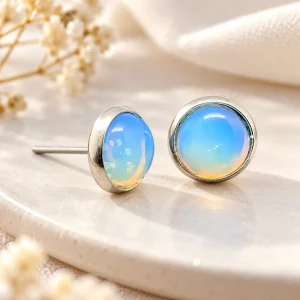
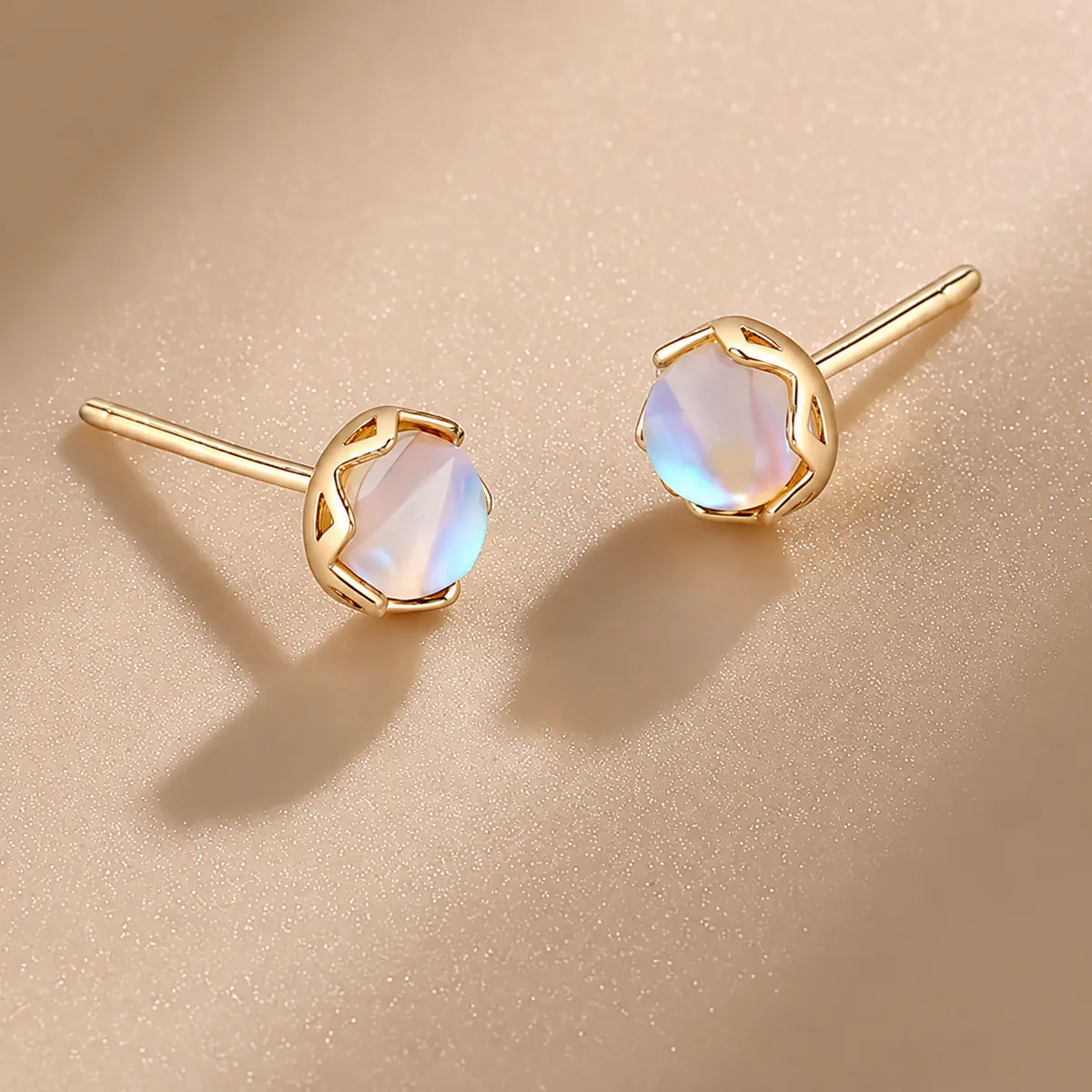
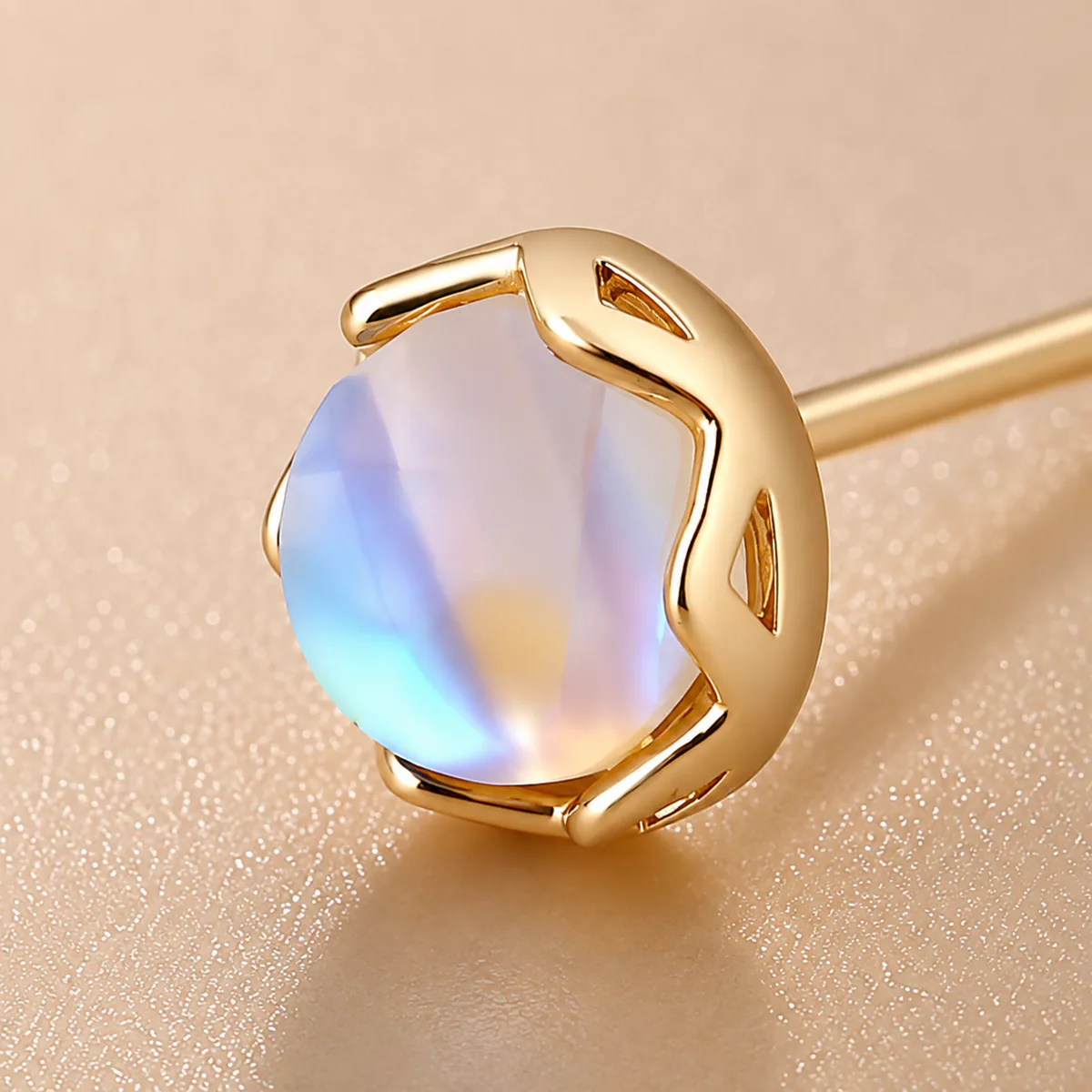
Two tiny studs, a small round stone with peach and pink flashes in a gold-toned crown cut into scallops, on a straight post. It is the smallest piece in the catalog, and the one talked about least, even though it is almost always the most worn.
The format you never take off
A stud is not jewelry like any other, and not just because of its size. It is the only one you keep on permanently: you forget it in the morning, you sleep with it, you shower with it, you always have it on. That is even its purpose, and it is what makes it the most cost-effective piece of jewelry there is, in hours of wear.
So it needs to be said upfront where the catch is. The format you keep on day and night is also the one least suited to gold plating. A gold layer is measured in fractions of a micron: it does not survive daily shampoo, soap, nighttime sweat, or friction against a pillow. Worn truly continuously, a gold-plated stud loses its color far faster than a pendant worn twice a week.
The good news is the fix costs nothing and easily doubles the lifespan: take them off for the shower and at night, put them back on once dressed and styled, after cream and perfume. That is thirty seconds morning and night, and it is the entire difference between two years and six. The shop’s other earrings are here.
The friction post, the closure people lose
Here is this model’s particularity, and I write it plainly because a stud gets lost far more often than it breaks. The small piece slid onto the back of the post, the friction back, does not lock anything: it holds by the pressure of its two small wings against a tiny groove cut into the post. It is a squeeze, not a closure.
That squeeze fatigues. From being pushed on and pulled off, the wings spread, and the back eventually slides on without resistance: that is exactly the moment the earring disappears into a scarf. The test takes one second: a back that slides on without any push-back needed is one to replace.
And here is the good news: these backs are standardized, they cost a few dollars a pair, and you can swap them yourself as often as you like. Two options beat the original back if you want to keep these earrings: silicone-lined versions, which brake far harder, or so-called screw backs. No jeweler will ever offer to replace them on their own, and yet it is the best dollar you will spend on this piece. I compared the three major earring closure types in detail on the Sterling Silver Moonstone Earrings listing.
The post runs through the lobe
A detail product listings never mention, and yet it has real consequences: on a stud, part of the jewelry sits inside the piercing, in constant contact with the skin of the channel. No other piece of jewelry does that.
And that is also exactly where the plating wears fastest, from friction with every insertion and every movement. On a gold-plated post, the base metal eventually shows through, and that is what touches the skin. If you notice redness or discomfort one day after months with no issue, this is almost always the explanation, not a sudden allergy to gold.
Two useful facts for the future: nearly all earring posts share roughly the same diameter, meaning a post can be swapped and a jeweler knows how; and if your skin reacts easily, look toward silver or surgical steel posts, where the question does not arise. As for the stone, it is held here by a scalloped crown that lets light in from the sides, which matters on a cabochon this small: it chips on impact rather than scratching, but at this size and in this setting, it does not risk much.
- Gold studs, small round stone held by a scalloped crown.
- The format you keep on day and night suits plating poorly: take them off for the shower and at night.
- A friction back that slides on without resistance is one to replace. It costs a few dollars.
- Delivered in two weeks with a cotton pouch, a handwritten note and a care card.
The specifications
- Stones
- Two small moonstone cabochons
- Look
- Translucent, peach and pink flashes
- Metal
- Gold-plated metal
- Setting
- Scalloped crown
- Closure
- Straight post and friction back
- Gender
- Women
- Brand
- Melissa Moon
A piece with a limited lifespan, and why I sell it anyway
Let us be clear about what you are buying. At this size and this price, plating is not one option among others, it is the only one: the same studs in solid gold would cost several times more, for a four-millimeter object nobody examines closely. This piece is therefore built for a few years of reasonable wear, not to be handed down.
That is not a reason to skip it, it is a reason to know what to expect, and above all to choose with full knowledge. If you want studs to keep on permanently without ever thinking about it, choose silver or steel rather than gold plate. If you want them for their warm color and are willing to take them off at night, these will serve you well for a long time. I would rather lose a sale than see a tarnished pair come back a year later. The rest of the shop is here.
A gold-plated stud worn day and night is a countdown. Taken off at night, it is a piece of jewelry.
No salt, no ultrasonic tank, no hot water: all three damage the stone for good. On gold-plated jewelry, nothing abrasive: no paste, no brush, no polishing cloth, which strip the gold layer along with the dirt. A soft, dry cloth is almost always enough. If cleaning is needed, lukewarm water, a drop of mild soap, a quick rinse and immediate drying, carefully drying the post and its groove, where moisture settles. Take them off before the shower, the pool, sport and at night, and store them with their backs on, in a pouch: a stud without its back gets lost in a drawer as surely as in the street. The detail is in cleaning a moonstone piece, and the safe methods in caring for it without harming it.