Hello, I’m Melissa
Moonstone Jewelry
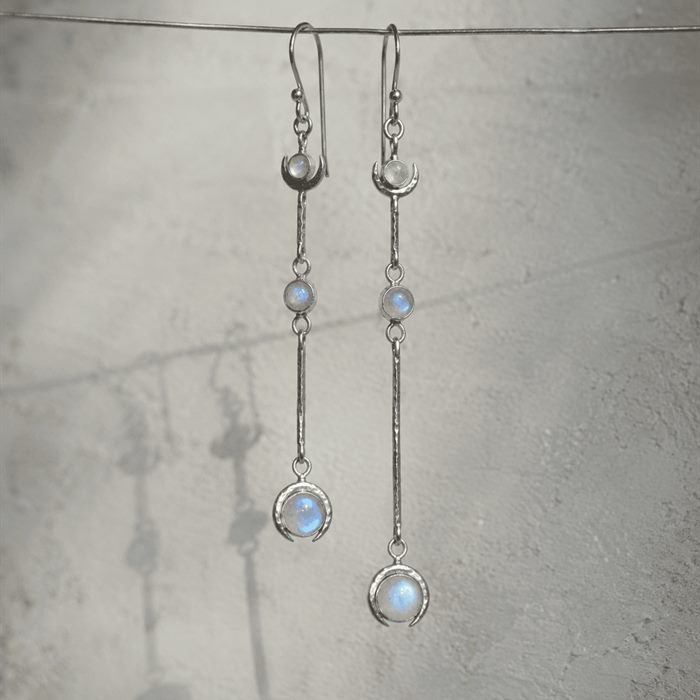
Rings, bracelets, necklaces, pendants and earrings in moonstone set on sterling silver. I choose them one at a time from partner workshops, and I only keep the stones whose sheen actually moves.
New to this stone? Start with the complete guide instead, I wrote it for that.

- Chosen one by oneFrom partner workshops
- Real stonesNever opalite, never glass
- Sterling silverAnd I tell you when a piece is plated
- Shipping & returnsTwo to three weeks, 14 days to change your mind
What I Offer in Moonstone
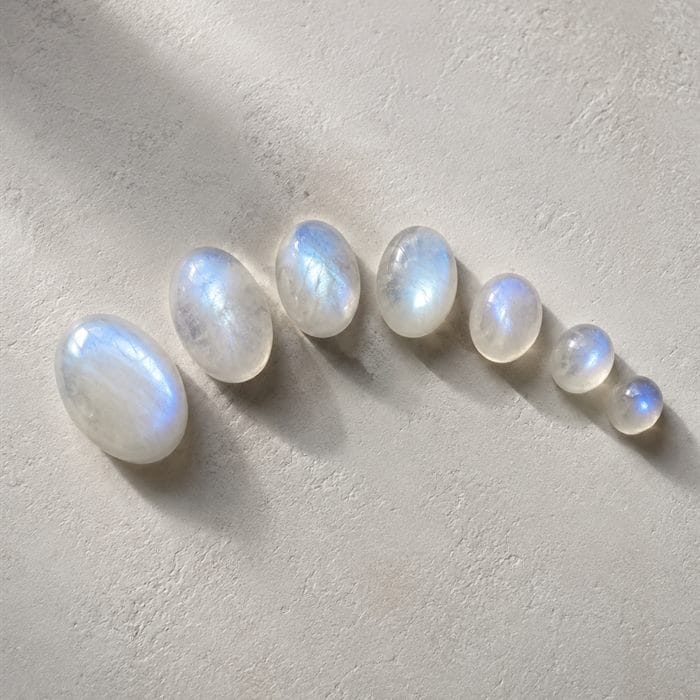
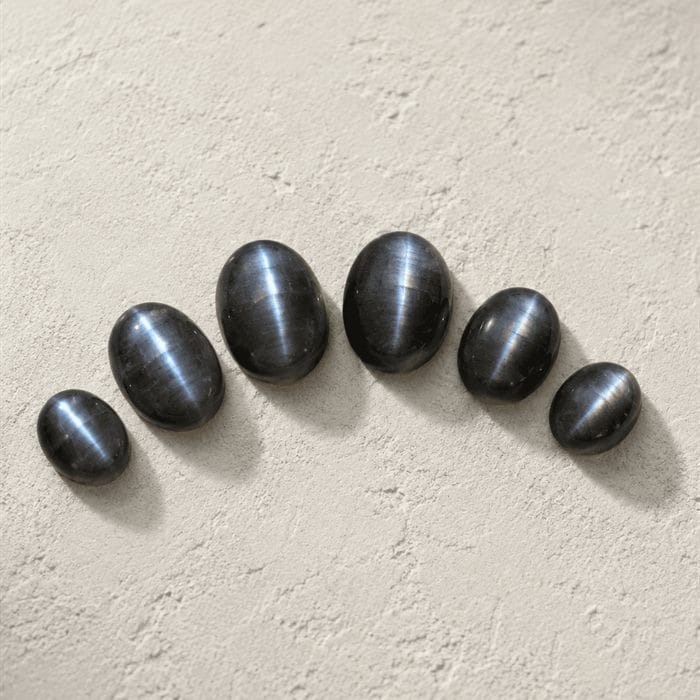
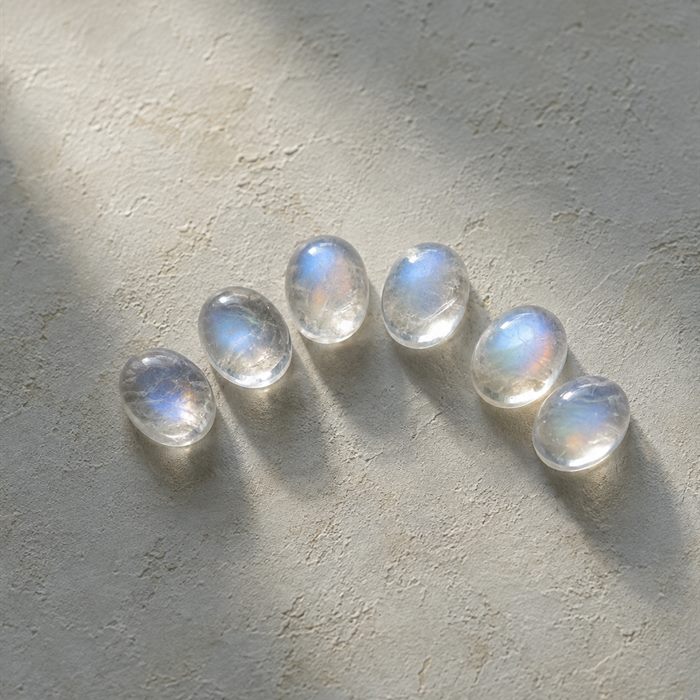
Five families of jewelry. And three varieties of stone, if you already know which sheen you are after. For sizing, everything is explained in the size guide, ring sizes and chain lengths.
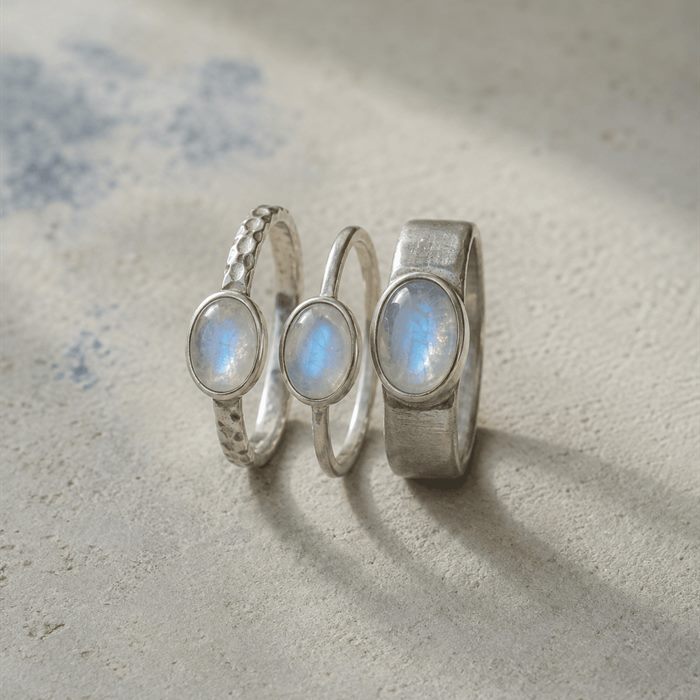
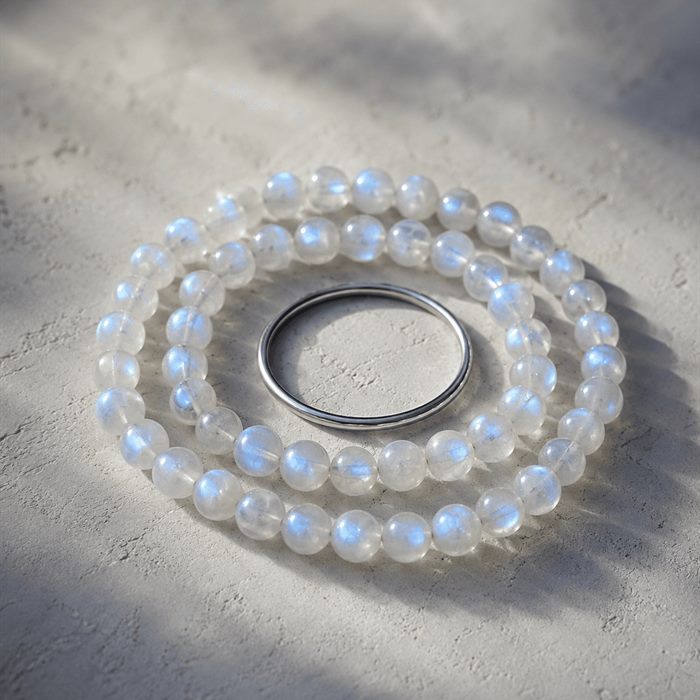
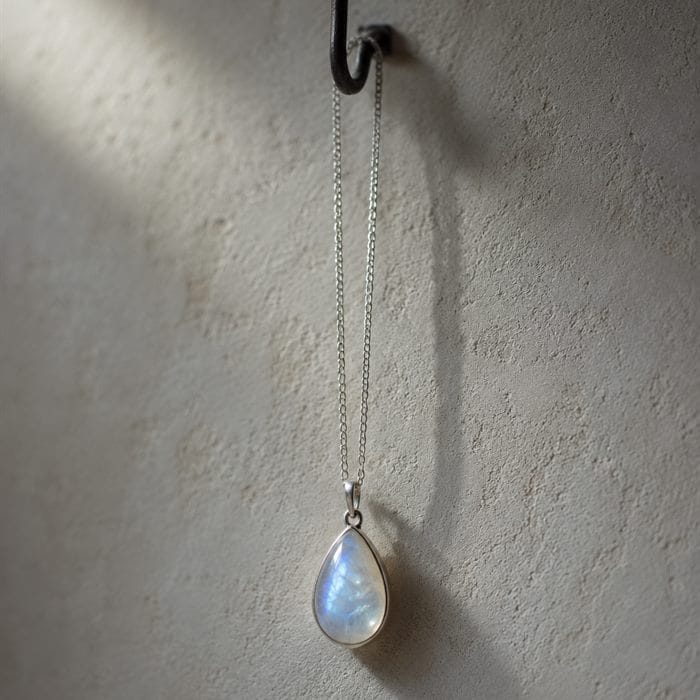
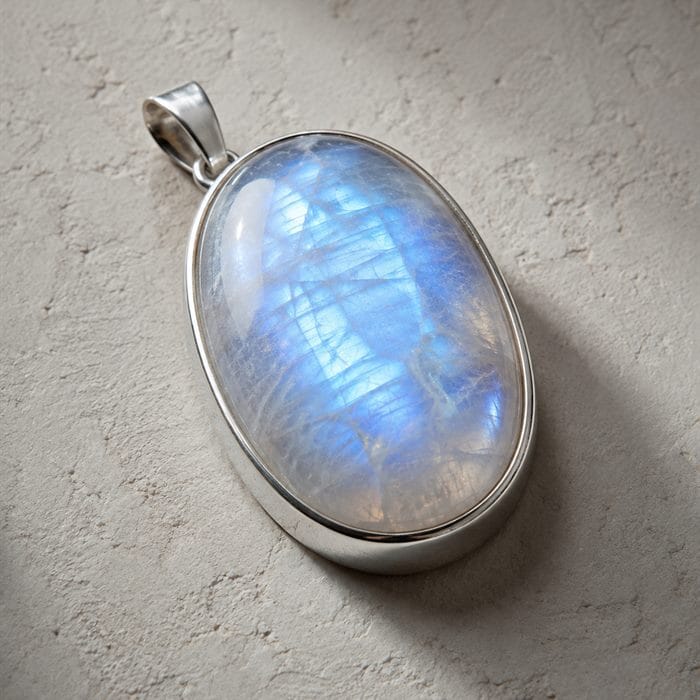
The Ones I Have Trouble Letting Go
There are always two or three pieces I would happily keep for myself. I list them anyway.
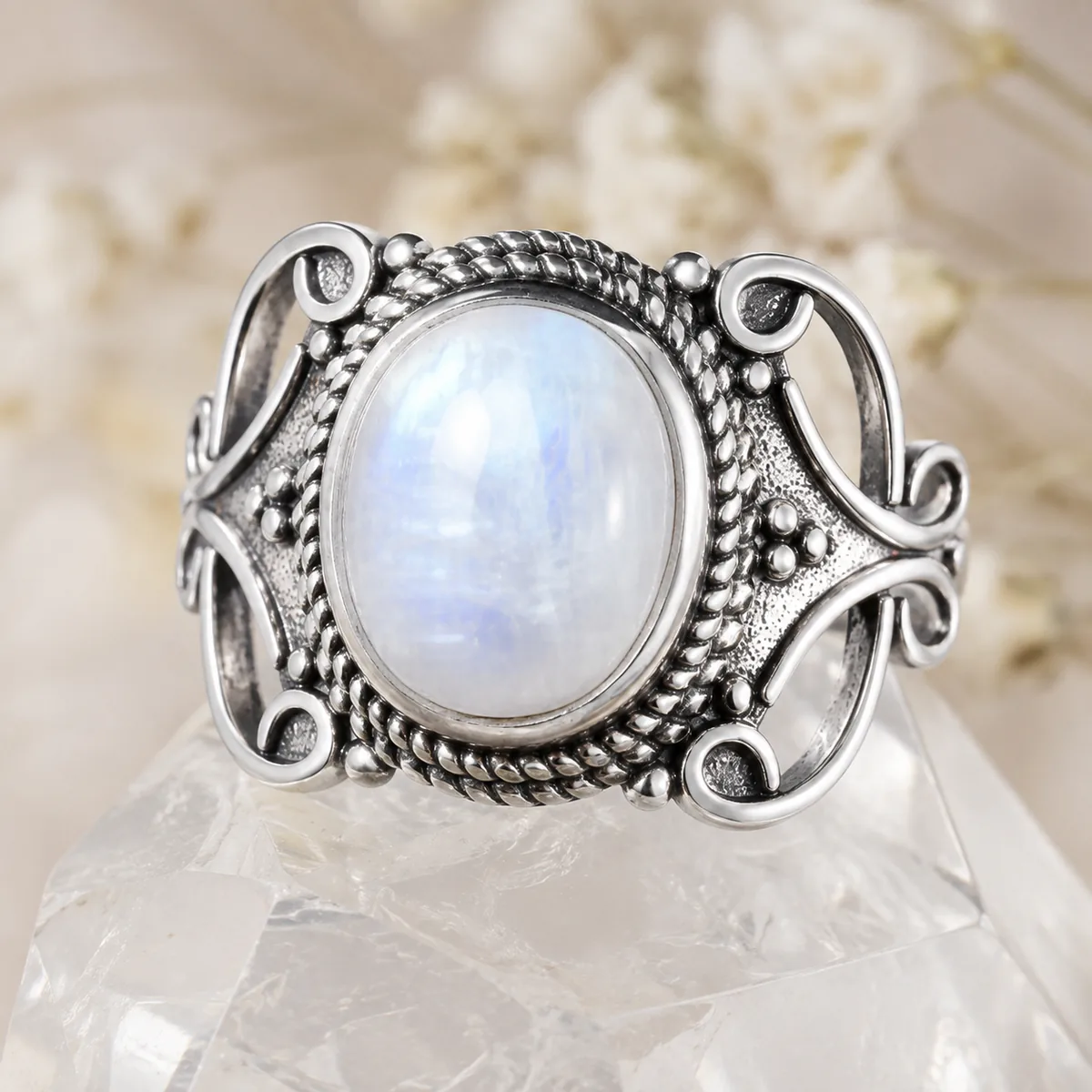
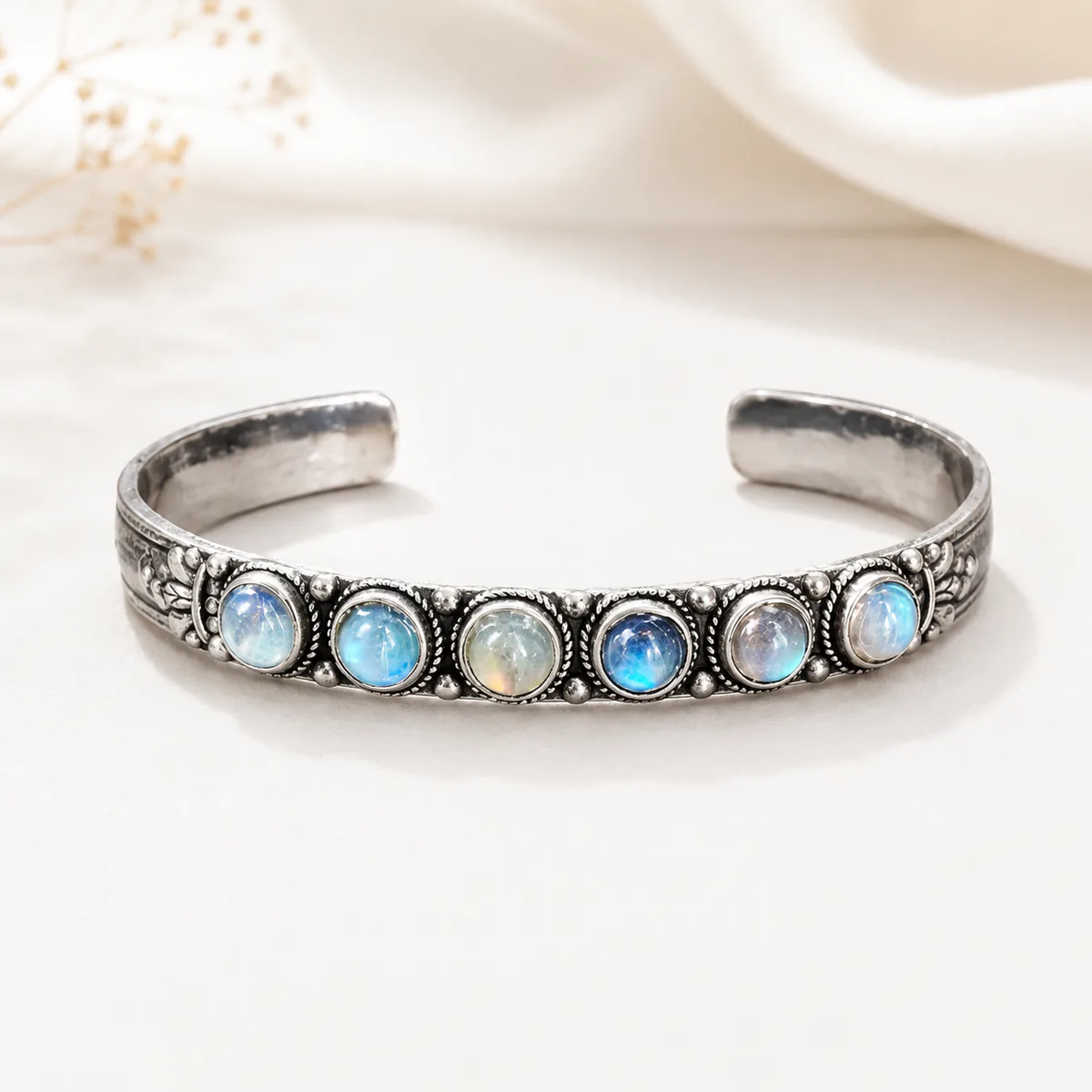
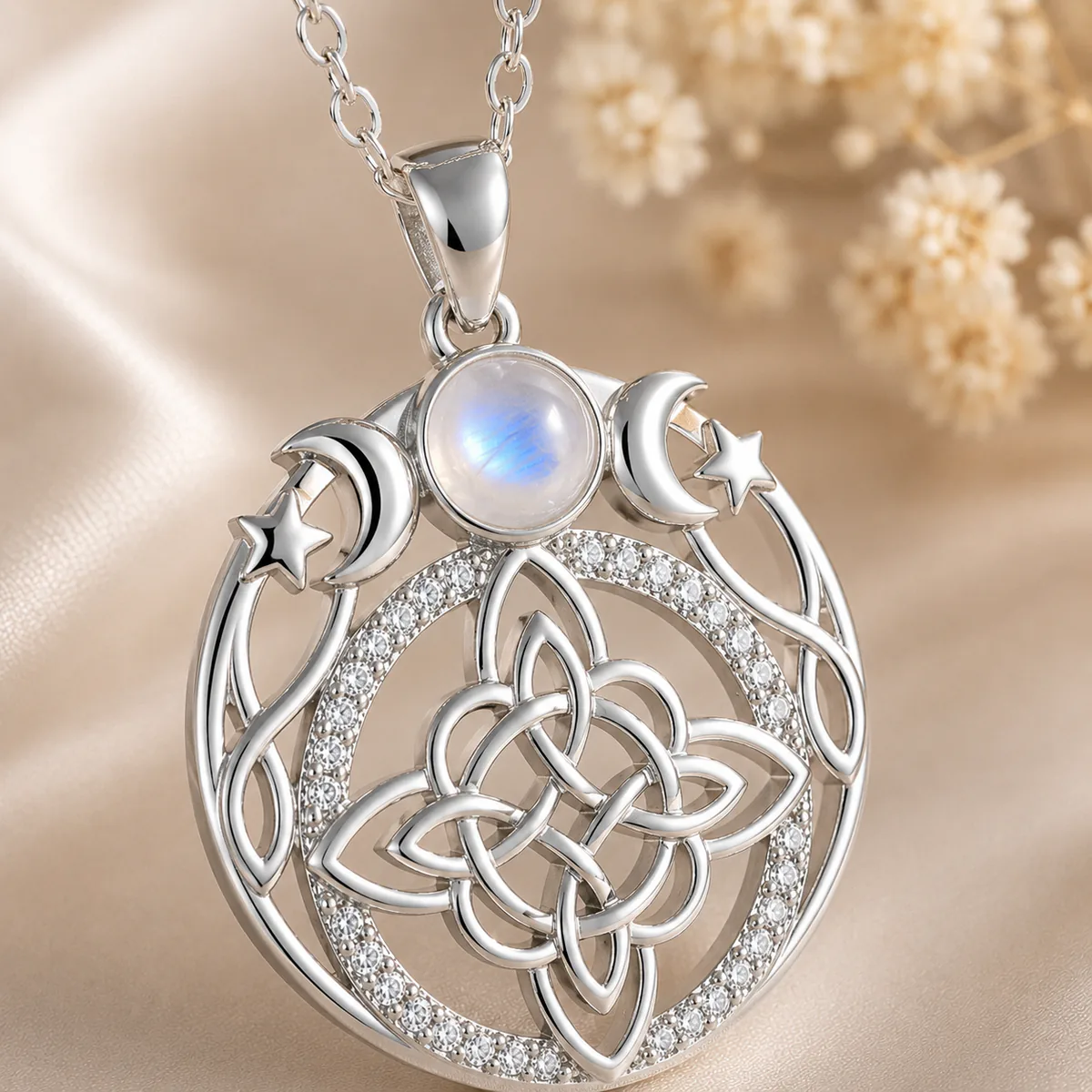
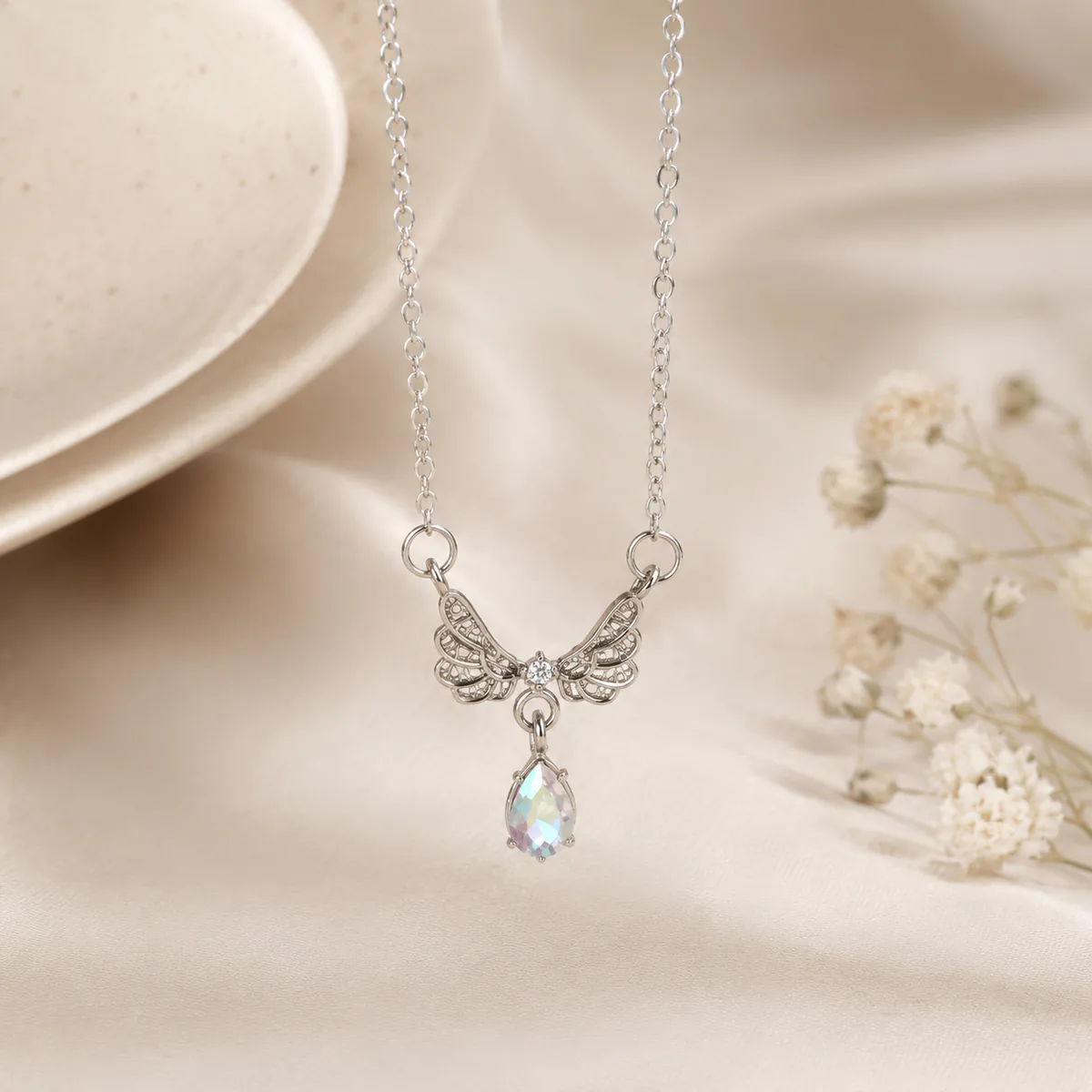
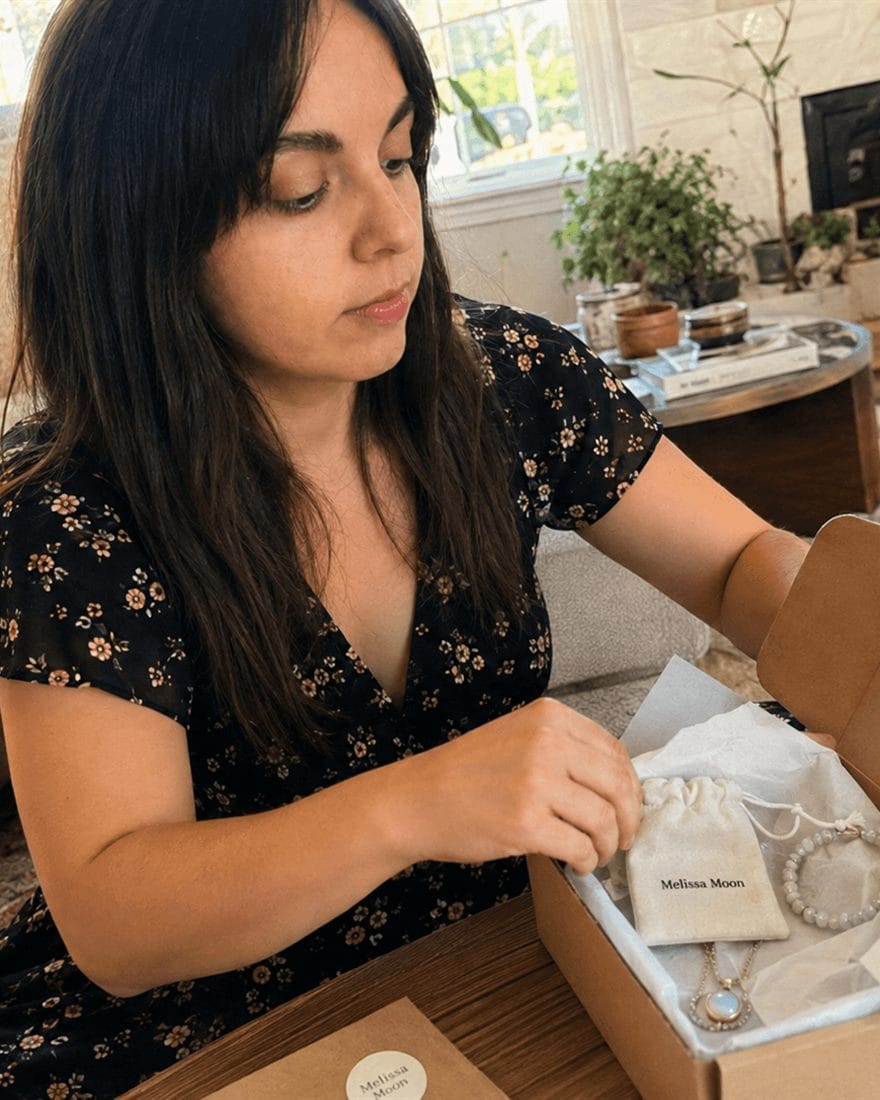
I’m Melissa
I was born in Peru, at my grandmother’s, high up, where night falls all at once and the sky is so clean you feel you could reach up and take hold of the moon. To her, this stone was a fallen piece of the moon. I never contradicted her. She is the one who taught me to look before picking anything up: she would turn a stone in the light, for a long time, without saying a word.
We left for Tallinn when I was a teenager. Nearly seven thousand miles, and a sky that no longer looked like anything I knew. She is gone now, I miss her every day, and it is for her that I started choosing stones. Moonstone has that sheen that slides when you tilt it and that you never quite catch. Like the people we miss.
Today I run this shop from Tallinn, with my partner, who is Belgian and keeps the books. I do not make the jewelry: I choose each piece from partner workshops, on what really matters, the sheen and the color of a stone. It ships to you directly, and nothing sits forgotten in a drawer.
The long version is over here. And the stories my grandmother used to tell me, I found nearly all of them again in the old myths.
Melissa
What I Don’t Sell, and Why
Moonstone is one of the most imitated stones there is. The simplest way to know who you are dealing with is to ask what that person refuses to sell.
- Opalite. It is glass. Its glow stays frozen when you tilt it, where a real moonstone’s does not, it slides. I put the comparison in photographs, and you will not be caught out again.
- Coated quartz sold under the name “rainbow”, or any stone whose origin I cannot tell you.
- And I will not let you believe it is all adularia. Rainbow moonstone and black moonstone are labradorites. They are real stones, beautiful ones, simply not the same species. Almost nobody says so. I do.
M.
Adularescence, the Sheen That Moves
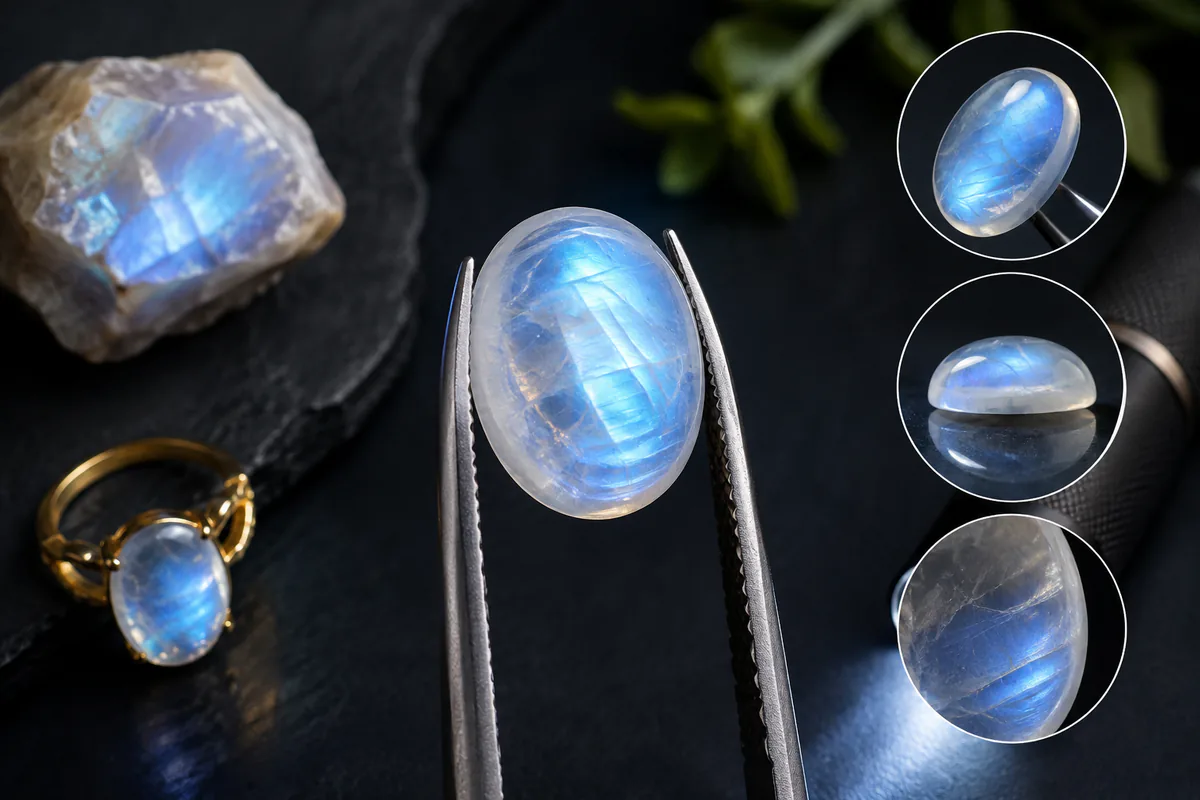
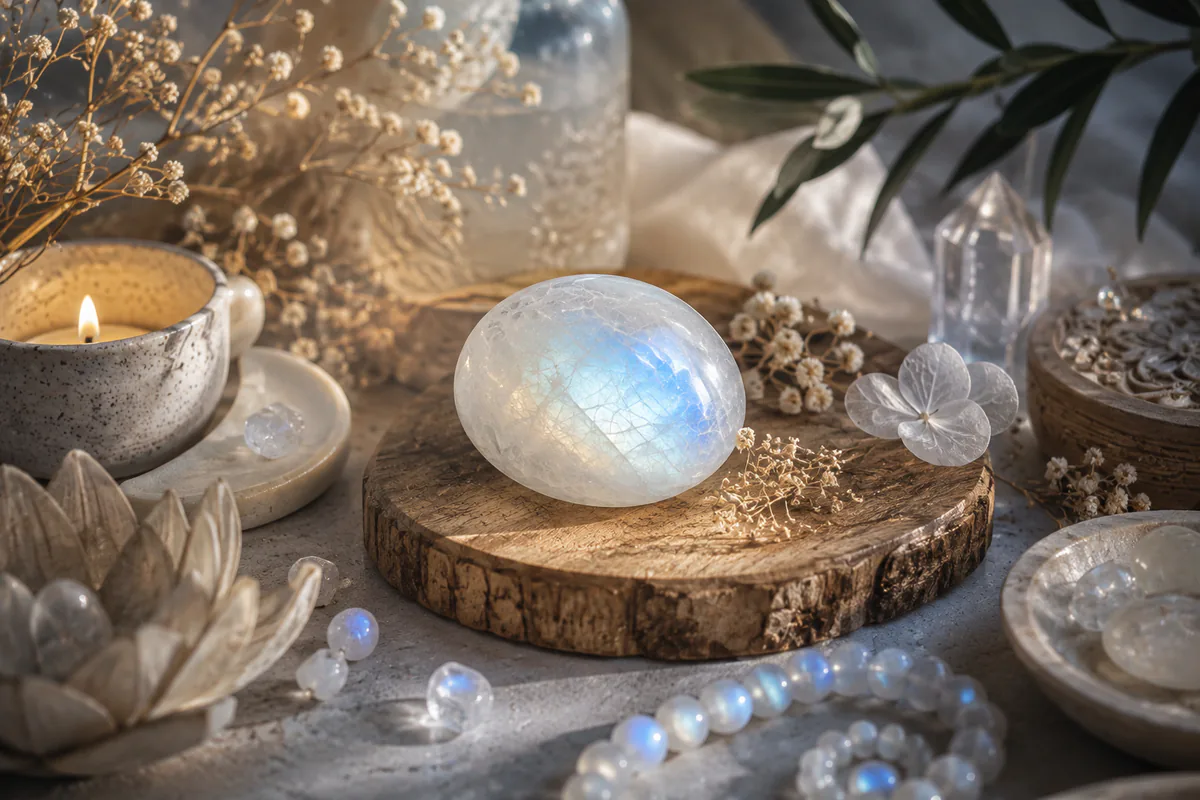
It has a name: adularescence. It is the one thing no imitation can reproduce, and it does not really photograph. You have to watch it move.
Where It Comes From
As it cooled very slowly, the feldspar separated into microscopic lamellae. They are so fine that they scatter blue light, exactly the way the sky does with the atmosphere.
Why It Moves
The sheen is not in the stone. It is born of the angle you look at it from. Tilt the stone and it slides. An imitation keeps the same glow, whatever you do.
Why the Cabochon
A faceted cut would break the effect. Only a smooth dome lets the sheen run across the whole surface. That is why you will see them everywhere here.
How It Works, Here
I Sort
I keep the designs whose sheen is frankly blue and properly centered on the dome, not pushed out to one edge. Those are two of the six criteria I apply. The blue almost always comes from Sri Lanka, the rainbow from southern India. It is that sorting, far more than the size of the stone, that explains what a moonstone costs.
I Check
The setting first: a bezel setting most of the time. Moonstone has perfect cleavage: it does not scratch all that easily, but it splits on impact. A closed setting protects it far better than prongs, and a glued stone always ends up moving. And if you are torn between a ring and a pendant, I wrote about how to wear it day to day.
You Receive
Count on roughly two to three weeks between your order and your mailbox: nothing is held in stock, every piece is ordered from the partner workshop after you buy, then shipped to you directly. And you have fourteen days to change your mind, with no reason to give. Moonstone hates salt and ultrasonic cleaners and it is better to know that before the first clean: it is all explained in how to clean moonstone jewelry. And if it is for a gift, I wrote about who to give moonstone to.
What People Ask Me Most About Moonstone
How do I know if my moonstone is real?
Tilt it under a direct light: the sheen should move. If it stays put, it is opalite or glass. Look too for the fine ladder-like inclusions people call “centipedes”, and hold it to your cheek: a real stone stays cool for a few seconds. The six tests in detail →
How do I clean it, how do I charge it?
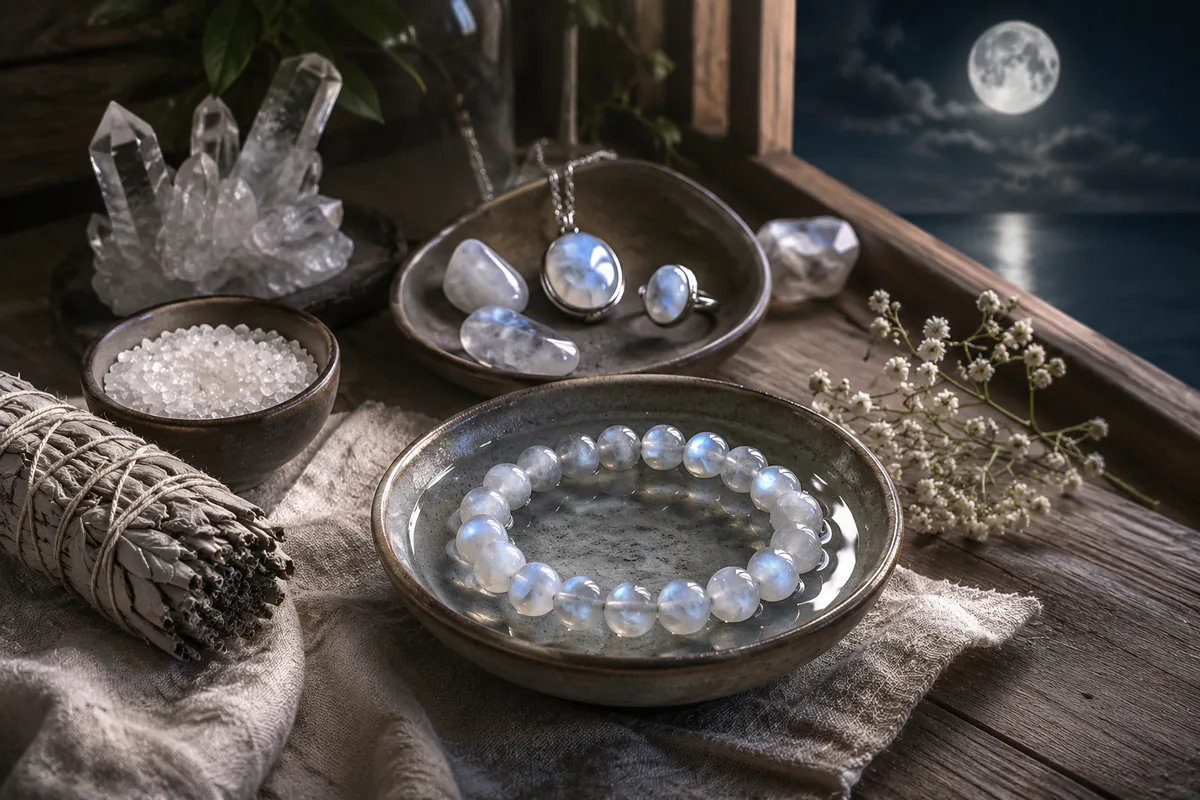
A soft cloth and a little lukewarm water, that is all. Never salt, never ultrasonic cleaners, never hot water, it is a soft feldspar and I would rather tell you plainly. To charge it, tradition sets it out in full moonlight: that one does it no harm. The full method → · The moon calendar →
Is it fragile?
More than people think, but not for the reason they imagine. Its hardness is decent, 6 to 6.5 on the Mohs scale. Its weak point is its perfect cleavage: it does not scratch all that easily, it splits on impact, along two clean planes. That is why I bezel set. What that changes day to day →
Can I keep it on in the shower?
Better not. A quick rinse in lukewarm water does nothing to it, but the shower means soap, the pool means chlorine, the sea means salt, and the tiled floor means impact. Take it off and it will thank you. What it really tolerates →
Which wrist should I wear my bracelet on?
Tradition says: on the left what you wish to receive, on the right what you wish to give. Moonstone sitting on the side of intuition and calm, it tends to be worn on the left. But honestly, wear it wherever you like. Where that wrist story comes from →
And its benefits, then?
Crystal healing credits it with calming, with accompanying the feminine cycle, with supporting intuition. These are traditions, not demonstrated facts, and I will never sell you a piece of jewelry as a remedy. Jewelry does not heal, and it replaces no medical advice. What tradition credits it with, stated as such →
What I Write Alongside
Here I answer the questions I get asked too often to keep repeating myself. It is free, and it may save you from buying an imitation somewhere else.
10% Off Your First Order
New pieces, the stones I turn up, and nothing else. One letter a month, I do not have time to write more.
One-click unsubscribe. Your address will never be passed on.
The properties attributed to stones belong to crystal healing traditions. They are neither a diagnosis nor a treatment, and in no case do they replace medical advice. If you have a health concern, consult a qualified professional.