Hello, I'm Melissa
Moonstone jewellery
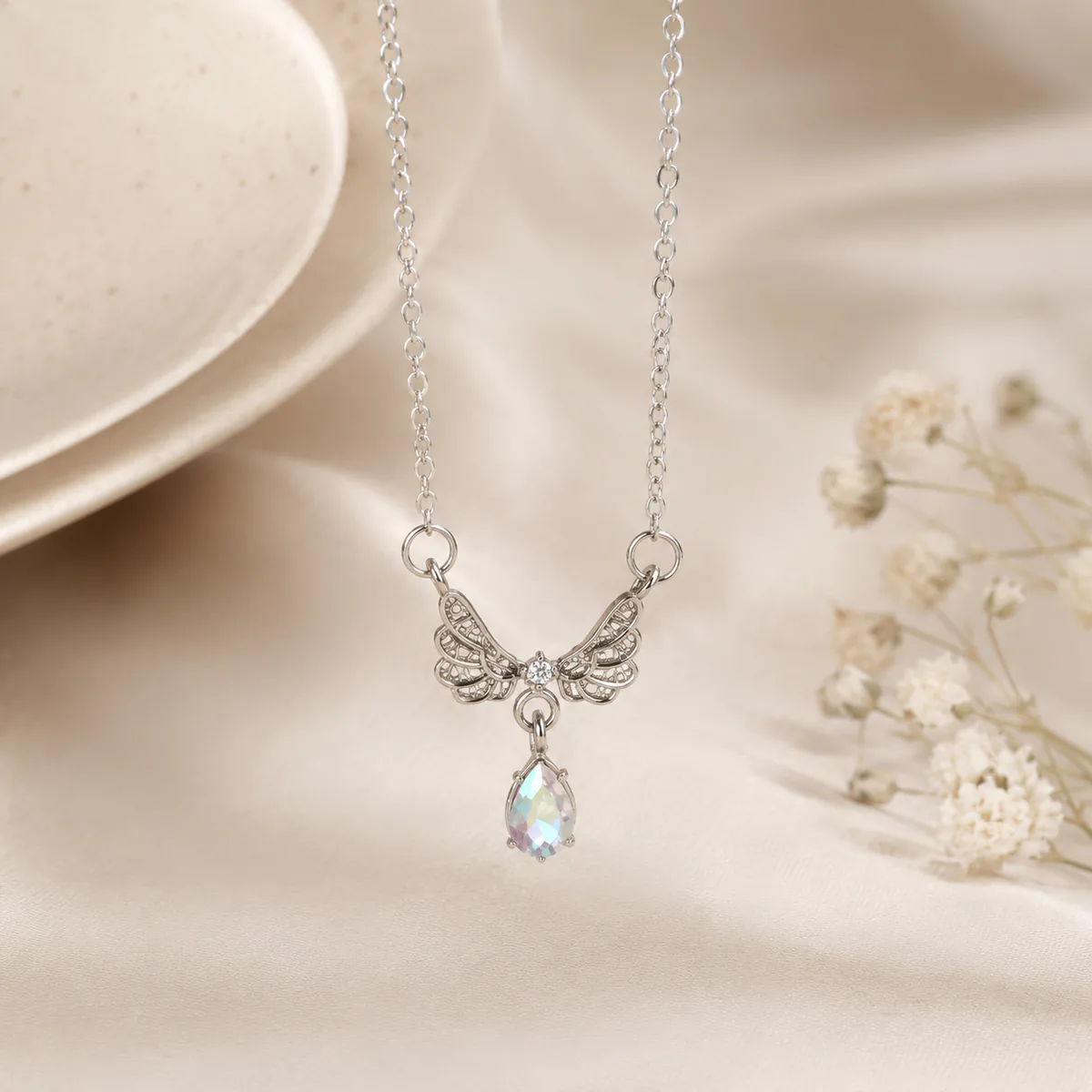
Rings, bracelets, necklaces, pendants and earrings in moonstone on sterling silver. I choose them one by one from partner workshops, and I only keep the stones whose sheen truly moves.
New to this stone? Start with the complete guide, I wrote it just for that.
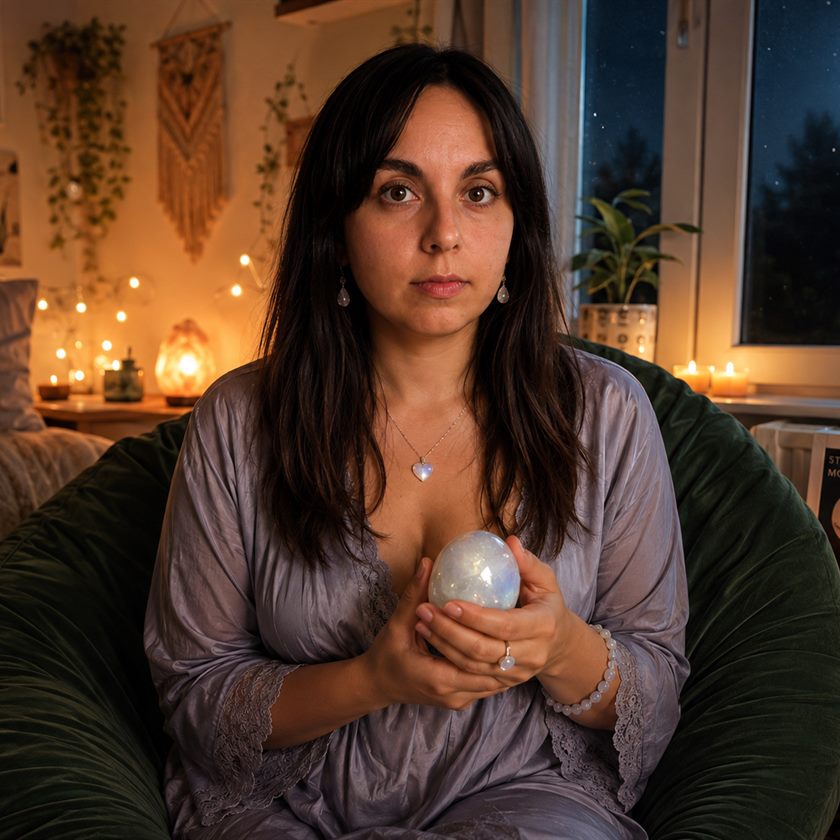
- Chosen one by oneFrom partner workshops
- Real stonesNever opalite, never glass
- Sterling silverAnd I tell you when it's gold plated
- Delivery & returnsWithin 2 weeks, 14 days to change your mind
What I offer in moonstone
Five families of jewellery. And three stone varieties, if you already know which sheen you're after. For sizing, it's all explained in the size guide, ring sizes and chain lengths.
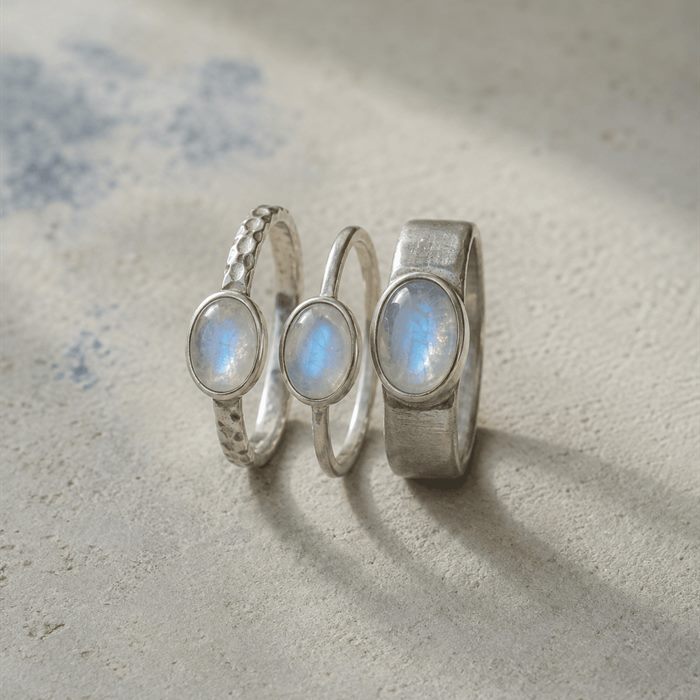
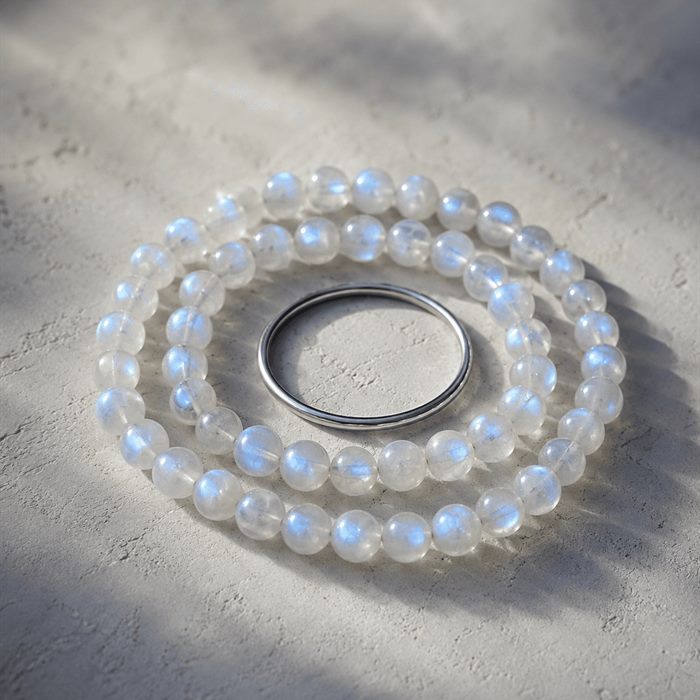
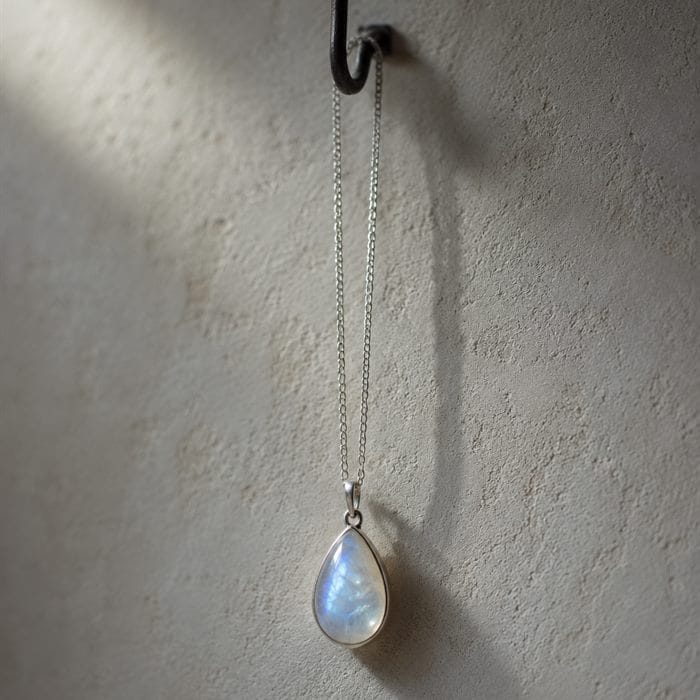
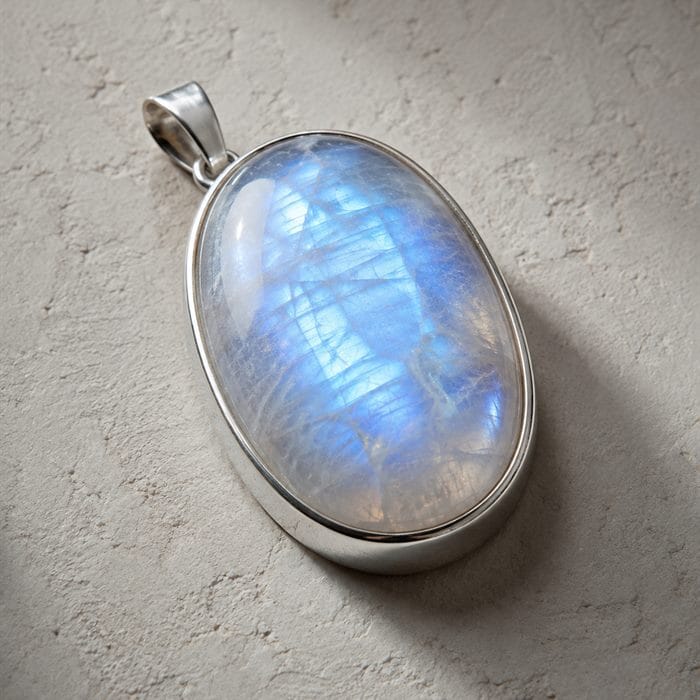
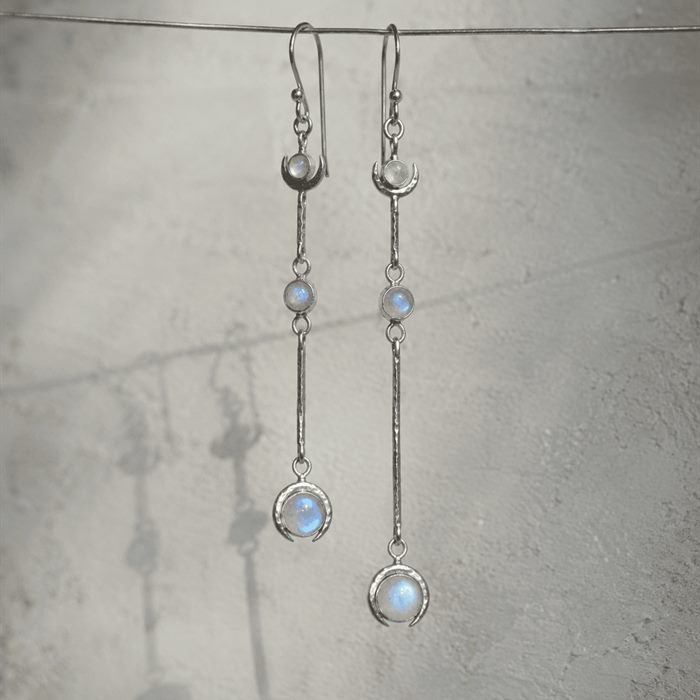
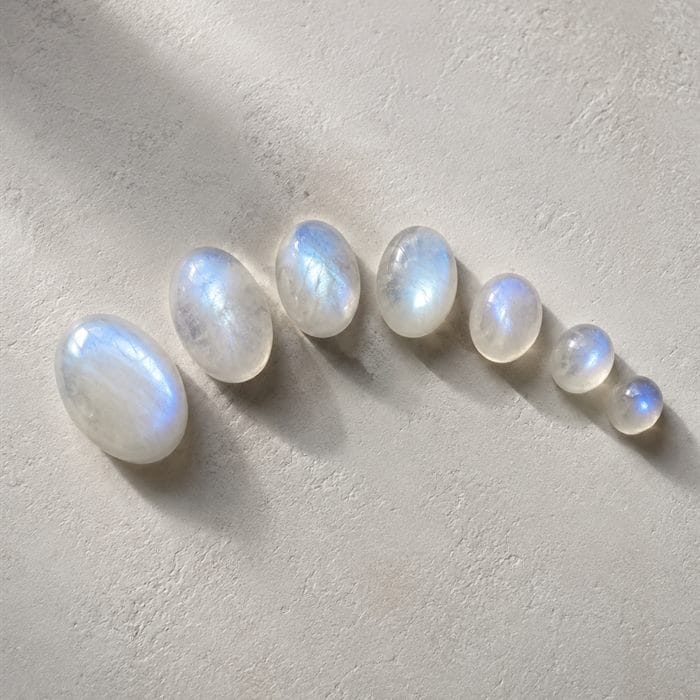
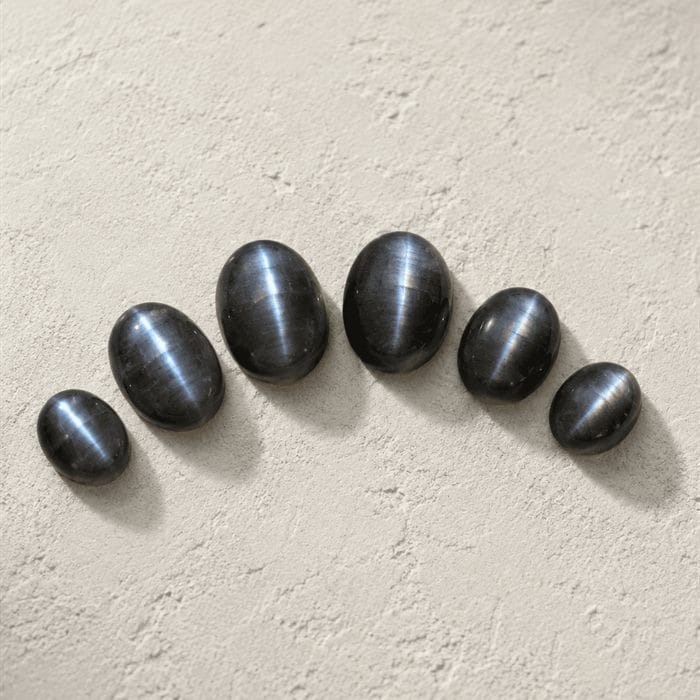
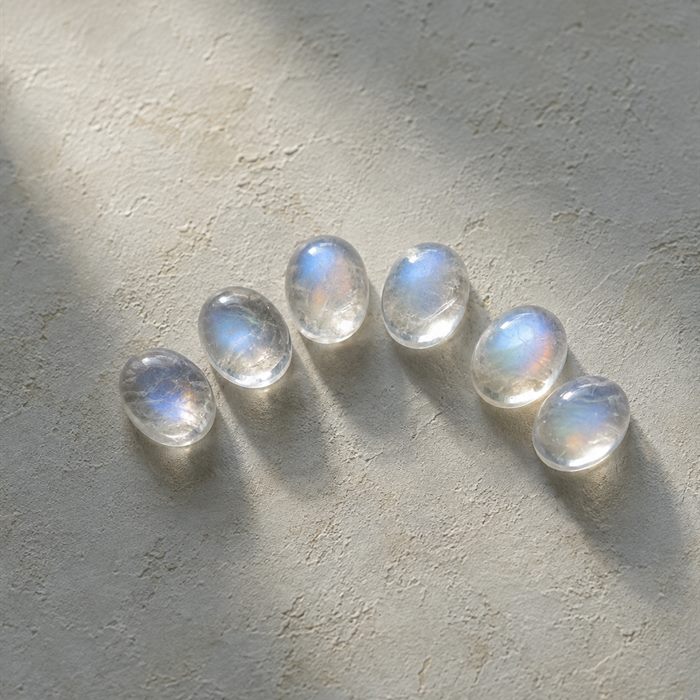
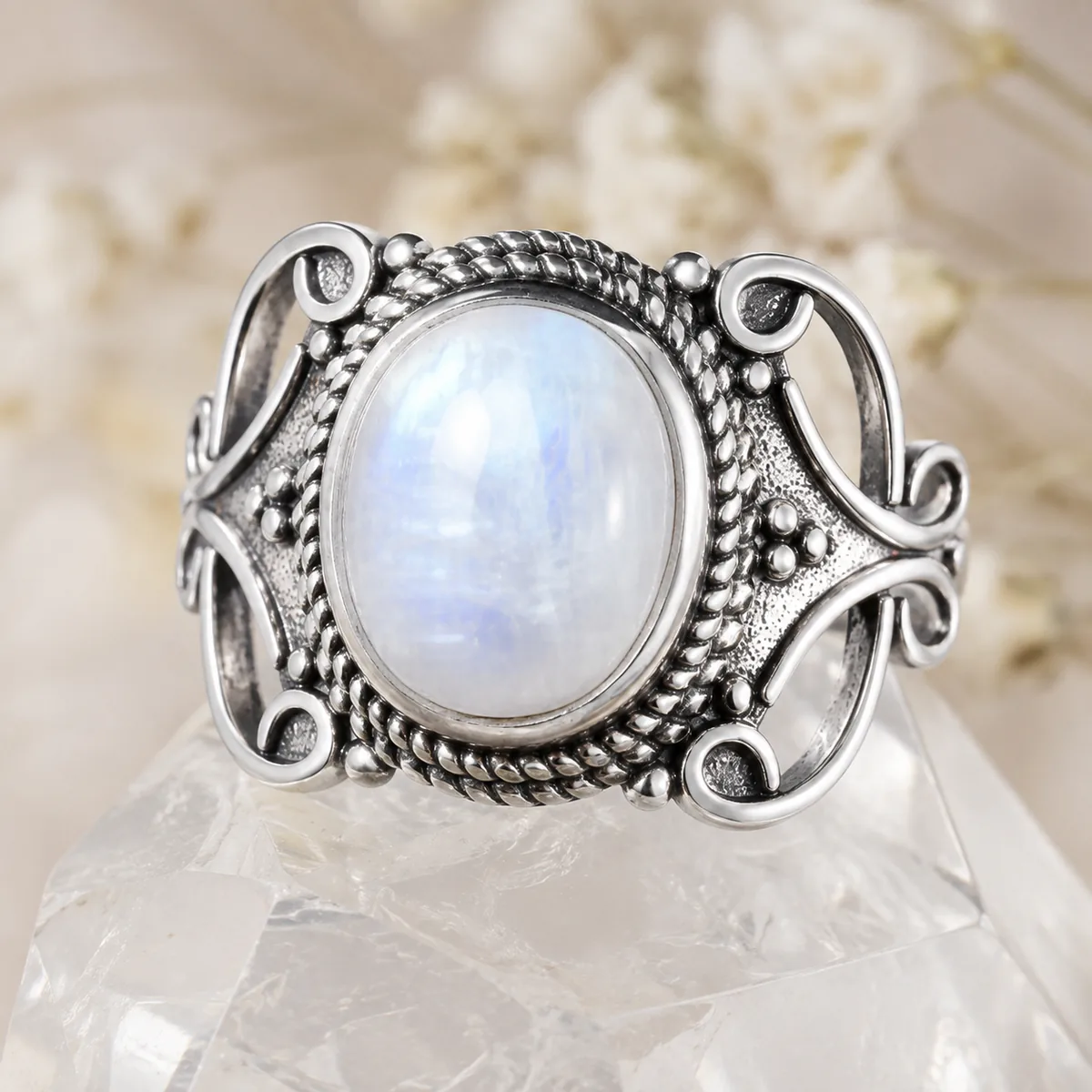
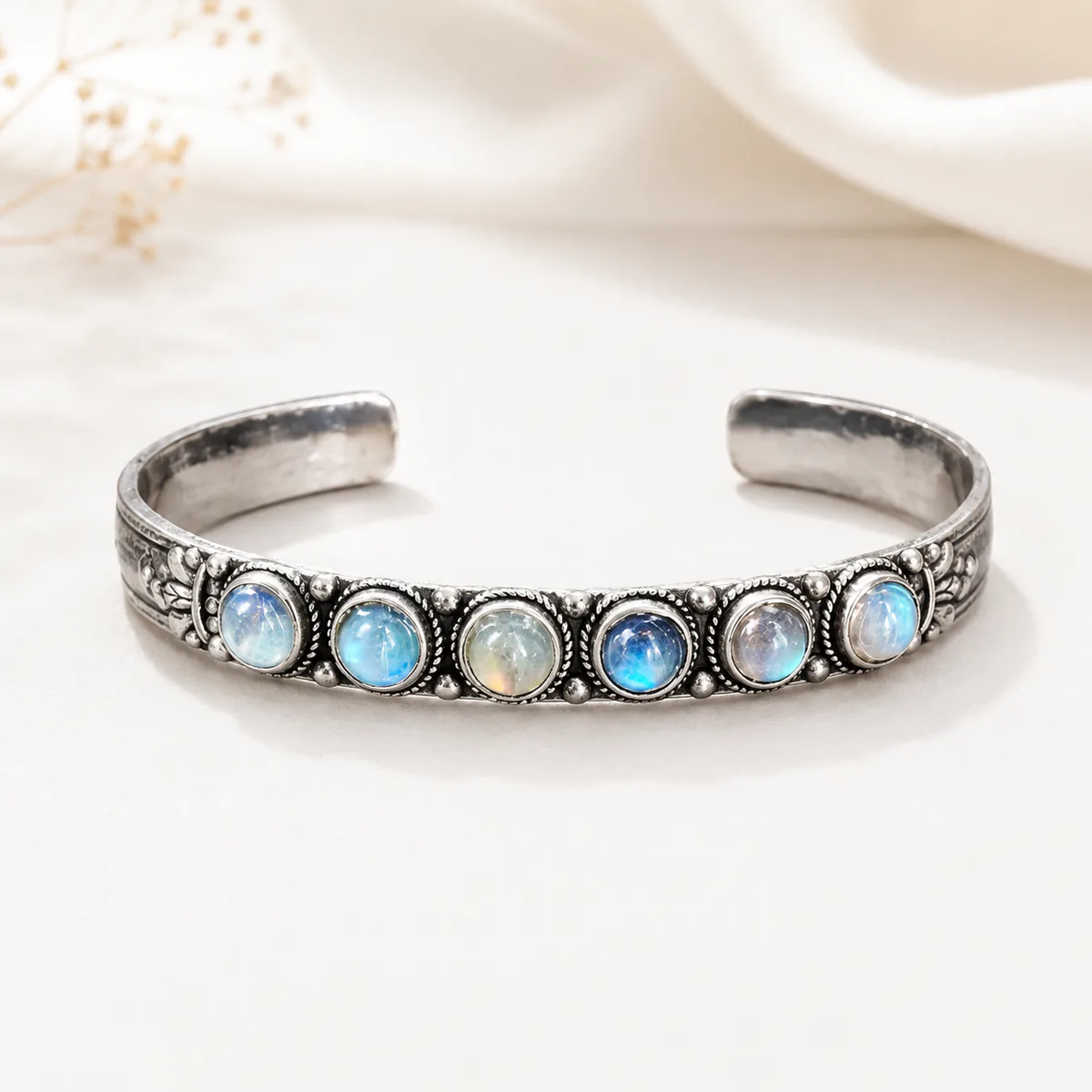
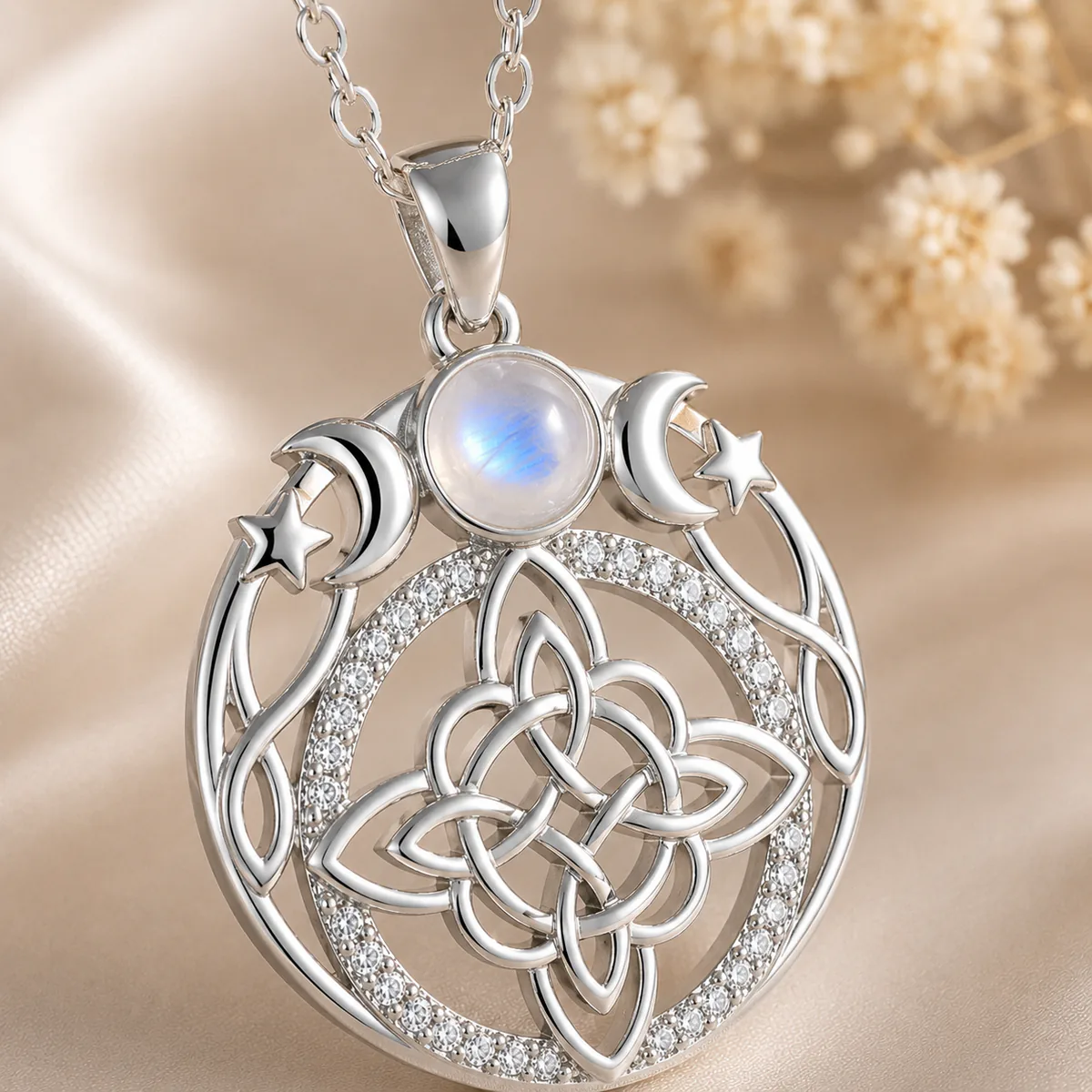
The ones I find hard to let go
There are always two or three pieces I'd happily keep for myself. I list them anyway.
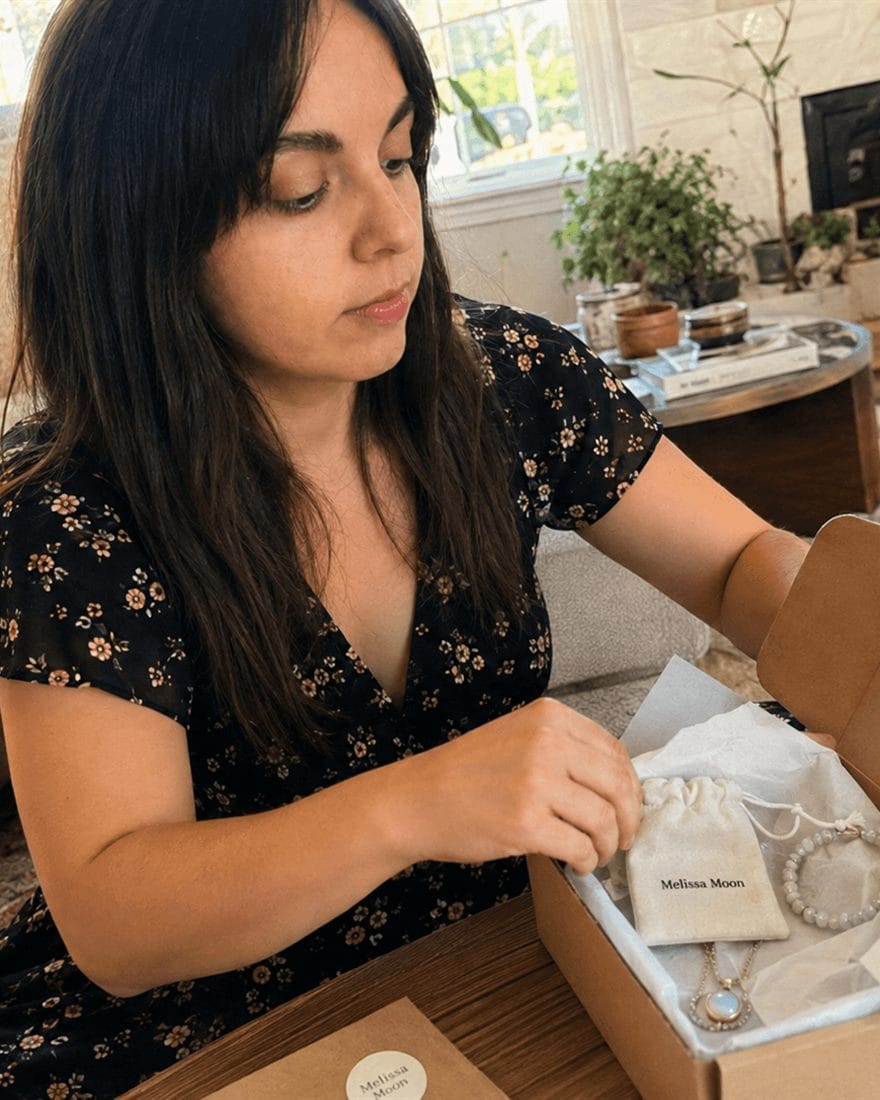
I'm Melissa
I was born in Peru, at my grandmother's, high up, where night falls all at once and the sky is so clear you feel you could reach out and catch the moon. To her, this stone was a fallen piece of the moon. I never contradicted her. She's the one who taught me to look before picking anything up: she would turn the stone in the light, for a long time, without saying a word.
We left for Tallinn when I was a teenager. Eleven thousand kilometres, and a sky that no longer looked like anything I knew. She isn't here any more, I miss her every day, and it's for her that I started choosing stones. Moonstone has that sheen which slides when you tilt it, and which you never quite catch. Like the people we miss.
Today I run this shop from Tallinn, with my partner, Belgian, who keeps the books. I don't make the jewellery: I choose each piece from partner workshops, on what really matters, the sheen and a stone's colour. It's sent to you directly, and nothing sits in a drawer.
The longer version is over here. And the stories my grandmother told me, I've found almost all of them again in the old myths.
Melissa
What I don't sell, and why
Moonstone is one of the most imitated stones there is. The simplest way to know who you're dealing with is to ask what they refuse to sell.
- Opalite. It's glass. Its shine stays fixed when you tilt it; a real moonstone's doesn't, it slides. I've put together a photo comparison, so you won't be caught out again.
- Coated quartz sold under the name "rainbow", or any stone I can't tell you the origin of.
- And I won't let you believe everything is adularia. Rainbow and black moonstone are labradorite. They're real stones, beautiful ones, just not the same species. Almost no one says so. I do.
M.
Adularescence, the sheen that moves
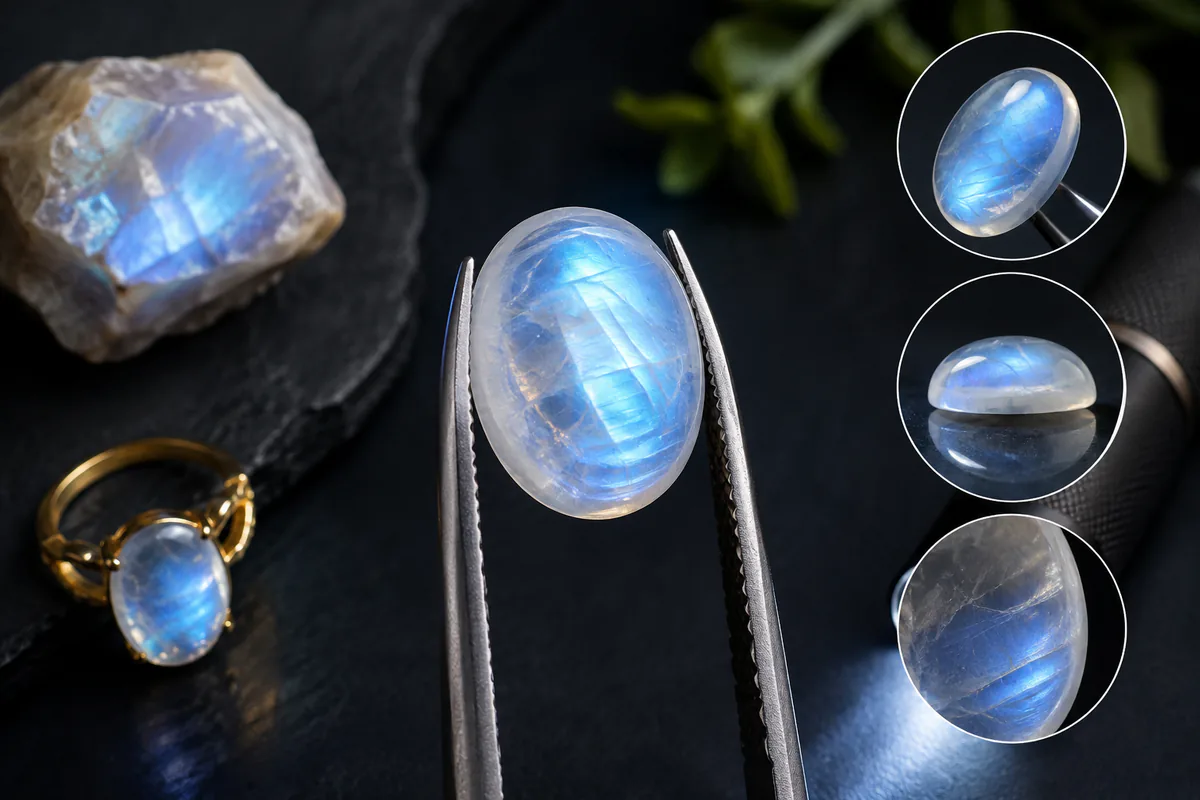
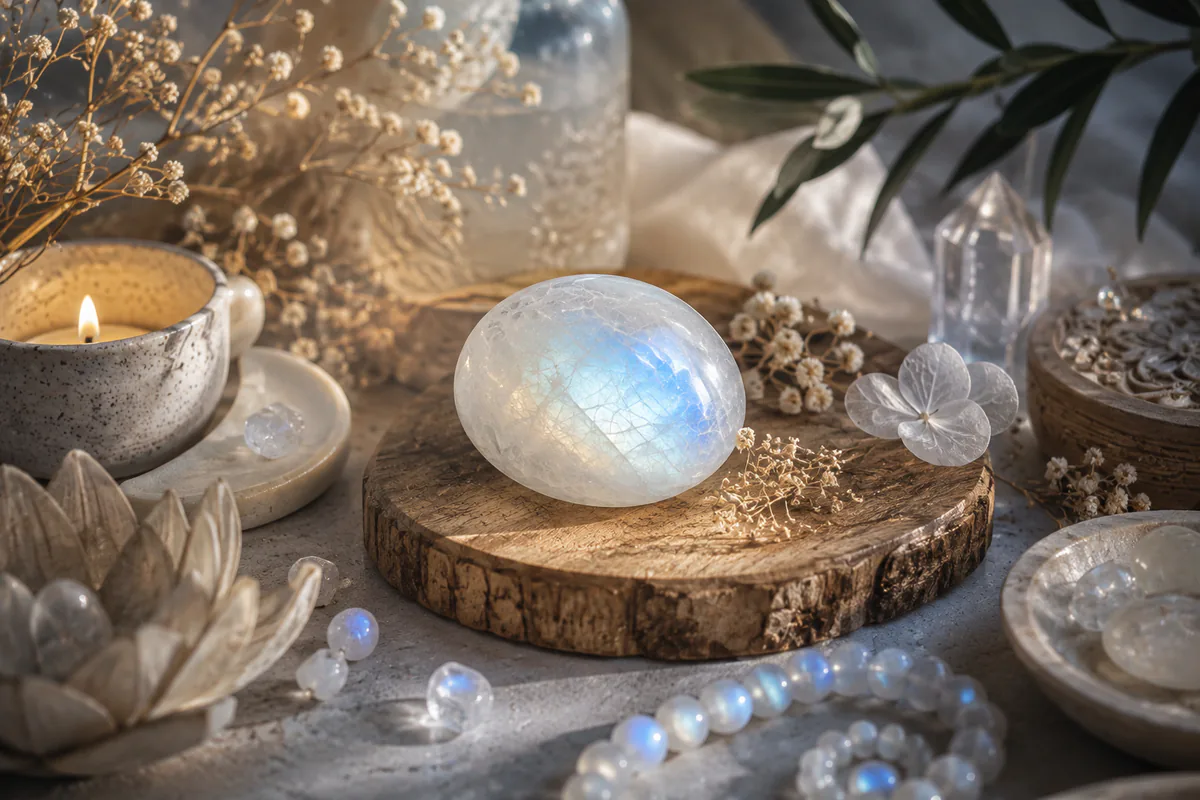
It has a name: adularescence. It's the one thing no imitation can reproduce, and it doesn't really photograph. You have to watch it move.
Where it comes from
As it cooled very slowly, the feldspar separated into microscopic layers. They're so thin that they scatter blue light, exactly the way the sky does with the atmosphere.
Why it moves
The sheen isn't inside the stone. It comes from the angle you're viewing it at. Tilt it, and it slides. An imitation keeps the same shine no matter what you do.
Why the cabochon
A faceted cut would break the effect. Only a smooth dome lets the sheen run across the whole surface. That's why you'll see them everywhere in my work.
How it works here
I sort
I keep the designs with a sheen that's clearly blue and well centred on the dome, not pushed to one edge. Those are two of the six criteria I apply. The blue almost always comes from Sri Lanka, the rainbow from South India. It's this sorting, far more than the size of the stone, that explains what a moonstone costs.
I check
The setting first: bezel set, most of the time. Moonstone has a perfect cleavage: it doesn't scratch much, but it chips on impact. A closed setting protects it far better than prongs, and a glued stone always ends up moving. And if you're torn between a ring and a pendant, I've written how to wear it day to day.
You receive
Allow around two weeks between your order and your letterbox: nothing is kept in stock, every piece is ordered from the partner workshop after you buy, then sent to you directly. And you have fourteen days to change your mind, no questions asked. Moonstone hates salt and ultrasonic cleaners, and it's better to know that before the first clean: it's all explained in how to clean a moonstone piece of jewellery. And if it's for a gift, I've written about who to give moonstone to.
What I'm asked most often about moonstone
How do I know if my moonstone is real?
Tilt it under direct light: the sheen should move. If it stays fixed, it's opalite or glass. Also look for the fine ladder-like inclusions known as "centipede" inclusions, and hold it against your cheek: a real stone stays cool for a few seconds. The six tests in detail →
How do I clean it, how do I charge it?
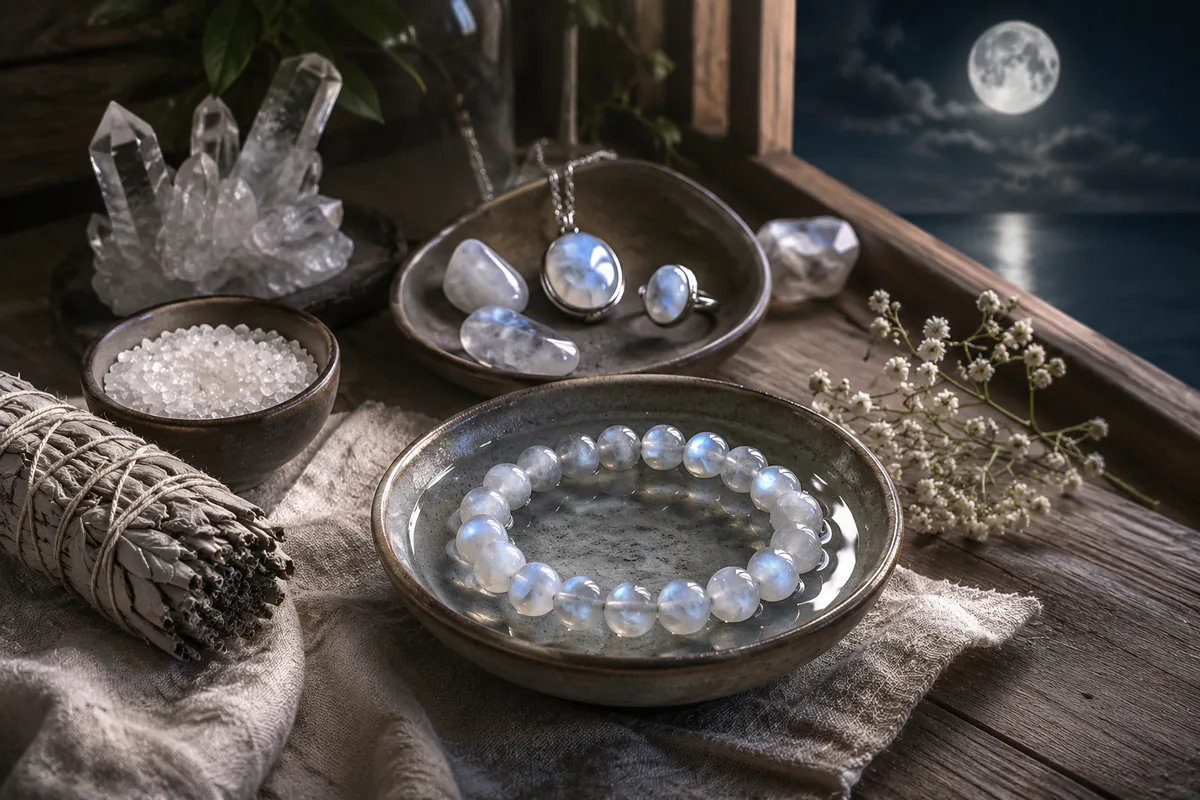
A soft cloth and a little warm water, that's it. Never salt, never ultrasonic cleaners, never hot water, it's a soft feldspar and I'd rather tell you plainly. To charge it, tradition sets it out in full moonlight: that, it can handle without any risk. The full method → · The lunar calendar →
Is it fragile?
More than people think, but not for the reason they assume. Its hardness is decent, 6 to 6.5 on the Mohs scale. Its weak point is its perfect cleavage: it doesn't scratch much, it chips on impact, along two clean planes. That's why I bezel set. What that changes day to day →
Can I wear it in the shower?
Better not to. A quick rinse in warm water won't hurt it, but the shower means soap, the pool means chlorine, the sea means salt, and tiles mean impact. Take it off, it'll thank you. What it can actually handle →
Which wrist should I wear my bracelet on?
Tradition says: the left for what you wish to receive, the right for what you wish to give. Since moonstone sits on the side of intuition and calm, it's usually worn on the left. But honestly, wear it wherever you like. Where this wrist tradition comes from →
And what about its healing properties?
Crystal healing credits it with calm, support through the female cycle, and a boost to intuition. These are traditions, not proven facts, and I will never sell you a piece of jewellery as a remedy. Jewellery doesn't heal, and it never replaces medical advice. What tradition credits it with, strictly as tradition →
What I write on the side
This is where I answer the questions I get asked too often to repeat every time. It's free, and it might just stop you buying an imitation somewhere else.
−10% on your first order
New pieces, the stones I find, and nothing else. One letter a month, I don't have time to write more.
Unsubscribe in one click. Your address will never be shared.
The properties attributed to stones come from crystal healing traditions. They are not a diagnosis or a treatment, and they never replace medical advice. If you have a health concern, consult a professional.