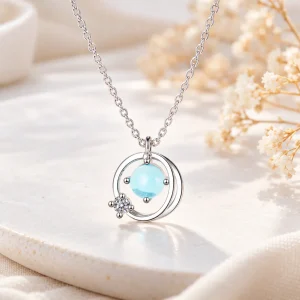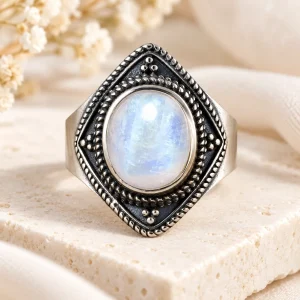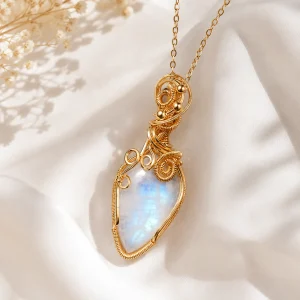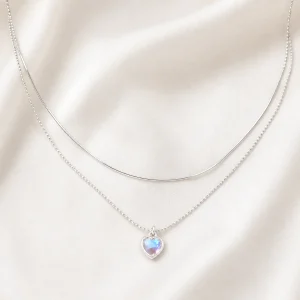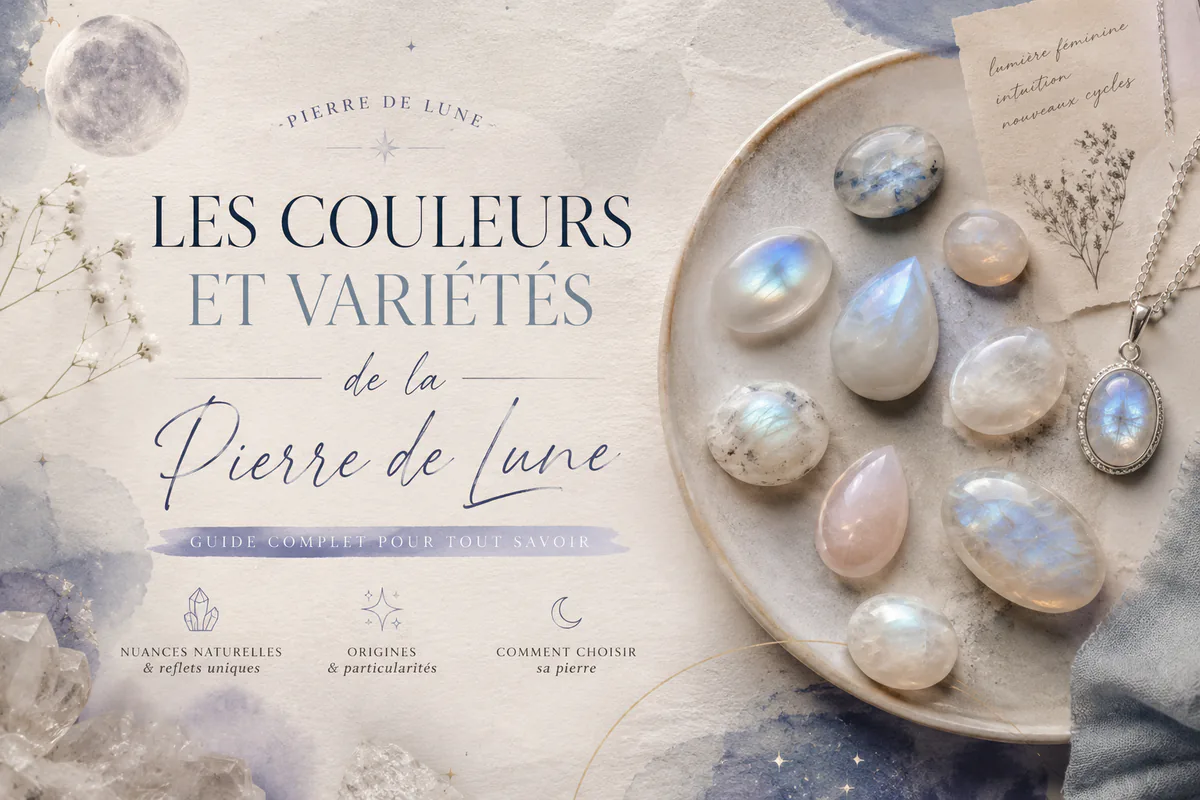
Moonstone colours and varieties
White, grey, peach, pink, orange, blue, rainbow, black. Eight colours under one name, but not one mineral: two of them are not even moonstone in the strict sense. Here is what actually sets them apart, what each one costs, and how to choose yours.
I choose my cabochons one by one, and this page is the sorting I do in the workshop, written down in plain terms. Some of these colours are worth the same, some are not, and two of them are sold under a name that is not really theirs. I say so, even at the cost of a dent in part of my own catalog.
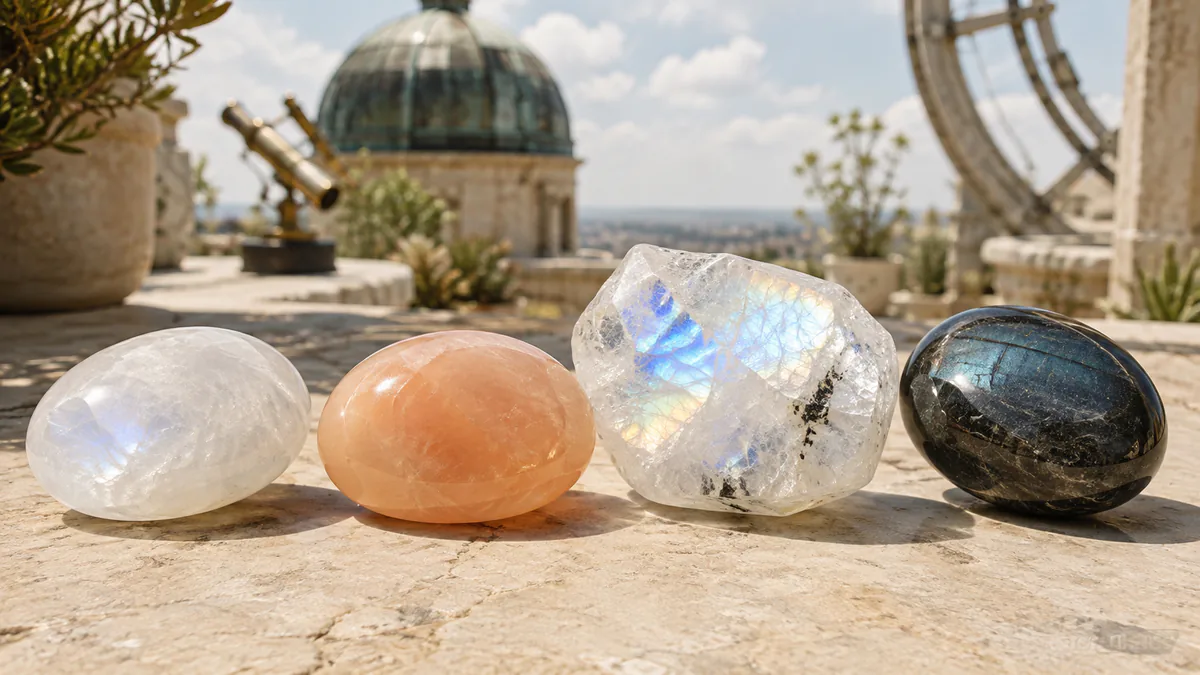
The short version, if you are in a hurry
- The colour of the body and the colour of the sheen are two different things. A peach-bodied stone can have a silvery sheen. That is the first thing to understand, and nobody explains it.
- White is the classic: translucent body, blue veil. This is adularia, the one that gave its name to all the others.
- Blue is the most expensive: colourless body, deep centred blue. The historic deposit is running out.
- Rainbow and black are labradorites, not adularia. Cousins, not sisters.
- Peach, pink and orange get their tint from iron oxide. They are affordable, and make good first stones.
- Be wary of bold colours. A purple, turquoise or bright green moonstone is dyed, or it is glass.
The eight colours in one table
The prices are orders of magnitude per carat, on a loose stone, for decent to fine quality. They move from year to year and are not a price list.
| Colour | Mineral species | Sheen | Price per carat |
|---|---|---|---|
| White | Orthoclase (adularia) | Diffuse blue veil | €4 to €40 |
| Blue | Orthoclase (adularia) | Deep centred blue | €50 to €500 |
| Grey | Orthoclase (adularia) | Silvery to bluish | €3 to €20 |
| Peach | Orthoclase (adularia) | Silvery, sometimes golden | €2 to €15 |
| Pink | Orthoclase (adularia) | Soft silvery | €2 to €15 |
| Orange | Orthoclase (adularia) | Warm silvery | €2 to €12 |
| Rainbow | Labradorite | Multicolored flashes | €3 to €25 |
| Black | Labradorite | Flashes on a dark ground | €3 to €25 |
One note before going into detail. In this table, the column that matters is not the price, it is the species. Two rows out of eight change mineral, and that is what most shops leave out.
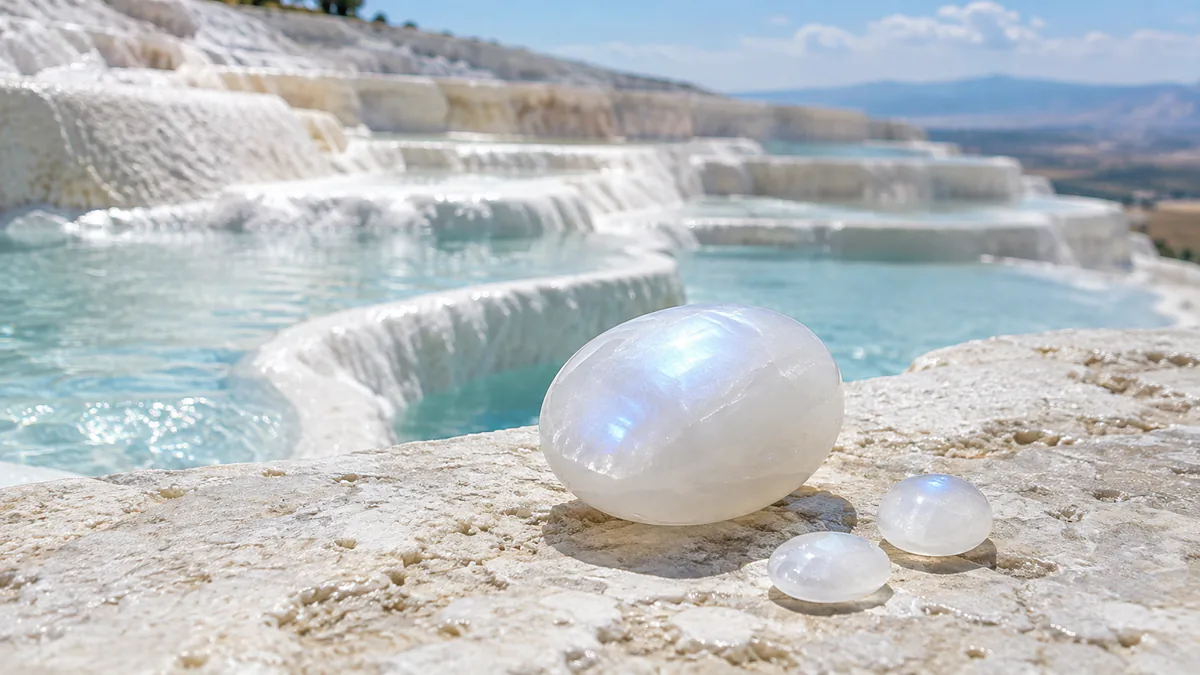
White, the classic
A translucent, almost colourless body, crossed by a blue veil that seems to float below the surface. This is adularia, a variety of orthoclase, and it is moonstone in the strict sense of the word.
What to look at, in order: the transparency of the body, which should tend towards colourless rather than milky; the intensity of the sheen; and above all its position, which should rise at the centre of the dome and not escape to an edge. A milky stone with a blurry sheen goes for a few euros per carat. The same stone translucent with a centred sheen is worth ten times more.
It is the most versatile variety: it goes with everything, is worn in any season, and does not date. If you buy only one, make it this one. The matching pieces are in the white moonstone collection.
Blue, the top of the range
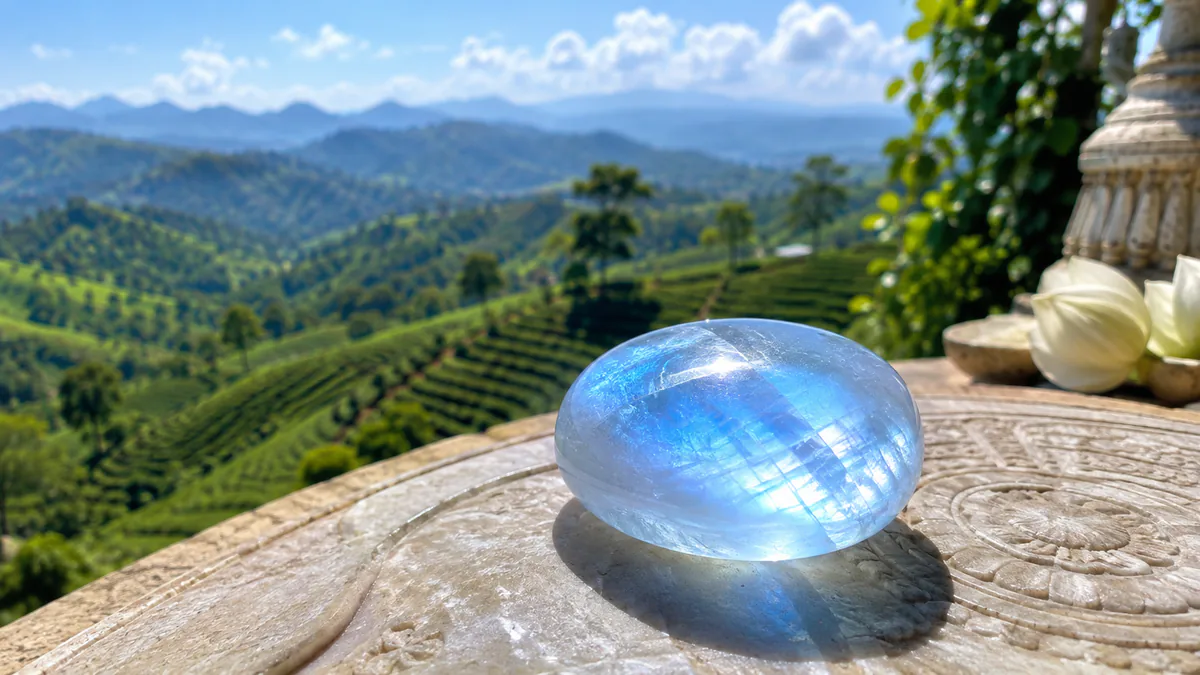
A perfectly colourless body, transparent as water, crossed by a deep, saturated blue that rises to the centre. It is the same species as white, an adularia, but pushed to its maximum on the three criteria that matter.
It historically comes from Sri Lanka, in particular the Meetiyagoda deposit, worked for more than a century and now running towards exhaustion. This scarcity is what explains the price gap with the other varieties: several tens to several hundreds of euros per carat, against a few euros for a peach.
Above five carats in gem quality, you enter collector piece territory. The detail is in blue moonstone, and the history of the deposit in moonstone from Sri Lanka.
Rainbow, which is not adularia
Here is the point I want in writing, even though it concerns pieces I sell myself.
Rainbow moonstone is a labradorite. A plagioclase feldspar, not an alkali feldspar. It is not the same mineral species as adularia, and even its crystal system differs: triclinic instead of monoclinic.
Its play of colour is labradorescence, a neighboring but distinct phenomenon from adularescence. Where adularescence gives a diffuse blue veil that glides smoothly, labradorescence gives broader, more colourful flashes, green, gold, sometimes purple, that light up in patches when you tilt the stone.
Is it a deception? No, the name has been standard in the gem trade for decades. It becomes one when a seller lets a buyer believe they are buying adularia at adularia prices. Here, the product page names the species.
The full distinction is in moonstone or labradorite, and the matching pieces in the rainbow collection.
Black, its dark sister
Same family, same phenomenon: black moonstone is also a labradorite. Its body is dark grey to black, and the flashes stand out there with a contrast white never has.
It is the variety with the most character, and by far the easiest to wear every day for anyone who finds white too discreet. It also works well as a men jewellery, which is rare in this stone family.
A practical point: on a dark body, inclusions show up much less. That makes the variety more forgiving to buy, but also harder to judge. Look at the extent of the flash rather than the cleanliness of the body.
The pieces are in the black moonstone collection.
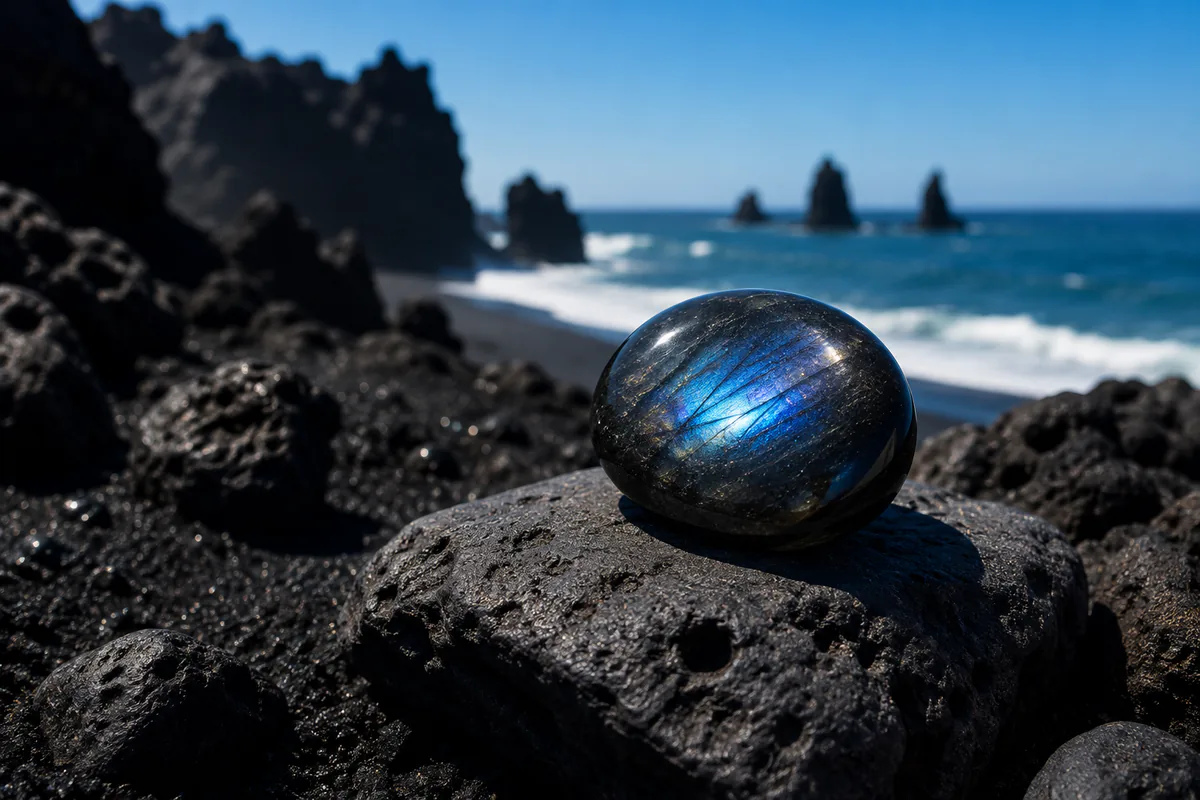
Peach, pink and orange
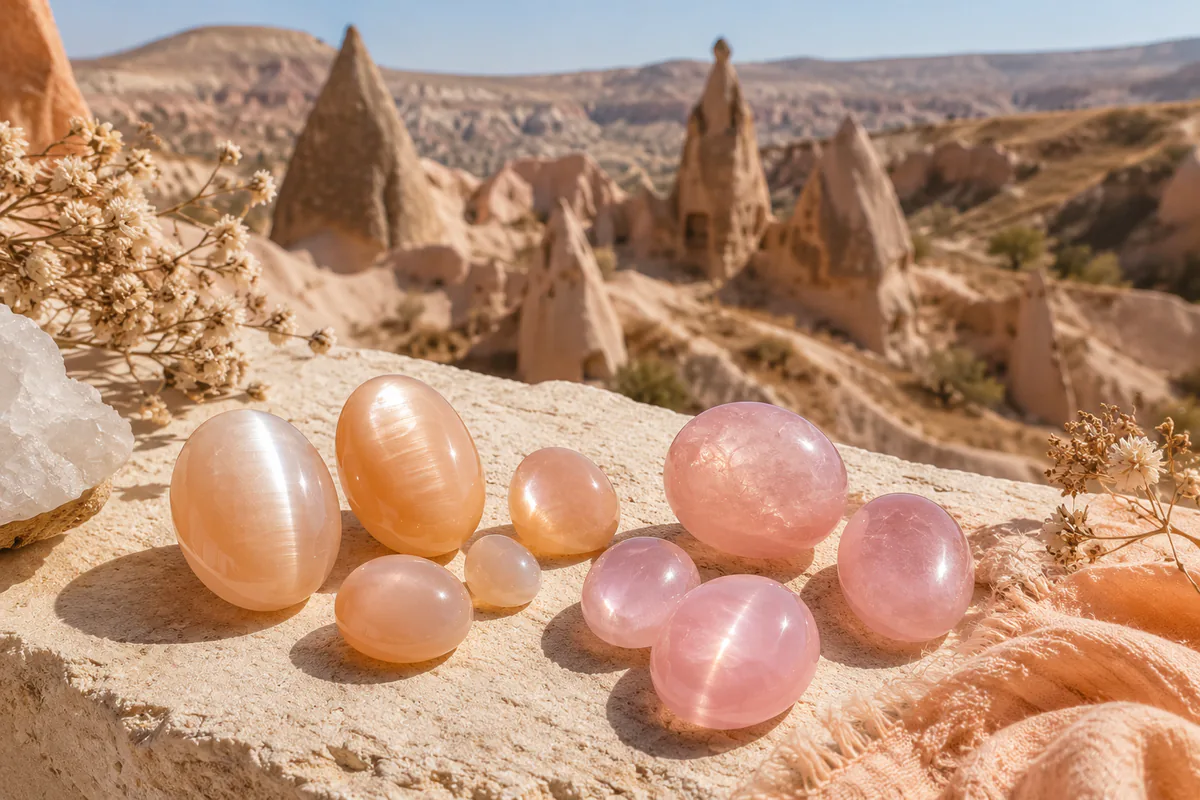
These three are genuine adularia, like white. Their warm tint comes from iron oxide inclusions scattered through the body of the stone.
And this is where the distinction announced above comes in, the one almost nobody explains: the colour of the body and the colour of the sheen are independent. On a peach stone, the body is warm but the sheen most often stays silvery, sometimes slightly golden. You will not get a peach-coloured sheen. Many buyers are disappointed for that one reason, simply because nobody explained it to them.
Peach is warm and bright, the most flattering on golden skin. Pink is gentler, between white and peach. Orange is the boldest of the three, and the rarest in fine quality.
All three are affordable, from two to fifteen euros per carat, which makes them excellent first stones: you learn to read a sheen without committing a budget. See pink moonstone and orange and peach.
Grey, green and the genuine rarities
Grey is an adularia with a smoky body, often with a very clear silvery sheen. It is underrated: for equal sheen quality, it costs noticeably less than a white and wears with a more understated elegance.
Green exists, in very small quantities, with a pale green body and a silvery sheen. It is rare enough that a boldly green stone is almost always something else: prehnite, aventurine, or dyed glass.
Two particular optical phenomena are worth knowing about, because they drive the price up when well expressed:
- Cat eye. A line of light crosses the dome and moves with the stone. It comes from very fine parallel inclusions.
- Asterism. Two lines cross and form a four-rayed star. Far rarer than cat eye, and striking on a dark stone.
These two effects show mostly on high-domed cabochons, and disappear on a stone cut too flat. One more reason to be wary of cabochons shaved down to save material.
Which one to choose for your skin tone and metal
What follows is workshop advice, not mineralogy. It is what I answer when someone asks me in the shop.
Fair skin, cool undertone. White and blue, set on silver or white gold. The blue veil extends the cool nuance of the metal, and the whole stays coherent. Grey works very well too, in a more understated way.
Fair skin, warm undertone. Peach and pink, on yellow or rose gold. The warm body of the stone picks up the tone of the metal, and the silvery sheen lightens it without fighting it.
Olive to golden skin. Peach and orange are stunning on yellow gold. Black creates a clean contrast that works particularly well.
Deep skin. White and rainbow stand out with an intensity they have on no other skin tone, because the contrast serves the sheen. This is where white is at its most striking.
Two simple rules to close. The metal matters as much as the stone: the same white looks cool on silver and creamy on yellow gold. And if you are unsure, choose white on silver: it is the combination that suits the widest range of skin tones, and the one that ages best.
On everyday wear, see how to wear moonstone. For finger size, the size guide.
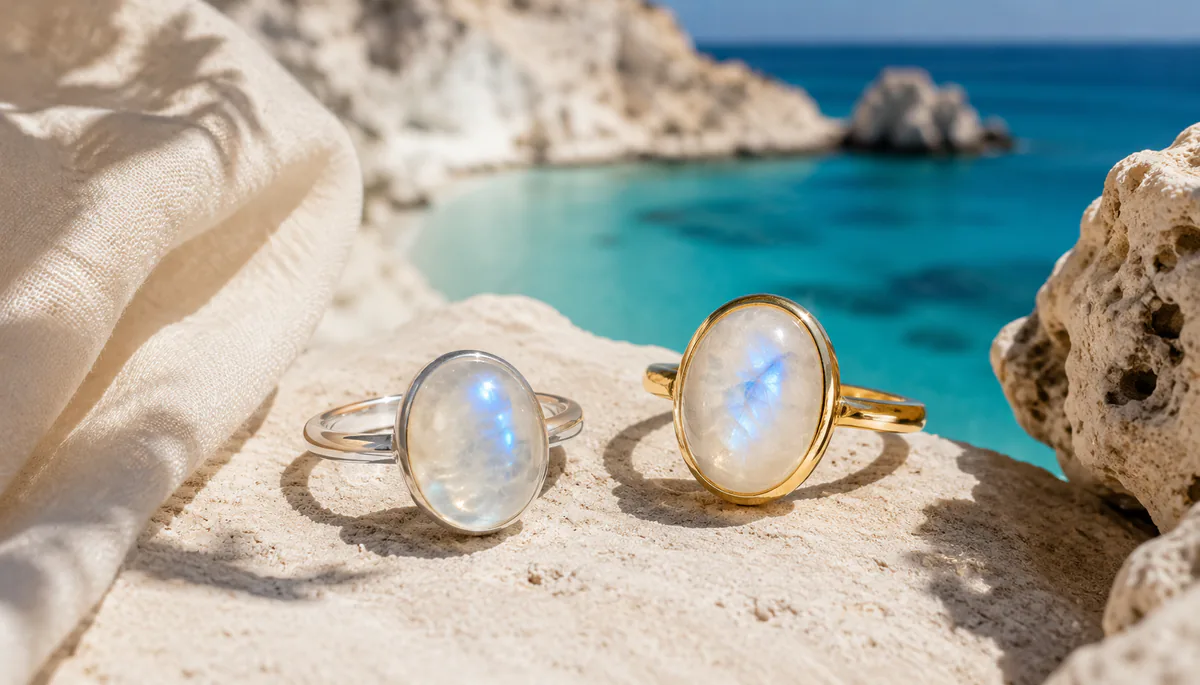
Gold and silver: the same stone, two finishes
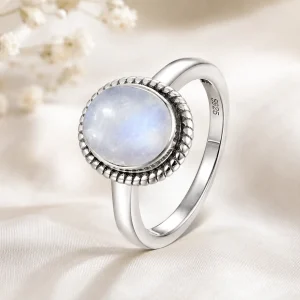
Three misconceptions to clear up
The first, already covered: rainbow and black are labradorites. It is not a detail of vocabulary, it is a different mineral species, with a different optical phenomenon and a different reference price.
The second: bold colours do not exist. A purple, turquoise, bright green or fuchsia moonstone is dyed, irradiated, or not moonstone at all. This family natural tints are soft and milky by nature, because they come from iron inclusions and not from pigments. A saturated, uniform colour should raise an immediate flag. The subject is covered in treated moonstone.
The third: the sheen does not follow the body. I repeat this because it is the most common disappointment. A peach moonstone does not have a peach-coloured sheen. A pink one does not have a pink sheen. The body carries the tint, the sheen stays silvery or bluish, whatever the body colour. Always look at photos from two angles before buying: it is the only way to see what the sheen actually does.
Frequently asked questions
What is the rarest moonstone colour?
Gem-quality blue, with a perfectly colourless body and a deep, centred blue. The Sri Lankan deposit that supplied it is running out, and above five carats it is a collector piece. Natural green is even rarer, but almost nobody wants it, so its price does not follow.
Is rainbow moonstone a real moonstone?
It is a real stone, but not a real adularia. It is a labradorite, a plagioclase feldspar. The trade name has long been accepted; what is not accepted is selling it at adularia prices without saying so.
Which moonstone colour should I choose for a first piece?
White set on silver. It is the combination that suits the widest range of skin tones, never goes out of style, and stays affordable as long as you do not demand perfect transparency. Peach is a good alternative on warm skin.
Why does not my peach moonstone have a peach sheen?
Because the body and the sheen are independent. The warm tint comes from iron oxide inclusions in the body; the sheen comes from microscopic lamellae and stays silvery or bluish regardless of the body colour. Your stone is normal.
Is there a purple or neon green moonstone?
No. This family natural tints are soft, milky, never saturated. A bold, uniform colour signals a dye, an irradiation, or another stone entirely. Be especially wary of cheap multicolored lots.
Does colour change the price?
A lot. A decent peach goes for a few euros per carat, a fine blue climbs to several tens, even hundreds. But at equal colour, it is the quality of the sheen that makes the biggest difference: an exceptional white is worth more than a mediocre blue.
What is cat eye moonstone?
A stone whose parallel inclusions focus light into a single line that crosses the dome and moves with the stone. It is a phenomenon distinct from adularescence, which drives the price up when it is sharp and well centred. It requires a high-domed cabochon.
Can you mix several colours on the same piece?
Yes, and it is even a nice way to show off the family. The only pitfall is metal contrast: mixing white and peach forces a choice between silver and gold, or neither finds its place. Choose the metal first, the stones after.
Where to go next
This page is the crossroads of the varieties. Depending on what you are looking for:
- The collections: white, rainbow, black.
- The varieties in detail: blue, pink, orange and peach.
- Understanding the sheen: adularescence, the mineral data sheet, moonstone or labradorite.
- Buying without making a mistake: recognising a genuine stone, judging quality, the price.
- The bigger picture: the complete guide to moonstone.
And if you simply want to see the colours set, everything is in the shop. Torn between two varieties? Write to me, I answer myself within 48 working hours, and I would rather tell you a stone is not right for you than sell it to you anyway.
My sources
The mineralogical classification, orthoclase versus plagioclase, and the mechanisms of adularescence and labradorescence follow the public data sheets of the GIA, Mindat and the International Gem Society. The price ranges come from my own purchases and from readings on the trading places: there is no official price list for this stone. The skin tone and metal advice is my own, and reflects only my workshop eye.
Last updated: August 19, 2026. If you find a mistake in this article, tell me about it: I correct it and I note it.
✦ À porter, à offrir
Découvrez mes créations