The shop
About Melissa Moon
Who chooses your jewelry, where it comes from, with which stones. And above all what I refuse to do, because that is still the question that tells you the most about a shop.
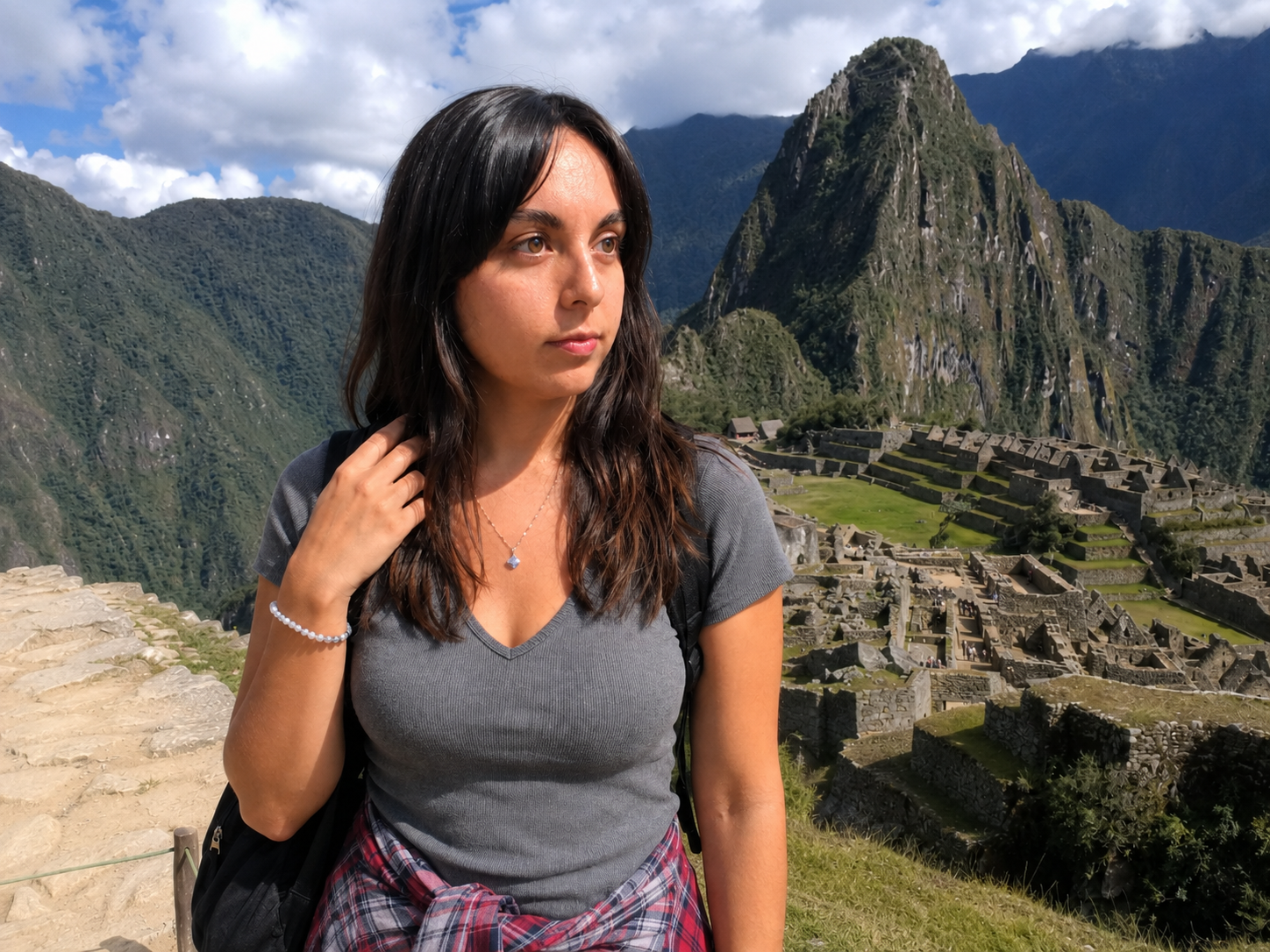
Peru, where I come from.
Where I come from
My name is Melissa, and the home page already gave you the short version. Here is the one I do not tell everyone.
My grandmother collected stones. Not to sell them, not to collect them as a set, just because she found them beautiful. She kept a tin box on the mantelpiece, and you had to ask before opening it. When she took one out, she would turn it in the light for a full minute before deciding whether it deserved to be kept. She never explained what she was looking at. She would hand it to me, and I would try.
To her, moonstone was a piece of fallen moon. I know today that it is a feldspar, and that its sheen comes from microscopic layers that scatter blue light. I like both versions, and I do not think the second one spoils the first. I have found almost all her stories again in the old myths, written by people she had never read.
We left for Estonia when I was fifteen. I never saw that sky again, and the tin box stayed behind. My grandmother is gone. Choosing stones is my way of still turning one in the light, every morning, wondering what she was looking at.
A shop run by two
That is not a figure of speech. There are two of us, in Tallinn: I choose the jewelry, my partner keeps the books. I do not make it: it comes from partner workshops. Here is what guides my choices.
- Named stones Every listing says which stone it is. When a supplier cannot name theirs, I pass.
- Inclusions A real moonstone almost always shows some, the fine ladder-like cracks called "centipede" fractures. An imitation is too clean. That is one of the six tests.
- Bezel settings first Moonstone splits on impact. A closed setting protects it better than prongs, which is why I favor bezel settings.
- 925 sterling silver It is the expected setting for this stone, and it takes a bezel setting without fatigue. When a piece is gold-plated, it says so on the listing.
- A partner who keeps the books He is Belgian, and he reads every listing before it goes live.
How I choose a stone
The designs I turn down are not bad pieces. They are decent pieces that any shop would sell without a second thought. I leave them out anyway, and that refusal is exactly what shows up in the price of a moonstone piece.
The sheen has to move
It is called adularescence. If the glow stays fixed when you tilt the stone, it is not moonstone. It is the one test no imitation can fake.
And it has to be centred
A sheen pushed to one edge of the dome disappears the moment the piece is worn. It is the criterion almost nobody checks, and it accounts for half the price gap between two stones. The six criteria in detail.
I want to know where it comes from
Each source gives a recognisable sheen, and a seller who cannot name theirs does not know what they are selling either. When the answer is "Asia", I pass. I have written up what the source changes.
What I stopped selling
I started like most people, buying what sold. Here is what I removed from the catalogue, in the order I understood it.
- Opalite. Opalescent glass, sold everywhere under the stone's name. I offered it in my first months, in good faith, because my supplier called it "white moonstone". A customer wrote to tell me. I pulled it all that same evening, and eventually wrote up how to tell them apart.
- Dyed quartz sold as "rainbow". A quartz coated with a film that irises. It shines a lot, does not last, and has nothing to do with the stone.
- Rough and tumbled stones. Not because they are bad, but because I sell jewelry and would not know how to choose them. If you are after one anyway, I still explain what changes with an uncut stone.
- Anything that promises to heal. I have been asked for "weight-loss" bracelets. The answer is no, and it will stay no. A piece of jewelry cures nothing. What tradition lends this stone, I write in the conditional, and set apart.
M.
One last point I keep repeating even though it earns me nothing. In mineralogy, adularia is an orthoclase; the rainbow and the black varieties belong to the plagioclases and are called labradorite. The trade files everything under the same label. I do sell all three, and I say so anyway, because a customer who learns it elsewhere will wonder what else I kept from her. The detail is in the mineral data sheet, and the kinship with sunstone is worth the detour.
What happens after your order
Nothing is kept in stock. Each piece is ordered from a partner workshop after you place your order, then shipped to you directly.
I order it
Your piece is ordered from the partner workshop that makes it. Most often in a bezel setting: the metal is folded all the way round the stone, which protects it, because this stone breaks without scratching.
It ships to you
Directly from the partner workshop, with tracking. For care, mostly remember what not to do: no salt, no ultrasound, no hot water.
You receive it
About two weeks, tracking included. If the size is wrong or the stone does not speak to you, send it back within fourteen days of receiving it: I will not ask why. Timelines and returns in detail.
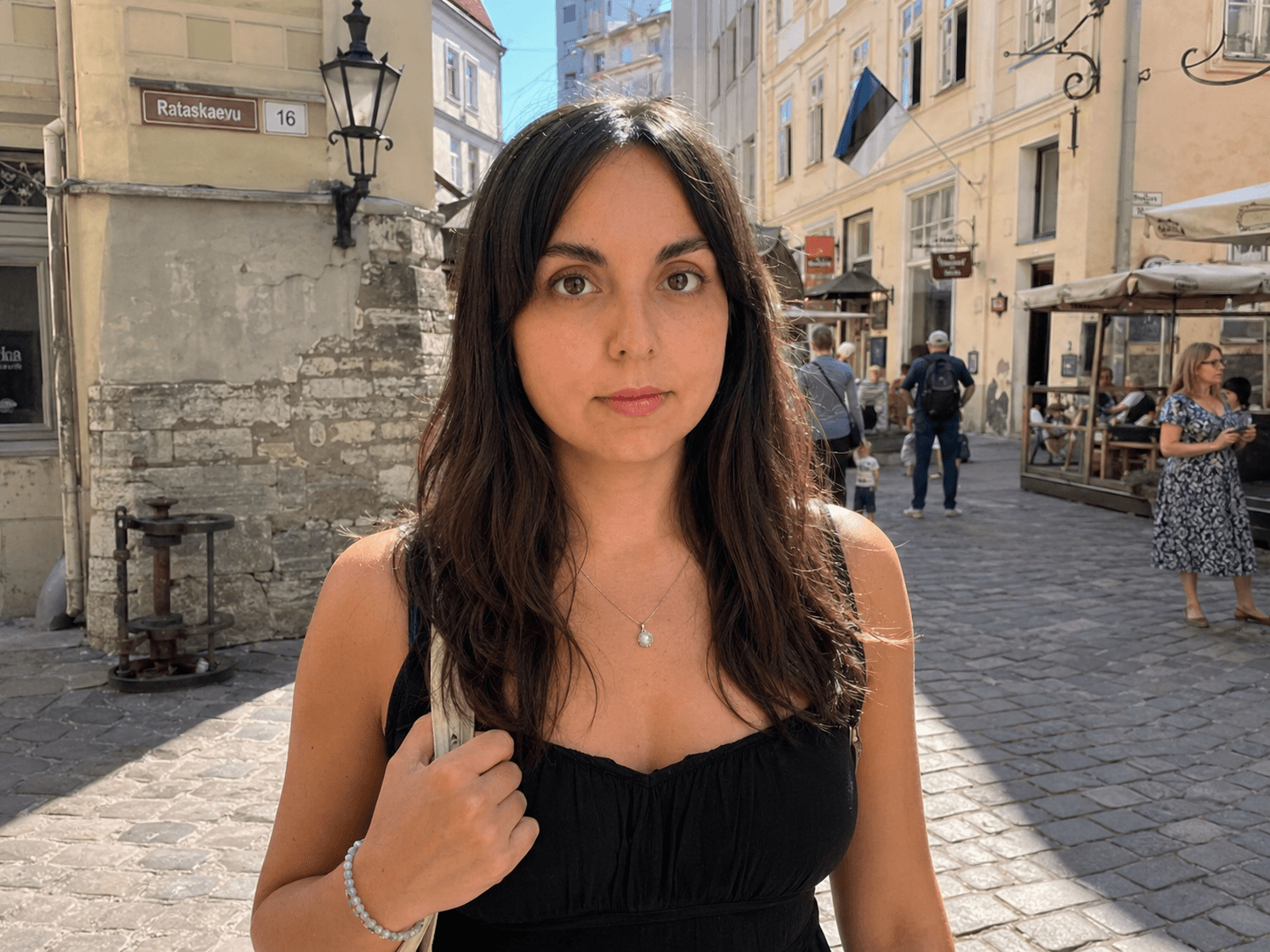
Tallinn, in winter. Night falls at three in the afternoon and does not let up.
Why Tallinn, and why I say so
Plenty of shops write "French creations" when nothing is made in France. I would rather name the place plainly: the shop is based in Tallinn, Estonia, and your jewelry ships directly from the partner workshops that make it.
It is a small operation. There are two of us, and no team behind us. That means longer lead times than a big brand, and someone who genuinely answers when you write.
If you are wondering how to tell a serious shop from the rest, I wrote up the questions worth asking in where to buy moonstone jewelry. It applies to me too.
Melissa
See the jewelry
Five families of jewelry, three varieties of stone. And if you would rather understand what you are buying first, it is all explained for free on the journal.
The properties attributed to stones come from crystal healing traditions. They are neither a diagnosis nor a treatment, and they never replace medical advice. In case of a health problem, consult a professional.