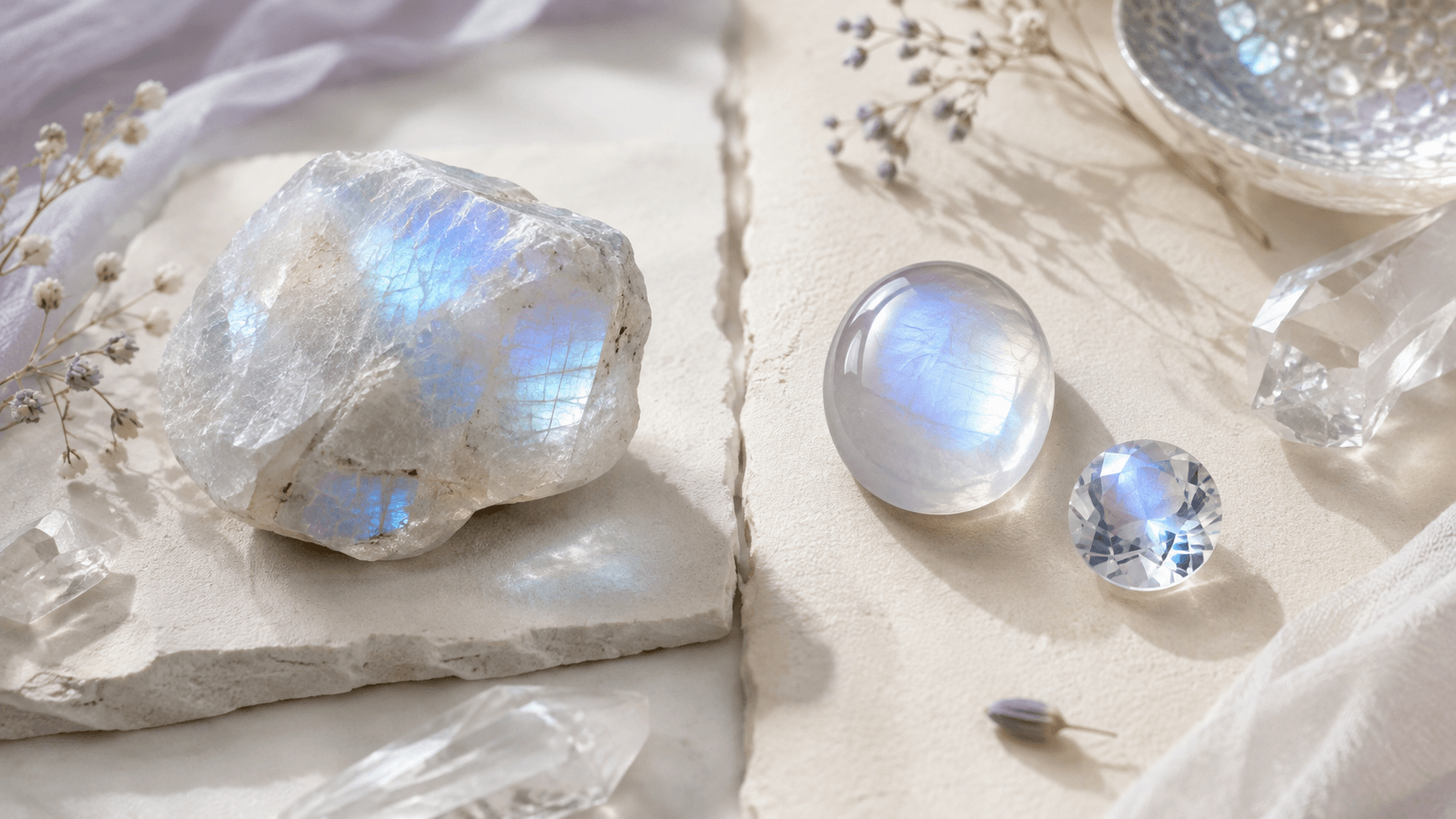
Raw moonstone or cut: which to choose
A raw moonstone almost never shows its sheen. It is the cutting that makes it appear, and that is why cutting costs what it costs. Here is what each form actually reveals, and which one to pick depending on what you plan to do with it.
I do not sell raw stones. I could, they sell well, but it is not my trade: I choose cabochons that are already cut and I set them. This page is therefore written from the other side of the bench, from someone who buys cut stones every week and learned, by getting it wrong, what a rough pebble promises and what it does not deliver.
The short version, if you are in a hurry
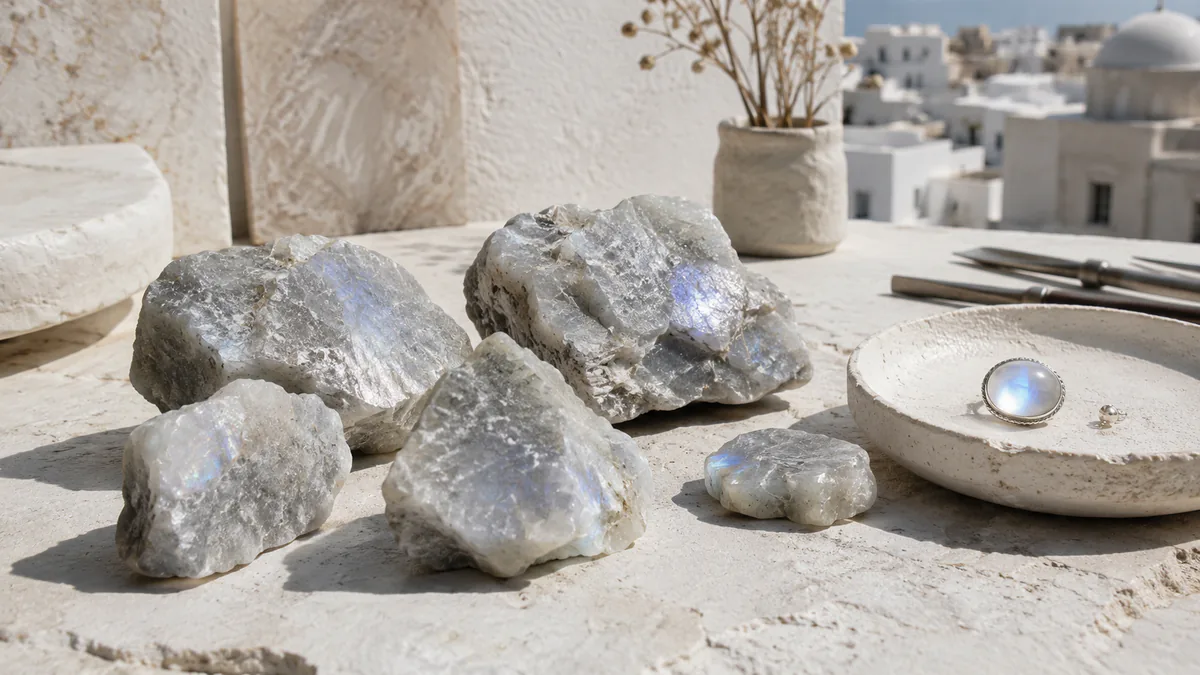
- The word "raw" covers three very different things: the stone straight out of the ground, the pebble tumbled and polished in a barrel, and the roughed-out preform. Most "raw" stones sold in shops are actually tumbled.
- A genuinely raw stone does not show its sheen. Adularescence needs a polished surface and a precise orientation. Without them, you have a grey pebble.
- It is the cutting that creates the sheen, not the material alone. Two cabochons from the same block can be worth ten times less than one another.
- Cutting consumes 50 to 70% of the material. That is the first reason for the price gap, before the labor is even counted.
- For jewellery, a cabochon is mandatory. For decoration or a collection, raw holds up very well.
- A raw stone is harder to authenticate, because the sheen test, the most reliable of all, does not work on it.
Rough, tumbled, preform: three words, three things
Before comparing, you need to name things. The word "raw" gets used for three states that do not carry the same price, nor the same interest.
Genuinely raw. The mineral as it comes out of the deposit, with its matrix, its natural faces and its fractures. It is dull, often grey or beige, and nothing spectacular. It is the state in which a lapidary buys it.
Tumbled. A fragment run for several days in a barrel with increasingly fine abrasives, until it becomes a smooth, shiny pebble. This is what the vast majority of shops sell under the label "raw moonstone," and it is a stretch of the word: the stone has been worked, simply not cut.
The preform. A roughed-out piece, already oriented by the lapidary but not yet polished, ready to become a cabochon. Rarely found for retail sale.
This distinction is not pedantry. A tumbled stone sometimes shows a little sheen, because it is polished. A genuinely raw stone does not. If someone sells you "raw" that shines, you are buying tumbled, and there is nothing wrong with that as long as the price follows.
Why a rough stone almost never shows its sheen
This is the point that decides everything else, and it is counterintuitive.
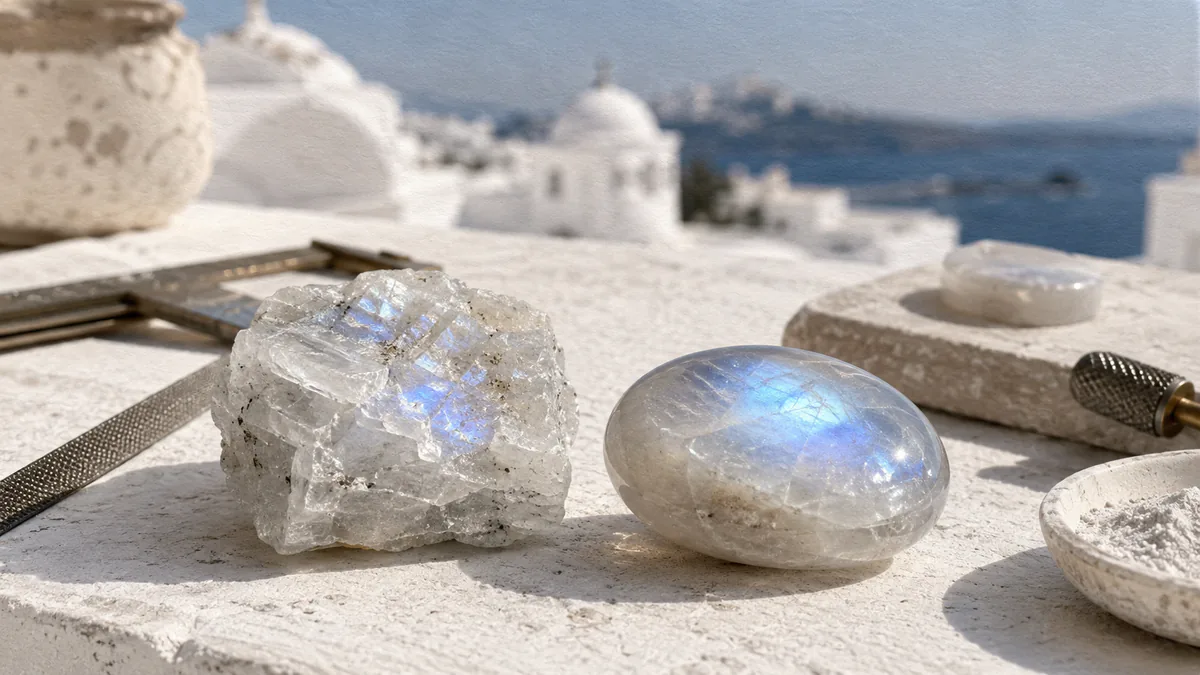
Adularescence comes from alternating microscopic lamellae inside the crystal, which scatter light and send it back out as a bluish veil. For that veil to be visible, two conditions have to be met, and a raw stone meets neither.
A surface that lets light in. On a raw stone, the surface is rough and diffuse: light scatters before it even reaches the lamellae. It is the same effect as frosted glass. The phenomenon happens inside, but nobody sees it.
Correct orientation. The lamellae have a direction. The sheen only rises if you look at the stone from the right angle relative to that plane. A raw pebble shows you whatever face chance gave it when it broke, and that is almost never the right one.
Practical consequence: buying a raw moonstone for its sheen is a misunderstanding. At best you will see a milky glow by wetting it, because water temporarily smooths the surface. That is in fact the gesture every buyer of rough material makes at a gem show: they wet the stone. Once dry, it goes dull again.
The full mechanism is in the article devoted to adularescence.
What the lapidary does, and why it changes everything
A lapidary work comes down to three decisions, and none of them is reversible.
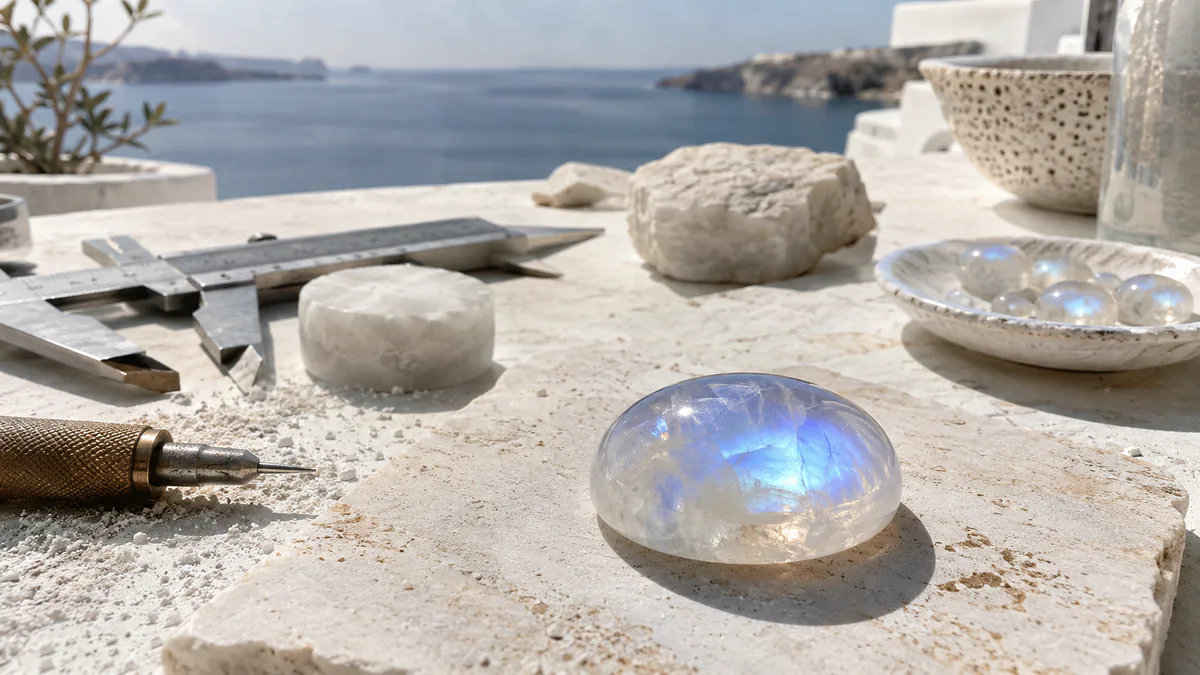
Orientation. They locate the plane of the lamellae and cut perpendicular to it, so the veil rises at the centre of the dome. Badly oriented, the same block gives a dull stone or a sheen escaping over an edge. It is the most important decision, and it is made before the first touch of the grinding wheel.
The height of the dome. Adularescence needs thickness to develop. A domed cabochon lets it show; a flattened cabochon, cut to save material or to fit a flat setting, partly kills it. It is a common flaw on cheap stones, and it cannot be fixed afterward.
The polish. It makes the surface optically neutral, which lets light enter and leave without being scattered. It is the polish that "lights up" the stone.
These three decisions explain something many buyers find unfair: two cabochons from the same pebble can be worth ten times less than one another. The material is not everything. The hand counts just as much, and that is what you pay for in a cut stone.
Rough or cut, the decision table
| Criterion | Raw or tumbled | Cut cabochon |
|---|---|---|
| Visible sheen | Rare, weak | Yes, that is its purpose |
| Price per gram | Low | High |
| Authentication | Difficult | Easy, the sheen is enough |
| Setting in jewellery | Not advised | Made for it |
| Decor, collecting | Very good | Possible, less telling |
| Impact resistance | Identical | Identical |
| Loss during cutting | Not applicable | 50 to 70% of the material |
Which one to choose depending on the use
For a piece of jewellery
The cabochon, without hesitation. A raw stone set into jewellery causes three problems: it does not show its sheen, so the whole point of the stone disappears; its sharp edges catch on clothing and chip; and drilling, when there is a hole, opens a direct path into the cleavage planes.
The raw-set pieces you do see around are almost always tumbled stones held in an open prong setting, which stays coherent. But then you are buying a shape, not an optical phenomenon.
On choosing the setting, see bezel or prong setting, and on how to wear it how to wear moonstone.
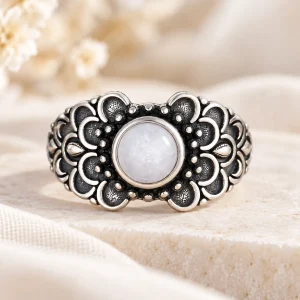
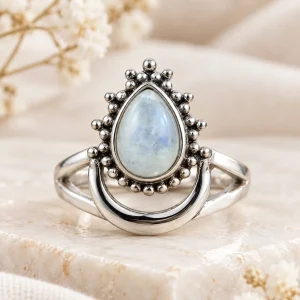
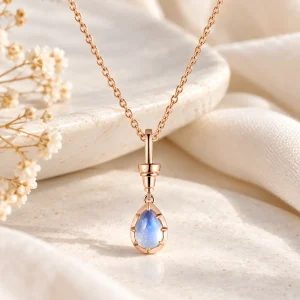
What a well-oriented cabochon gives you




For crystal healing
Here I switch registers, and I flag it. Crystal healing traditions set no hierarchy between raw and cut: some prefer the raw stone for its untouched look, others the cut one. Neither preference relates to any measurable property of the stone.
What I can say, on the other hand, has to do with your wallet: if the use is a stone you hold in your hand or set on a nightstand, a tumbled stone does exactly the same job as a cabochon ten times the price. Get the tumbled one.
These correspondences belong to crystal healing, an approach founded on traditions and beliefs. They are not a medical claim and never replace the advice of a health professional. Read the full disclaimer.
For decor or a collection
A genuinely raw stone, with its matrix and its natural faces, tells a story a cabochon does not: where the stone comes from, and what it looks like before anyone touches it. On a shelf or in a display case, it has the most to say.
For a collector, a rough specimen with a visible twin or an interesting mineral association is worth far more than an ordinary cabochon. You are not collecting the same thing.
For learning to look
Here is the advice I give most often, and it costs almost nothing. Buy both. A tumbled stone for a few euros and a decent small cabochon, set side by side on a windowsill. In one afternoon you will understand adularescence better than by reading ten articles, this one included.
It is also the best way to train your eye before a more committed purchase. The six criteria that make quality are in judging the quality of a moonstone.
The catch: a rough stone is far harder to authenticate
This is the point rough-stone sellers never bring up, and it is a serious one.
The most reliable test to recognise moonstone is to tilt the stone and watch whether the sheen moves. This test does not work on a rough stone, since it has no visible sheen. You lose your best tool at the exact moment you would need it most.
What is left: density, but that needs a hydrostatic balance; observing the cleavage planes, which should look clean and pearly on a fresh break; and the absence of round bubbles, which would sign glass.
The most frequent substitutes on the rough-stone market are white albite, milky quartz and calcite, all very close in appearance when dull. Calcite gives itself away easily: its hardness is 3, it scratches under a knife point, where moonstone at 6.5 resists.
The full method is in how to recognise genuine moonstone, and the mineral data sheet in the properties of moonstone.
Rough is not more solid
It is a stubborn misconception: a raw stone would be tougher because it was not "weakened" by cutting. It is false.
Cleavage is a property of the crystal atomic structure, not of its outward shape. A raw stone has exactly the same breaking planes as a cabochon cut from the same block. It is often even more vulnerable, for two reasons: its sharp edges concentrate stress, and it still carries the microfissures created by extraction, which cutting would have removed.
The subject is developed in is moonstone fragile.
What it costs, and why cut is not "more expensive"
A tumbled stone goes for a few euros a piece. A decent cabochon starts around a few euros per carat and climbs fast with the quality of the sheen.
The gap looks enormous as long as you think per gram. It explains itself once you look at what happens between the two.
Material loss. Cutting a cabochon commonly consumes half to more than two thirds of the starting rough. The rest becomes dust and offcuts.
Sorting. Out of a batch of rough, only a small fraction will give stones with a clear, centred sheen. The price of the good stones carries the price of all the others.
The work. Orienting, roughing out, doming, polishing. A hand operation, on a material with perfect cleavage that forgives little.
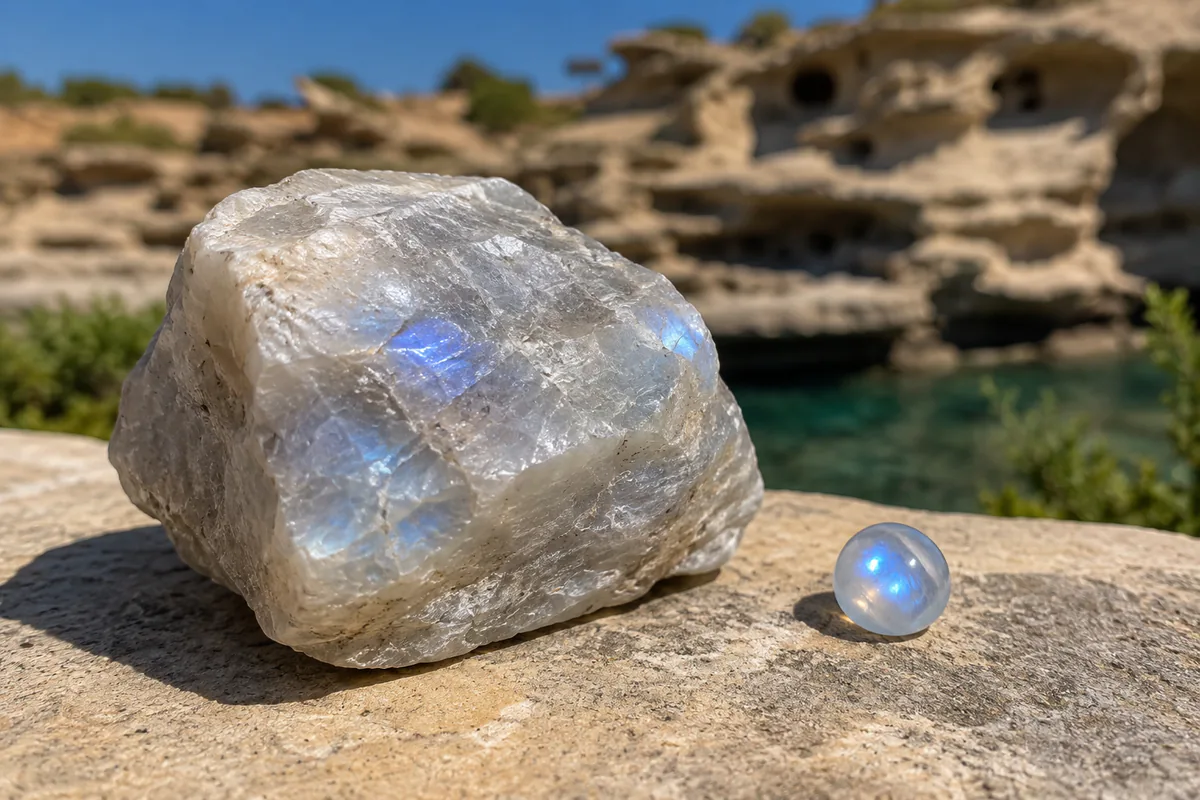
In other words, a cabochon is not a tumbled stone with a markup added: it is the survivor of a selection process. The full breakdown is in the price of moonstone.
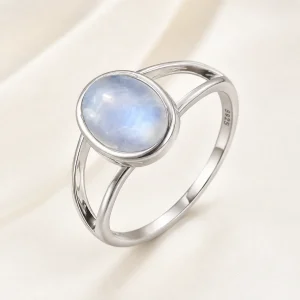
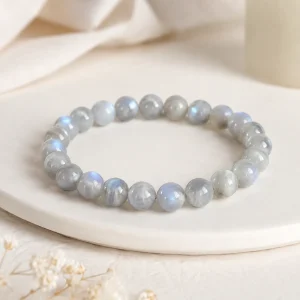
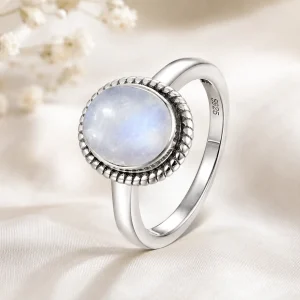
Cabochons I kept
Frequently asked questions
Does raw moonstone show any sheen?
Very rarely, and never clearly. Adularescence needs a polished surface and a precise orientation, two conditions a raw stone does not meet. At best you will see a milky glow by wetting it, because water temporarily smooths the surface. Once dry, it goes dull again.
Can you cut a raw moonstone yourself?
Technically yes, with a cabochon grinder and a lot of patience. But perfect cleavage makes the material unforgiving: a poorly placed pressure splits the stone open. And orientation, which decides everything, cannot be improvised. Expect to lose several stones before your first success.
Is raw moonstone more "pure" or more natural?
It is less processed, that is all. Cutting neither adds nor removes anything from the composition: it is polishing and shaping. A tumbled stone, often sold as raw, has in fact spent several days in a barrel with abrasives.
How do you recognise genuine raw moonstone?
It is harder than on a cut stone, since the sheen test does not apply. Look at the cleavage planes on a fresh break: they should be flat and pearly. Check that no round bubbles appear, which would sign glass. And test the hardness against a blade: calcite, a frequent substitute, scratches immediately.
Can you drill a raw moonstone to make a pendant?
It is possible but risky. Drilling opens a direct path into the cleavage planes and often cracks the stone, either right away or at the first impact. If you are set on it, prefer a setting that holds the stone without drilling it.
Why is my raw stone grey and dull?
Because that is the normal look of unpolished moonstone. The blue veil only appears with an optically smooth surface and a correct orientation. Your stone has nothing wrong with it: it is simply in its original state.
Raw or cut as a gift?
Cut, in almost every case. Raw needs an explanation to be appreciated, which makes it a double-edged gift. A set cabochon speaks for itself. The exception: someone who collects minerals, for whom a fine raw specimen is worth far more than a piece of jewellery.
Where to go next
- Understanding the sheen: adularescence, the mineral data sheet, how moonstone forms.
- Buying without making a mistake: recognising a genuine stone, judging quality, the price.
- Where it comes from: the deposits, the Sri Lankan deposit.
- The bigger picture: the complete guide, the colours and varieties.
I only sell cut stones, hand set in my workshop. Everything is in the shop. Torn between two stones? Write to me: I answer myself within 48 working hours.
My sources
The mineralogical data, cleavage, hardness and the mechanism of adularescence, follow the public data sheets of the GIA, Mindat and the International Gem Society. The orders of magnitude for cutting loss and sorting are what my two cabochon suppliers report to me, and match what is commonly said in the trade: there is no published statistic on the subject. The rest comes from my own workshop.
Last updated: August 19, 2026. If you find a mistake in this article, tell me about it: I correct it and I note it.
✦ À porter, à offrir
Découvrez mes créations