Moonstone bracelets
From 8 mm beads to silver bangles, by way of nine multi-stone pairings. The format where the material is faked most easily, so here you get the test before the catalogue.
Showing all 30 results
-
-20 %

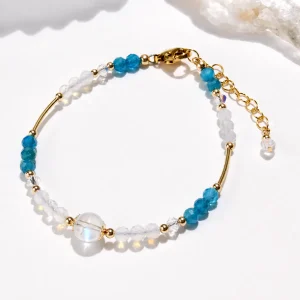
Apatite and moonstone bracelet
Original price was: 34,90 €.27,90 €Current price is: 27,90 €. Choose options -
-20 %
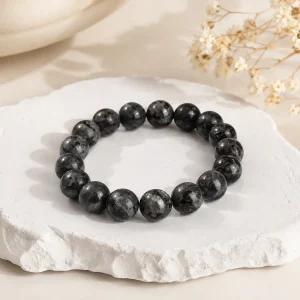
Black moonstone bracelet
Original price was: 34,90 €.27,90 €Current price is: 27,90 €. Choose options -
-20 %
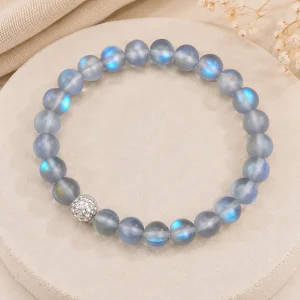
Blue moonstone bracelet
Original price was: 32,90 €.25,90 €Current price is: 25,90 €. Choose options -
-20 %
Gold moonstone bracelet
Original price was: 47,90 €.37,90 €Current price is: 37,90 €. Choose options -
-20 %
Iridescent moonstone tablet bracelet
Original price was: 171,90 €.136,90 €Current price is: 136,90 €. Choose options -
-20 %
Labradorite and moonstone bracelet
Original price was: 27,90 €.21,90 €Current price is: 21,90 €. Choose options -
-20 %
Men’s moonstone bracelet
Original price was: 24,90 €.19,90 €Current price is: 19,90 €. Choose options -
-20 %
Moonstone and amethyst bracelet
Original price was: 34,90 €.27,90 €Current price is: 27,90 €. Choose options -
-20 %
Moonstone and carnelian bracelet
Original price was: 22,90 €.17,90 €Current price is: 17,90 €. Choose options -
-20 %
Moonstone and malachite bracelet
Original price was: 27,90 €.21,90 €Current price is: 21,90 €. Choose options -
-20 %
Moonstone and rose quartz bracelet
Original price was: 32,90 €.25,90 €Current price is: 25,90 €. Choose options -
-20 %
Moonstone and sunstone bracelet
Original price was: 24,90 €.19,90 €Current price is: 19,90 €. Choose options -
-20 %
Moonstone anklet
Original price was: 32,90 €.25,90 €Current price is: 25,90 €. Choose options -
-20 %
Moonstone bracelet on a sliding cord
Original price was: 40,90 €.31,90 €Current price is: 31,90 €. Choose options -
-20 %
Moonstone bracelet, a single cabochon
Original price was: 90,90 €.71,90 €Current price is: 71,90 €. Choose options -
-20 %
Moonstone cord bracelet
Original price was: 37,90 €.29,90 €Current price is: 29,90 €. Choose options -
-20 %
Moonstone crescent and zircon bracelet
Original price was: 43,90 €.34,90 €Current price is: 34,90 €. Choose options -
-20 %
Moonstone double chain bracelet
Original price was: 56,90 €.44,90 €Current price is: 44,90 €. Choose options -
-20 %
Moonstone fertility bracelet
Original price was: 24,90 €.19,90 €Current price is: 19,90 €. Choose options -
-20 %
Moonstone lace bangle, double open cuff
Original price was: 171,90 €.136,90 €Current price is: 136,90 €. Choose options -
-20 %
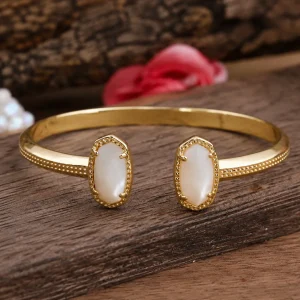
Moonstone medallion bangle, rigid cuff
Original price was: 71,90 €.56,90 €Current price is: 56,90 €. Choose options -
-20 %
Moonstone star bracelet, fine chain
Original price was: 43,90 €.34,90 €Current price is: 34,90 €. Choose options -
-20 %
Moonstone teardrop bracelet, twisted links
Original price was: 39,90 €.31,90 €Current price is: 31,90 €. Choose options -
-20 %
Pearl and moonstone bracelet
Original price was: 44,90 €.35,90 €Current price is: 35,90 €. Choose options -
-20 %
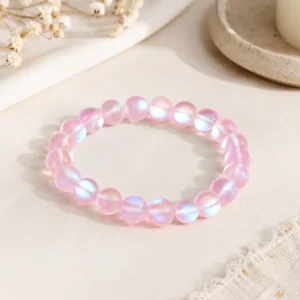
Pink moonstone bracelet
Original price was: 22,90 €.17,90 €Current price is: 17,90 €. Choose options -
-20 %
Rainbow moonstone bracelet
Original price was: 27,90 €.21,90 €Current price is: 21,90 €. Choose options -
-20 %
Real moonstone bracelet, 8 mm beads
Original price was: 27,90 €.21,90 €Current price is: 21,90 €. Choose options -
-20 %
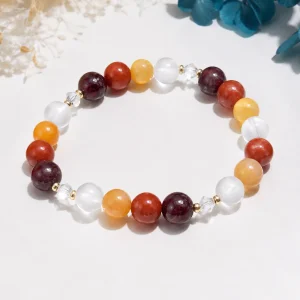
Red jasper and moonstone bracelet
Original price was: 37,90 €.29,90 €Current price is: 29,90 €. Choose options -
-20 %
Sterling silver moonstone bangle
Original price was: 37,90 €.29,90 €Current price is: 29,90 €. Choose options -
-20 %
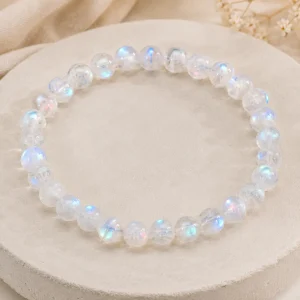
White moonstone bracelet
Original price was: 34,90 €.27,90 €Current price is: 27,90 €. Choose options
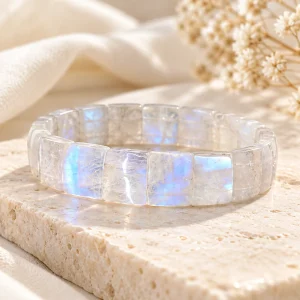
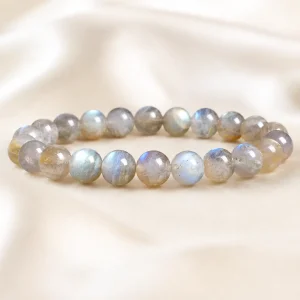
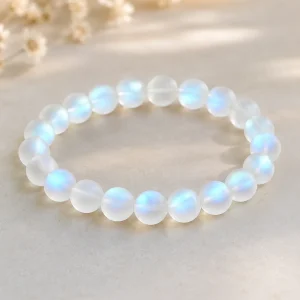
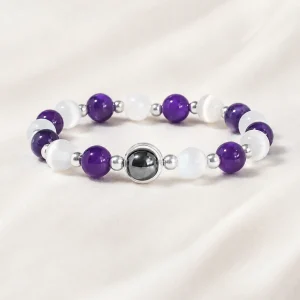
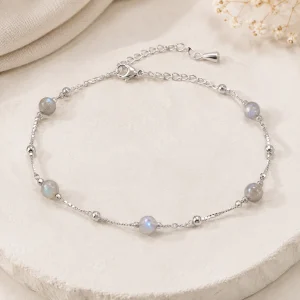
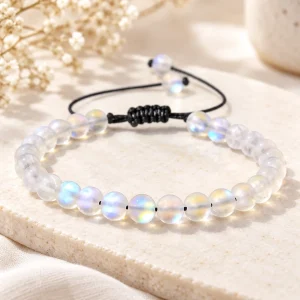
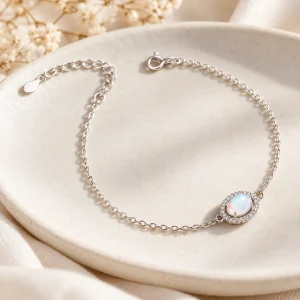
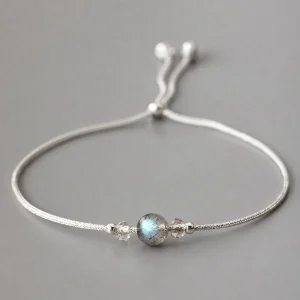
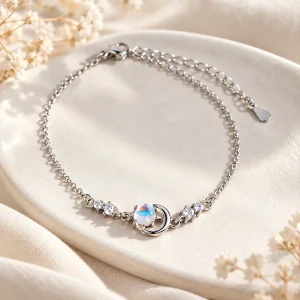
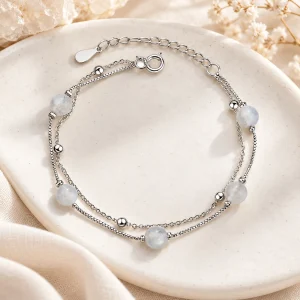
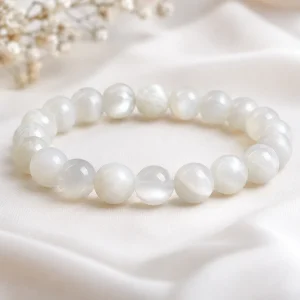
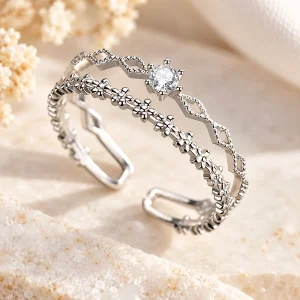
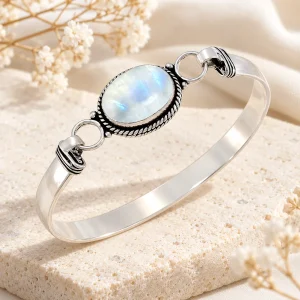
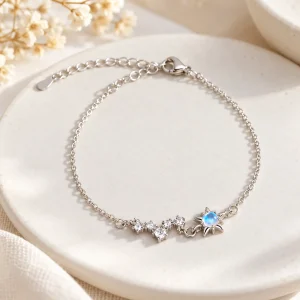
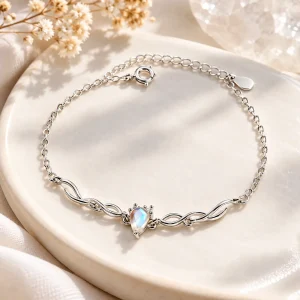
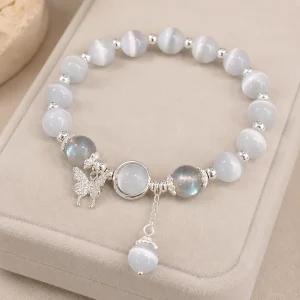
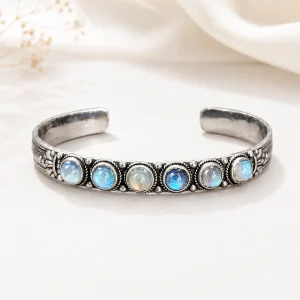
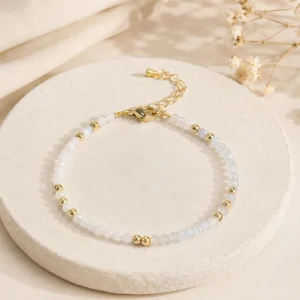
Three ways to wear the stone on the wrist
Wrist size changes through the day
This is the particular thing about a bracelet, and it does not exist on a ring. The wrist swells with heat, effort and tiredness, and the gap between morning and evening commonly reaches a centimetre. A bracelet measured on an empty stomach on a winter morning will be too tight in July.
The rule is therefore simple: measure at the end of the day, and add a centimetre to the bare wrist for a bead bracelet, a centimetre and a half if you dislike a snug fit. On a rigid bangle the measurement is different, since it passes over the wrist bone rather than around: the guide details both methods.
Left or right? The question comes up more often than any other. There is a traditional rule, it is consistent from one school to the next, and it rests on nothing verifiable. I explain it in detail here, without claiming to settle it.
The pairings, and what really goes with moonstone
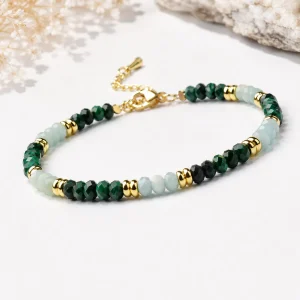
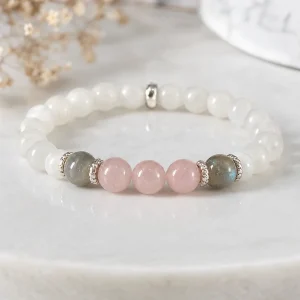
Nine bracelets in the workshop pair moonstone with a second stone: rose quartz, amethyst, carnelian, malachite, labradorite, apatite, red jasper, sunstone, pearl. These are not random assemblies, but they are not recipes either: I set them because the colours hold together and because the hardnesses are compatible.
That last point is the only honest technical argument about a pairing. Two stones of very different hardness damage each other as they roll against each other on the wrist, and it is moonstone, the softer one, that loses. I have gathered the pairings that work and above all those to avoid.
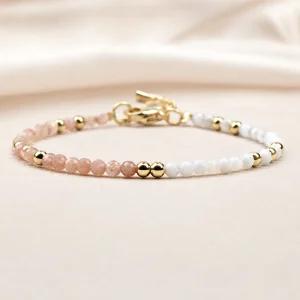
The most interesting pairing of the lot is sunstone: two feldspars, the same mineral family, two opposite symbolisms. It is the only one in the series that stands on more than taste.
The varieties on the wrist
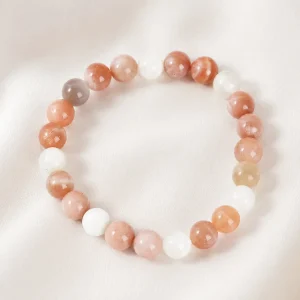
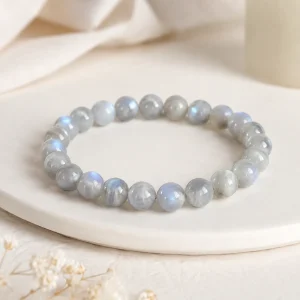
On a bead bracelet, the variety shows more than on a ring, because you have twenty of them in view instead of one. White stays the most classic and the softest; rainbow and blue give the sharpest sheen, and they are labradorites rather than adularia; black needs daylight to reveal itself; pink is the rarest and the most discreet.
One useful note before choosing: the more spectacular the variety, the more the difference between beads shows. A rainbow bracelet where three beads blaze and seventeen stay quiet is obvious at once, whereas the same unevenness goes unnoticed on a white one.
What you will not find here
There is a real and measurable demand for moonstone and amethyst bracelets sold as slimming aids or weight-loss helpers. I do not sell them and I will not. This is not a pose: a weight-loss claim on a piece of jewellery is a health claim with no foundation whatsoever, and presenting it as such is misleading advertising.
The same goes for anything that would promise to heal, to protect against illness or to act on a pregnancy. What tradition lends this stone, I write down, in the conditional and separately, on every listing. The full disclaimer is here.
And the fertility bracelet? It is in the catalogue, because the demand exists and the subject deserves better than silence. Its listing promises nothing, suggests nothing, and refers you to a doctor. If you are after anything more than that, you will be disappointed, and that is deliberate.
Unsure of your wrist size before you order? The guide answers in thirty seconds, and I answer myself within 48 working hours.