How to Wear Moonstone, and on Which Hand
Moonstone doesn't scratch, it splits open. Its perfect cleavage decides everything: which piece to choose, which hand to wear it on, when to take it off. Here's how to wear it every day without breaking it, jewelry family by jewelry family.
I've been setting these stones long enough to know where they break. Almost always in the same place, almost always for the same reason, and almost always because nobody warned them. This page is what I tell my customers when they leave with their first piece.
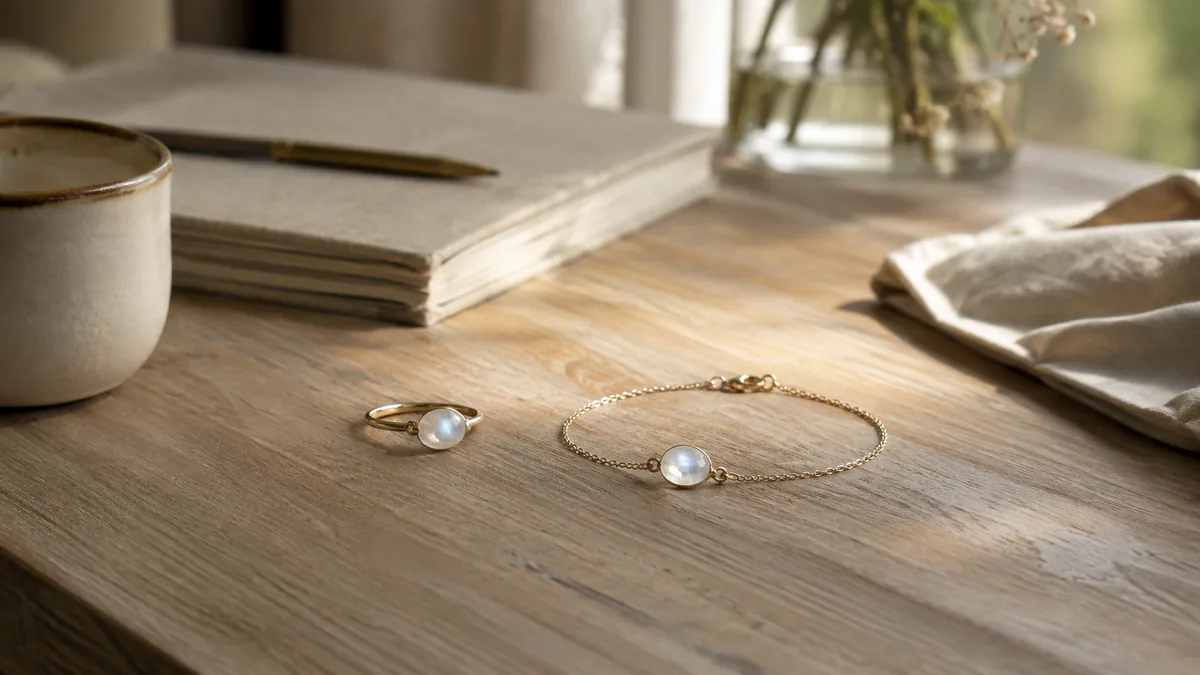
The essentials, if you're in a hurry
- The risk ranking: ring, then bracelet, then necklace, then pendant, then earrings. Hands knock into things, ears don't.
- The less active hand, for a mechanical reason before a symbolic one. For most people, that's the left hand.
- A closed bezel rather than prongs on anything that touches your hand.
- Last on, first off. After lotion and perfume, before dishes and exercise.
- Never with a watch on the same wrist, and never against a quartz bracelet: they're harder and they scratch.
- No shower, no pool, no ocean. No ultrasonic cleaners, no salt, no hot water.
Jewelry pieces, ranked by risk
Before choosing a piece, you need to know what you're putting it through. Moonstone has decent hardness, 6 to 6.5 on the Mohs scale, but above all perfect cleavage: it splits cleanly on impact, along internal planes.
So the risk doesn't depend on the stone, it depends on where on your body you put it. Here's the ranking, from most exposed to calmest.
| Piece | What it goes through | Risk |
|---|---|---|
| Ring | Knocks against door handles, countertops, steering wheels | High |
| Bracelet | Rubbing on tables, knocks to the wrist | Medium |
| Choker-length necklace | Collar friction, clasps, hair | Low |
| Long pendant | Swings, occasionally catches on things | Low |
| Earrings | Almost nothing, except during makeup removal | Very low |
This ranking has a direct practical consequence: if you want to wear your moonstone every day without thinking about it, go with earrings or a pendant. If you want a ring, accept that you'll take it off several times a day.
Which hand, really
This is the question I get asked most, and it has two answers that don't say the same thing.
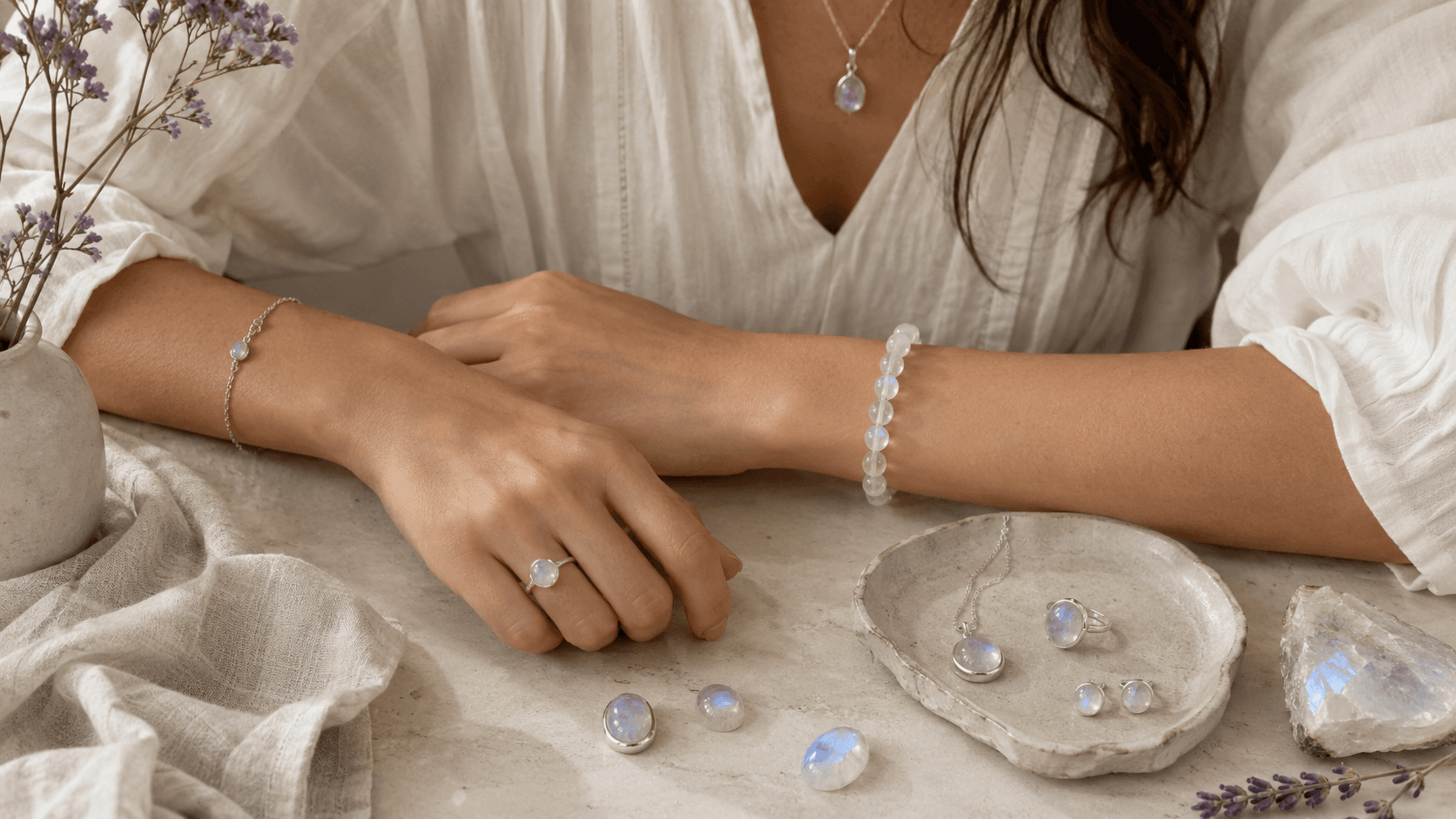
The mechanical answer, the one I stand by: the less active hand. For a right-handed person, that's the left hand. It's the one that rests on tables less, carries bags less, and knocks against doorframes less. On a stone with perfect cleavage, this detail matters more than any tradition.
The symbolic answer: crystal healing tradition places moonstone on the left hand, the side said to be receptive, the one that receives rather than acts. As it happens, that's also the less active hand for most people, which is where the popular idea of a "moonstone right hand meaning" versus a left-hand one comes from.
For a left-handed person, the two answers diverge: mechanics says right hand, tradition says left hand. It's up to you to decide, knowing what each one costs. The question is covered in detail in which wrist to wear a moonstone bracelet on.
These correspondences belong to crystal healing, an approach rooted in tradition and belief. They do not constitute a medical claim and never replace the advice of a healthcare professional. Read the full disclaimer.
The ring, the most exposed
A moonstone ring isn't a wedding band you never take off. It's a ring you remove, often.
When to take it off: dishes, cleaning, gardening, sports, DIY projects, moving house, and at night. That sounds like a lot; in practice, it becomes a reflex within a week, like taking off your glasses.
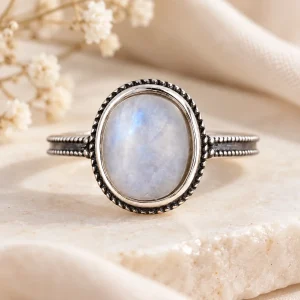
Which setting: a closed bezel, that continuous rim of metal that surrounds the stone and absorbs side impacts in its place. Prongs show off the cabochon better but expose it more. The trade-off is detailed in closed bezel or prongs.
Which finger: avoid the index finger of your dominant hand, which takes almost all the knocks. The ring finger and middle finger are calmer, the pinky even more so.
On what a moonstone ring means and ways to wear it, see moonstone ring: meaning and ways to wear it. For sizing, the size guide.
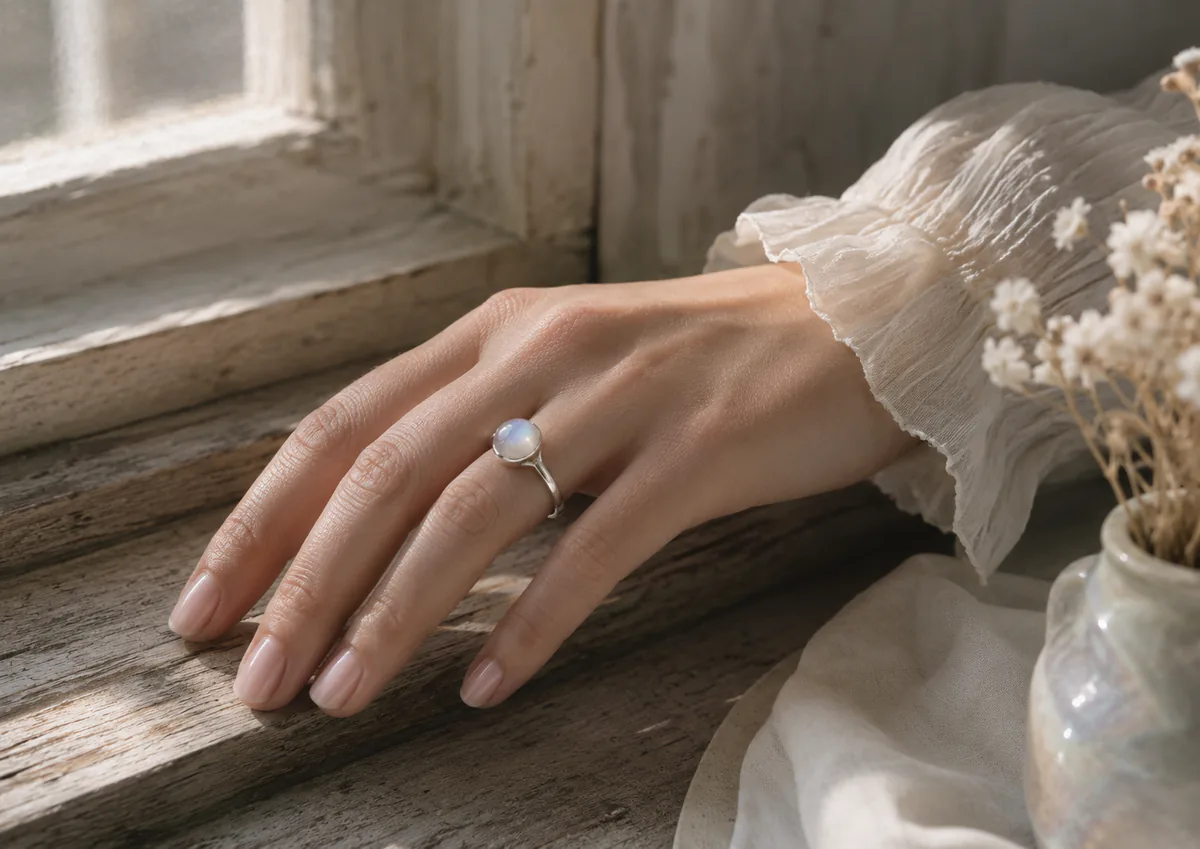
Rings set in closed bezels




The bracelet
Second in the risk ranking, but far behind the ring. A bracelet mostly goes through rubbing, when the wrist rests on a table or a keyboard, and occasional knocks against doorframes.
Three simple rules.
- The less active hand, as covered above.
- Never on the same side as a watch. A watch's crystal, mineral or sapphire, is noticeably harder than moonstone: repeated rubbing dulls the cabochon.
- Not too tight. A loose bracelet absorbs an impact by sliding, a tight one takes it head-on.
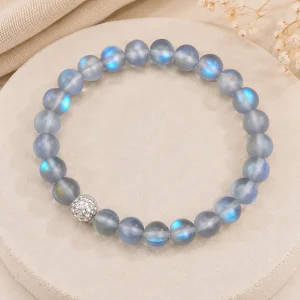
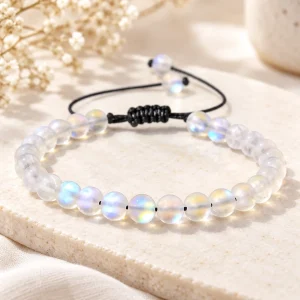
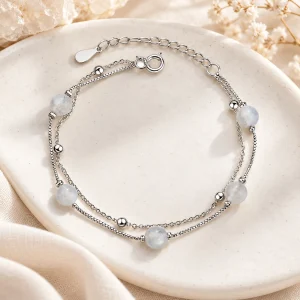
On beaded bracelets, here's a point few sellers mention: drilling goes through the stone, which opens a path straight into the cleavage planes. That's why a bracelet bead breaks more easily than a bezel-set cabochon of comparable size.
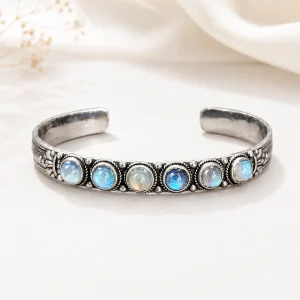
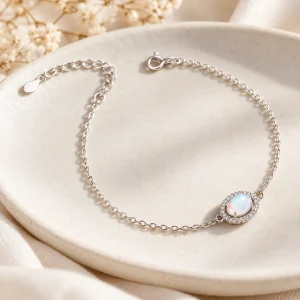
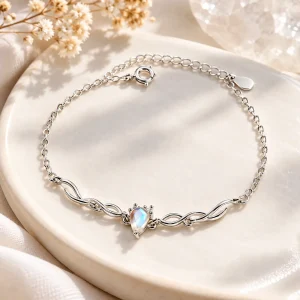
The studio's bracelets
The necklace and pendant
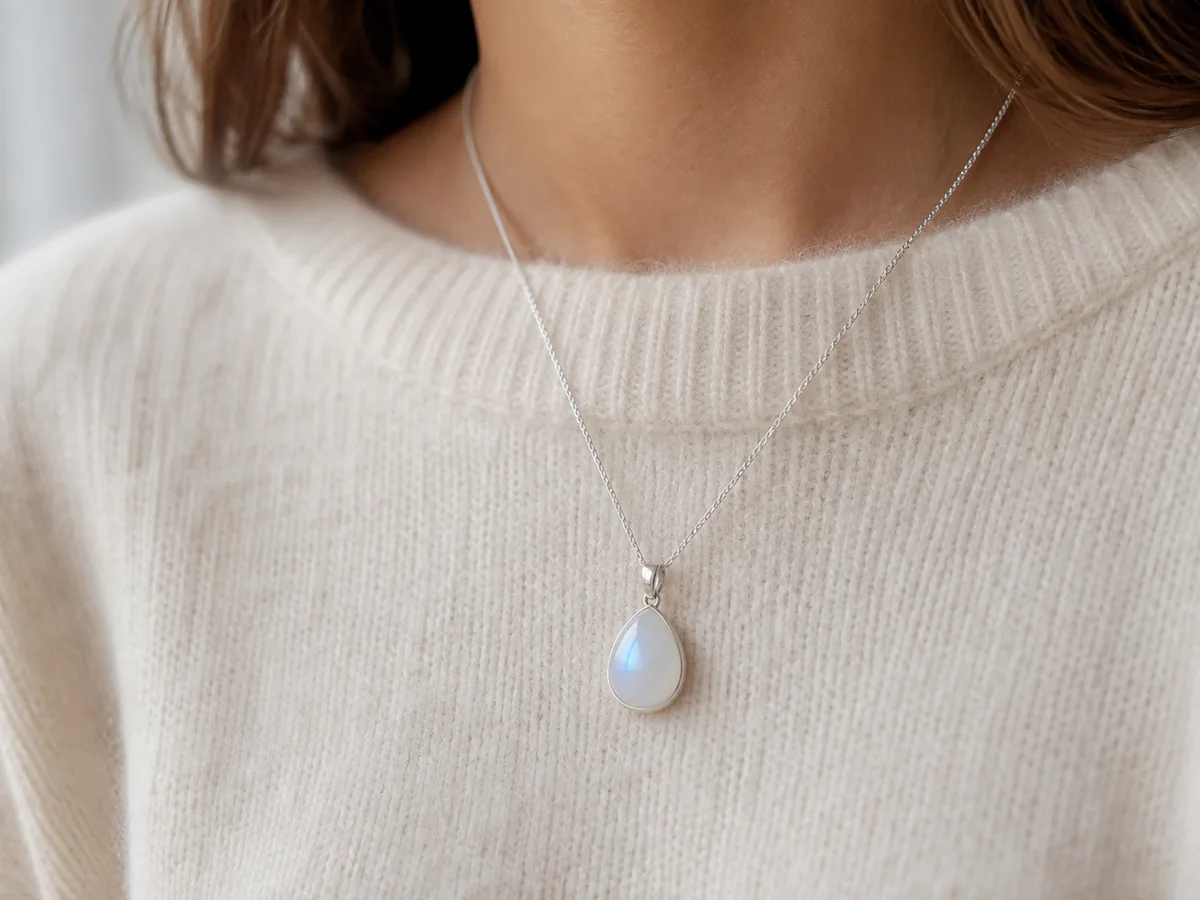
This is the best compromise between visibility and peace of mind, and it's what I recommend to anyone who wants to wear their stone every day.
A pendant almost never gets knocked. Its two real enemies lie elsewhere: it catches on scarves and sweater collars, and it takes a hit from the perfume and hairspray people spray on their neckline.
Two pieces of advice. Choose a slightly longer chain than what's currently trendy if you often wear turtlenecks, so the stone rests on the fabric instead of rubbing underneath it. And take off the necklace before doing your hair, not after.
The detail is in moonstone necklace and pendant, and the pieces in the pendant collection.
Earrings
The calmest of all, by far. They don't knock into anything, they don't rub against anything, and they're visible without being exposed.
The only real risk moment is removing makeup and washing your hair: that's when they get caught, dropped into a sink, and accidentally rinsed. Take them off beforehand, and always set them down in the same spot.
An advantage people forget: this is the family where moonstone gives the most, because it moves constantly with your head. And its shimmer only exists in motion, as explained in the article on adularescence.
Ways to wear them are in how to wear moonstone earrings, and the pieces in the earring collection.

When to wear it
Three practical notes, no mysticism.
Daytime rather than nighttime. Not for a symbolic reason, but because a ring that rubs against a headboard or gets caught in a sheet takes exactly the kind of impact that splits it. The topic is covered in sleeping with your moonstone.
Natural light rather than artificial. Adularescence needs soft, broad light to form. Under a diffused ceiling light, moonstone looks dull; near a window or outdoors, it lights up. It's not the stone that's at fault, it's the lighting.
Any season. Contrary to what you might read sometimes, it isn't a summer stone or a winter one. Its pale body and cool sheen suit a tan just as well as a November outfit. Choosing a variety based on skin tone and metal is covered in the colors and varieties of moonstone.
The rule: last on, first off
This is the single most useful rule in jewelry care, and it applies to every stone with cleavage.
The piece goes on last, after lotion, perfume, hairspray and makeup. These products contain alcohols and oils that settle into microfractures and dull the polish over months.
The piece comes off first, before dishes, sports, cleaning, gardening and bedtime.
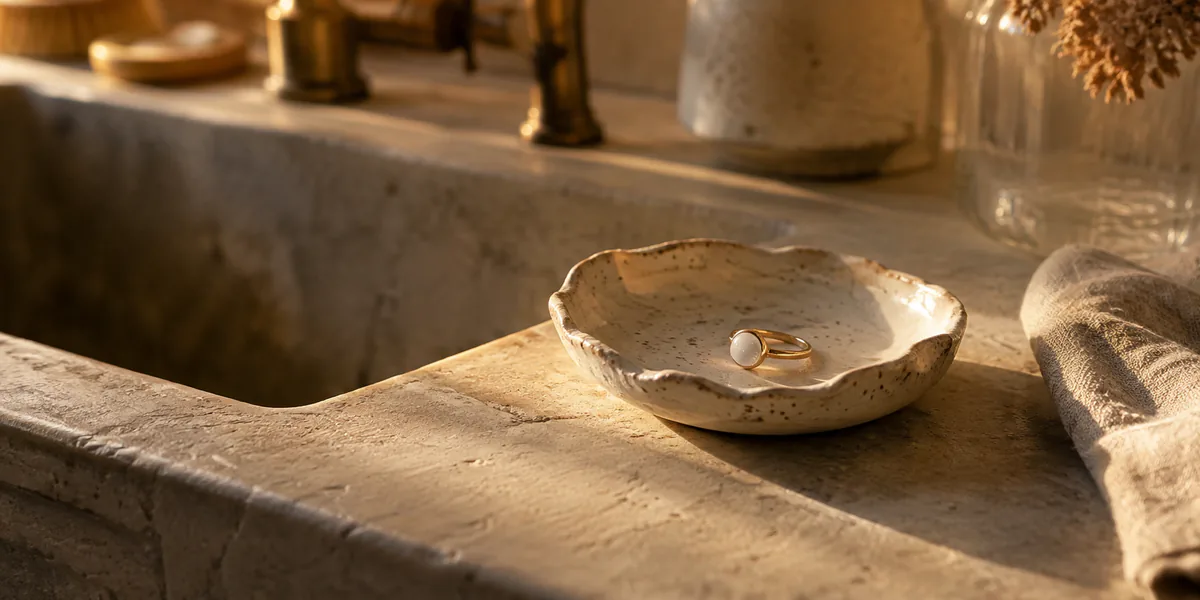
A consequence people don't think of: this means keeping a catch-all dish in two places, in the bathroom and in the kitchen. A piece you take off but set down just anywhere eventually falls, and a cabochon that falls onto tile splits.
Layering it with other jewelry
When you stack pieces, the real risk isn't impact, it's the difference in hardness.
At 6 to 6.5, moonstone is softer than most stones worn alongside it: quartz sits at 7, garnet around 7, sapphire at 9. A rose quartz bracelet worn on the same wrist as a moonstone bracelet scratches the moonstone, slowly but surely.
Three rules for stacking without damage:
- Separate wrists: hard stones on one side, moonstone on the other.
- Add metal spacers: a smooth bangle between two stone bracelets cushions the rubbing.
- Store separately. In a box, stones scratch each other even when nobody's wearing them.
On pairings, in the symbolic sense this time, see what crystals to pair it with and the ones that clash.
What's better avoided
The short list, and it has no exceptions.
Hot water and thermal shock. Showers, baths, saunas, steam rooms. A stone with perfect cleavage doesn't take kindly to sudden temperature changes.
Chlorinated and salt water. Pools and the ocean, in other words. Salt works its way into microfractures and attacks the surface.
Ultrasonic cleaners. The fastest way to destroy a cabochon, and plenty of jewelers offer it out of habit because the method suits diamonds.
Cleansing salt. It's the most common method in crystal healing guides, and it happens to be exactly the one you shouldn't use on this stone.
For routine care, lukewarm water and a soft cloth are enough. The detail by jewelry type is in how to clean a piece of moonstone jewelry, and cleansing methods in the crystal-healing sense are in cleansing and recharging your moonstone.
Frequently asked questions
Which wrist should you wear a moonstone bracelet on?
The less active wrist, for a mechanical reason: it's the one that knocks into things least. For a right-handed person, that's the left hand, which works out nicely since crystal healing tradition also places moonstone on the left hand, the side said to be receptive. That's the whole "moonstone right hand meaning" question, really: for a left-handed person, the two answers diverge and you have to pick one.
Can you wear moonstone every day?
Yes, as long as you choose the right jewelry family. Earrings or a pendant can be worn without a second thought. A ring needs to come off several times a day, for dishes, sports and gardening.
Can you sleep with it on?
Nothing forbids it, but it's the fastest way to damage it: a ring that rubs against a headboard or gets caught in a sheet takes exactly the kind of impact that splits it. I recommend taking it off at night.
Can you wear it in the shower or at the pool?
No. Hot water creates thermal shock, and chlorine and salt work their way into microfractures. Take the piece off before a shower, a pool, or the ocean, no exceptions.
Can you wear it with other stones?
Yes, but not side by side with harder stones. Quartz, garnet or a watch crystal will scratch moonstone through repeated rubbing. Separate your wrists, or add a smooth metal spacer bangle.
Should you put it on before or after perfume?
After, always. The rule is "last on, first off": the piece goes on after lotion, perfume and hairspray, and comes off before dishes and sports. Alcohols and oils settle into microfractures and dull the polish.
Which finger for a moonstone ring?
Avoid the index finger of your dominant hand, which takes almost all the knocks. The ring finger and middle finger are calmer, the pinky even more so. And go with a closed bezel, which protects the stone much better than prongs.
Where to go next
This page is the crossroads for everyday wear. To go further, family by family:
- By piece: the bracelet and which wrist, the ring, the necklace and pendant, earrings.
- Protecting the stone: is it fragile, closed bezel or prongs, cleaning it.
- Choosing: the colors and varieties, judging quality, the size guide.
- The full picture: the complete guide.
Everything I set is in the shop, mostly in closed bezels. A question about a piece you already own? Write to me, I answer personally within 48 business hours.
My sources
Hardness and cleavage data follow the public fact sheets from the GIA, Mindat and the International Gem Society. The risk ranking, and the advice on finger, wrist and storage, come from my own workshop and from what I see on the pieces customers bring me for repair. Symbolic correspondences are reported as traditions, never as properties of the stone.
Last updated: August 19, 2026. If you find an error in this article, let me know: I'll correct it and note it.
✦ À porter, à offrir
Découvrez mes créations