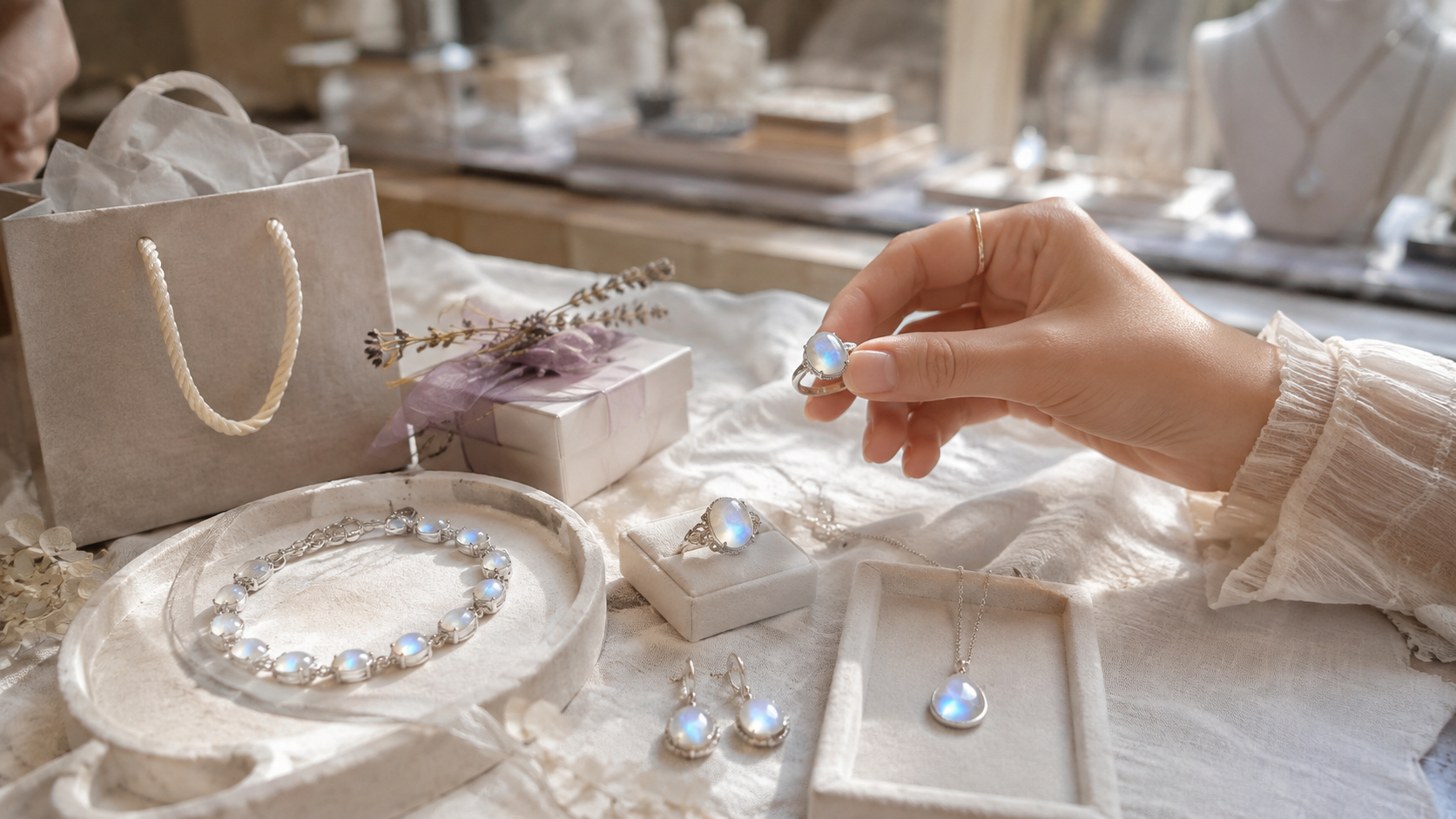
Where to Buy Real Moonstone Jewelry
There are five ways to buy moonstone jewelry, and they are nowhere near equal. Here is how to spot a seller who knows what they're selling, how to recognize a dropshipping shop in thirty seconds, and the six questions that settle the matter before you pay.
I'm going to give you criteria that don't always work in my favor. You can absolutely buy elsewhere and get a great deal: a gem show, a lapidary, a fellow maker who sets their own stones. What I want is for you not to pay for glass at the price of feldspar, because it happens every day and it usually ends with an email I get three months later.
The essentials, if you're in a hurry
- The test that settles everything: ask for a photo of the exact stone you'll receive, from two angles. A serious seller sends it the same day. A reseller doesn't have it.
- Two cabochons are never identical. A shop selling forty "handmade" rings with the same stone photo isn't setting anything at all.
- The real danger isn't a scam, it's opalite, an opal glass sold under the name moonstone.
- "AAA" means nothing. No organization issues that grading for this stone.
- A 15-to-25-day delivery window advertised on a shop that presents itself as domestic almost always signals a direct shipment from overseas.
- Have the species named. Orthoclase, or labradorite. A seller who can't answer didn't buy their stones themselves.
- A very low price isn't a good deal, it's the most reliable information you'll get about what's actually in the setting.
The five channels, and what each one is worth
Before talking about traps, you need to know the terrain. There are five places people actually buy this kind of jewelry, and they don't share the same prices, the same risks, or the same after-sales service.
| Channel | What you gain | What you risk |
|---|---|---|
| General marketplace | Huge selection, easy returns | Anonymous sellers, frequent imitations |
| Dropshipping shop | Advertised low price | Unknown stone, long delays, no real recourse |
| Crystal healing shop | Advice, atmosphere, simple pieces | Little gemology, recycled marketing names |
| Gem show | You see and turn the stone yourself | No recourse, no custom setting |
| Maker or lapidary | Named stone, careful setting, possible follow-up | Higher price, production delays |
None of these rows is a verdict. I've seen beautiful stones on marketplaces and mediocre pieces from makers. This table simply says where to focus your attention depending on where you're buying.
Spotting a dropshipping shop
This is the most common case, and it isn't illegal: someone opens an online shop, publishes photos from a supplier's catalog, and forwards your order to a shipper on the other side of the world. The seller has never seen the stone. Often, they don't even know what species it is.
Six clues, and three are enough to decide.
- The advertised delay. 15 to 25 business days on a shop that presents itself as domestic is a direct shipment from overseas.
- The catalog. Thousands of listings, jewelry in every stone imaginable, sometimes items that have nothing to do with each other. Nobody sets all of that themselves.
- The photos. Perfect white background, same model's hand, same angle. Run a reverse image search: you'll find them on thirty other sites.
- The descriptions. The same sentences word for word from one shop to the next, often translated with the same awkward phrasing.
- No address. No legal notice, no business registration number, a contact form and nothing else.
- The reviews. Hundreds of short comments, no customer photos, no review that actually describes the stone.
The fastest test is still the simplest: write to the seller and ask what mineral species it is and where the stone comes from. A shop that holds its own stock answers in one sentence. A middleman sends you a marketing sheet or doesn't answer at all.
The trap that costs the most
The real danger isn't overpaying for a real stone. It's paying a normal price for glass.
Opalite is a manufactured opal glass, translucent, with a bluish glow when lit from behind and an orange tint in transmitted light. It's sold almost everywhere under the name moonstone, often as beads, often as very uniformly polished drops.
Three things give it away. It's too perfect: no inclusions, no flaws, the regularity of a glass marble. Its glow doesn't travel when you tilt it, whereas real moonstone's adularescence slides across the dome. And the beads on one bracelet are rigorously identical, which never happens with a mineral.
The subject deserves its own page, and it has one: moonstone or opalite. The other verification methods are in how to tell if moonstone is real.
What "genuine," "natural," and "AAA" actually mean
Not much, and it's worth knowing before you pay extra for an adjective.
"Genuine" and "natural" are storefront words. They only bind the seller if you can prove they lied. In the US, FTC guidance on jewelry marketing does prohibit selling an imitation under the name of a real gem without disclosing it: calling glass "moonstone" outright isn't allowed. But someone still has to file a complaint, and nobody does that over a twenty-five-dollar ring.
"AAA," "AAAA," "gem quality": none of these labels correspond to a grading issued by any organization. They're in-house labels, invented by each seller, not comparable from one shop to another. A "AAA" cabochon at one shop can be less attractive than an "A" one somewhere else.
"Certified" means nothing either until you're told by whom. A lab certificate carries a lab's name, a number, and a description. A label printed by the seller isn't a certificate.
What actually tells you something is the name of the species. Orthoclase for real moonstone, labradorite for what's sold under the names rainbow and black. A seller able to name the species bought their stones themselves. The detail is in colors and varieties and in moonstone or labradorite.
The photos that don't lie
Here is the single most telling criterion on this whole page, and it costs nothing to check.
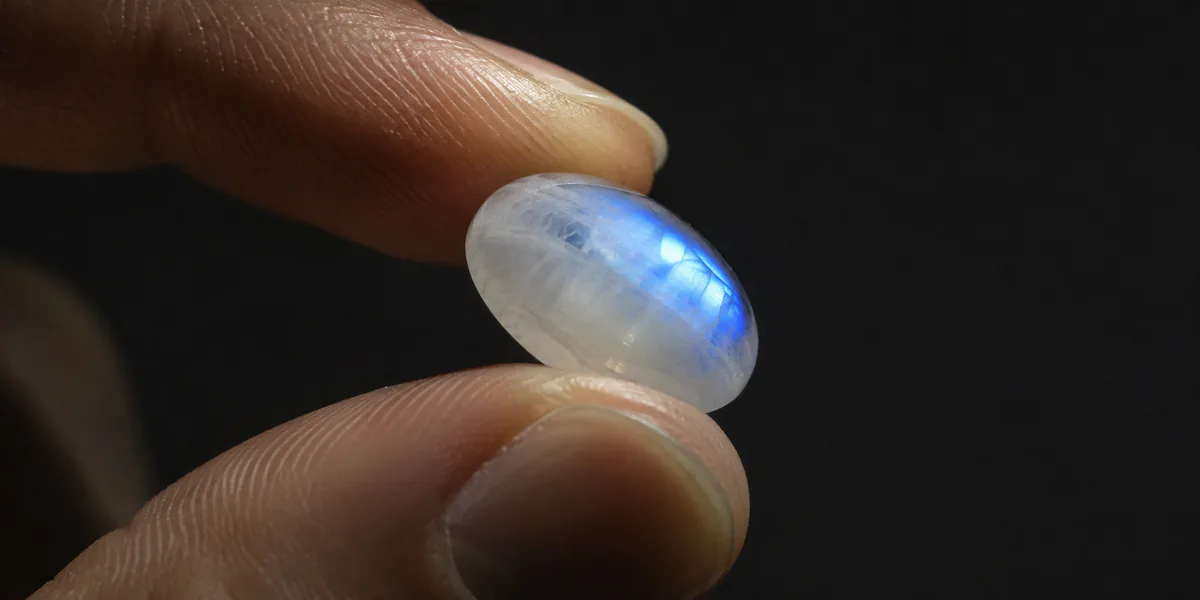
Adularescence is a phenomenon of movement. The blue sheen shifts across the dome as you tilt the stone. A single photo, on a white background, under studio lighting, can't show that: it freezes a reflection that could just as easily be well-placed lighting.
A seller who actually holds the stones therefore publishes two shots from two angles, or a short video where the stone turns. It's the one piece of visual proof an imitation can't fake, and it's also a rule I've set for myself on this site.
Second check: ask for a photo of the exact piece you'll receive, not the sample shot. On a unique stone, the difference between two specimens is visible to the naked eye. If the seller answers that "stones may vary slightly," it means they don't know which one they'll be sending you.
Six questions to ask before you pay
Copy these, send them as they are. The answers will teach you more than any "about us" page.
- What species is this, orthoclase or labradorite? The right answer is a name, not an adjective.
- Where does the stone come from? Sri Lanka, India, Madagascar, Tanzania. A seller who doesn't know didn't choose their own batch.
- Can you send me two photos of the exact stone, from two angles? This is the decisive test.
- Is the stone set with prongs or a bezel, or glued? Glue gives way to solvents long before the stone budges.
- Is the metal hallmarked? Sterling silver or gold, with the matching hallmark. "Silver-plated" isn't silver.
- What happens if the stone breaks in a year? The answer tells you everything about how serious the seller is, and it costs nothing to ask.
A maker will answer all six. A serious shop will answer four or five. A reseller will dodge at least three.
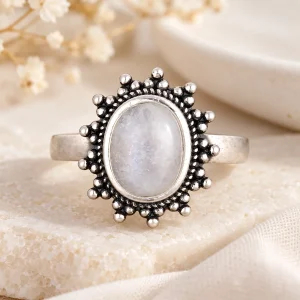
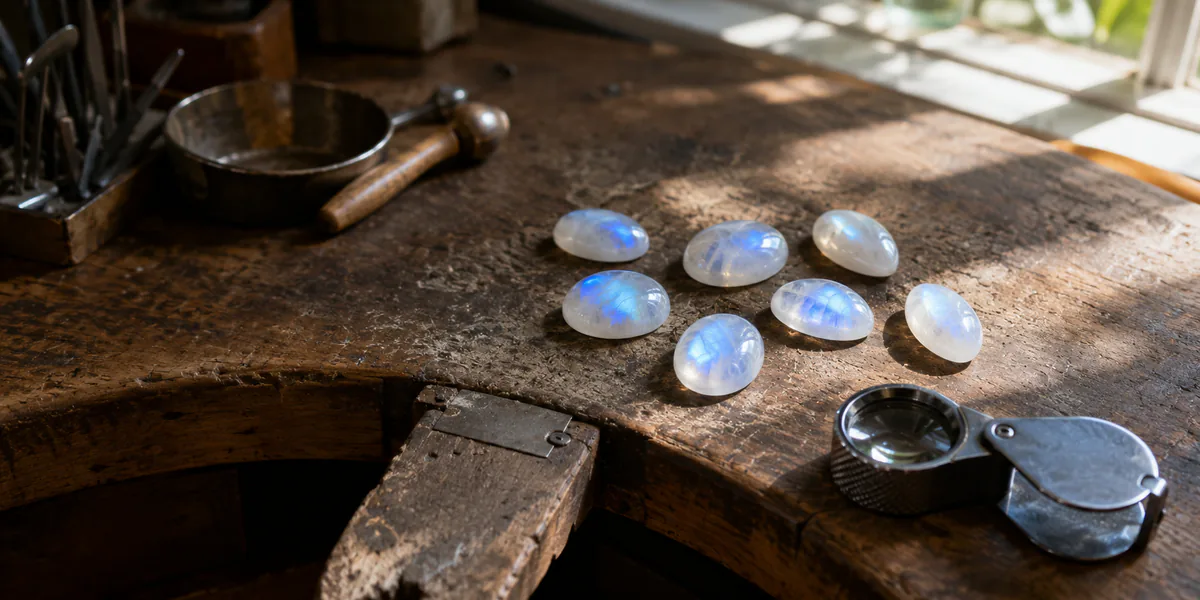
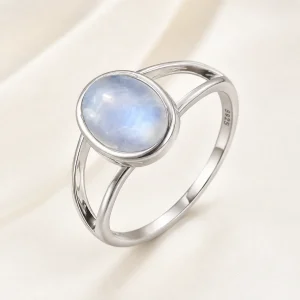
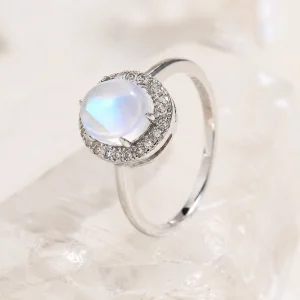
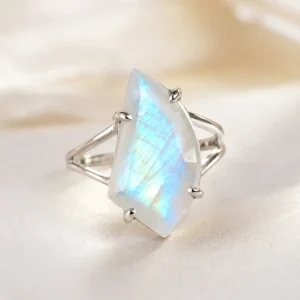
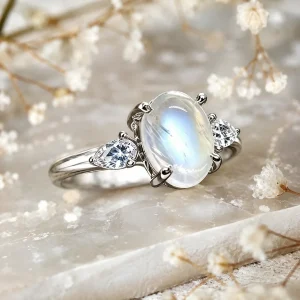
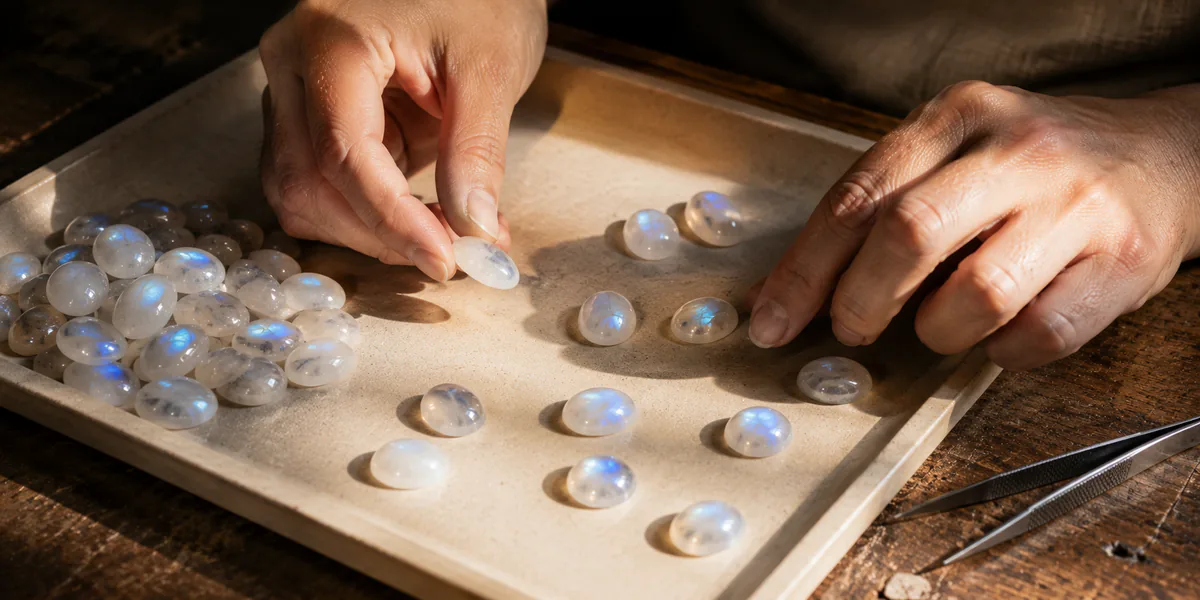
Cabochons chosen one by one, species named on every listing
What a price that's too low tells you
A piece of jewelry has no absolute fair price, but it does have floors. Below a certain threshold, something had to be taken out: the stone, the metal, or the labor.
A fifteen-dollar ring, delivered in three weeks, contains at best plated brass and glass; at best again, a small low-quality cabochon glued in place. That's not a scam, it's a price consistent with what's in it.
What actually sets moonstone's price is the clarity of the sheen, its color, its position at the center of the dome, and the body's transparency. The detail is in moonstone pricing and the judging criteria are in judging moonstone quality.
A word on treatments, since the question always comes up at this point: moonstone is one of the least treated gems on the market, and that's covered separately in is moonstone treated.
Buying at a gem show
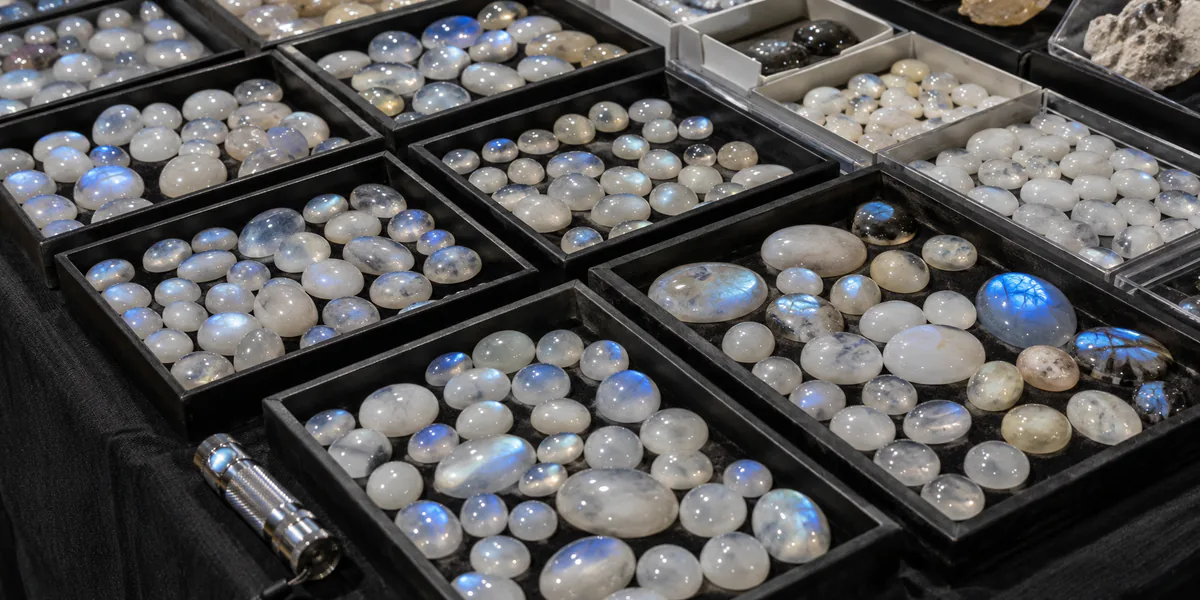
This is the channel I recommend most to anyone who wants to learn, because it's the only one where you can hold the stone and turn it yourself.
Three practical tips. Bring a small flashlight: hall lighting is diffuse and flattens adularescence, whereas a point source makes it appear instantly. Look at the stone tilting it slowly, not head-on. And be wary of stalls where every stone in a bin looks identical.
Ask about the species here too. Bins labeled "black moonstone" are almost always labradorite, sometimes a Norwegian rock called larvikite. These are beautiful materials, they simply don't cost the same.
What you won't get at a show: recourse. No cooling-off period, no warranty, no returns. Buy what you saw, not what you're promised will be set.
Buying from overseas
Moonstone comes mainly from Sri Lanka, India, Madagascar, and Tanzania. The idea of buying at the source is appealing, and it's sometimes excellent. It still deserves three warnings.
The "direct" seller almost never is. Many accounts presenting themselves as Sri Lankan miners are resellers, in Asia as elsewhere. That's not disqualifying, it's simply worth knowing before you pay a "mine-direct" price.
The real cost isn't the sticker price. Beyond the duty-free thresholds, you have to add import taxes, possible customs duties, and the carrier's processing fee. A stone bought for a hundred dollars can end up costing a hundred and forty.
Recourse is theoretical. A dispute with a seller outside the country, over a low-value item, is almost never resolved.
If you do it anyway, demand the same things as anywhere else: two photos from two angles, the species named, the weight in carats and the dimensions in millimeters. The deposits are detailed in moonstone deposits.
Buying from a maker
This is my trade, so take this paragraph for what it is, but I'll also state its limits.
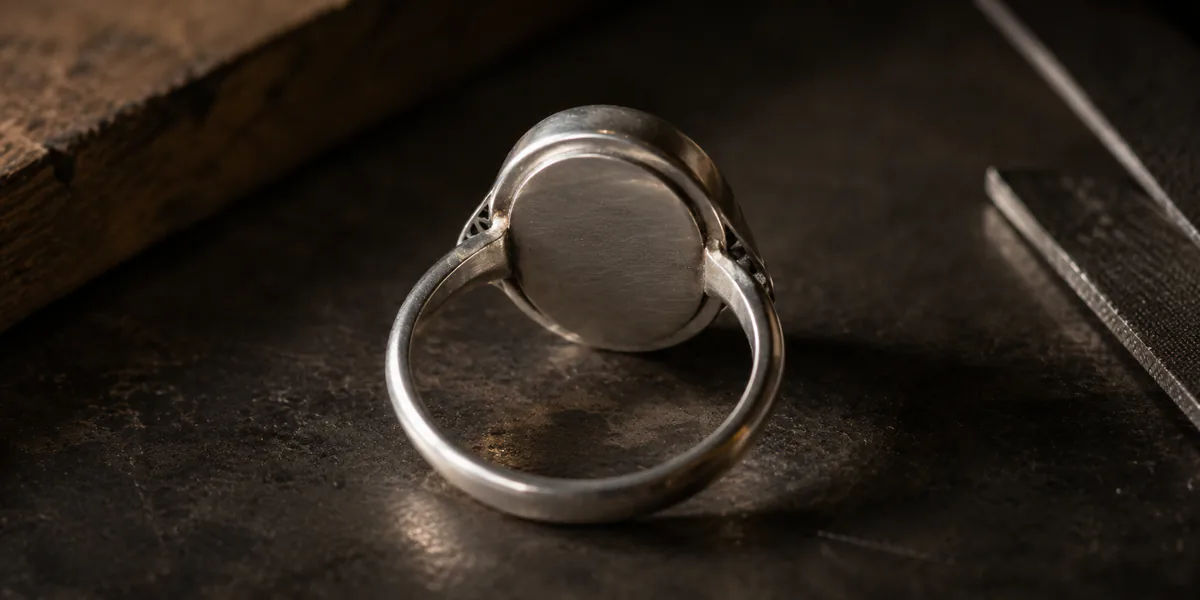
What you gain: the stone is named, it's chosen one at a time, the setting is fitted to that specific cabochon, and there's someone to write to three years later. A closed bezel set by hand on a stone with cleavage has nothing to do with a mass-produced setting.
What you lose: the price is higher, so are the delays, and the selection is necessarily narrower. A maker who sets their own stones doesn't have four hundred listings, they have twenty or thirty. If you're looking for something very specific, they might make it for you, but not tomorrow.
A useful question to ask: request to see the back of a piece. The reverse of a piece of jewelry tells you everything about the workmanship. A clean solder joint, a well-fitted closed back, an even bezel edge: none of that gets photographed in a supplier's catalog.
What I refuse to do
Since this page talks about sellers, I might as well say where I stand.
I don't sell opalite, under any name. I don't sell white labradorite presented as adularia, but I do specify on every listing when a stone is labradorite, which is the case for the rainbow and black ones. I don't glue my cabochons, they're set. And I don't write a single healing promise, not on a product page, not here.
I also don't have unlimited stock: once a cabochon is gone, the next piece won't have exactly the same sheen, and I say so rather than photographing the same one forever.
The crystal healing uses mentioned on this site are based on traditions and beliefs. They do not constitute a medical claim and never replace the advice of a healthcare professional. Read the full disclaimer.
The workshop's rings, species named on every listing




Frequently asked questions
Where can you buy moonstone jewelry with confidence?
From a seller able to name the mineral species, say where the stone comes from, and send two photos of the exact piece from two angles. That trio is enough to rule out nearly every reseller. The channel matters less than these three answers.
How do you know if a shop is dropshipping?
A 15-to-25-day delivery window, a catalog of thousands of listings, photos a reverse image search finds on other sites, descriptions identical from one shop to the next, and no address in the legal notice. Three of these clues are enough.
What is a "AAA" moonstone rating worth?
Nothing verifiable. No organization issues that grading for this stone: every seller invents their own scale, and they aren't comparable to each other. Judge the sheen, its clarity, its color, and its position on the dome, not the letters.
Can you buy moonstone on a marketplace?
Yes, provided you write to the seller before ordering and ask the six questions on this page. Marketplaces host excellent lapidaries and plenty of anonymous resellers, and nothing on the listing tells them apart.
Can a fifteen-dollar stone be genuine?
A small, low-quality stone, yes. A fine cabochon set in silver, no. At that price, something had to be taken out: the stone, the metal, or the setting work. It isn't necessarily fraud, it's a price consistent with what's inside.
Do you need a certificate for a moonstone?
It isn't common practice for this gem, whose unit value stays modest, and a certificate would often cost more than the stone. What matters is that the seller names the species. If a certificate is advertised, ask for the lab's name and the number.
Is it better to buy at a show or online?
At a show if you want to learn to see: it's the only place where you tilt the stone yourself. Online if you want recourse, a careful setting, and someone to talk to. A show gives you no right of return.
How do you check the stone once you receive it?
Tilt it under a point light source: the sheen should shift. Look for inclusions under a loupe, a real stone has them. Compare the beads on a bracelet to each other, they should differ. And if doubt remains, write to the seller before your return window closes.
Where to go from here
This page is the crossroads of buying. The next steps, in the order they come up:
- Verify the stone: telling a genuine stone apart, moonstone or opalite, is it treated.
- Judge and pay the right price: judging quality, moonstone pricing.
- Know what you're buying: colors and varieties, moonstone or labradorite, the deposits, the glossary.
- After the purchase: how to wear it, closed bezel or prongs, cleaning it.
- Gifting or wearing: gifting moonstone, the engagement ring question, which wrist for a bracelet.
- The full picture: the complete guide.
What I set is in the shop, with the species named on every listing. A question about a piece you're considering buying elsewhere? Write to me, I answer even when it isn't from my shop.
My sources
The identification landmarks, adularescence, inclusions, and the distinction from opal glass, follow the public reference sheets from the GIA, Mindat, and the International Gem Society. The US framework on truthful jewelry marketing comes from FTC guidance on the sale of gemstones and precious metals: I cite it for what it prohibits, not as a guarantee, since it's almost never invoked over low-value items.
The warning signs of resale shops and the six questions to ask come from my own workshop experience and the pieces people bring me to repair or identify. These are professional observations, not statistics, and I flag that rather than dressing them up with numbers.
Last updated: August 19, 2026. If you spot an error in this article, let me know: I'll fix it and note it.
✦ À porter, à offrir
Découvrez mes créations