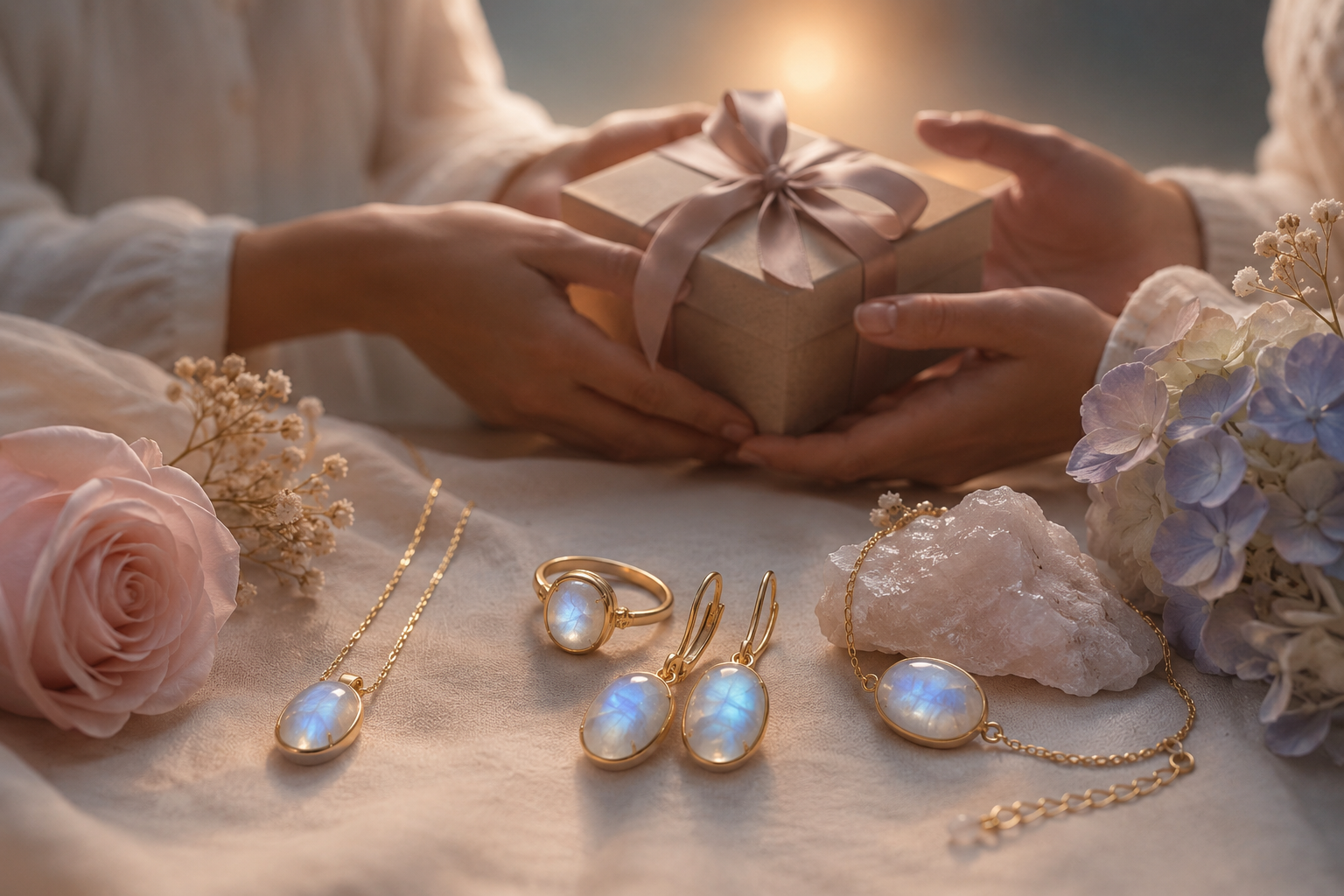
Giving Moonstone as a Gift: Who and When
Moonstone is an easy gift for three specific occasions, and frankly a risky one for two others. Here is who it suits, how to choose a piece without knowing the size or the taste, and the note to include with it, because that's usually the part that's missing.
I wrap pieces meant to be given as gifts all year round, and I see the notes that come with them. The question I get almost never is "which one is prettier," it's "will they like it, and what do I write." This page answers both.
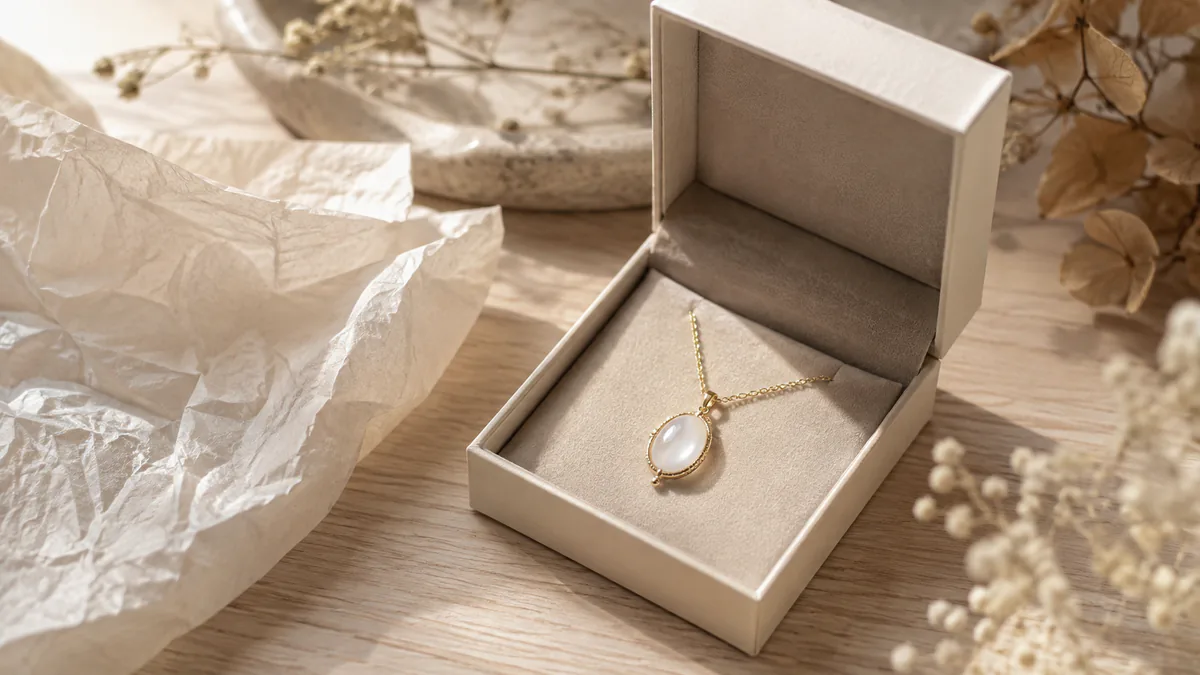
The essentials, if you're in a hurry
- The simplest case: a June birthday. Moonstone is one of three birthstones for that month, and the gift explains itself.
- The implicit message is soft and not romantic by default: you can give it to a friend, your mother, or your sister without it being ambiguous.
- A new baby, yes, with care: you're giving an object and a gesture, never a promise.
- Without knowing the size, choose an elastic-cord bracelet or an open-band ring. That's the leading cause of a gift that ends up in a drawer.
- Skip the ring if the person works with their hands or never takes their jewelry off: the stone has perfect cleavage and cracks on impact.
- Write a note. Without one, the jewelry arrives with a meaning the person has to guess at, and they'll often guess wrong.
What this gift says
A piece of jewelry carries a message before it's even opened, and this one carries a fairly particular one.
Moonstone isn't a red stone. It has neither the obvious romance of ruby, nor the weight of a diamond, nor the firmness of a black stone. Its register is soft, understated, a little contemplative. It's a gift you can give a friend without it being misread, and one you can give someone you love without it feeling flat.
That neutrality is its biggest strength as a gift. It's also why writing a note matters: without text, the person will look for meaning on their own, and they'll often land on virtues they read somewhere rather than on what you actually meant.
On what the stone represents, the reference page is the meaning of moonstone.
The occasions, ranked by how obvious they are
Here's how I rank them, from the most obvious to the most delicate. "Obvious" means: does the gift explain itself, or does it need a note to go with it?
| Occasion | How obvious | What to know |
|---|---|---|
| June birthday | Immediate | Birthstone of the month, nothing to explain |
| Friendship gift | Strong | Soft register, no romantic ambiguity |
| Mother's Day | Strong | Choose an understated piece, wearable every day |
| New baby | Moderate | Give the object, never a promise |
| Couple anniversary | Moderate | Works if the note carries the intent |
| Engagement | Weak | Possible, but a stone that cleaves on a ring that's never removed |
| Consolation, bereavement | Weak | Risky: the jewelry becomes the object tied to a painful memory |
The last two rows aren't off-limits. They're cases where the jewelry alone isn't enough, and where what you write matters more than what you buy.
A June birthday, the simplest case
If the person was born in June, stop right there: you have your gift.
Moonstone is one of the three birthstones for June, along with pearl and alexandrite, on the modern list set by American jewelers in 1912 and revised since. It's not an ancient tradition, it's a commercial convention, but it's widely known and it gives the gift an immediate justification.
Two practical advantages. The gift explains itself in one sentence, which solves the note problem. And it repeats well: you can give a piece in June several years in a row without it feeling like a shortcut, because every cabochon has a different sheen.
Watch out for one common mix-up: a birthstone follows the calendar month, while a star sign follows a different split. Someone born on June 25 is a Cancer, but their birthstone is still the one for June. The detail is covered in moonstone, the birthstone for June and in moonstone and astrology.
A new baby, and what's better left unsaid
This is an occasion where moonstone works very well and where I'm going to ask you to be careful with your wording.
Jewelry is an excellent baby-gift because it's addressed to the parent, not the baby: something soft, personal, that's neither an outfit nor one more piece of baby gear. An understated piece, wearable every day, that lasts for years.
What to avoid is the vocabulary that circulates around this stone. You'll read everywhere that it supposedly supports fertility, pregnancy, cycles. These attributions are traditions, they're proven by nothing, and above all: they can hurt. Giving a stone "for fertility" to someone whose situation you don't know is a real risk.
The safe wording exists and fits in one sentence: give the jewelry because it's beautiful and because you were thinking of the person. That's it, and it's enough. The sensitive topics are addressed separately, in the conditional, in moonstone and fertility and which stone for a pregnant woman.
These uses fall under crystal healing, an approach based on traditions and beliefs. They are not a medical claim and never replace the advice of a healthcare professional. Read the full disclaimer.
Engagements and couple anniversaries
For a couple anniversary, moonstone is a very good choice: it's personal without being solemn, and it doesn't play into the expected register of a red stone or a solitaire diamond.
For an engagement, it's more complicated, and I'd rather say so even though I sell a model made for exactly that. An engagement ring is worn every day and is almost never taken off. But moonstone has perfect cleavage: it cracks on impact, and a hand is put to work all day long. It's still doable, under specific conditions I've laid out in a moonstone engagement ring, is it a good idea.
A solution I often suggest: give moonstone for the proposal, and plan on a harder stone for everyday wear. The gesture keeps its object, and the stone doesn't spend its days against a steering wheel.
Giving it to a man
Nothing stands in the way, and the idea that it's a feminine stone is more recent than people think: it takes hold in the literature of the 1980s and 1990s, even though the stone was already appearing on tie pins and cufflinks around 1900.
In practice, two formats work almost every time: a matte-bead bracelet, which you'd only notice by looking closely at the wrist, and a signet ring with an inset cabochon if you know the size. The topic has its own full page: moonstone for men.
Who not to give it to
Better to say it plainly, it saves a gift from sitting in a box.
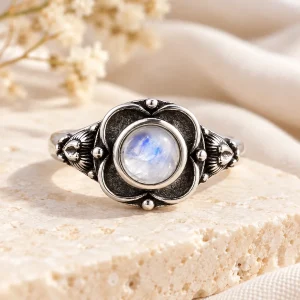
- Someone who works with their hands, if you were thinking of a ring. Cooking, gardening, workshop work, caregiving: those are exactly the impacts that crack the stone. A pendant or earrings, on the other hand, pose no problem at all.
- Someone who never takes their jewelry off. This stone needs to come off for dishes, sports, and the shower. If you know that won't happen, choose a harder stone.
- Someone who doesn't wear jewelry at all. That sounds obvious, and it's the most common cause of gifts that never get worn.
- Someone who reacts to metal. Allergies almost always target the nickel in low-grade alloys. Hallmarked sterling silver or gold avoids that in most cases.
In these situations, the right move isn't to give up on the stone, it's to switch jewelry families. The risk breakdown is in how to wear moonstone.
Which piece to choose without knowing their taste
Three simple rules, and they work almost every time.
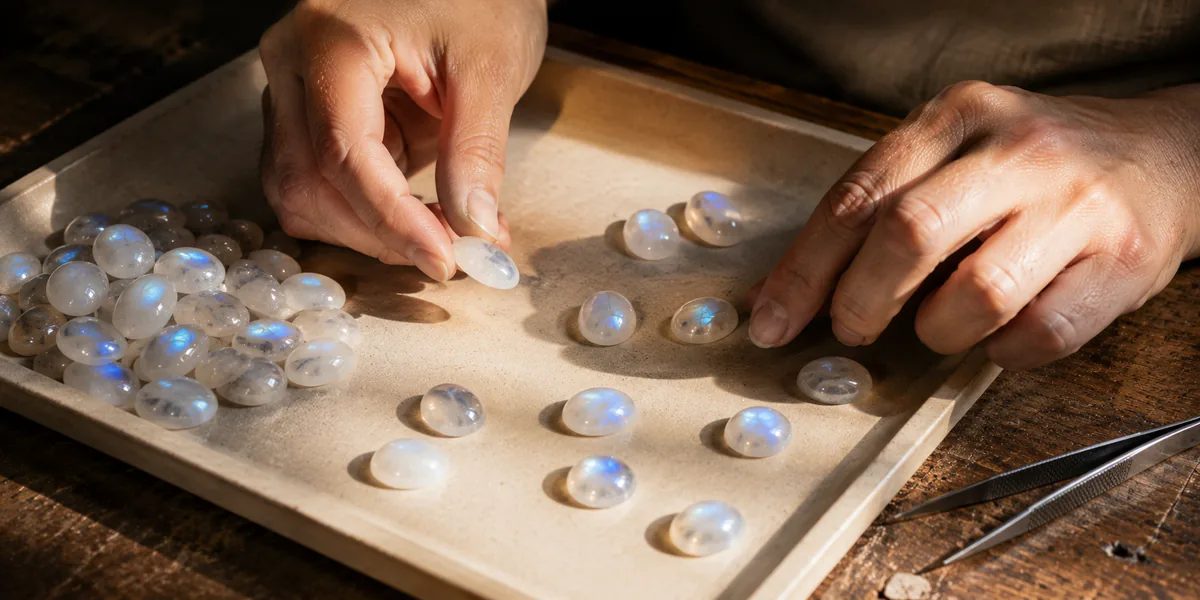
Go understated. A single cabochon, a plain bezel, no halo, no side stones. An understated piece goes with everything and clashes with no style. A heavily worked piece is either loved or ignored entirely.
Go white or blue. Those are the two colors everyone associates with this stone, and they go with any wardrobe. Save the rainbow, black, and pink varieties for someone whose taste you actually know. The varieties are covered in the colors and varieties.
Go with something that needs no sizing. That's the next section, and it's the point that saves the most gifts.
The pieces that need no sizing at all
The size problem, and three ways around it
Size is the number-one cause of a gift falling flat. A ring that's too big gets lost, one that's too small doesn't get worn, and asking someone their ring size gives the gift away.
Three solutions, from the simplest to the most involved.
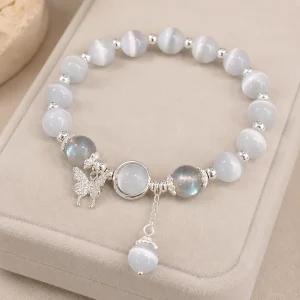
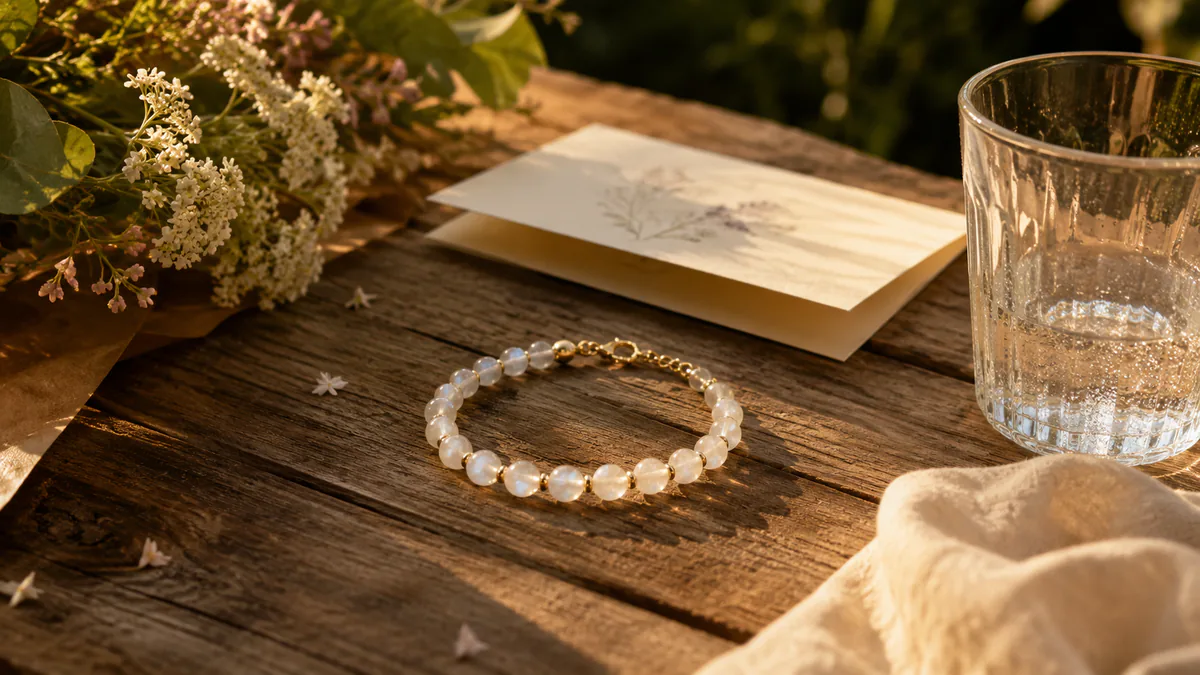
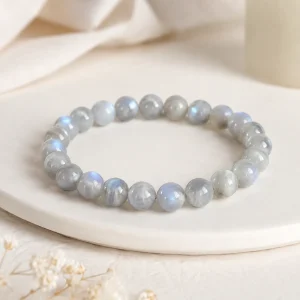
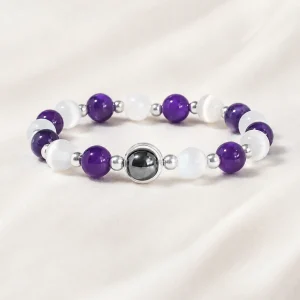
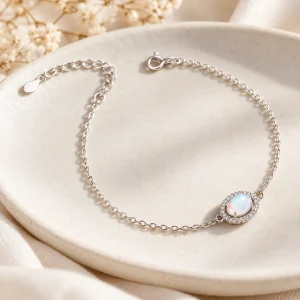
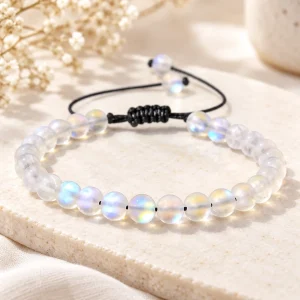
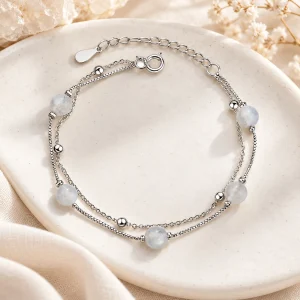
A bracelet on elastic cord. It covers wrist sizes from 5.5 to 8 inches, which covers nearly every adult. Nothing to measure, nothing to adjust, and it slips on with one hand.
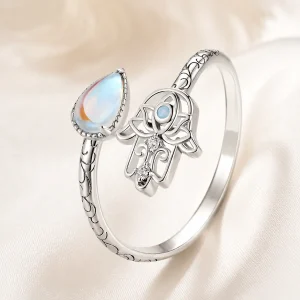
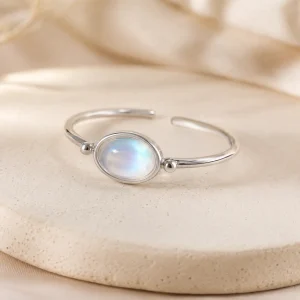
An open-band ring. The band isn't closed, it flexes slightly and adjusts to the finger. That's the principle behind the workshop's adjustable ring and its engagement ring, which makes a proposal possible without knowing the size.
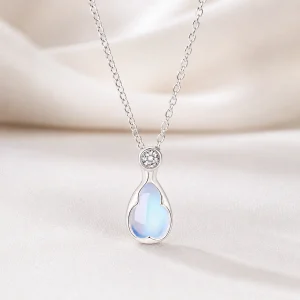
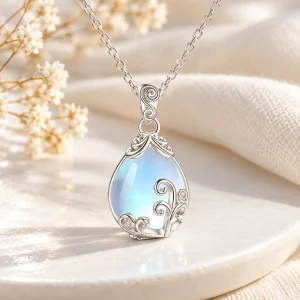
A pendant or earrings. No sizing question at all, and these are the two families least exposed to impact. If you know nothing about the person's habits, this is the safest choice of all.
If you're set on a fixed-size ring, the discreet method is to borrow a ring they already wear on the same hand and measure its inner diameter. Careful: a pinky ring has nothing to do with a ring-finger ring.
The note that goes with the jewelry
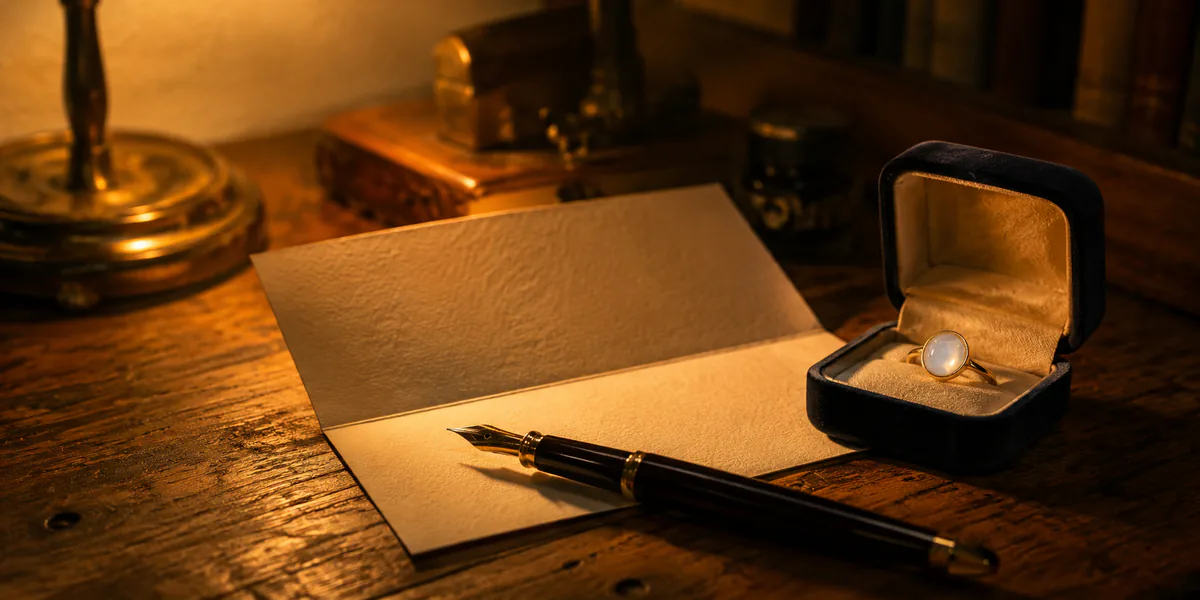
This is the part I get asked about most, and the one no shop ever writes for you. Jewelry arrives with an uncertain meaning; two lines are enough to set it.
Three principles. Short, three or four lines at most. Concrete, a reason rather than a symbol. And no promises, especially no virtue attributed to the stone, which would turn a gift into a prescription.
Four examples, to use as-is or adapt.
For a June birthday. "This is the stone for your birth month. I picked this one because its sheen shifts when you turn your hand. Happy birthday."
For a friend. "I saw it, I thought of you, I didn't look any further than that."
For a new baby. "Something for you, not for the baby. You're going to need it."
For a couple anniversary. "Eleven years. This stone changes color depending on the angle, and I think that suits us."
Notice what none of these notes do: promise an effect. That's deliberate, and it's what makes them believable.
The four most common mistakes
These are the ones I keep seeing come back as exchange requests.
Giving a ring without knowing the size. By far the most common. It's solved in thirty seconds with a bracelet or an open-band ring.
Giving a piece that's too elaborate. A large cabochon surrounded by side stones stands out, and it only gets worn on certain occasions. The jewelry worn every day is almost always the simplest.
Announcing a virtue. "This is to help you sleep" turns a gift into a diagnosis. Even said kindly, the phrase implies a problem.
Saying nothing about care. Moonstone comes off for the shower, the pool, sports, and dishes, and never goes in an ultrasonic cleaner. Slip the instruction into your note, or point them to how to clean moonstone jewelry. That's what makes the gift last.
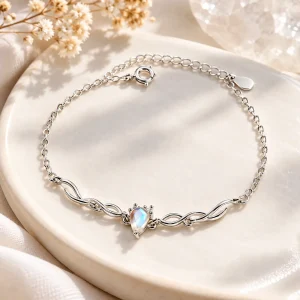
The bracelets, the piece you can give with your eyes closed
Frequently asked questions
Who should you give moonstone to?
Someone born in June, whose birthstone it is, and more broadly a friend, a mother, a sister, or a partner. Its register is soft and not explicitly romantic, which makes it giftable without ambiguity. Skip the ring if the person works with their hands.
Can you give moonstone to a man?
Yes. The idea that it's a feminine stone dates to the 1980s and 1990s, even though the stone was worn by men in tie pins around 1900. A matte-bead bracelet or a signet ring with an inset cabochon are the two safest formats.
How do you give a ring without knowing the size?
Choose an open-band ring, which adjusts to the finger with no size to specify. Otherwise, discreetly borrow a ring worn on the same hand and measure its inner diameter. A stretch bracelet or a pendant removes the problem entirely.
Is moonstone a good baby gift?
Yes, as long as you give it to the parent and without any promise. An understated piece, wearable every day, lasts for years. Avoid the vocabulary of fertility and cycles: those are unproven traditions, and they can hurt someone whose situation you don't know.
Which color should I choose if I don't know their taste?
White or blue, in an understated setting. Those are the two colors everyone associates with this stone, and they go with any wardrobe. Save the rainbow, black, and pink varieties for someone whose style you actually know.
Should you write a note with the jewelry?
Yes, and keep it short. Three or four lines, a concrete reason rather than a symbol, and no virtue attributed to the stone. Without text, the person will look for the meaning themselves and often land on something other than what you intended.
Can you give moonstone for a marriage proposal?
It's possible, but an engagement ring is worn every day and this stone has perfect cleavage. A common solution is to use moonstone for the proposal and plan on a harder stone for everyday wear.
How much should you spend?
There's no expected amount for this type of stone, whose per-unit value stays moderate. What sets the price is the clarity of the sheen, its color, and its position on the dome, not the size of the cabochon. A small stone with a crisp sheen beats a large, dull one.
Where to go from here
This page is the crossroads for gift-giving. To narrow it down:
- Specific occasions: the June birthstone, the engagement ring, giving it to a man.
- Choosing the piece: colors and varieties, judging quality, moonstone prices, where to buy it.
- What to tell them: how to wear it, cleaning it, is it fragile.
- The meaning: its meaning, myths and legends.
- The full picture: the complete guide.
Everything I make is in the shop, and every piece ships already gift-wrapped. Torn between two pieces? Write to me, I answer myself and I won't sell you the pricier one just because.
My sources
The birthstone list by month is the one set by American jewelers in 1912 and revised since: it's a commercial convention, not an ancient tradition, and I present it as such. The hardness and cleavage data behind the wearing advice follow the public sheets from the GIA and Mindat.
The ranking of occasions, the common mistakes, and the note examples come from my workshop and from conversations with the people who buy pieces from me as gifts. These are observations, not a study, and I'd rather say so.
Last updated: August 19, 2026. If you spot an error in this article, let me know: I'll fix it and note it.
✦ À porter, à offrir
Découvrez mes créations