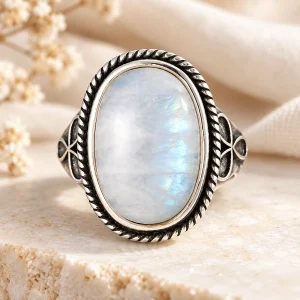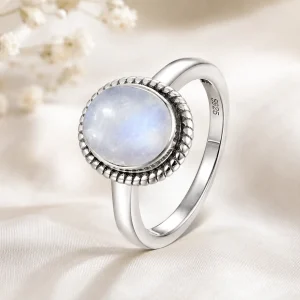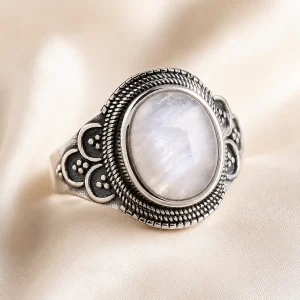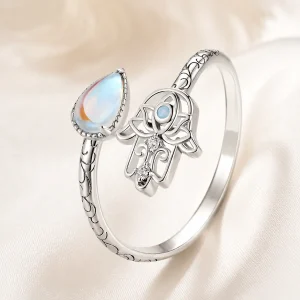



Description
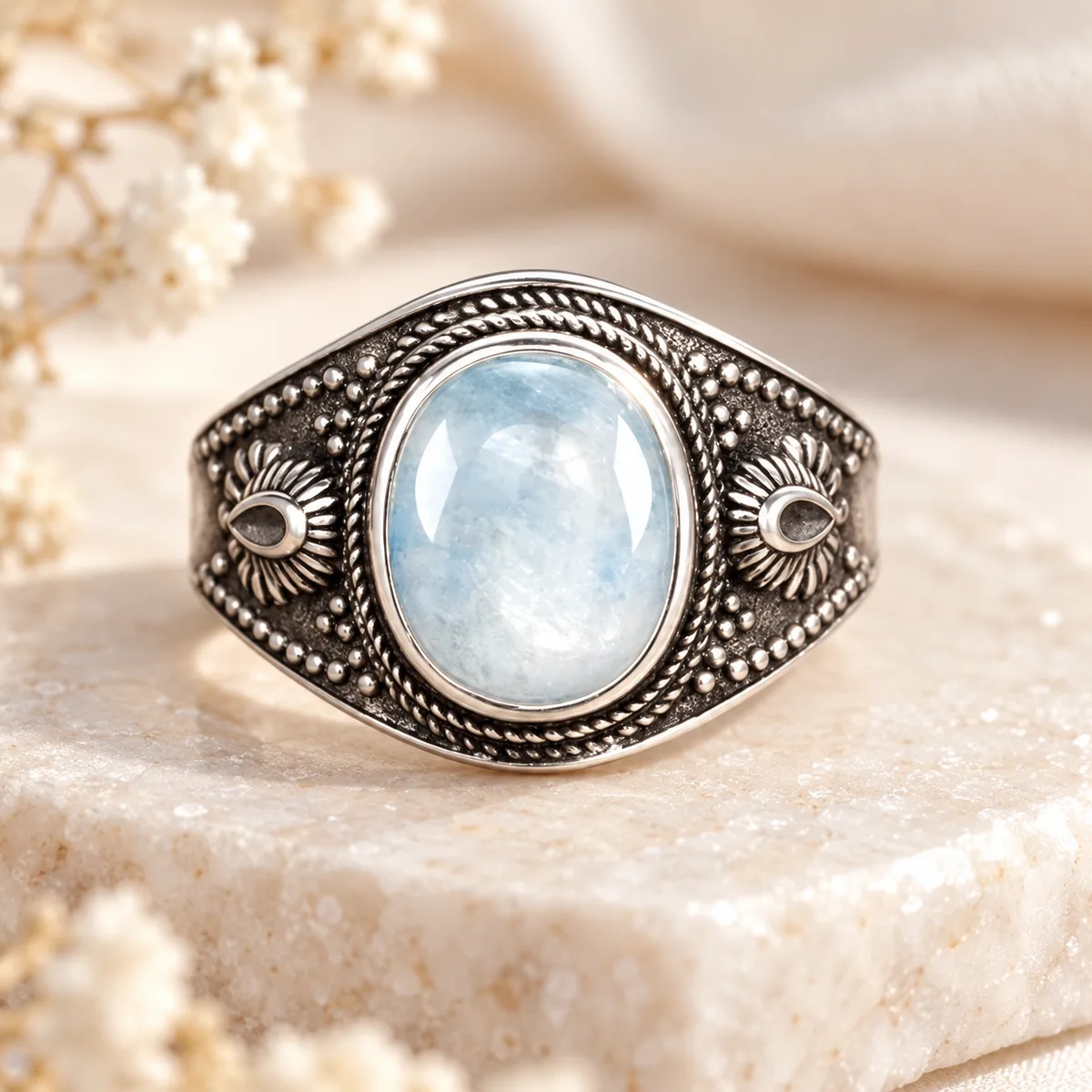
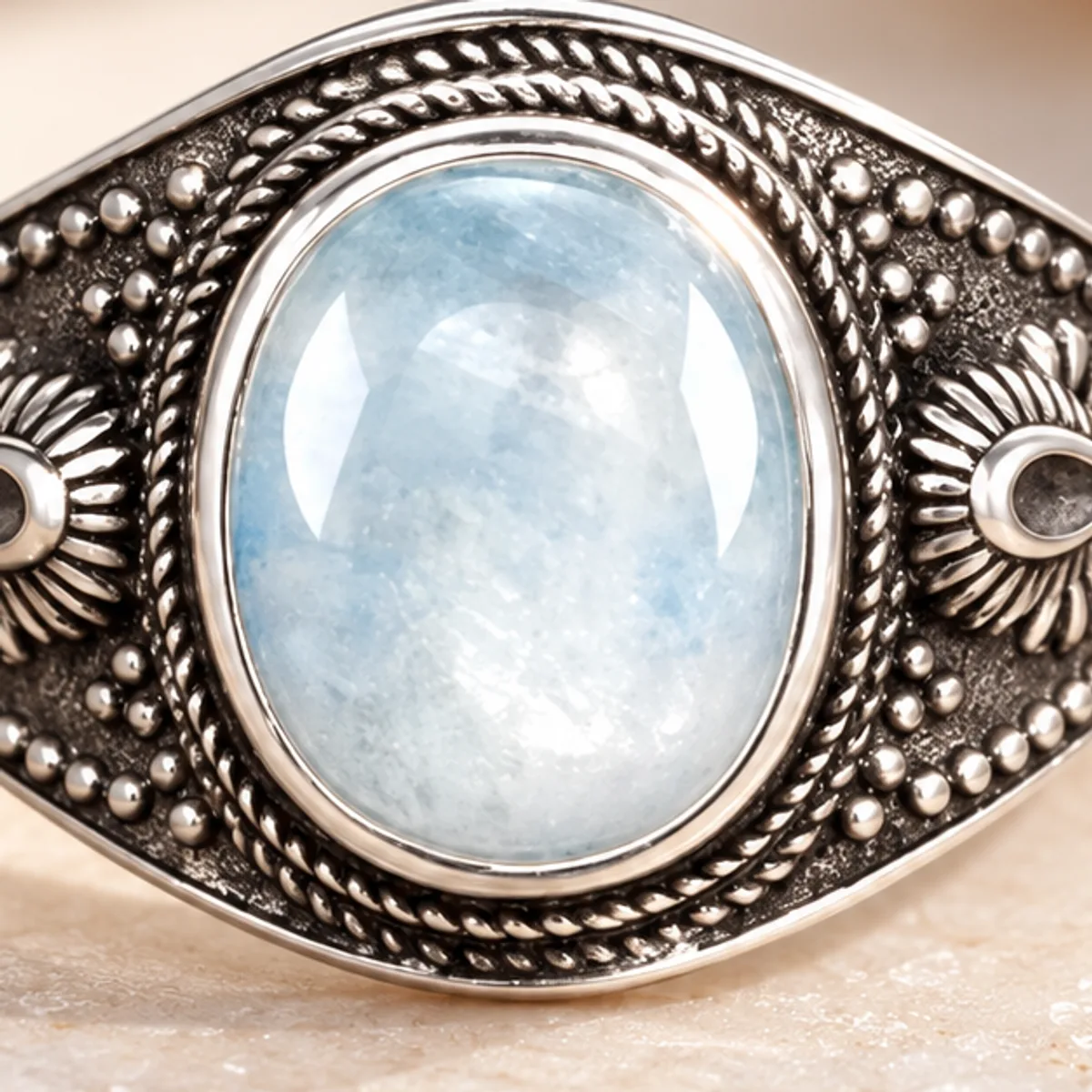
A faceted oval stone, and on each shoulder a fan of engraved lines radiating away from it, the way rays are drawn around a sun.
Lines that point
Engraved lines do something no other ornament does: they have a direction, and the eye follows them. Fan them out from behind the stone and every line sends the eye back to the centre. That is the entire reason for a sunray shoulder, and it is why the motif has survived on signet rings and watch dials for two centuries while prettier ornaments came and went.
The lines are cut with a burin, each one in a single pass, which is the only way to get a clean bright cut: stopping and restarting leaves a visible join that catches the light differently. On a curved shoulder that single pass is harder than it sounds, because the tool has to follow the curve while keeping a constant depth. Look along the shoulder at a low angle and you will see that the lines are slightly deeper where they leave the bezel and shallower at the edge, which is deliberate: it makes the fan look like it is spreading.
The stone is faceted rather than domed, which makes it the second of only two faceted models in the collection. Faceting gives short flashes instead of the sliding veil of a cabochon, and the pairing with sunrays is not an accident: sparkle at the centre, radiating lines around it, and the two read as one bright event rather than as a stone sitting on a decorated band.
The stone sits in a bezel with the crown standing a little above the metal, so the edges of the facets are the exposed part, as on any faceted stone. This is not the ring for gardening. It is the ring for a hand that will be seen. The other rings are here, and the size guide takes two minutes.
- Faceted oval moonstone: short flashes rather than a sliding veil.
- 925 sterling silver hallmarked S925, sunray lines engraved with a burin.
- Each line cut in a single pass, deeper at the bezel and shallower at the edge.
- UK sizes I 1/2 to T 1/2, that is 48 to 62 mm. Delivered in two weeks.
The specifications
- Stone
- Real moonstone (adularia), faceted oval cut
- Origin
- India
- Metal
- 925 sterling silver, S925 hallmark
- Setting
- Bezel, no glue
- Decoration
- Engraved sunray shoulders
- Finish
- Oxidized silver, crests rubbed back with a cloth
- Sizes
- UK I 1/2 to T 1/2 (48 to 62 mm)
- Gender
- Women
- Brand
- Melissa Moon
What a bright cut actually is
An engraved line is not a scratch. The burin lifts a curl of metal and leaves behind a V shaped furrow with two walls, and those walls are mirror polished by the tool itself as it passes. That is what jewellers call a bright cut, and it is why a hand engraved line looks like a line of light while a machined or cast one looks like a groove. You can see the difference across a room without knowing what you are looking at.
The consequence for wear is worth knowing. A bright cut stays bright as long as the walls of the furrow stay clean. Polishing compound, toothpaste and any abrasive cream round those walls off and the line goes dull permanently. It is the one finish in this collection that a well meaning cleaning can destroy in a minute, and no jeweller can restore it without recutting.
A burin cut in one pass is the fastest bright thing I can do to silver. Two passes and it is just a scratch that took twice as long.
No salt, no ultrasonic tank, no hot water: moonstone is a feldspar, and all three damage it for good. Above all, no polishing paste and no abrasive cloth on the engraved shoulders: they dull a bright cut for good. Lukewarm water, a soft dry cloth, nothing more. A faceted stone needs cleaning more often than a cabochon, since finger grease on the facets kills the sparkle. The detail is in cleaning a moonstone piece, and the safe methods in caring for it without harming it.