Moonstone Earrings
Four models, in 925 sterling silver or gold plate, from studs to long drops. It is the smallest family in the catalogue, and the only one where two stones have to match.
Showing all 20 results
-
-20 %

Blue Moonstone Earrings
Original price was: 35,90 €.27,90 €Current price is: 27,90 €. Add to basket -
-20 %
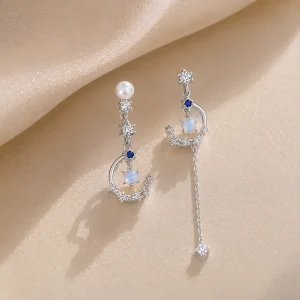
Crescent Moon Moonstone Earrings
Original price was: 34,90 €.27,90 €Current price is: 27,90 €. Add to basket -
-20 %
Gilded Tulip Moonstone Earrings
Original price was: 34,90 €.27,90 €Current price is: 27,90 €. Add to basket -
-20 %
Gold Moonstone Earrings
Original price was: 27,90 €.21,90 €Current price is: 21,90 €. Add to basket -
-20 %
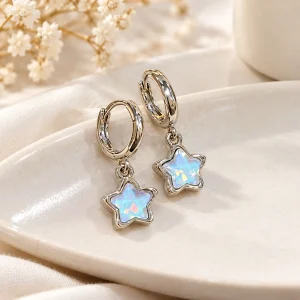
Little Star Moonstone Earrings
Original price was: 34,90 €.27,90 €Current price is: 27,90 €. Add to basket -
-20 %
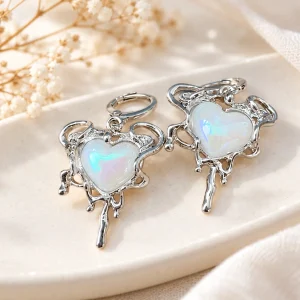
Molten Heart Moonstone Earrings
Original price was: 34,90 €.27,90 €Current price is: 27,90 €. Add to basket -
-20 %
Moonstone Dangle Earrings
Original price was: 32,90 €.25,90 €Current price is: 25,90 €. Add to basket -
-20 %
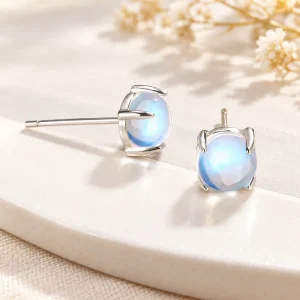
Moonstone Domed Stud Earrings, Four Claws
Original price was: 22,90 €.17,90 €Current price is: 17,90 €. Add to basket -
-20 %
Moonstone Drop Earrings
Original price was: 32,90 €.25,90 €Current price is: 25,90 €. Add to basket -
-20 %
Moonstone Earring Set, Bow, Star and Butterfly
Original price was: 30,90 €.23,90 €Current price is: 23,90 €. Add to basket -
-20 %
Moonstone Earrings with Golden Sheen
Original price was: 35,90 €.27,90 €Current price is: 27,90 €. Add to basket -
-20 %
Moonstone Heart Hoop Earrings
Original price was: 36,90 €.28,90 €Current price is: 28,90 €. Add to basket -
-20 %
Moonstone Heart Screw Back Earrings
Original price was: 30,90 €.23,90 €Current price is: 23,90 €. Add to basket -
-20 %
Moonstone Leverback Earrings, Scroll Frame
Original price was: 31,90 €.24,90 €Current price is: 24,90 €. Add to basket -
-20 %
Moonstone Mini Stud Earrings Set
Original price was: 30,90 €.23,90 €Current price is: 23,90 €. Add to basket -
-20 %
Moonstone Oval Stud Earrings
Original price was: 36,90 €.28,90 €Current price is: 28,90 €. Add to basket -
-20 %
Moonstone Pierced Feather Earrings
Original price was: 35,90 €.27,90 €Current price is: 27,90 €. Add to basket -
-20 %
Moonstone Ring and Square Hoop Earrings
Original price was: 45,90 €.35,90 €Current price is: 35,90 €. Add to basket -
-20 %
Moonstone Round Leverback Earrings
Original price was: 41,90 €.32,90 €Current price is: 32,90 €. Add to basket -
-20 %
Sterling Silver Moonstone Earrings
Original price was: 37,90 €.29,90 €Current price is: 29,90 €. Add to basket
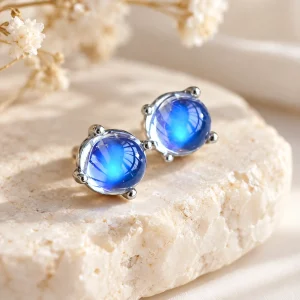
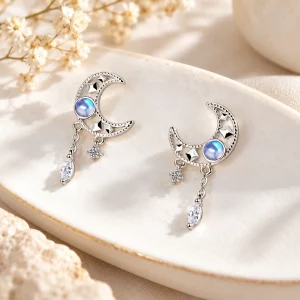
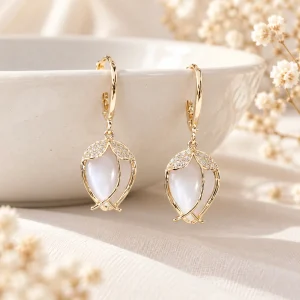
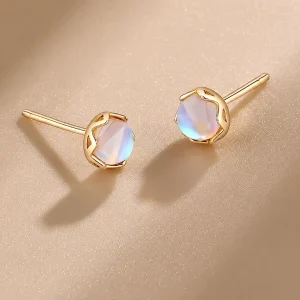
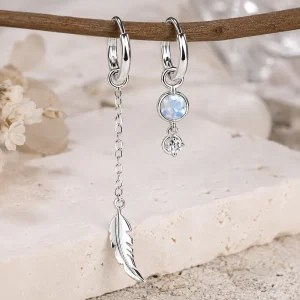
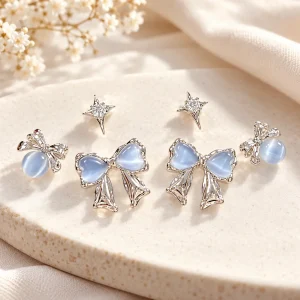
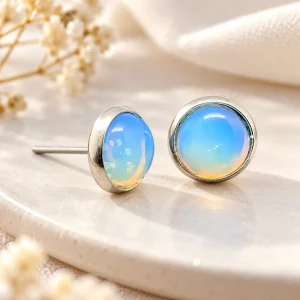
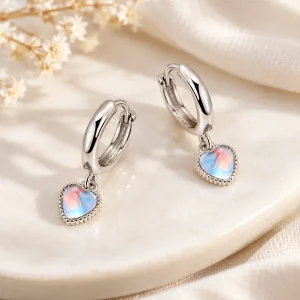
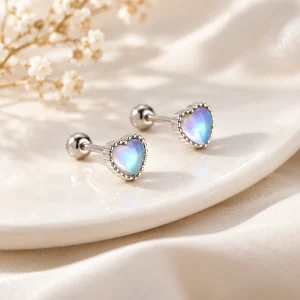
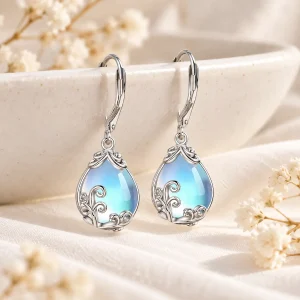
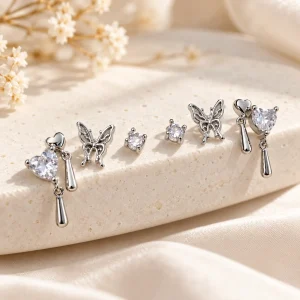
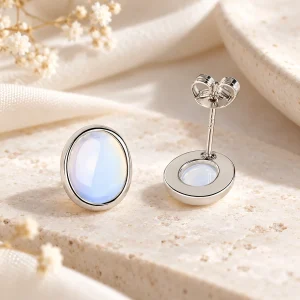
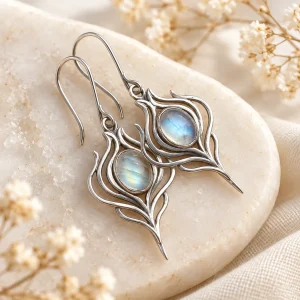
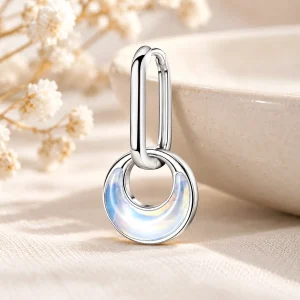
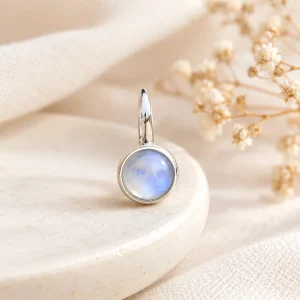
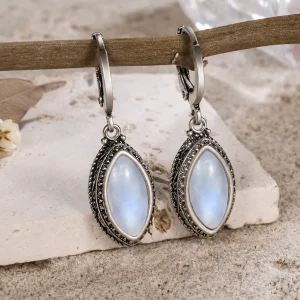
Stud, drop or long
Three ways to wear the same stone, and they are not for the same days.
Movement changes everything on this stone in particular, and I have set out separately how to wear them by face and hairstyle.
The post passes through the skin
It is what sets an earring apart from every other piece, and yet it is the part you never look at when buying. A pierced lobe is not an ordinary patch of skin: it is a channel, and the metal stays in permanent contact with it, at night included.
The subject has a name: nickel. It is the most common contact allergen in Europe, and the posts of cheap jewellery almost always contain it, sometimes under a thin plating layer that wears away. Sterling silver contains none: it is an alloy of silver and copper, and it is one of the reasons it is the workshop’s default setting.
If your ears react to some earrings and not others, it is almost never the stone at fault. It is the post, or the back, often of a different metal from the rest of the piece. On every listing, the metal of the post is given like that of the setting.
Two stones are never identical
It is the difficulty peculiar to this family, and it exists nowhere else in the catalogue. A ring has only one stone; a bracelet has twenty, and their differences are lost in the number. A pair has two, worn fifteen centimetres apart, on either side of a face that people look at. The slightest gap in colour or in sheen intensity shows.
Now the sheen of a moonstone depends on the orientation of the internal planes of the crystal, which you do not choose in the cutting. Matching two cabochons is therefore a job of sorting, not of making: you set some aside, you compare two by two, you start again. It is what takes the most time on this family, and it is why it is the smallest.
What to expect from it. Two well-matched stones look alike enough that you notice nothing at a metre. Seen side by side in the hand, they stay different, and they always will. A strictly identical pair is not natural stone: it is glass.
Weight, and what it does to the lobe
An earring is the only piece hung from a single, fragile point. Worn daily for years, heavy earrings stretch the piercing, which eventually lengthens irreversibly. It is not a matter of the quality of the piece, it is mechanics.
Moonstone works in your favour here: it is a feldspar, a light material, and a cabochon of reasonable size weighs less than a glass bead of the same volume. The workshop’s long models are lighter than they look, because their drop is in openwork silver and not solid mass. If you wear earrings every day, alternate with studs all the same: it is the best service you can do a lobe.
The stone itself has perfect cleavage and chips under impact. At the ears it is little exposed, except at one precise moment: taking them off over a basin. That is where most stones are lost or cracked, and it is a habit you pick up in one go.
What you will not find here
No post of unidentified metal. It is the first saving on a cheap earring: a pretty setting, and behind it, a post of anonymous alloy. Yet it is the only part that enters the skin. Here the post and the back are the same metal as the piece, and it is named.
No pair assembled at random. Two cabochons taken from the same bag do not make a pair. When I cannot match two stones properly, the model does not come out, and that has happened more often than I would have liked.
And no models for the sake of numbers. You will find only four references here, against seventeen in rings. I could have added hoops and leverbacks to pad the page; nobody looks for them in moonstone, and a collection swollen with items nobody wants serves nobody. The glass imitation has no place here either, not here nor anywhere.
Do your ears react easily? Write to me before you order, I answer myself within 48 working hours and I will tell you exactly what the post of the model you are interested in is made of. And you have fourteen days to change your mind.
Hesitating between a stud and a drop? The wearing guide answers by hairstyle and face shape, and the ways to wear the stone are gathered separately.