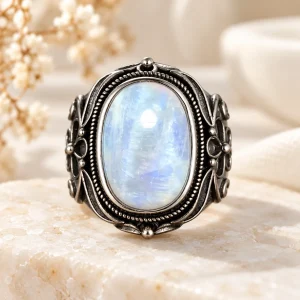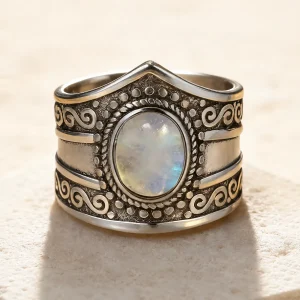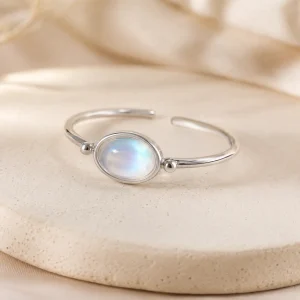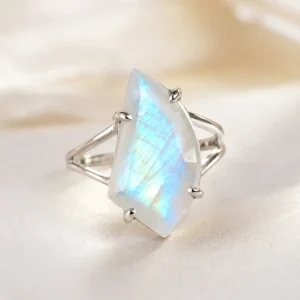



Description
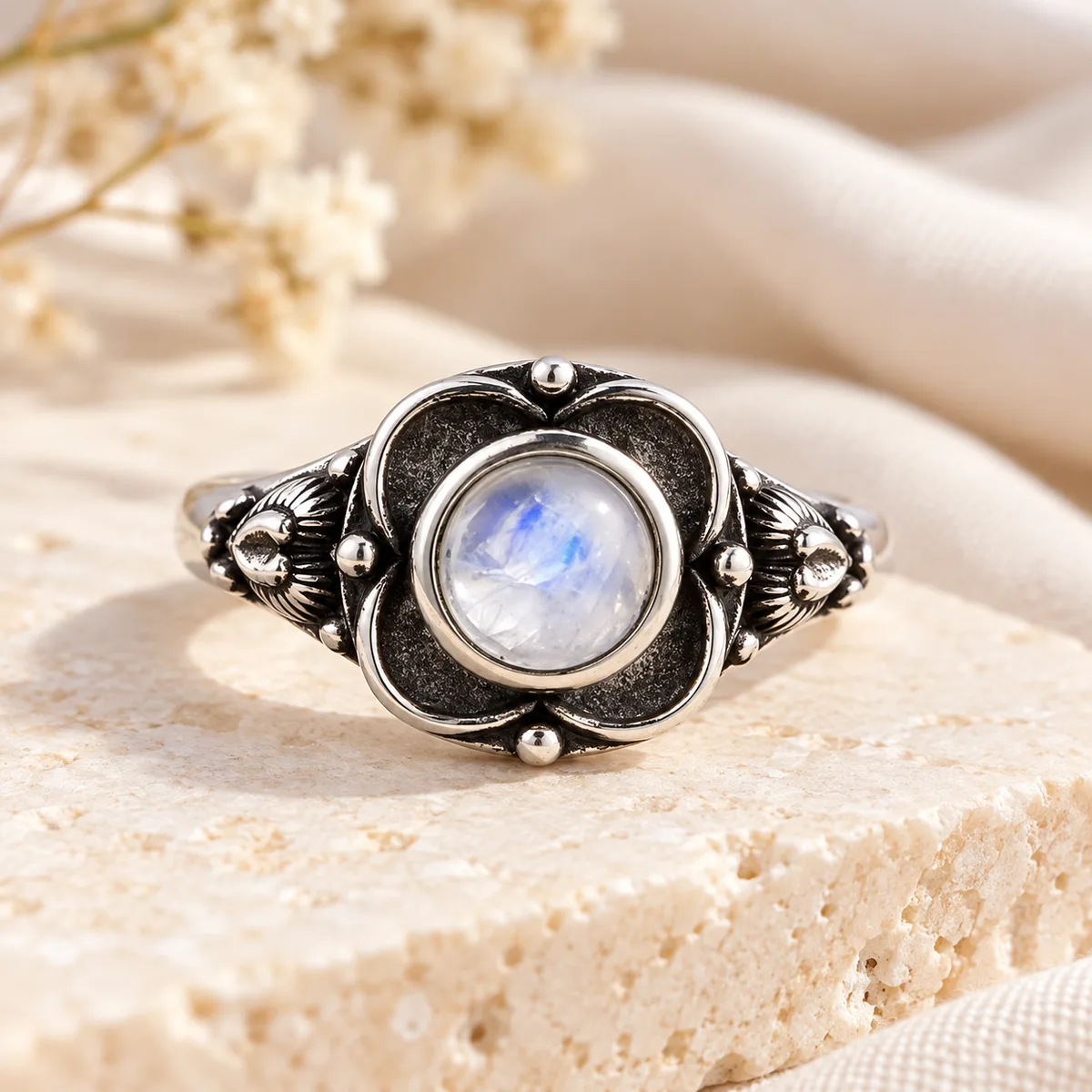
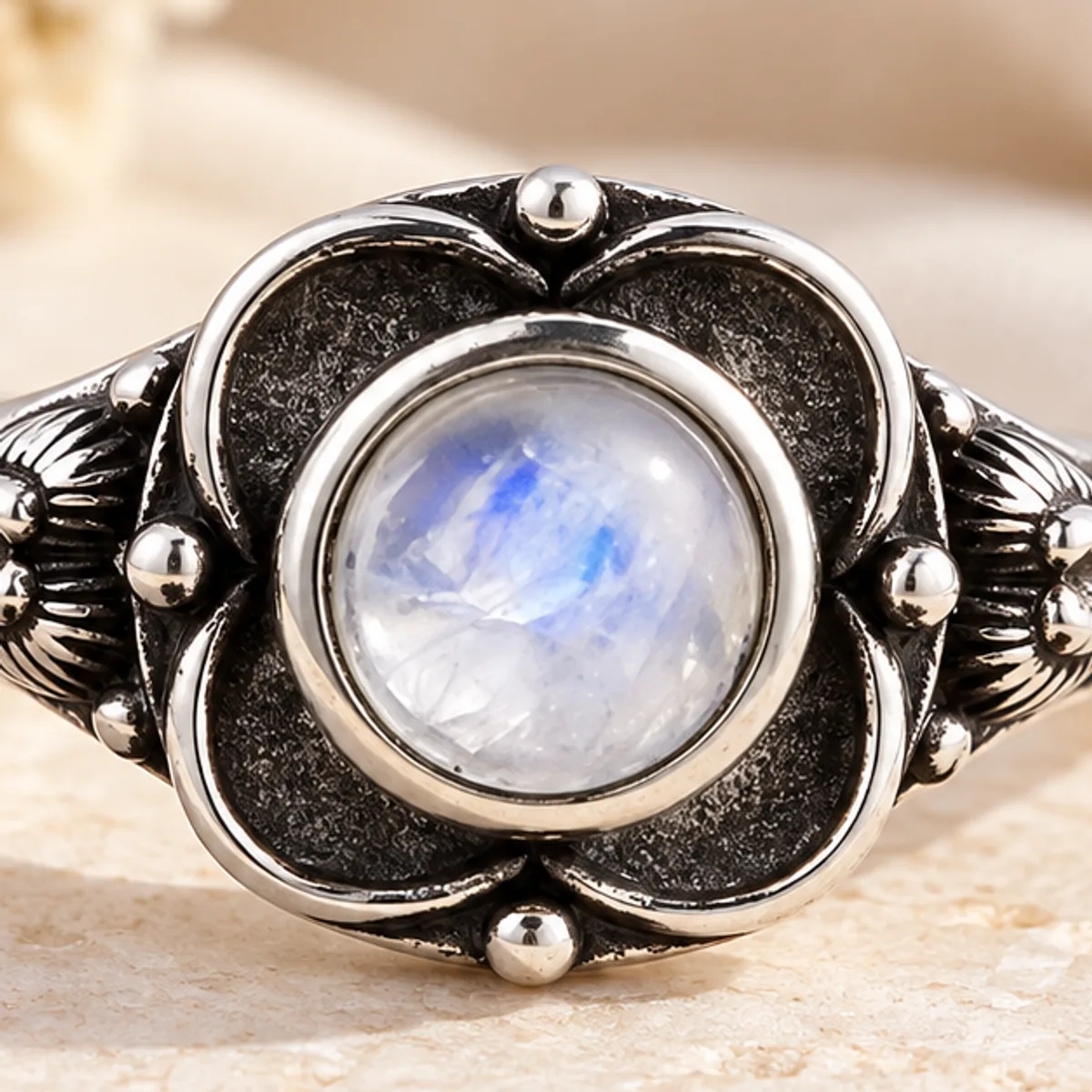
A small round cabochon, and around it four petals that are not decoration laid on a band: they are the body of the ring, the metal that holds the stone and becomes the shoulders.
When the structure is the ornament
On most decorated rings there are two things: a band that does the work, and a motif that sits on it. Here there is one. The four petals rise from the shank, meet around the stone, and hold it. Remove the flower and there is no ring left. That changes what the piece can look like, and it changes entirely what it takes to make.
The difficulty is that there is nowhere to hide. On a ring with an applied motif, the joins are underneath the motif and nobody ever sees them. When the structure is the ornament, every join is on the surface, every file mark is on a visible face, and a petal that is a fraction thicker than its neighbour is obvious because the eye compares four shapes that should be identical. It is the kind of piece where the work either holds up to close inspection or fails at it, with nothing in between.
The compensation is that the ring is light for its size. Four petals with air between them cover a wide area of finger for very little silver, so the piece looks generous and weighs almost nothing. That is the oldest trick in jewelry and it never stopped working: the eye measures area, the hand measures mass, and a good design lets them disagree.
The stone is small and round, held in a closed bezel at the junction of the petals. A small cabochon shows its veil as a flash rather than a permanent glow, which suits a ring meant to be worn every day and forgotten. The other rings are here, and the size guide takes two minutes.
- Small round moonstone cabochon, closed bezel at the junction of the petals.
- 925 sterling silver hallmarked S925, four petals forming the body of the ring.
- Wide on the finger, almost no weight: the structure is the ornament.
- US sizes 4 1/2 to 10, that is 48 to 62 mm. Shipped in two weeks.
The specifications
- Stone
- Real moonstone (adularia), small round cabochon
- Origin
- India
- Metal
- 925 sterling silver, S925 hallmark
- Setting
- Closed bezel, no glue
- Shape
- Four petal body, petals rising from the shank
- Finish
- Oxidized silver, crests rubbed back with a cloth
- Sizes
- US 4 1/2 to 10 (48 to 62 mm)
- Gender
- Women
- Brand
- Melissa Moon
Four shapes that must match
The eye is extraordinarily good at comparing repeated shapes and extraordinarily bad at judging a single one. Show someone one petal and they cannot say whether it is well drawn. Show them four and they will spot in a second that the third is a little wider. So on a piece like this the work is not making a good petal, it is making four that agree, and the fourth is always the hard one because by then the first three have set the standard.
How I actually do it: file all four together, not one after another. The petals are shaped while still joined as a single piece, so the file crosses all four at once and they cannot drift apart. They are separated last. It is slower to set up and far faster to finish, and it is the difference between a flower and four petals that happen to be near each other.
Anyone can make one good petal. The trade is in the fourth one, and that is true of almost everything made by hand.
No salt, no ultrasonic tank, no hot water: moonstone is a feldspar, and all three damage it for good. The gaps between the petals catch soap, so rinse under lukewarm water rather than wiping. Avoid silver dips, they lift the oxidation from between the petals and the flower flattens out. The detail is in cleaning a moonstone piece, and the safe methods in caring for it without harming it. The petals stand higher than the stone, so they meet a knock first, which protects a cabochon that chips.