


Description
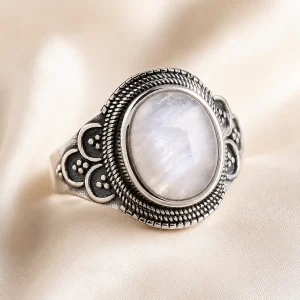
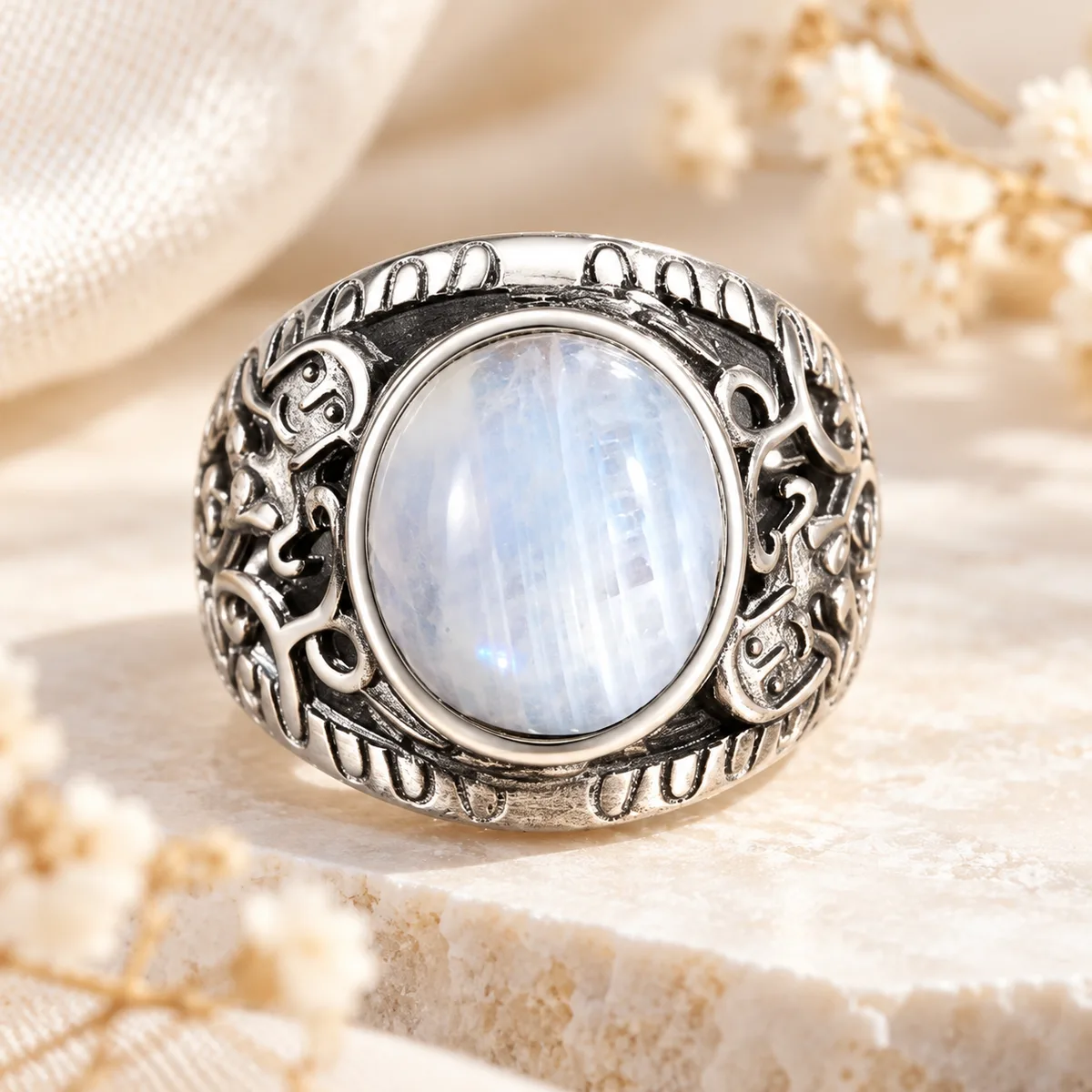
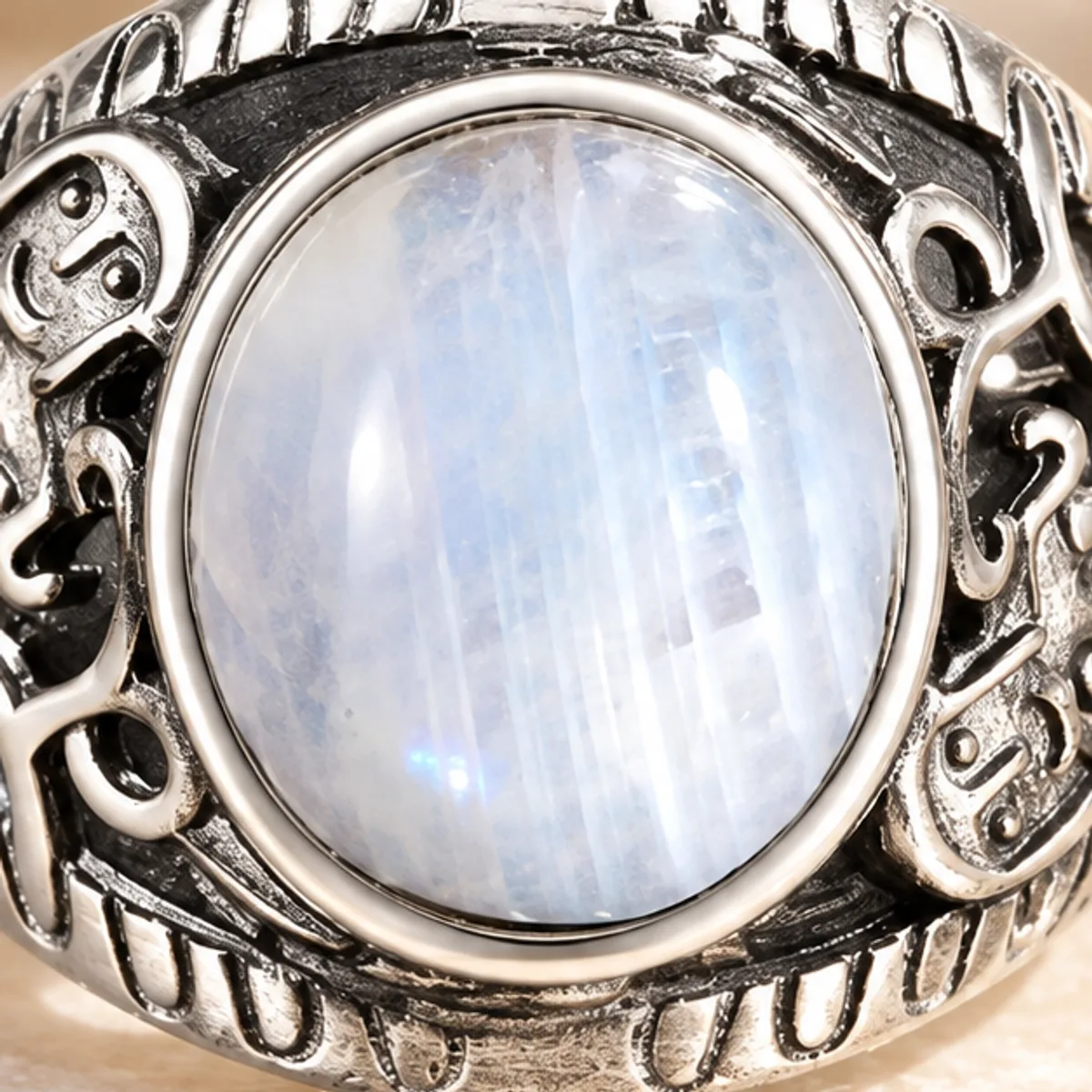
An oval cabochon on a wide band, and that band is pierced: scrolls cut right through the metal, continuing around the finger rather than stopping at the shoulders.
Piercing the part that carries the load
Openwork around a stone is common and it is easy, because that part of a ring holds nothing up. Piercing the band itself is a different question, because the band is the structure. Every hole removes metal from the thing that has to resist being squeezed, and there is a point past which the ring simply ovals the first time it is caught in a car door.
The rule I work to is that the continuous metal along each edge of the band must never drop below about a millimeter, whatever the pattern does in the middle. Think of it as two thin rings joined by the pattern between them: the edges carry the load, the scrolls fill the space. That is why the piercing on this ring is concentrated in the center of the band and why the two borders are unbroken. It looks like a decorative choice and it is a structural one.
What you gain is considerable. A wide pierced band is the only way I know to get real presence on a finger at this weight of silver: the ring covers a lot of hand, the skin shows through, and it weighs less than several of the narrow models in this collection. It is also cooler to wear in summer, which sounds trivial until you have worn a wide solid band in August.
The stone sits in a closed bezel and the band is wide, so take a quarter size up compared to a thin ring. The blue veil is the only closed surface on a piece that is otherwise mostly air. The other rings are here.
- Oval moonstone cabochon, closed bezel, the only solid surface on the ring.
- 925 sterling silver hallmarked S925, wide band pierced with scrolls all the way round.
- Unbroken borders on both edges: the pattern is decorative, the edges carry the load.
- US sizes 4 1/2 to 10, that is 48 to 62 mm. Shipped in two weeks.
The specifications
- Stone
- Real moonstone (adularia), oval cabochon
- Origin
- India
- Metal
- 925 sterling silver, S925 hallmark
- Setting
- Closed bezel, no glue
- Shape
- Wide band, pierced with scrolls around the whole circumference
- Structure
- Unbroken border along both edges
- Finish
- Oxidized silver, crests rubbed back with a cloth
- Sizes
- US 4 1/2 to 10 (48 to 62 mm)
- Gender
- Women
- Brand
- Melissa Moon
How much metal you can take out
More than people expect, and only in the right places. A band resists deformation mainly through the material at its two edges, in the same way a steel beam does most of its work in its top and bottom flanges and very little in the web between them. Remove the middle and you lose surprisingly little strength. Remove the edges and the ring is finished. Engineers have known this for two centuries and jewelers worked it out by trial and error long before that.
The practical test I use is simple and you can do it yourself on any pierced ring, carefully: squeeze it gently between finger and thumb across the widest point. A well pierced band feels rigid. One where the pattern has eaten into the borders gives very slightly, and that slight give is the whole warning you will get before it goes oval permanently.
You can take out half the metal and lose almost none of the strength, provided you take it out of the middle. That is the entire secret of openwork, and it is not a secret.
No salt, no ultrasonic tank, no hot water: moonstone is a feldspar, and all three damage it for good. A pierced band is easier to clean than a carved one, since water goes straight through rather than collecting: rinse under lukewarm water and dab dry. Avoid silver dips, they lift the oxidation from the hollows of the scrolls. The detail is in cleaning a moonstone piece, and the safe methods in caring for it without harming it. The bezel protects the stone, though a moonstone chips on a real knock.