


Description
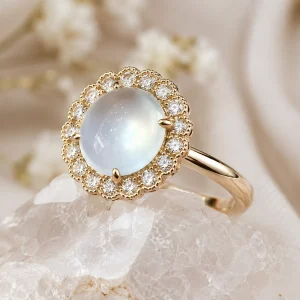
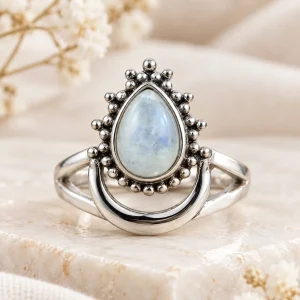
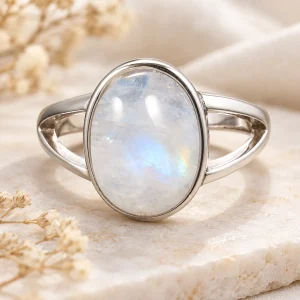
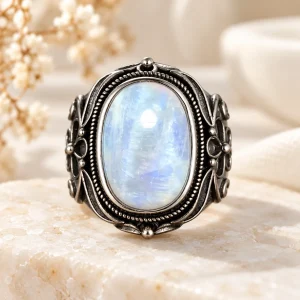
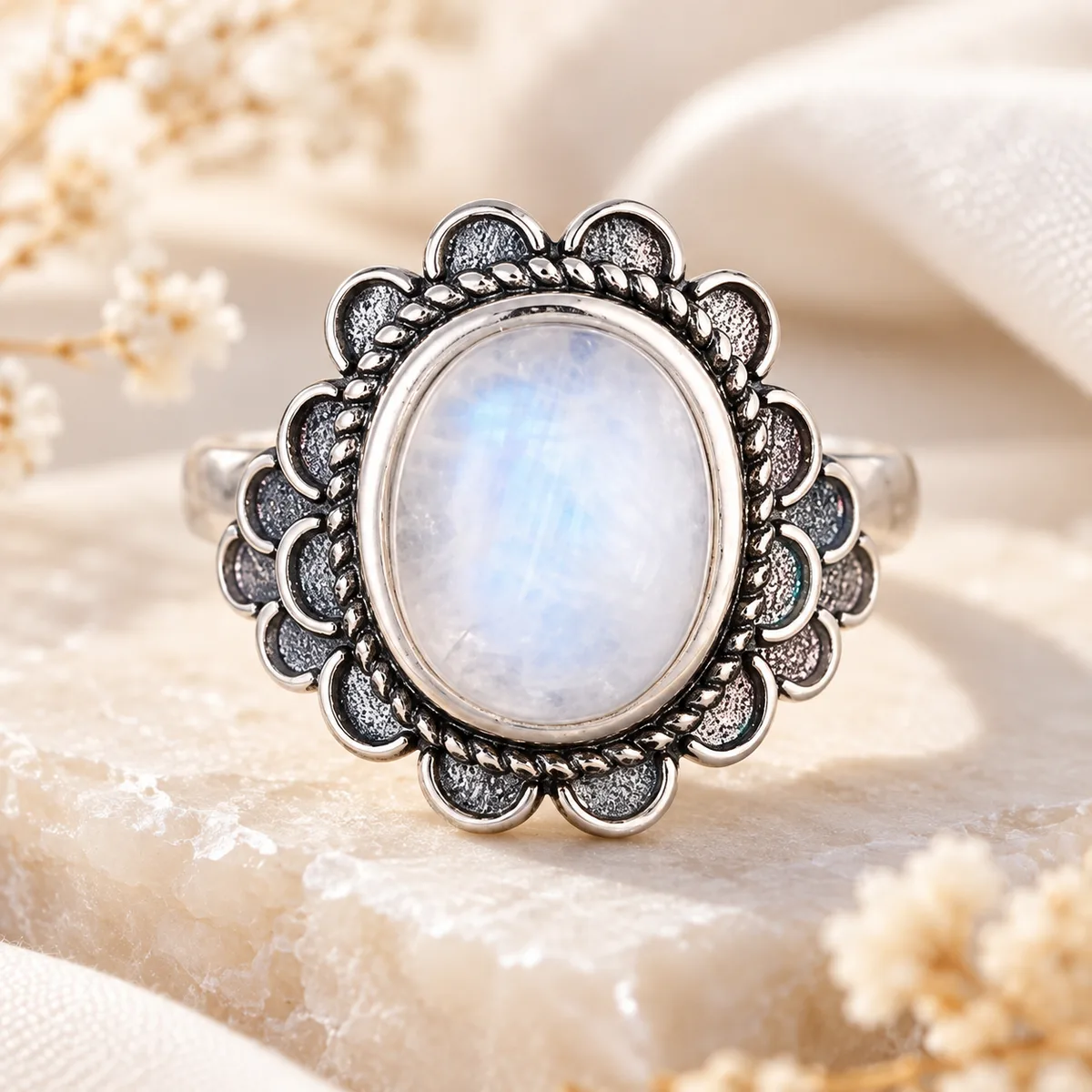
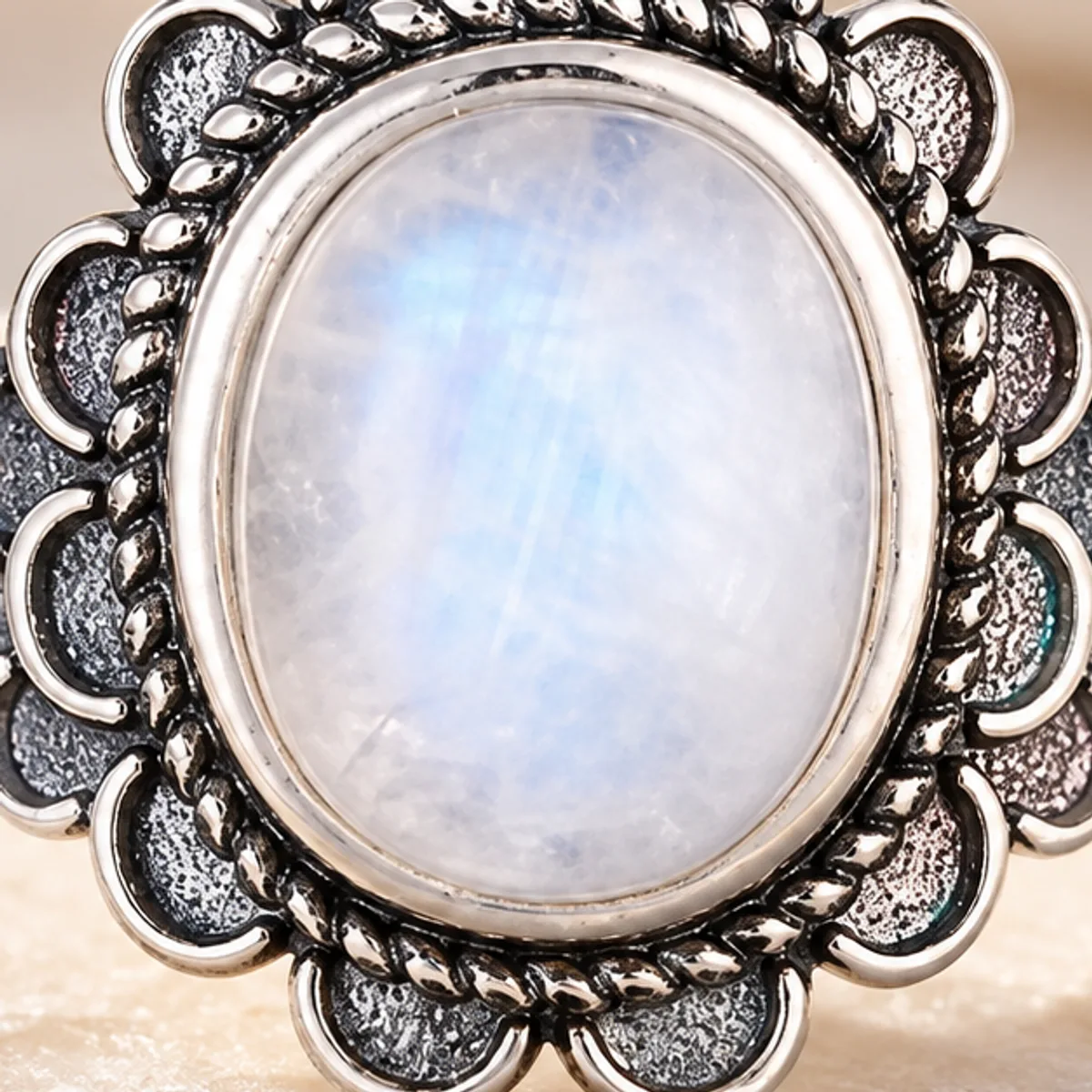
An oval cabochon inside not one ring of petals but two, the upper layer set back from the lower and raised above it, with a visible gap between the two.
Two layers, and the shadow between them
A single corolla is a drawing in metal. Two corollas, one above the other with air between, is a piece of relief, and the difference is shadow. Not the drawn shadow of an engraved line, which is a dark groove, but a real cast shadow: the upper petals throw their shape onto the lower ones, and that shadow moves as the hand moves. It is the only way I know to get depth into a piece only three millimeters tall.
The gap has to be small enough to read as one object and large enough for light to get in. Too tight and the two layers look like one thick petal with a line across it. Too open and they look like two separate rings that happen to be stacked. The working range is narrow, a fraction of a millimeter either way, and finding it is the whole of the design work on this model.
The two layers are also offset: each upper petal sits over the gap between two lower ones, never directly above a lower petal. That is the same rule as roof tiles and for the same reason: an element that covers a joint looks intentional, an element that sits on another element looks like a mistake. It also means that from directly above you see a continuous surface, and from an angle you see through to the lower layer, so the ring changes as you turn your hand.
The stone sits in a closed bezel at the center of both layers. The blue veil is at the bottom of a small well of silver, which concentrates it. The other rings are here, and the size guide takes two minutes.
- Oval moonstone cabochon, closed bezel at the center of two layers of petals.
- 925 sterling silver hallmarked S925, upper layer offset over the gaps of the lower.
- A real cast shadow between the two layers, which moves as the hand moves.
- US sizes 4 1/2 to 10, that is 48 to 62 mm. Shipped in two weeks.
The specifications
- Stone
- Real moonstone (adularia), oval cabochon
- Origin
- India
- Metal
- 925 sterling silver, S925 hallmark
- Setting
- Closed bezel, no glue
- Decoration
- Two layers of petals, offset, with a gap between them
- Finish
- Oxidized silver, crests rubbed back with a cloth
- Sizes
- US 4 1/2 to 10 (48 to 62 mm)
- Gender
- Women
- Brand
- Melissa Moon
Why relief is worth the trouble on a small object
At the scale of a ring, everything is close to flat, and the eye reads flat objects as printed rather than made. Three millimeters of genuine relief is enough to flip that: the piece starts casting its own shadows and the brain files it as a three dimensional thing. Below about a millimeter of relief you get no shadow worth having; above about five, on a ring, you get something that catches on everything. The useful band is narrow and this piece sits in the middle of it.
The cost is that a two layer piece takes two solderings where a one layer piece takes one, and the second soldering has to hold the upper layer at a constant height all the way round. A tenth of a millimeter of tilt is visible, because the gap is what the eye is reading. It is the single most demanding assembly in this collection and the one that gets rejected most often at the bench.
Depth is the cheapest luxury in jewelry and the hardest to make. It costs almost no metal and a great deal of attention.
No salt, no ultrasonic tank, no hot water: moonstone is a feldspar, and all three damage it for good. The gap between the two layers collects cream and is almost impossible to wipe, so rinse under lukewarm water and let it drain rather than trying to reach inside. Do not push a brush into the gap, it will bend the upper petals. Avoid silver dips, they lift the oxidation and the shadow effect goes with it. The detail is in cleaning a moonstone piece, and the safe methods in caring for it without harming it. The petals stand above the stone and protect a cabochon that chips.