


Description
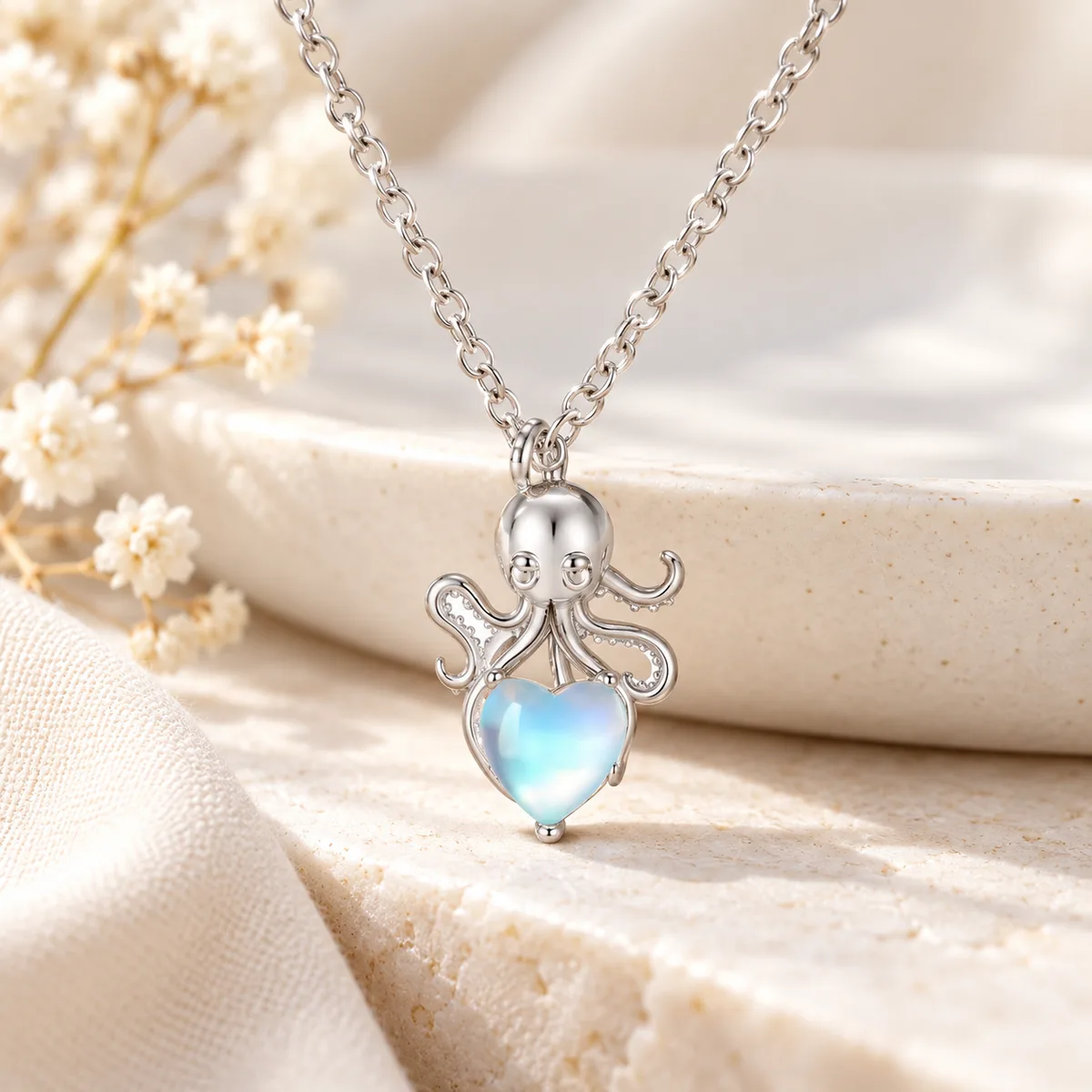
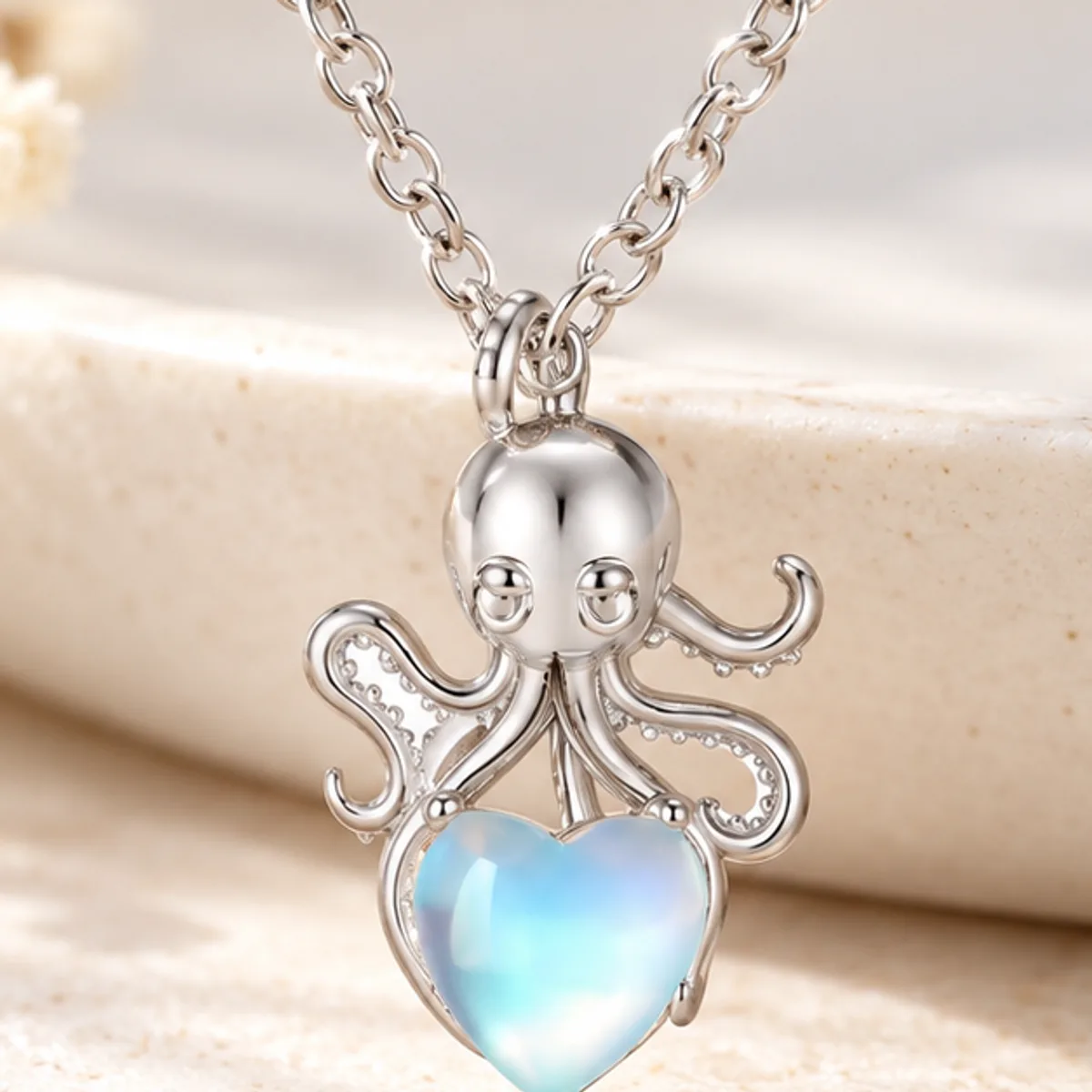
A silver octopus whose tentacles curl around a round moonstone cabochon, which it seems to hold against itself. A marine motif, and one of the few animals that survives being made small.
Eight arms holding the stone
The composition is a capture: the body of the animal occupies the top of the pendant, and its arms come down, curl, and close their suckers on the edge of the stone. The tentacles are not decorative, they are the setting: they are what actually hold the cabochon, and the whole thing holds because eight points of support are better than four prongs.
The animal takes to miniature well, which not all do. A horse or a bird reduced to two centimetres loses its proportions and becomes a confused shape. An octopus is made of curves that coil: the smaller you make it, the more it becomes an abstract motif, and it stays readable. That is why it appears on jewelry and pottery from very far back.
The suckers are punched one by one with a round punch, about a hundred of them, and that is the part of the work that takes longest. After oxidation they stay dark while the tentacles are rubbed back with a cloth: without that contrast you would see smooth arms and the motif would lose what makes it recognisable.
The cabochon is round, mounted in a closed bezel behind the arms, with no glue. On this shape the adularescence gathers into a centred disc of light. Moonstone chips on impact, and here the tentacles themselves shield the edge of the stone, which is the part that a bezel usually has to protect alone. The other necklaces are here, and what a moonstone necklace says was written for the people giving one.
- Real moonstone, round cabochon, centred disc of light.
- 925 sterling silver hallmarked S925, about a hundred suckers punched one by one.
- The tentacles are the setting: eight points of support rather than four prongs.
- Adjustable chain from 40 to 45 cm. Shipped in two weeks.
The specifications
- Stone
- Real moonstone (adularia), round cabochon
- Origin
- India
- Metal
- 925 sterling silver, S925 hallmark, oxidized
- Setting
- Closed bezel behind the arms, tentacles gripping the edge, no glue
- Shape
- Octopus, body at the top, eight arms around the stone
- Finish
- Oxidized silver, suckers left dark, tentacles rubbed back
- Sizes
- Adjustable chain 40 to 45 cm, lobster clasp
- Gender
- Women
- Brand
- Melissa Moon
Which animals survive being made small
Figurative jewelry fails most often at the size, not at the drawing. Anything whose identity depends on proportion, a horse, a heron, a deer, turns to mush below three centimetres, because the legs become wires and the eye can no longer measure. What survives is anything built from coils and curves: octopus, snail, snake, wave. The octopus is the best of them, which is why it has been on jewelry for three thousand years and the heron has not.
The hundred suckers are what makes it read rather than the outline, and they are also the reason it is not cheap. Each one is a single hit with a round punch, and a punch that lands twice in the same place leaves a mark you cannot remove.
An octopus gets better as it gets smaller. Most animals get worse, which is why so few of them belong on jewelry.
No salt, no ultrasonic tank, no hot water: moonstone is a feldspar, and all three damage it for good. The dark in the suckers is the drawing, so no silver dip and no polishing cloth. Dirt collects in them, and a soft brush with lukewarm water once a month is the whole routine. Cleaning a moonstone piece and caring for it without harming it cover the rest.