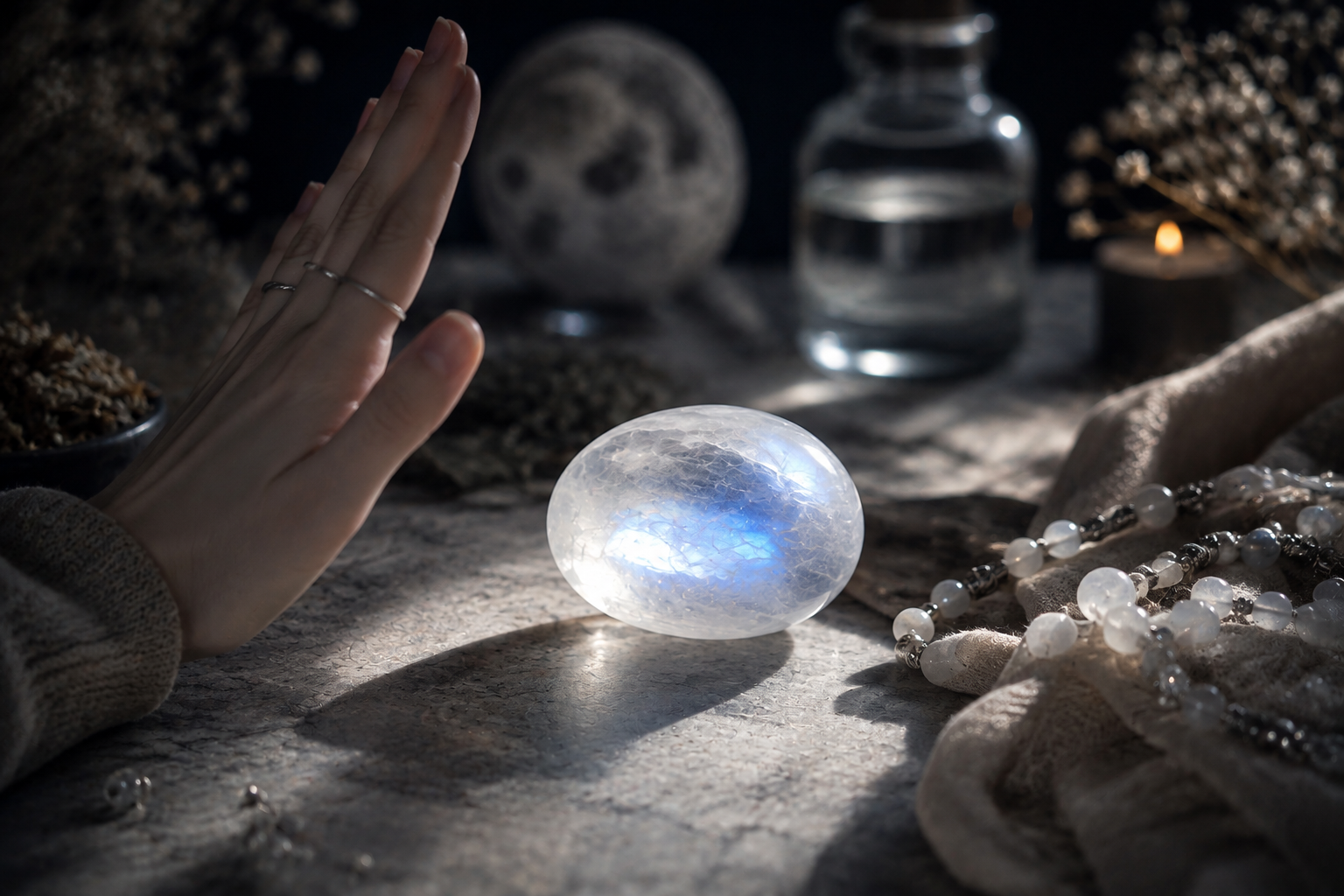
Moonstone Side Effects: What to Know
No, not in the medical sense, and for a simple reason: a side effect supposes an effect, and no effect has ever been demonstrated for this stone. There are, on the other hand, real precautions, one genuine warning, and a list of traditional prohibitions that contradict one another. Here are the three, separately.
This is the most delicate page on this site, and the one I have reworked most. I sell moonstone jewellery: I have no commercial interest in writing what follows. I write it because the question is asked seriously by people who deserve a serious answer.
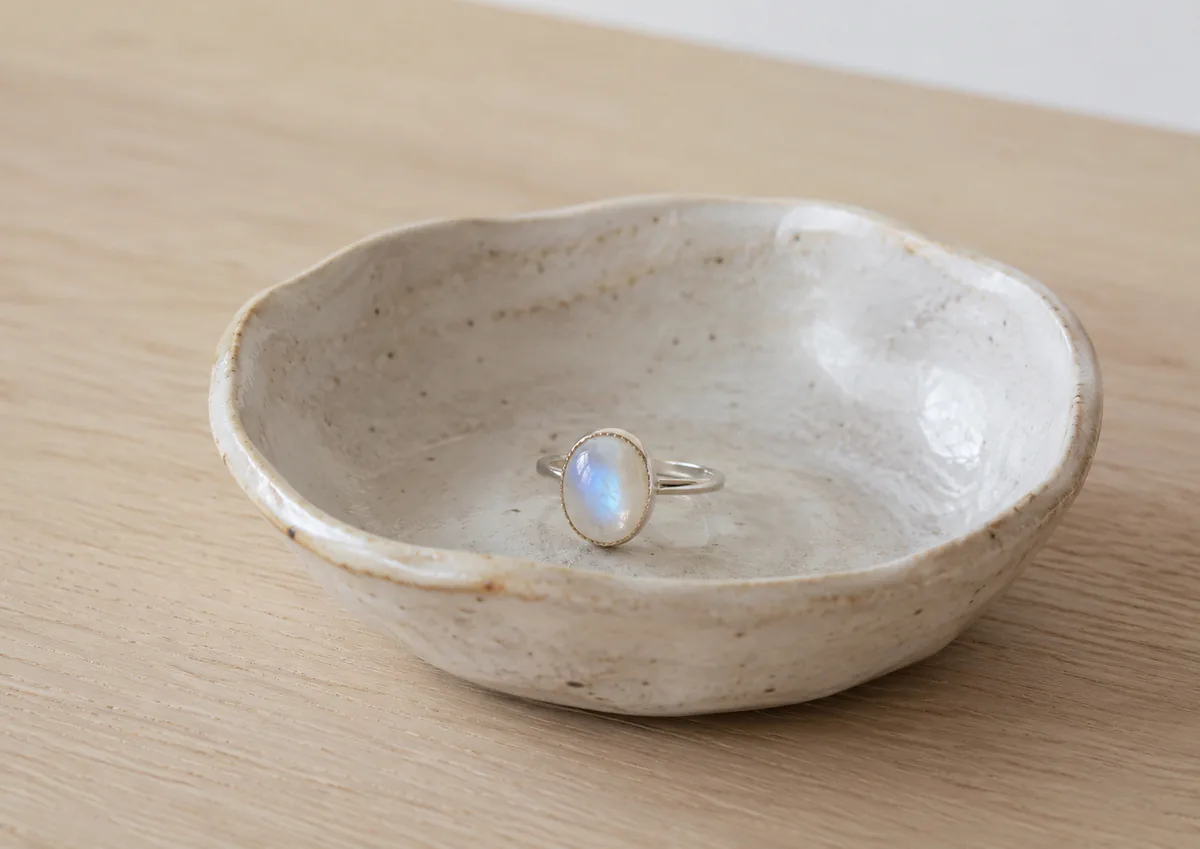
The short version, if you are in a hurry
- No medical side effect exists, because no medical effect has been demonstrated. Wearing this stone is neither beneficial nor harmful.
- The one genuine warning is not about the stone: it is about replacing medical advice with a piece of jewellery.
- The prohibitions you read online are recent traditions, and they contradict one another from one source to the next.
- No reason to avoid a jewel during pregnancy, and no reason to expect anything from it either.
- The real risk with a child is mechanical: a bead that comes off an elastic thread gets swallowed.
- Skin reactions come from the metal, not the stone, and most often from the nickel in low-grade alloys.
- Swallow nothing. No elixir, no water that stones have soaked in.
- The real precautions are those of a fragile object: no hot water, no ultrasound, no knocks.
A side effect supposes an effect
Let us start with the logic, because it settles a good part of the question.
A side effect, strictly speaking, is what an active product does beyond what was asked of it. The term only means something if the product does something: an inert object has no side effects, and nothing to contraindicate.
And moonstone has no demonstrated effect on the body. No study establishes one, beneficial or harmful. What crystal healing assigns to it belongs to traditions and beliefs, and this site always reports it in the conditional.
The consequence is symmetrical, and it has to be said both ways round. There is no reason to expect any benefit from it, and there is no reason to fear any danger from it. A feldspar cabochon worn on a finger or a wrist is an object, not a substance.
What remains after that is of two kinds: the risk from the object itself, and the risk from what is asked of it. Both are real, and they have nothing to do with each other.
The one genuine warning
It fits in one sentence, and this page exists in order to write it.
The only serious danger attached to a stone is entrusting it with what belongs to a doctor. Delaying a consultation, stopping a treatment, or putting off a test because you are wearing a stone: that is the risk, and it has nothing to do with mineralogy.
That risk does not come from the stone, it comes from what is expected of it. It grows when sellers promise effects, when pages talk about "relieving" or "balancing", and when nobody points out that a piece of jewellery heals nothing.
That is why I never write a promise on a product page, and why the symbolic section of every listing is kept apart from the rest. A jewel can keep someone company, please them, remind them of something. It does not replace care.
Everything reported on this page in matters of crystal healing belongs to traditions and beliefs. None of it is a medical claim, and none of it replaces the advice of a healthcare professional. If you have a symptom, a doubt, or a treatment underway, see a doctor. Read the full disclaimer.
What tradition advises against
On to what you actually find online when you look up the contraindications of this stone. I report it because it is what worries people, not because I subscribe to it.
- To very emotional people, on the grounds that the stone would amplify sensitivity rather than calm it.
- During the full moon, a period some sources call it too active and advise against sleeping with.
- To fire signs, Aries, Leo and Sagittarius, by analogy of elements.
- To people who lack grounding, a vague formula meaning those said to be too dreamy.
- Paired with so-called solar stones, carnelian, red jasper, tiger's eye.
- To men, in a few sources, on the grounds of a supposedly feminine polarity.
None of these warnings is demonstrated, none rests on a measured observation, and the next section shows that they do not even agree with one another.
Why these prohibitions contradict each other
This is the argument that should reassure everyone, and it takes no expertise to verify.
Take the list above and look up each item elsewhere. You will find, with the same confidence and often on comparable sites, the exact opposite.
The stone is advised against for emotional people here, and recommended for precisely that reason there. It is forbidden to fire signs on one side, presented as their useful counterweight on the other. It is advised against for men in a few texts, while documented use by men is older than the gendered reading itself, as I explain in moonstone for men.
That instability is not a detail: it is the sign of a body of writing that is recent and not transmitted. These charts were built in the twentieth century, spread with modern crystal healing from the 1970s and 1980s onward, then froze by copying. A genuinely old tradition would not have that variability.
In other words, if a page has worried you by saying this stone is not right for you, another will tell you the opposite in the same terms. The same sorting is done in the myths and legends of moonstone and in which stone not to pair it with.
Pregnancy and fertility: what I refuse to say
This is the subject I am strictest about, and I would rather handle it plainly than avoid it.
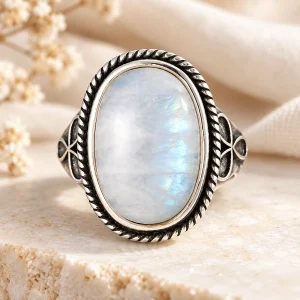
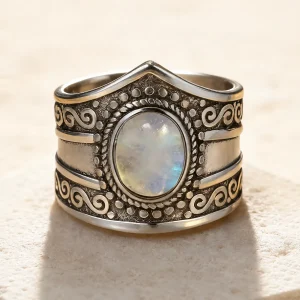
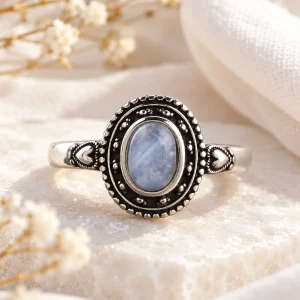
On wearing the jewel. There is no reason to avoid moonstone jewellery during pregnancy. It is an inert object worn on the skin, no different from a wedding band. The only thing to watch is purely practical: fingers swell, and a ring that was already tight can become hard to remove.
On what gets assigned to it. You read everywhere that this stone accompanies fertility, cycles and pregnancy. Those are crystal healing attributions, undemonstrated, and I will never present them as anything else. They can also wound someone going through a difficult time very deeply.
My position fits in one sentence: no promise, no advice, and above all no substitution. A path towards conception, or a pregnancy, is followed with healthcare professionals. The two pages that touch on these subjects do so in the conditional and without any promise: moonstone and fertility and which stone for a pregnant woman.
Children, a real and concrete risk
Here is the only serious physical contraindication on this whole page, and there is nothing symbolic about it.
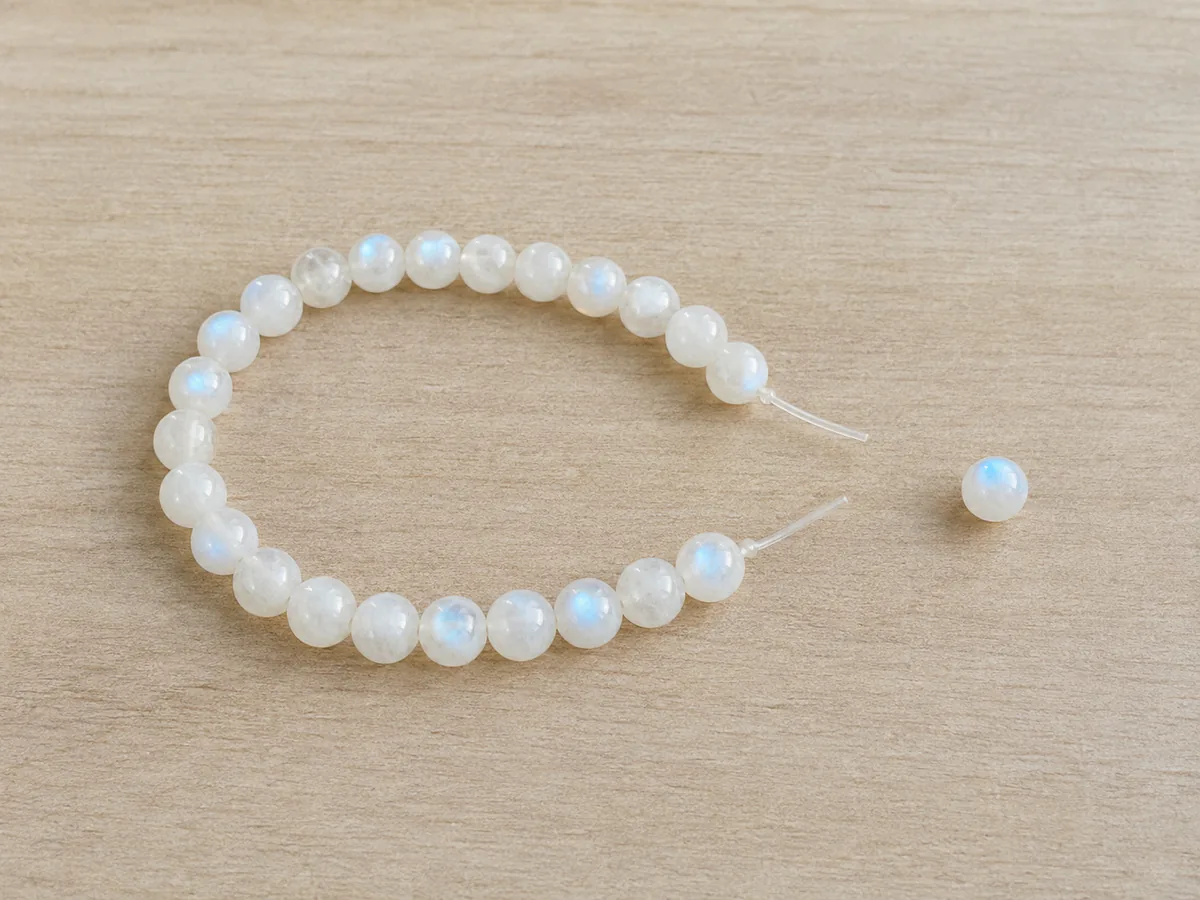
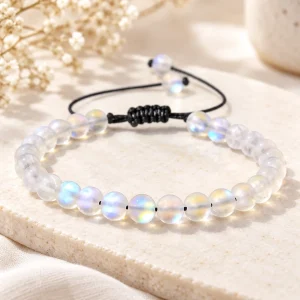
A bead bracelet strung on elastic thread always gives way in the end. It does not break all at once: the elastic tires, then lets go, and the beads scatter. On an adult that is an inconvenience. On a young child, a bead of 6 to 10 mm is a swallowing and choking risk.
Three simple rules. No bead bracelet on a very young child. No jewellery left within reach of a little one who puts everything in their mouth. And if a bracelet is given to an older child, check the elastic regularly and replace it at the first sign of slack.
It is a common-sense rule nobody writes on crystal healing pages, while it is infinitely more concrete than every energy warning in the world.
Skin reactions come from the metal
When somebody reports redness or itching under a jewel, the stone is almost never the cause.
A polished feldspar cabochon is chemically inert in contact with skin. What causes reactions is the alloys, and first of all nickel, still very common in low-grade jewellery and in metals described as silver-toned.
Three useful habits. Look at whether the piece is hallmarked: a 925 silver or gold hallmark commits the maker on the composition, unlike a "silver-toned metal" label that means nothing. If you are sensitive, ask the seller for the alloy composition before buying. And be wary of glued pieces: poor quality adhesives can irritate more than the metal does.
A persistent reaction is shown to a doctor, like any other skin reaction. It is not a crystal healing subject.
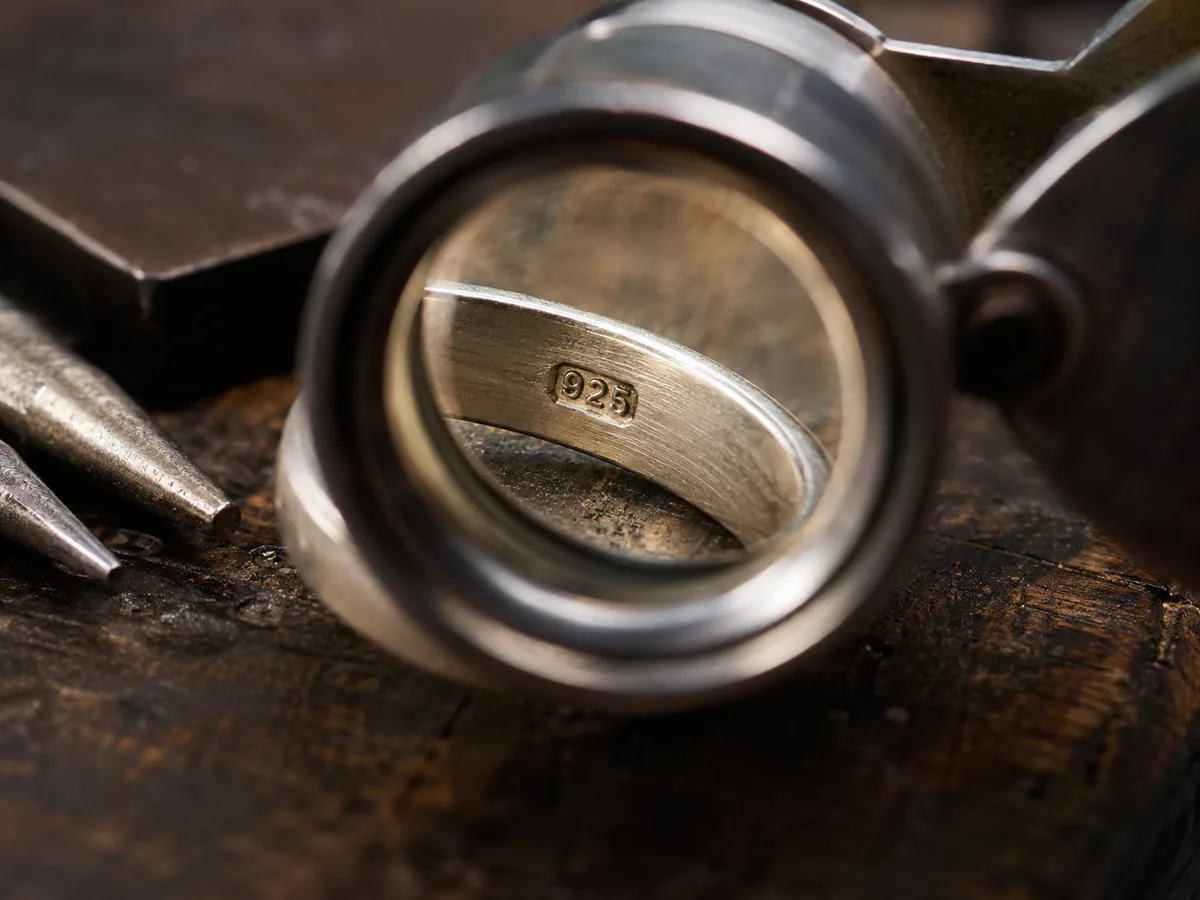
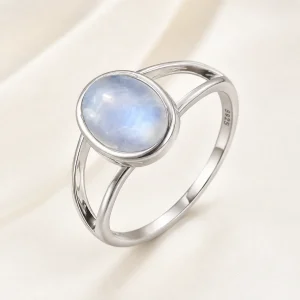
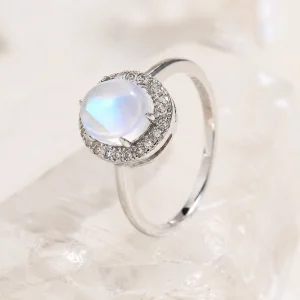
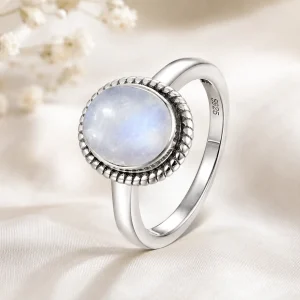
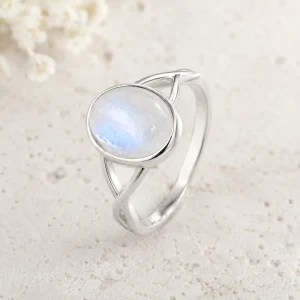
Settings in hallmarked 925 silver, set without glue
Elixirs and anything swallowed
Here I drop the conditional, because it is the one place on this site where I give a firm instruction.
Swallow nothing. No stone elixir, no water that minerals have soaked in, no powder, no preparation of any kind. That instruction holds for moonstone as for every other stone.
Two reasons, and the second matters most.
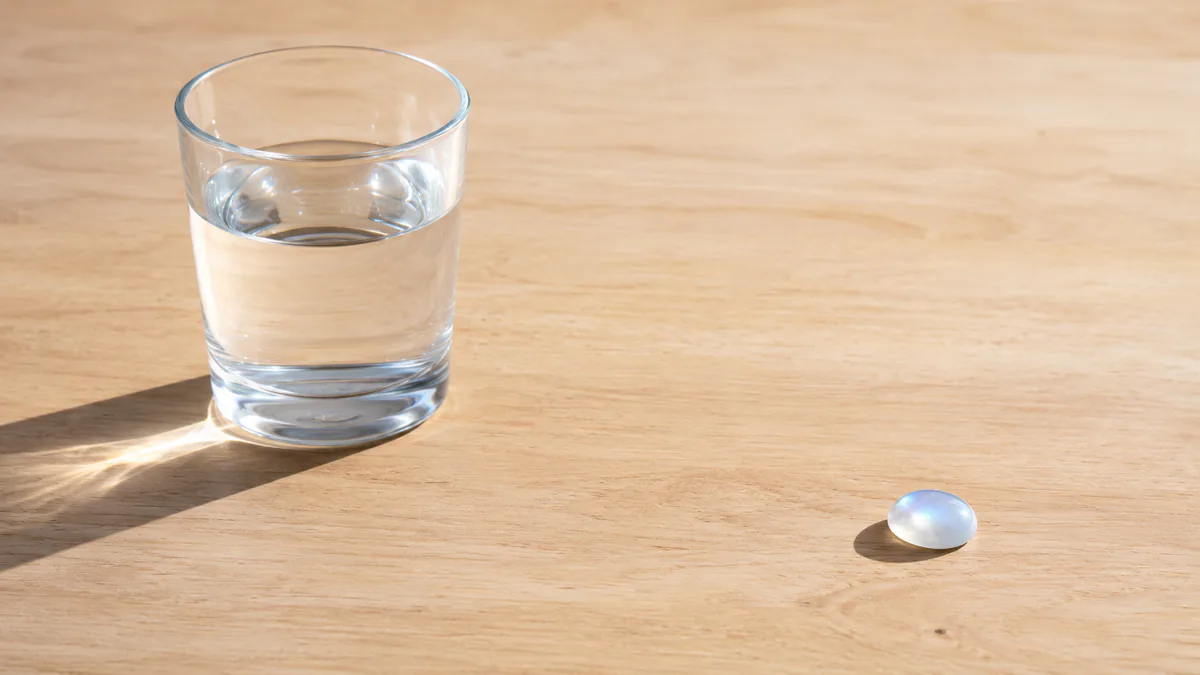
Many minerals are genuinely toxic in prolonged contact with water or an acidic liquid. Malachite contains copper, other stones contain lead, arsenic or mercury. A practice that consists of soaking "a stone" in a glass supposes that you know exactly which species it is, which is rarely the case when you bought it on a marketplace.
And there is nothing to be gained. Since no effect is demonstrated, you take a risk, however small, for zero benefit. The arithmetic is easy.
Moonstone itself is not a toxic stone, and that is not the point: the practice should be avoided across the board, because it is the only advice that also protects the person who has the wrong stone.
The real precautions of a fragile jewel
These are the only "contraindications" I stand by, and they concern the object.
Moonstone sits at 6 or 6.5 on the Mohs scale and has perfect cleavage: it splits cleanly on impact rather than chipping at random. Those are two measured properties, not beliefs.
| To avoid | Reason | Severity |
|---|---|---|
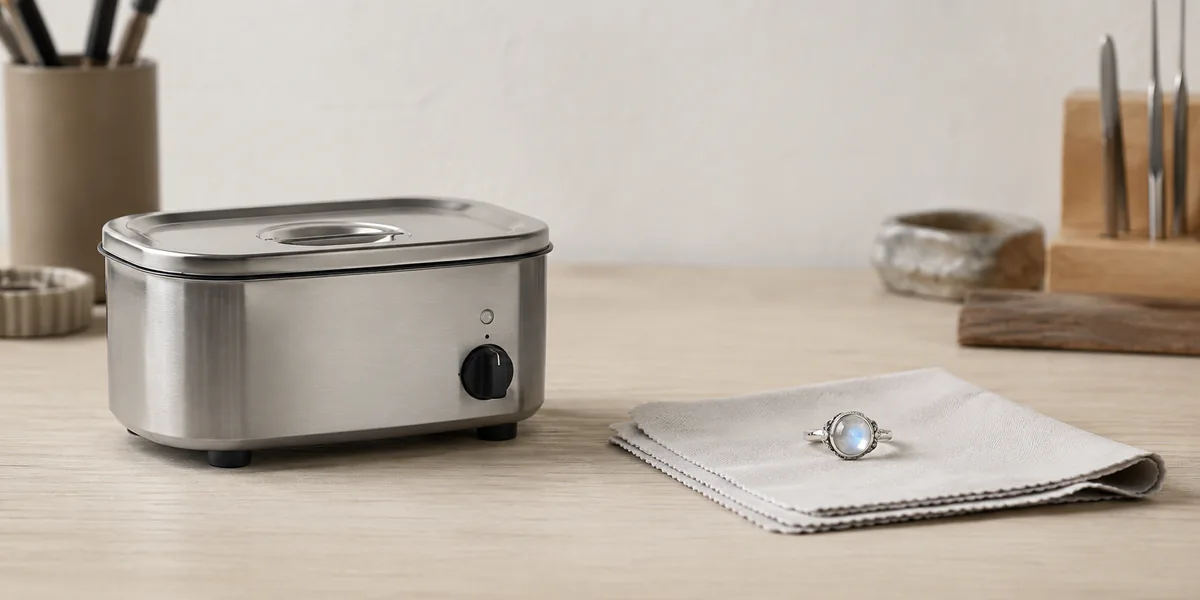
| Ultrasonic tank | Vibration propagates fractures along the cleavage | High |
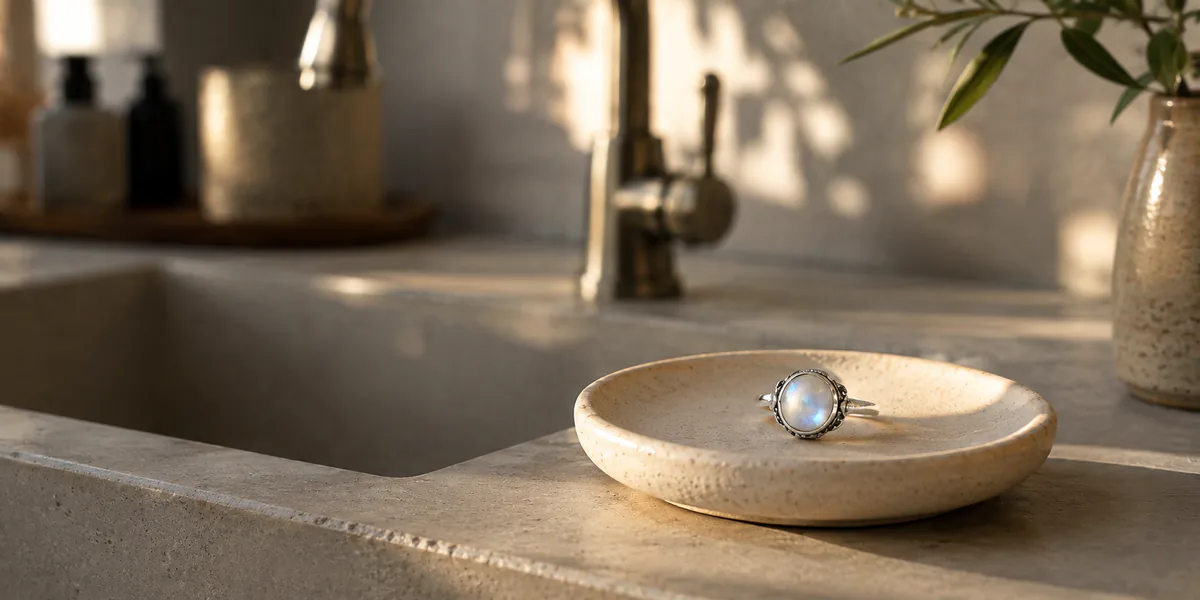
| Steam cleaner, hot water | Thermal shock on a sensitive stone | High |
| Salt, salt water, chlorine | Work into the microfractures, attack the settings | High |
| Ring worn for dishes or DIY | Repeated knocks on the girdle of the cabochon | Medium |
| Next to a stone at 7 and above | Scratches that put the sheen out | Medium |
| Stored loose with the keys | Scratches outside wearing time | Medium |
| Perfume, hairspray, cream before the jewel | Dull the polish and clog the bezel | Low |
The detail of the habits is in how to wear moonstone, how to clean it and is it fragile.
When to see a doctor, without hesitating
I am neither a doctor nor a therapist, and I stick to what I know. But since this page draws people asking health questions, I might as well be clear.
See a healthcare professional as soon as a symptom appears, persists or worsens, and before interrupting or changing anything in a treatment. That holds whatever jewellery you happen to be wearing.
If somebody offers you a stone as an alternative to care, to a test or to a medicine, treat that as the alarm signal. A jewel was never meant for that, and a serious seller will not offer it.
Finally, if a page has worried you by explaining that this stone could do you harm: it is as wrong as the ones promising it will do you good. Both assert what neither can demonstrate.
What to take away
Three lines, and you have the whole page.
There is no medical contraindication, because there is no medical effect. No benefit, no danger.
There are three concrete precautions: swallow nothing, keep bead bracelets out of reach of toddlers, and watch the metal rather than the stone if a skin reaction appears.
There is a long list of object precautions, those of a jewel at 6.5 on the Mohs scale with perfect cleavage. They are the only ones that will keep your piece for ten years.
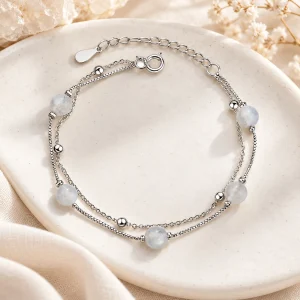
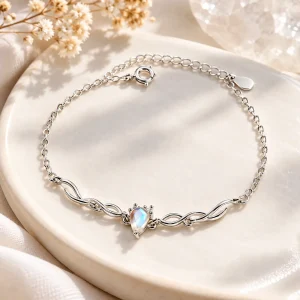
The workshop bracelets, stringing and composition detailed on every listing
Frequently asked questions
Does moonstone have side effects?
Not in the medical sense. A side effect supposes an active product, and no effect has been demonstrated for this stone, beneficial or harmful. There are, on the other hand, concrete precautions: ingest nothing, keep bead bracelets away from toddlers, and treat the jewel as a fragile object.
Can moonstone be worn while pregnant?
Yes, nothing stands against it: it is an inert object worn on the skin. Just watch that a ring does not become too tight, since fingers can swell. But expect no effect from it: what tradition assigns to this stone regarding fertility is demonstrated by nothing.
Can it be given to a child?
Not a bead bracelet to a very young child: the elastic thread always gives way in the end and a bead of 6 to 10 mm is a swallowing risk. For an older child, check the elastic regularly and replace it as soon as it goes slack.
Can moonstone cause an allergy?
The cabochon itself is inert. Reactions almost always come from the metal, and first of all from the nickel in low-grade alloys. Check the hallmark, ask for the composition if you are sensitive, and show any persistent reaction to a doctor.
Can you drink water that has held a moonstone?
I advise firmly against it, as for every stone. Many minerals are genuinely toxic in prolonged contact with a liquid, and the practice supposes you know exactly which species it is. Since the expected benefit is nil, any risk at all is a pointless one.
Should it be avoided during the full moon?
Some sources advise against it, others recommend it for exactly the same reason. That contradiction points to a recent tradition rather than to transmitted knowledge. Nothing stands against wearing a jewel on any day of the month.
Are there people it does not suit?
On the symbolic side, the lists in circulation contradict one another and rest on nothing verifiable. On the practical side, yes: a moonstone ring does not suit someone who works with their hands or never takes their jewellery off. A pendant or earrings suit them better.
Can it be worn alongside a medical treatment?
Wearing a jewel interferes with no treatment. The only warning that counts is this one: never change or interrupt a treatment because of a stone, and talk to your doctor about it rather than to a seller.
Where to go next
This page covers the precautions. For the rest:
- Protecting the jewel: is it fragile, how to wear it day to day, cleaning it, moonstone in water.
- The pairings: which stone not to pair with it, which stone to pair it with.
- The sensitive subjects, handled without promises: moonstone and fertility, which stone for a pregnant woman, moonstone, periods and the female cycle.
- What tradition says, and since when: benefits and properties, the myths and legends, the meaning.
- The big picture: the complete guide.
What I make is in the shop, with no promise on any listing. A question this page has not settled? Write to me: I will tell you what I know, and I will tell you when I do not know.
My sources
The hardness, the cleavage, the cleaning prohibitions and the sensitivity to thermal shock follow the public data sheets of the GIA, of Mindat and of the International Gem Society. They are the only assertions on this page that rest on measurements.
The absence of a demonstrated effect is not an opinion of mine: no clinical data establishes any action of worn minerals on the body, and no health authority recognises crystal healing as a treatment. I say it both ways round, without crediting this stone with more dangers than virtues.
The traditional prohibitions are reported from the most widely circulated crystal healing sources, with their contradictions flagged as such. Nickel sensitivity in alloys is an ordinary dermatological fact, unrelated to gems.
I am neither a doctor nor a therapist. This page replaces no medical advice, and it is written to say exactly that.
Last updated: 19 August 2026. If you find an error in this article, let me know: I correct it and I note it.
✦ À porter, à offrir
Découvrez mes créations