


Description
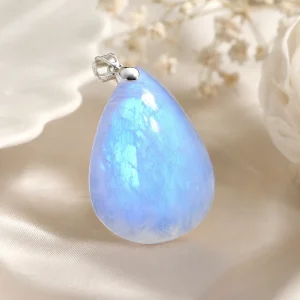
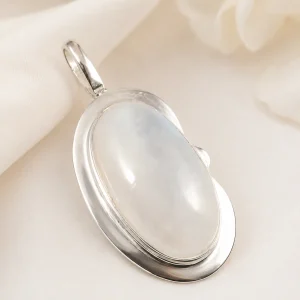
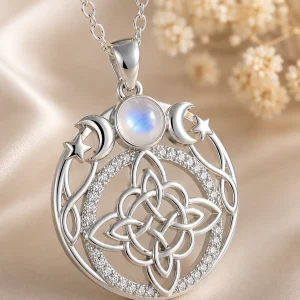
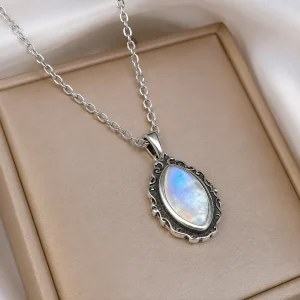
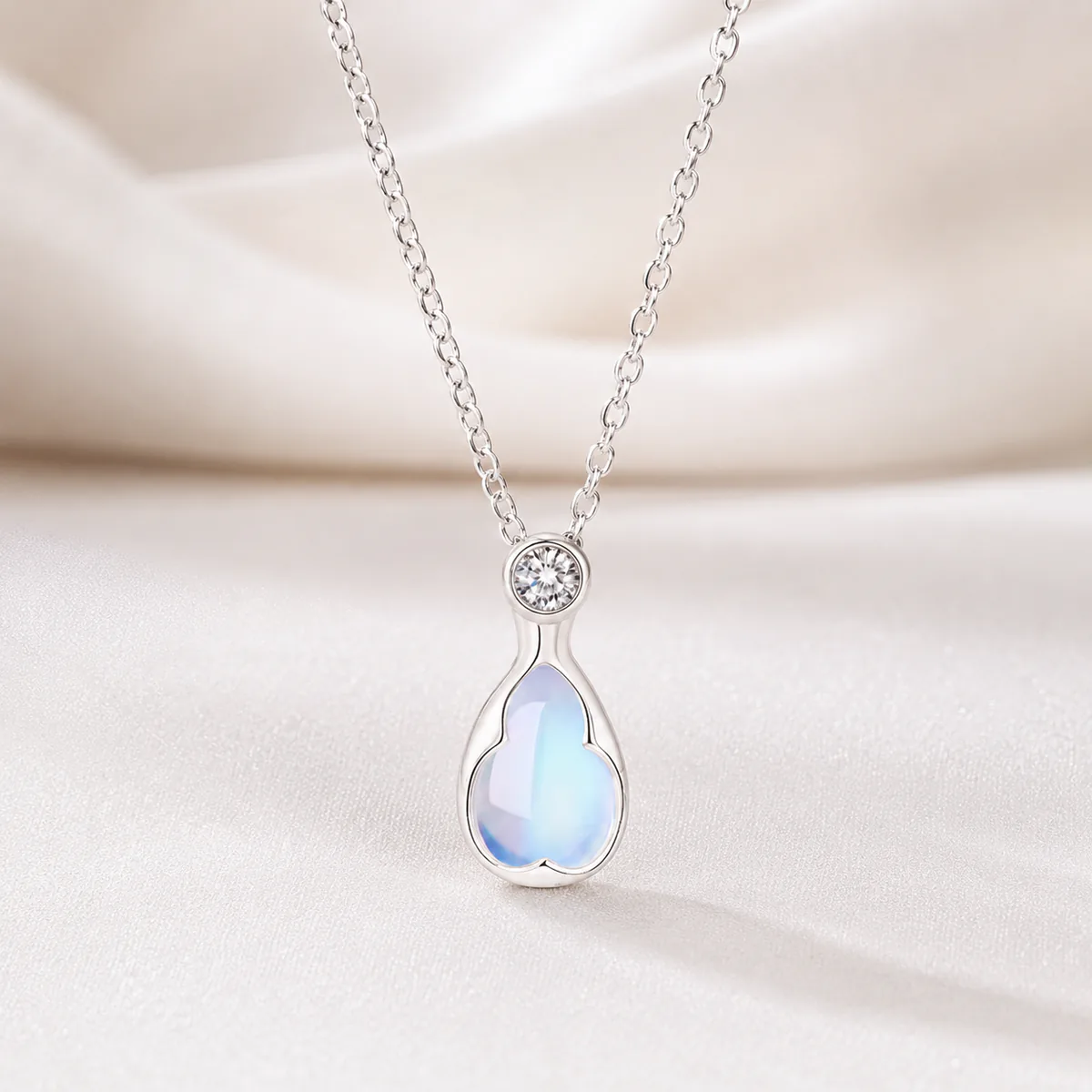
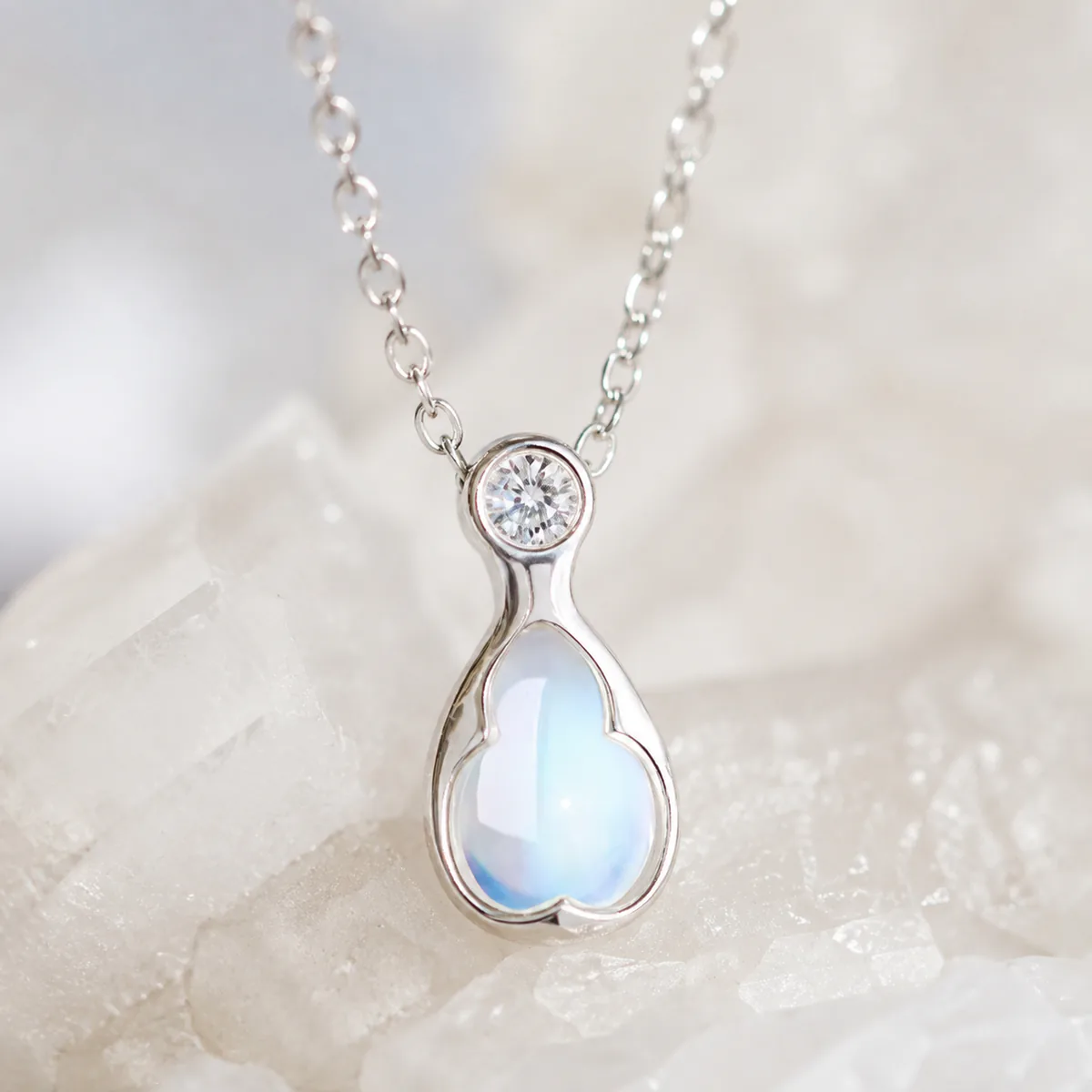
A gourd-shaped silhouette, rounded at the bottom, closing into a heart at the top, fully rimmed by a silver bezel, and above it a small clear, sparkling stone in its own setting. Two materials, two settings, and a shape that is anything but a plain oval.
What a stone’s shape tells you
Since this pendant carries the word real, it may as well be used to teach something useful, and I will take an angle I have not seen written anywhere: the way a stone is cut says a lot about how it was made.
A cut stone starts from a block and material is removed from it. Every complicated outline costs lost material, lapidary time, and a risk of breakage the moment an inward angle is attacked, that dip at the center of a heart being precisely the trickiest move. A molded material, on the other hand, faces none of these constraints: a complicated shape costs it nothing more than a round one, since all it takes is changing the mold.
Hence a simple habit worth keeping, useful everywhere and not only here: compare the two halves. On a cut stone, even a very well-executed one, the two lobes of a heart are never rigorously identical, the central dip sits slightly off-center, and you can sometimes make out fine tool marks on the side. On a molded piece, the two halves overlap perfectly, the outline is crisp everywhere, and nothing juts out. Perfection is the tell here, not the quality.
The rest of the checks happen on the surface, and I have detailed them elsewhere rather than repeat them: the tilt test and the backlight test are explained on the necklace of the same name, and the full comparison with opalite is here.
What a closed bezel keeps you from seeing
Here is this model’s particularity, and it is a trade-off worth knowing. The stone is enclosed all around by a folded silver edge. It is the most protective setting there is, the one I recommend on a fragile material, and I explain in detail why it suits this stone so well.
But a closed bezel has a rarely mentioned consequence: it hides the stone’s edge, and the edge is where you spot an assembled piece. A doublet, a thin layer of fine material glued onto some backing, almost never gives itself away from above: it gives itself away in profile, through a line of glue. A full bezel makes that check impossible, and this holds for every closed bezel in the world, not just this one.
What I conclude from that is simple and direct: on a stone set in a closed bezel, you are buying as much on trust as on inspection. The surface tests still hold, the edge escapes you, and the only thing that bridges the gap is what the seller states in black and white. It is also why these pages state every time exactly what material is involved, even when the answer is less flattering.
The small stone up top is not the same thing
Above the cabochon, a second setting holds a colorless faceted stone, bright and perfectly clear. This is not a moonstone, and it is not a diamond either: on this kind of jewelry, it is almost always cubic zirconia, a lab-made material designed to imitate diamond, and I would rather write that than let a flattering doubt hang in the air.
It has a practical consequence nobody mentions. Cubic zirconia is extremely hard, far harder than moonstone and than most stones in your jewelry box. Stored loose, that little sparkler will scratch cabochons, beads and polished surfaces it touches, without ever catching anything itself. So the rule counts double here: store this pendant alone, in its pouch.
For the main stone, nothing new: it chips on impact rather than scratching, but here it is protected all around its rim. The shop’s other pendants are here, and the quality criteria are detailed there.
- Cut-shaped cabochon, 925 silver closed bezel, topped by a small faceted clear stone.
- Compare the two halves: a cut stone is never perfectly symmetrical, a molded piece always is.
- A closed bezel protects the stone and keeps you from examining its edge.
- Shipped in two weeks with a cotton pouch, a handwritten note and a care card.
The specifications
- Stone
- Moonstone, cut-shaped cabochon
- Look
- Translucent bluish white, moving sheen
- Second stone
- Colorless cubic zirconia, faceted
- Metal
- 925 sterling silver
- Setting
- Two closed bezels, no prongs
- Gender
- Women
- Brand
- Melissa Moon
What a moonstone really costs
The best tool for judging the word real is not a loupe, it is a sum. The raw material of this stone is not worth much: it is neither rare nor hard to mine. What costs is everything that comes after. Sorting a batch to keep only the blocks whose sheen is usable, deciding which way to saw each one knowing a wrong orientation ruins the stone, cutting an outline that is not a plain oval, polishing a dome with no flat spot and no ripple. Hours of work on a cheap rock.
That is why the price of a piece like this reads backward from what people assume: it says almost nothing about the value of the material and a great deal about the time spent on it. When a pendant with a cut stone costs less than the hours needed to cut it, that is not a good deal, it is information. The rest of the shop is here.
The price of a stone is almost never the stone. It is the time spent on it.
No salt, no ultrasonic tank, no hot water: moonstone is a feldspar, and all three damage it for good. Lukewarm water, a drop of mild soap, a soft cloth, a complete drying with attention to the edge of both bezels, where water settles between the metal and the stone. A silver polishing cloth is for the metal only: it is mildly abrasive and has no business on a cabochon. Store this pendant alone, in its pouch: the small zirconia up top is harder than nearly everything else it might touch in a box. Take it off before the shower, the pool and sport. The detail is in cleaning a moonstone piece, and the safe methods in caring for it without harming it.