


Description
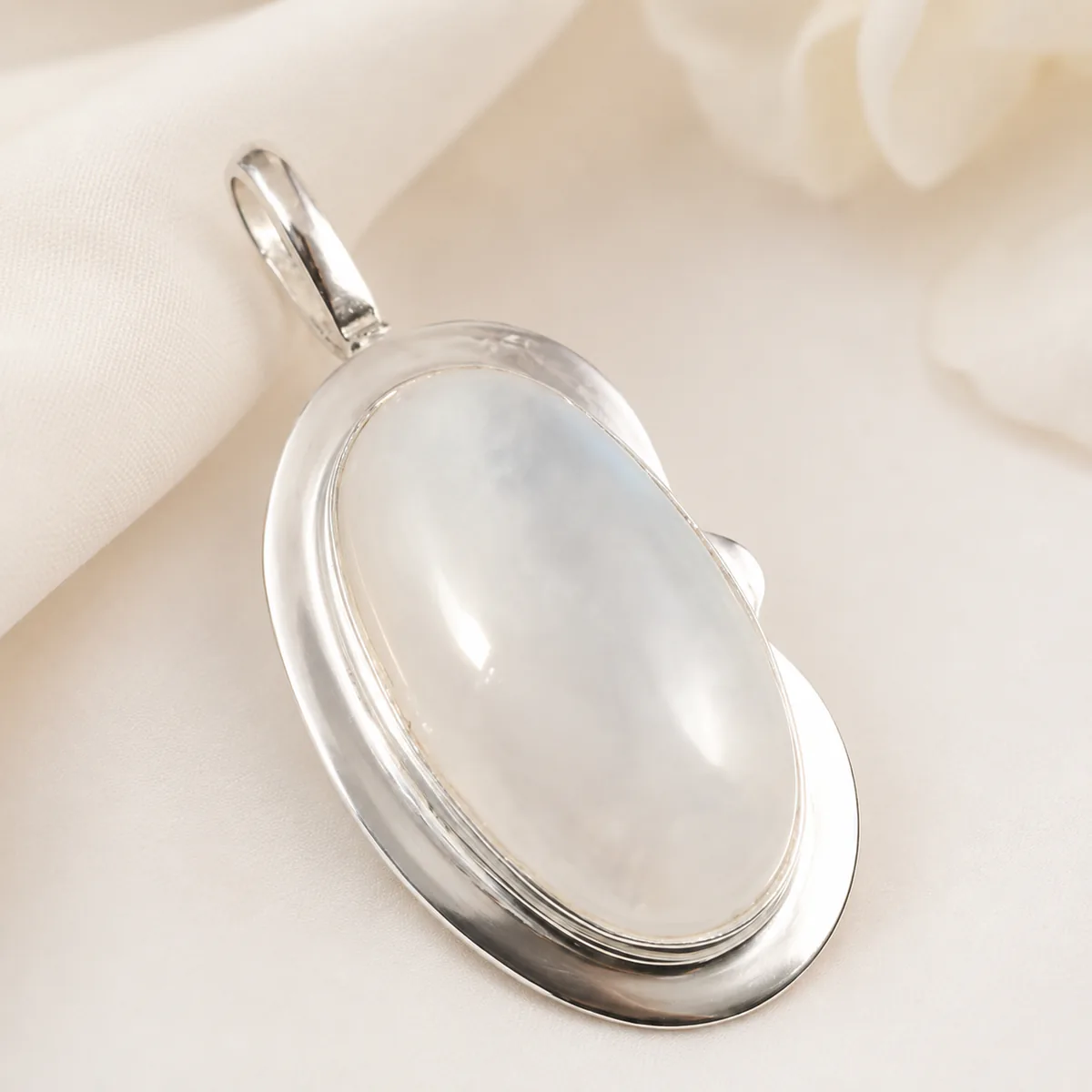
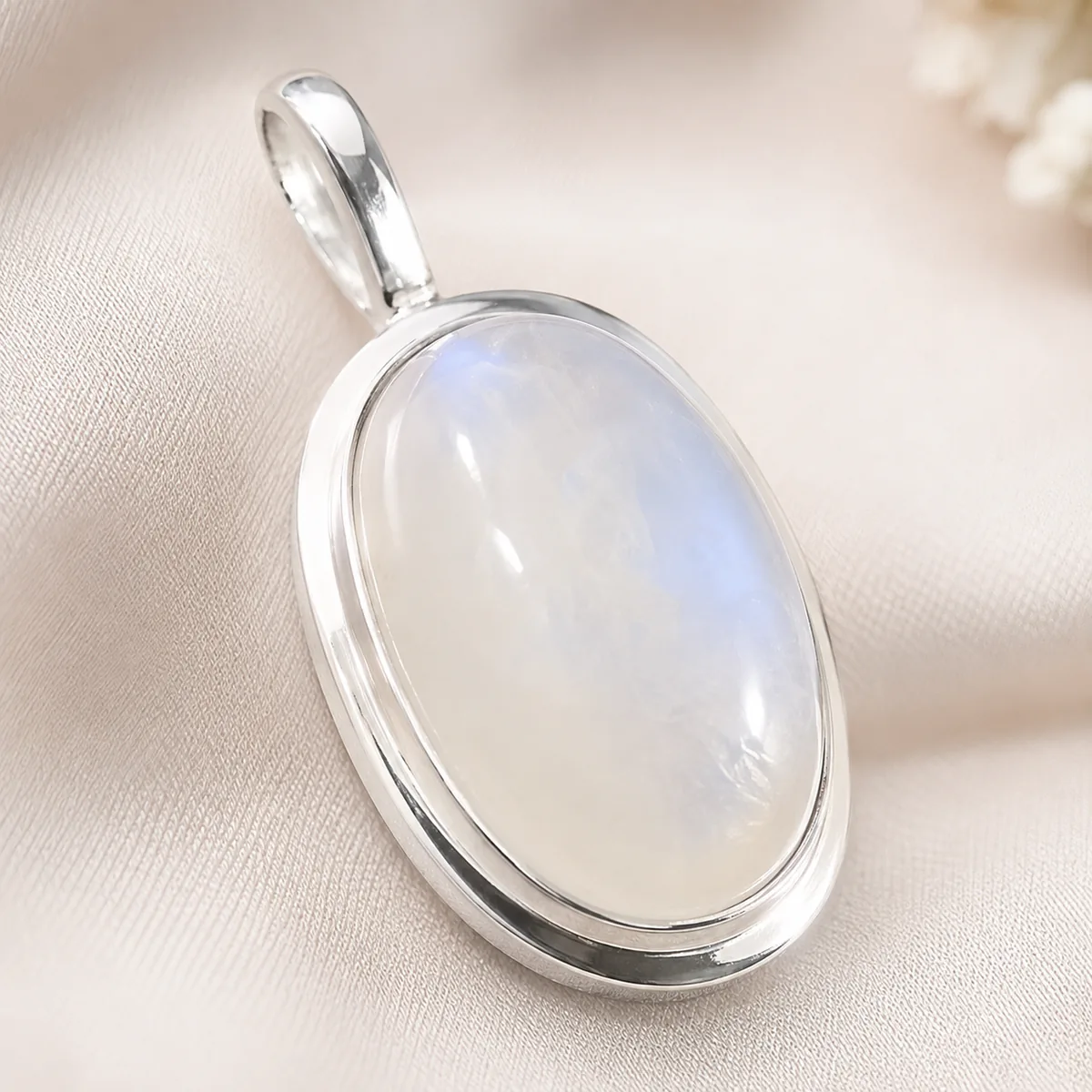
A large oval cabochon, white and milky, sitting at the center of a wide polished silver frame that surrounds it along its full height, with a bail open enough to take a real chain. It is the heaviest piece in the catalog, and the one where the metal takes up almost as much room as the stone.
The metal around it is not just decoration
The bezel that holds this cabochon is not a thin wire folded over its edge: it is a wide, domed plate of polished silver that clearly overflows the stone on every side. The first thing you see in that is an aesthetic choice, and it is one. But the frame also works.
A polished surface throws light back, and part of that light bounces onto the stone from the side, at a grazing angle no direct light source would provide. On a cabochon whose whole appeal is an internal reflection, that side light is not wasted: it lights up the edges of the dome, exactly where a thin setting would let the stone go dark. The frame acts a little like a reflector around a subject.
It protects too, better than any narrow bezel could: the rim of the stone, which is exactly where a cabochon chips, sits here recessed behind the outer edge of the metal. What hits the pendant hits the silver, not the stone. Moonstone chips on impact without scratching, and on a piece this size, that margin matters.
The cabochon cut, meanwhile, is the only one that shows this stone correctly: the veil needs a domed surface to glide across, and it breaks up on facets. The shop’s other pendants are here, and the real quality criteria are detailed there.
The back of a large pendant
Here is this model’s particularity, and I have not seen it written anywhere, though it concerns every heavy piece. This pendant has a back, it is wide, it is solid, and it spends the day pressed against the skin. It is the side nobody looks at, and the one that ages fastest.
Three things combine there: constant contact with sweat, no friction against clothing to polish the surface, and the fact that no cloth ever passes over it. The result: the back tarnishes noticeably darker while the front stays bright, and on a surface this large it can leave a gray mark on a light shirt after a long hot day.
Nothing serious, and the fix is one gesture: when you take the necklace off at night, turn it over and wipe the back too, not just the front. Thirty seconds, and the problem stops existing. On this piece, a silver polishing cloth is fine on the back, since it is smooth and free of detail, but it stays off the stone: it is mildly abrasive and has no business on a cabochon. I go into the behavior of sterling silver in detail on the Moonstone Silver Necklace listing.
On a heavy piece, watch the bail
A pendant this heavy does more than pull on the chain, it has inertia: it keeps moving after you stop, swings when you lean forward, drops back when you straighten. That back-and-forth load always lands on the same spot.
That spot is the inside of the bail, and it is the one point on the piece nobody ever inspects. The chain slides there with every movement, over a short arc, and over years it grooves the silver. A bail worn thin from the inside narrows, opens slightly, and eventually lets the chain slip through on a day you least expect it.
The check is easy since this bail is wide: unhook the pendant, look inside the ring in good light, and look for a shiny groove where the chain has been riding. If the metal looks noticeably thinner there, it is time to have the piece reinforced, which costs far less than losing it. And as always on a heavy piece, choose a chain a notch heavier than you would for a small pendant: I go into that point in detail on the Moonstone Teardrop Pendant listing, and the sizing guide is here.
- Large oval cabochon in a bezel setting, wide polished silver frame, open bail.
- The frame throws light onto the edges of the stone, and absorbs impacts in its place.
- Wipe the cloth over the back too, not just the front: that is where the silver blackens.
- Delivered in two weeks with a cotton pouch, a handwritten note and a care card.
The specifications
- Stone
- Moonstone, large oval cabochon
- Look
- Milky white, mobile blue veil
- Metal
- 925 sterling silver, wide polished frame
- Setting
- Bezel set, folded edge, no glue
- Bail
- Wide, accepts a thick chain
- Gender
- Women
- Brand
- Melissa Moon
What you are paying for, exactly
On this pendant, the answer is unusual for this shop: you are mostly paying for metal. A frame this wide represents a real quantity of silver, and silver sells by weight, at a rate that moves every day. Add a large cabochon, the rarest thing in any lot, and you have the bulk of the bill. The setting work itself takes no longer than on a small piece.
That is the exact opposite of a faceted-stone pendant, where the metal weighs almost nothing and you are paying for hours of lapidary work. Neither is better, they are simply different purchases, and knowing which one you are making keeps the price from disappointing you either way. The rest of the shop is here.
Here you pay for metal by weight. Elsewhere you pay for hours. It is not the same purchase.
No salt, no ultrasonic tank, no hot water: moonstone is a feldspar, and all three damage it for good. Lukewarm water, a drop of mild soap, a soft cloth, a complete drying with attention around the bezel rim, where water settles between the metal and the stone. A silver polishing cloth suits the frame, and especially the back, since both are smooth and clear of detail, but never the cabochon. Remember to flip the pendant over when cleaning it: on a piece this large, it is the hidden face that tarnishes. Remove the necklace before the shower, the pool and sport. The detail is in cleaning a moonstone piece, and the safe methods in caring for it without harming it.