Pink Moonstone
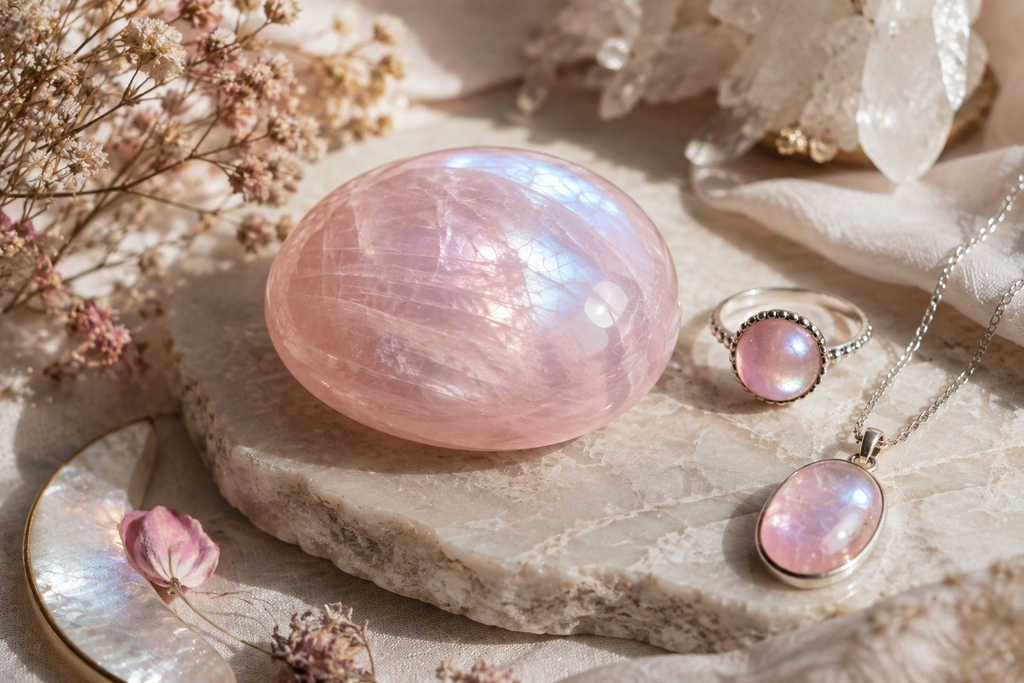
Where the pink comes from, why the sheen stays silver over a coloured body, and how it compares to peach. Plus what it is worth and what it is not.
Blue Moonstone: Sheen, Meaning and Price
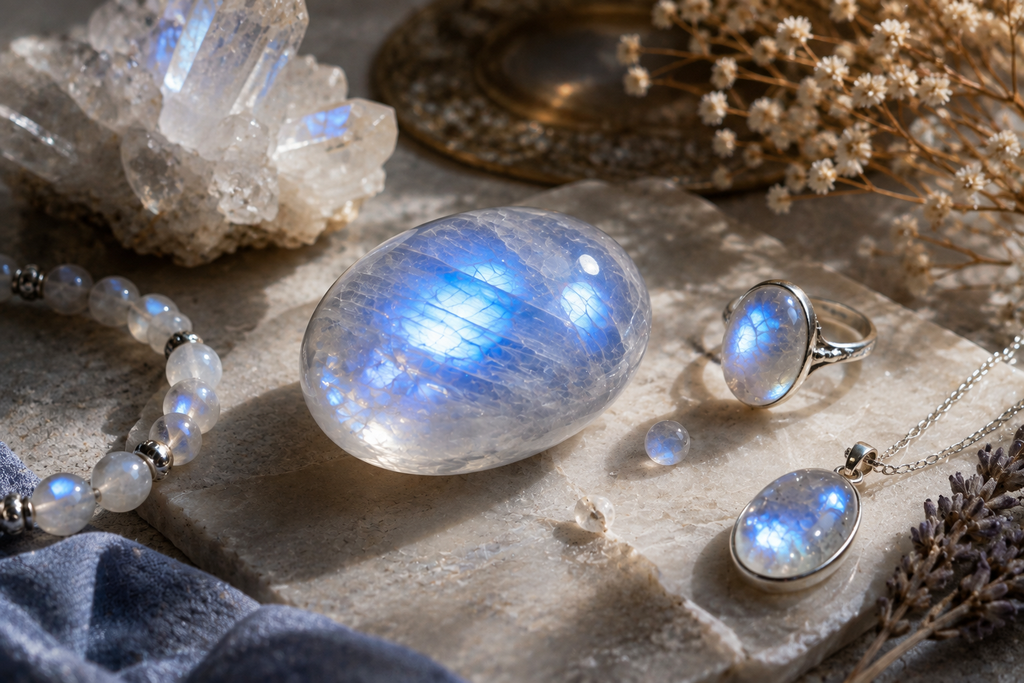
The most sought-after of them all. Why the blue costs more than the white, how deep it should go, and the six things to look at before you buy.
Peach Moonstone
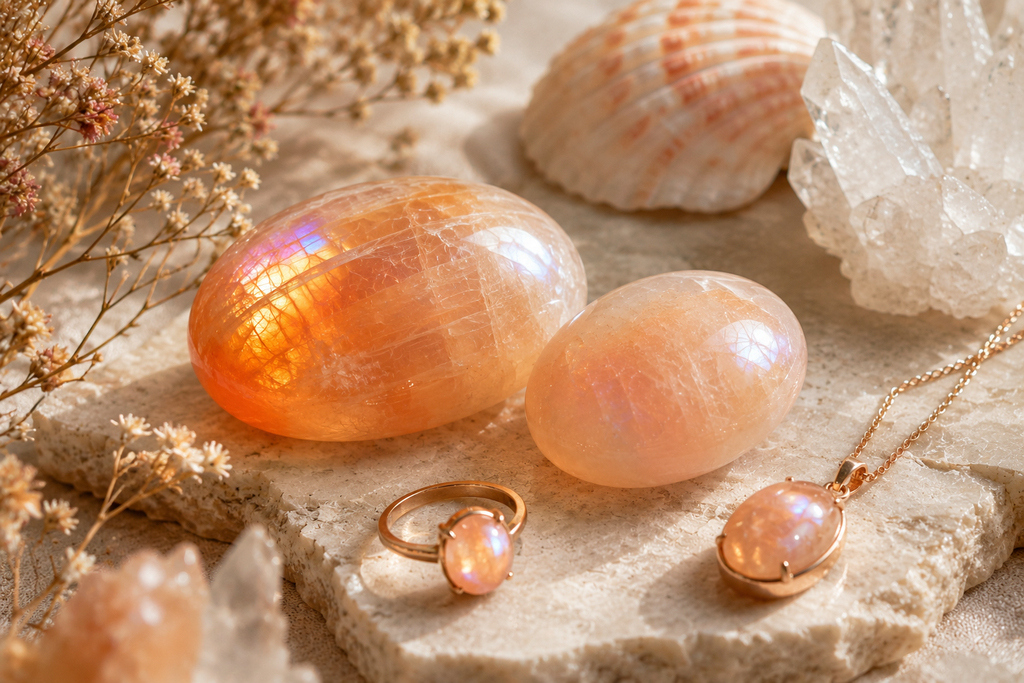
Iron in the crystal lattice gives the body its warmth while the sheen above it stays silver. And why these stones photograph so badly.
Moon Gods and Goddesses
Selene, Chandra, Thoth, Mani and the rest: who the moon deities were across cultures, and how this stone came to be attached to them.
Adularescence: Where Moonstone’s Glow Comes From
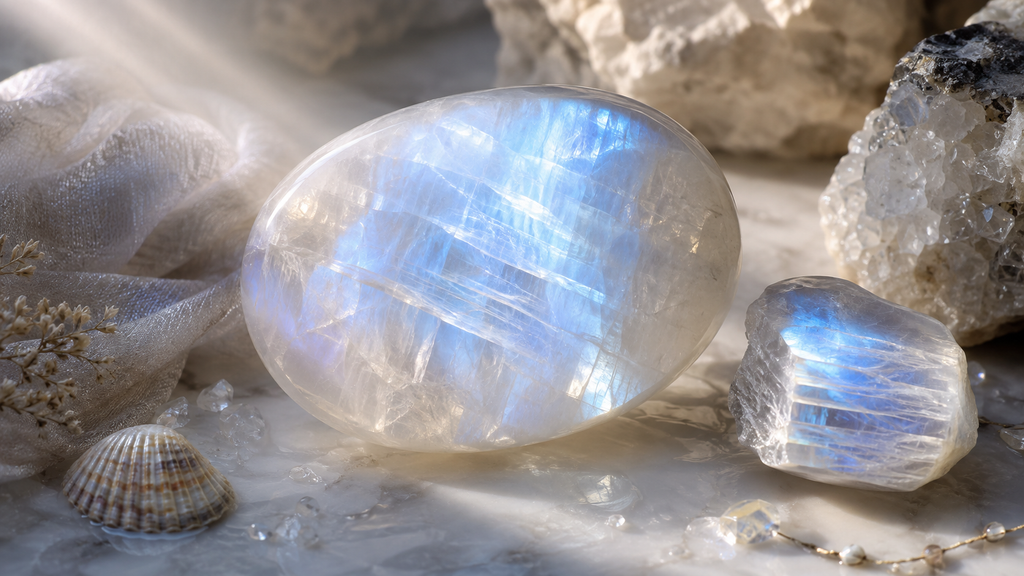
The optical effect that defines the stone, explained without any hand-waving. Lamellae, scattering, and the reason the light reads blue.
Moonstone in Art Nouveau: Lalique, Tiffany, Jensen
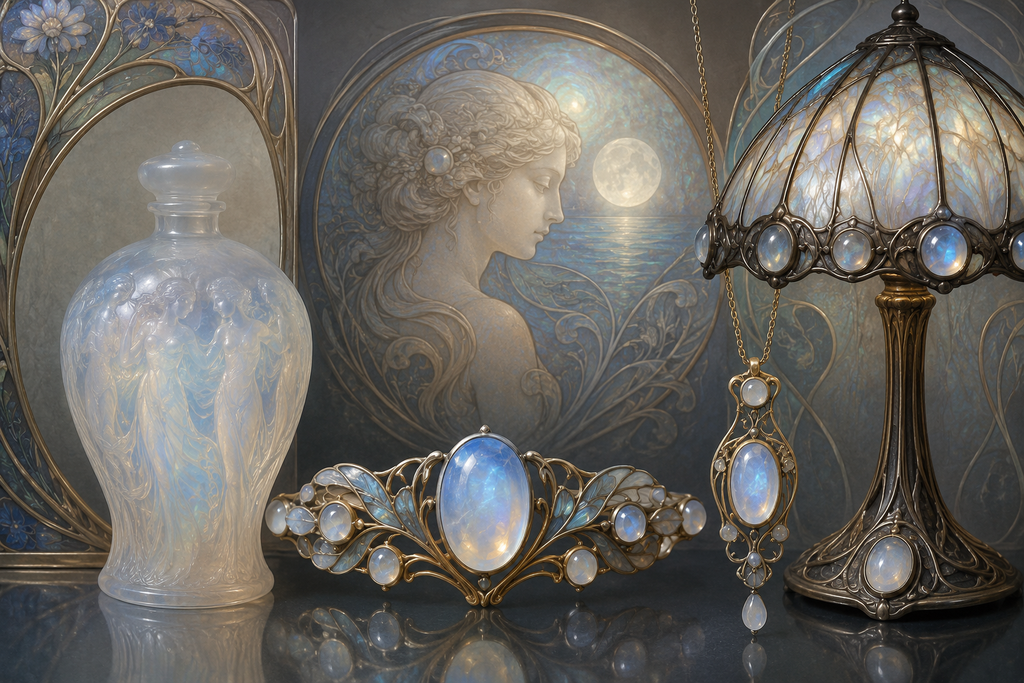
Thirty years when this modest stone outranked the diamond, at Lalique, at Tiffany and at Jensen, and the museums where the proof is still on view.
How Moonstone Forms
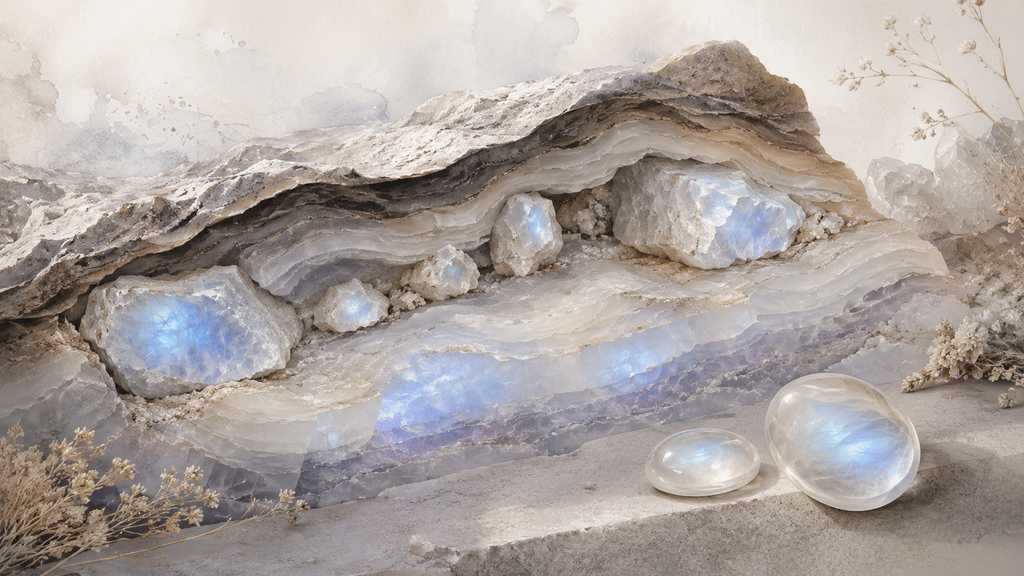
A feldspar that unmixes into lamellae as it cools, over thousands of years. That separation is the entire reason the stone has a sheen at all.
Moonstone or Selenite: Two Moon Stones
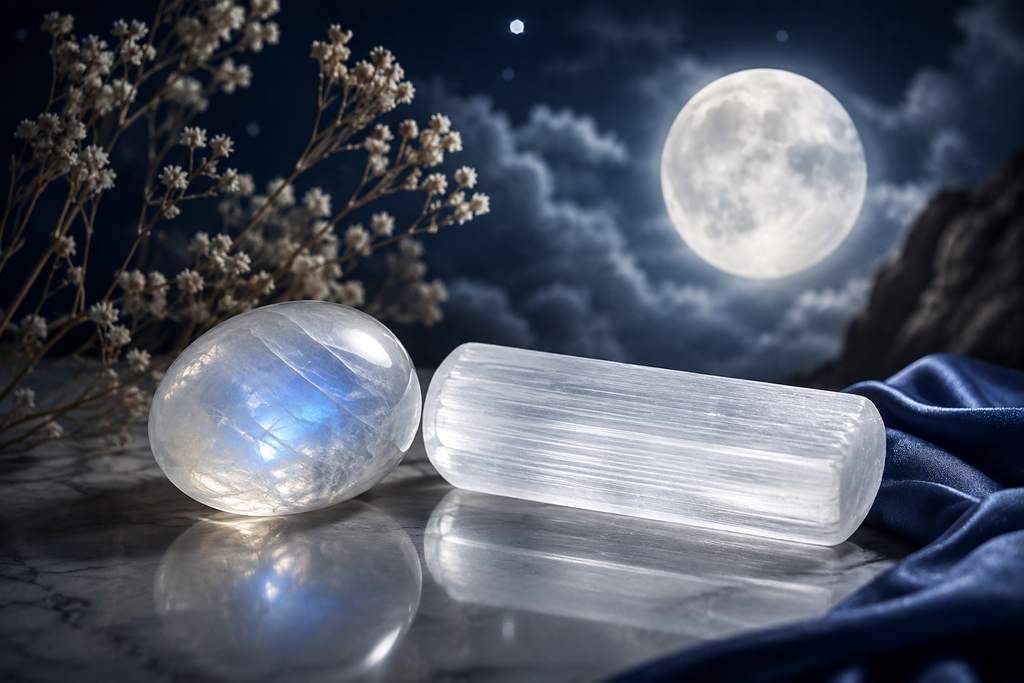
Both are named after the Moon and neither resembles the other. One is a feldspar at 6.5 on the Mohs scale, the other a gypsum at 2 that water dissolves.
Moonstone or Opal: Two Plays of Light
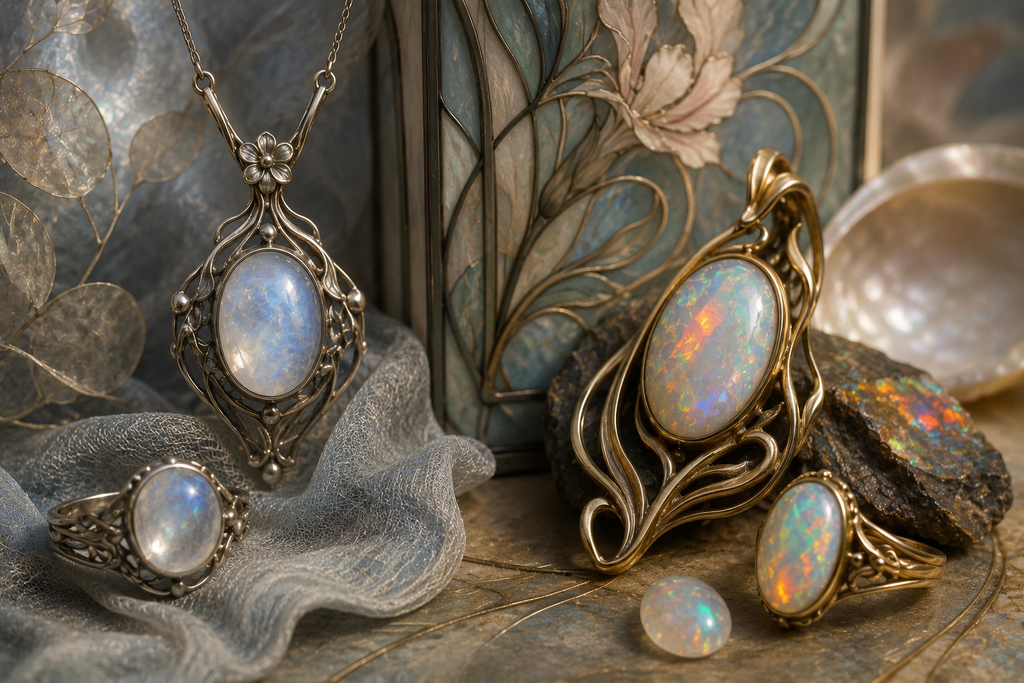
One shows separate colours in patches, the other a single veil that slides. And the two are cared for in almost exactly opposite ways.
The Moonstone Glossary
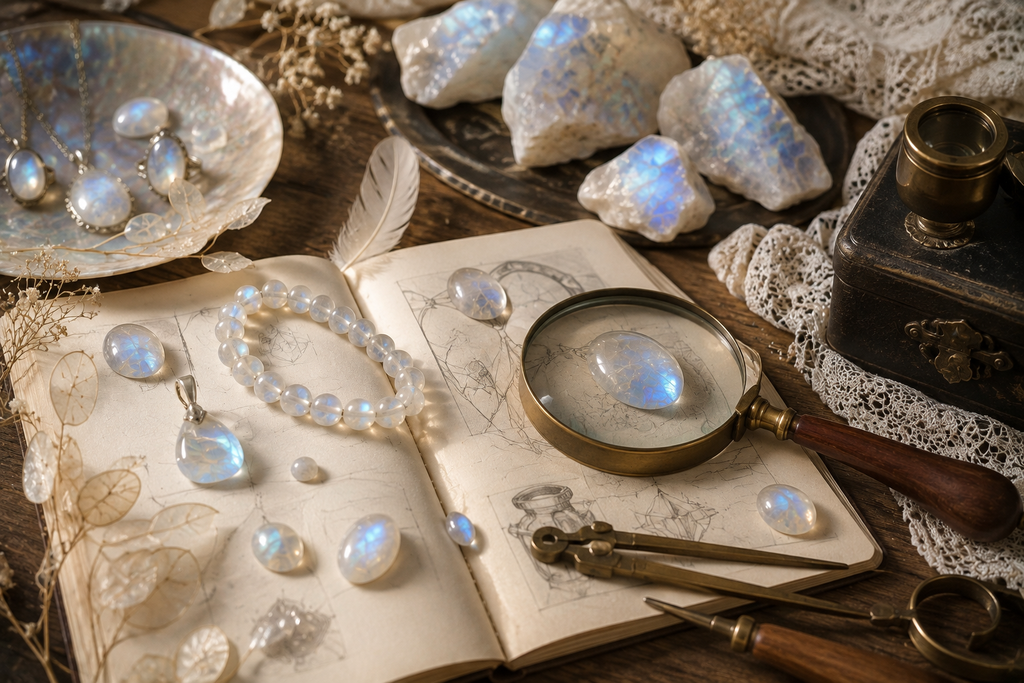
Adularescence, adularia, cabochon, cleavage, orthoclase, schiller: every term you will meet on a listing, defined in plain language.