


Description
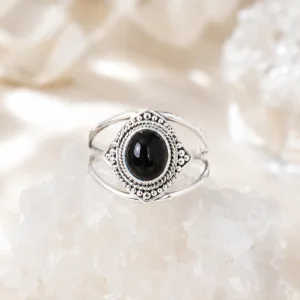
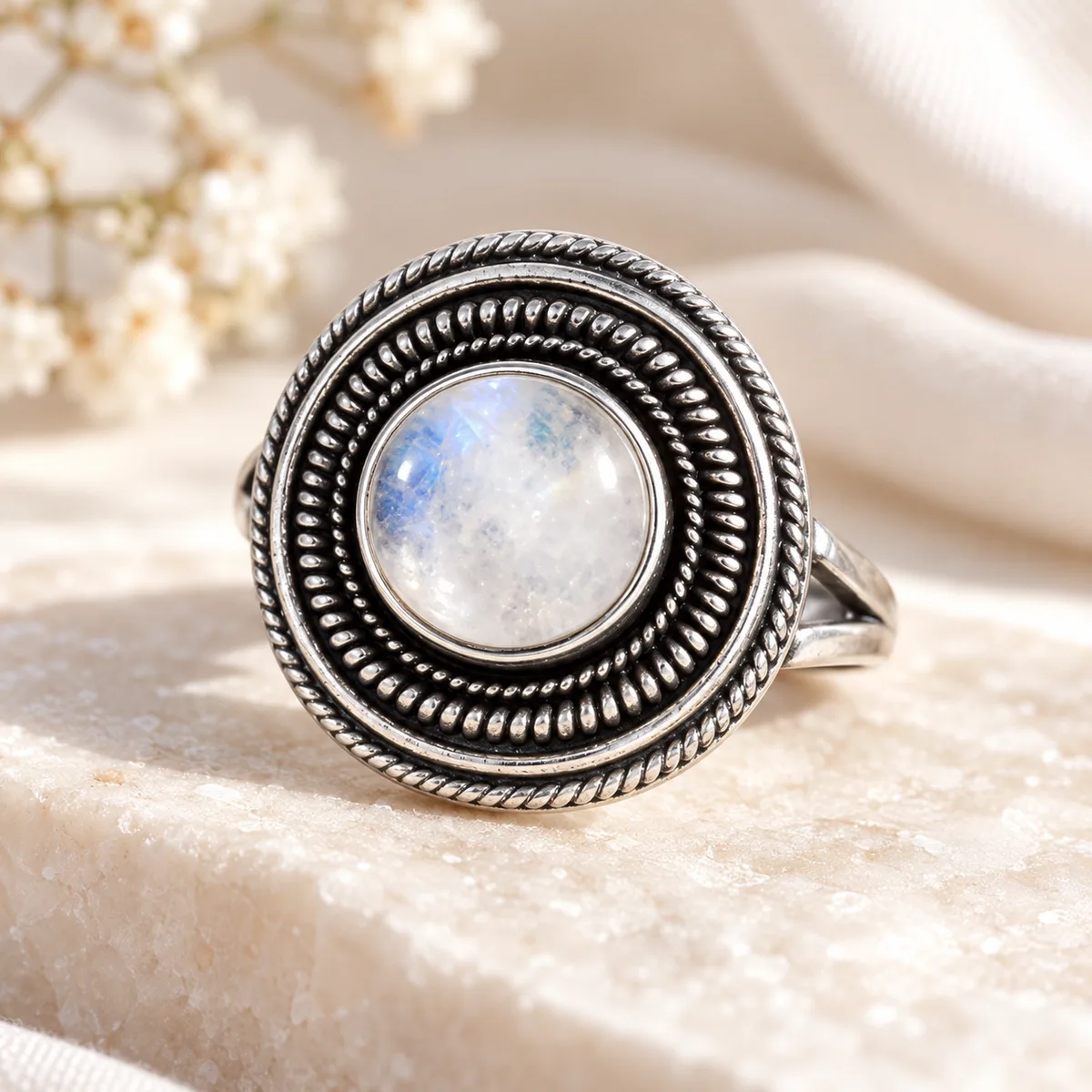
A round cabochon at the center, and around it two twisted silver ropes laid in concentric rings. The whole thing is aged rather than polished, so the piece looks like something found rather than something bought.
Concentric ropes, and the effect they produce
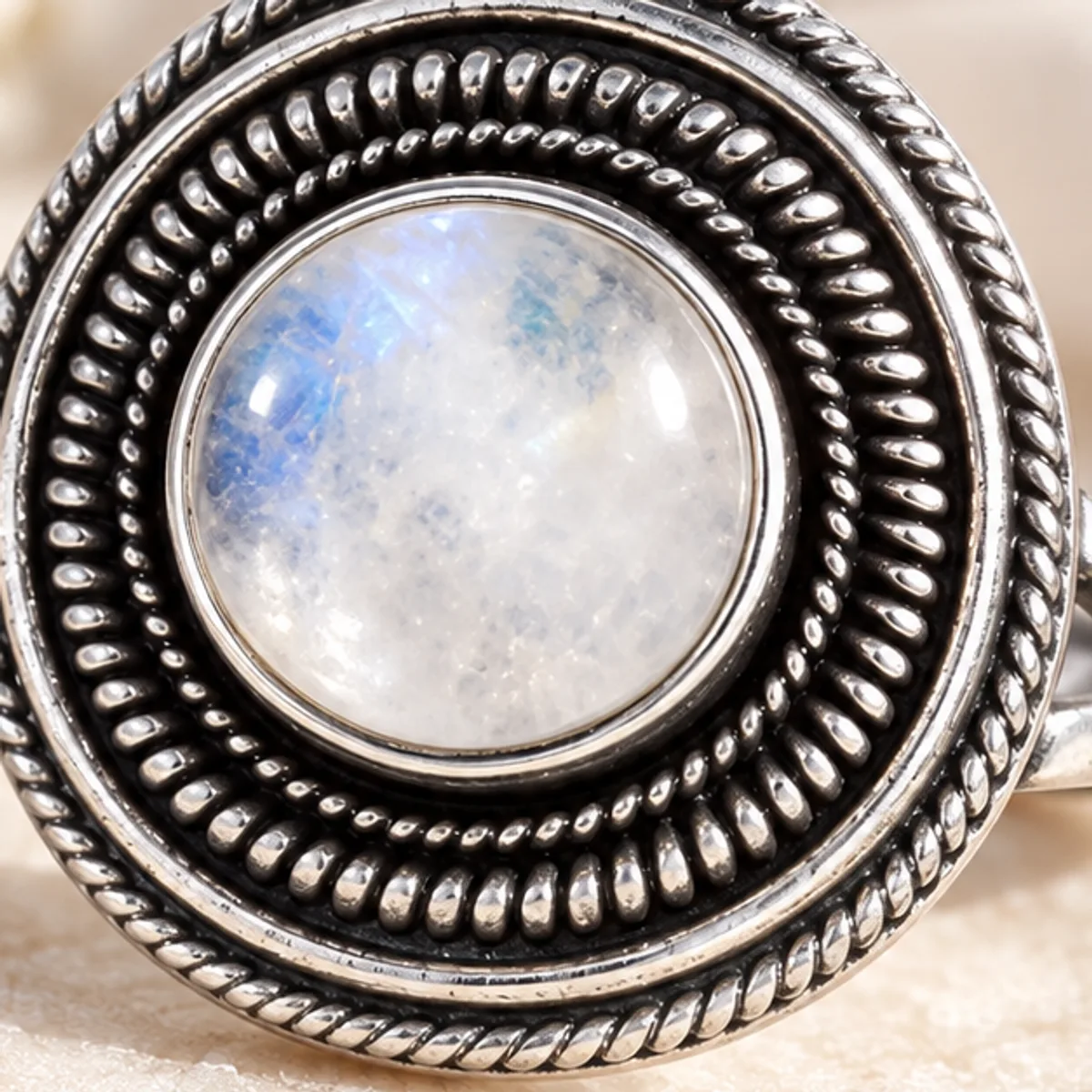
The twisted rope is an old motif: two wires rolled together, then laid flat and soldered. Here there are two of them, one tight around the bezel, the other wider, and the gap between them lets the base metal show. The eye reads the circles before the stone, then comes back to the stone. That is the intended effect, and it is why I kept a round cabochon rather than an oval: the circles need a circle at the center.
The silver is aged, not just oxidized. The difference matters. Oxidation blackens uniformly; ageing means oxidizing, then wearing back unevenly, so the piece looks as if it has been worn for years. On a twisted rope this is what makes each turn of the twist readable: dark in the groove, light on the crest, and never twice the same along the circle. A polished rope, by contrast, turns into a bright blur.
The stone is held by a closed bezel, which is the setting I choose whenever the piece is meant to be worn without thinking. The cabochon is round and quite small relative to the ropes, and that proportion is deliberate: this is a ring where the metal speaks first. If you want the stone to dominate, look at the large oval models instead, they are in the ring section.
It is a comfortable ring, less tall than it looks, and it goes with the index or the middle finger. The blue veil is discreet on a small cabochon, and it appears when the hand turns rather than all the time. That is not a flaw, it is how a small moonstone behaves. The size guide will help you avoid ordering twice.
- Round moonstone cabochon, closed bezel, a veil that appears when the hand turns.
- 925 sterling silver hallmarked S925, two twisted ropes in concentric rings.
- Aged silver, worn back unevenly: each turn of the twist reads.
- US sizes 4 1/2 to 10, that is 48 to 62 mm. Shipped in two weeks.
The specifications
- Stone
- Real moonstone (adularia), round cabochon
- Origin
- India
- Metal
- 925 sterling silver, S925 hallmark
- Setting
- Closed bezel, no glue
- Decoration
- Two twisted ropes in concentric rings
- Finish
- Aged silver, worn back unevenly
- Sizes
- US 4 1/2 to 10 (48 to 62 mm)
- Gender
- Women
- Brand
- Melissa Moon
Aged or polished: two different pieces
The same ring, aged or polished, is not the same object. Polished, it is bright, urban, and it shows every scratch within a month. Aged, it is calmer, it goes with linen and wool rather than with silk, and above all it absorbs scratches instead of showing them: a new mark on an already uneven surface disappears into the whole. That is the practical argument, and it is the one I use most often.
The point people miss is that ageing is not permanent. It is a surface, a few microns thick, and it will wear off where the ring rubs, faster on the inside of the finger. In three or four years the ring will be lighter than it is today, especially on the crests. I like that, and I say so plainly: if you want a piece that looks new in ten years, take a polished one.
A twisted rope is the simplest way I know to make silver catch light without polishing it. Two wires, a twist, and the metal does the rest.
No salt, no ultrasonic tank, no hot water: moonstone is a feldspar, and all three damage it for good. On aged silver, also avoid silver dips and polishing pastes: they strip the whole finish in one pass, and there is no going back. Lukewarm water, a soft cloth on the crests only. The detail is in cleaning a moonstone piece, and the safe methods in caring for it without harming it.