


Description
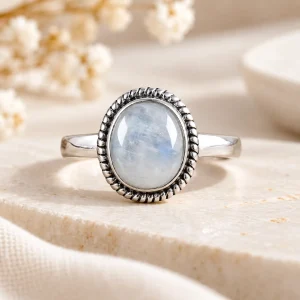
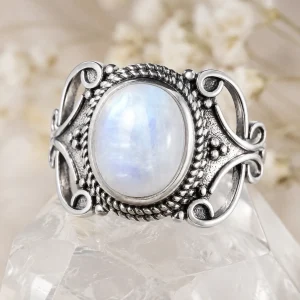
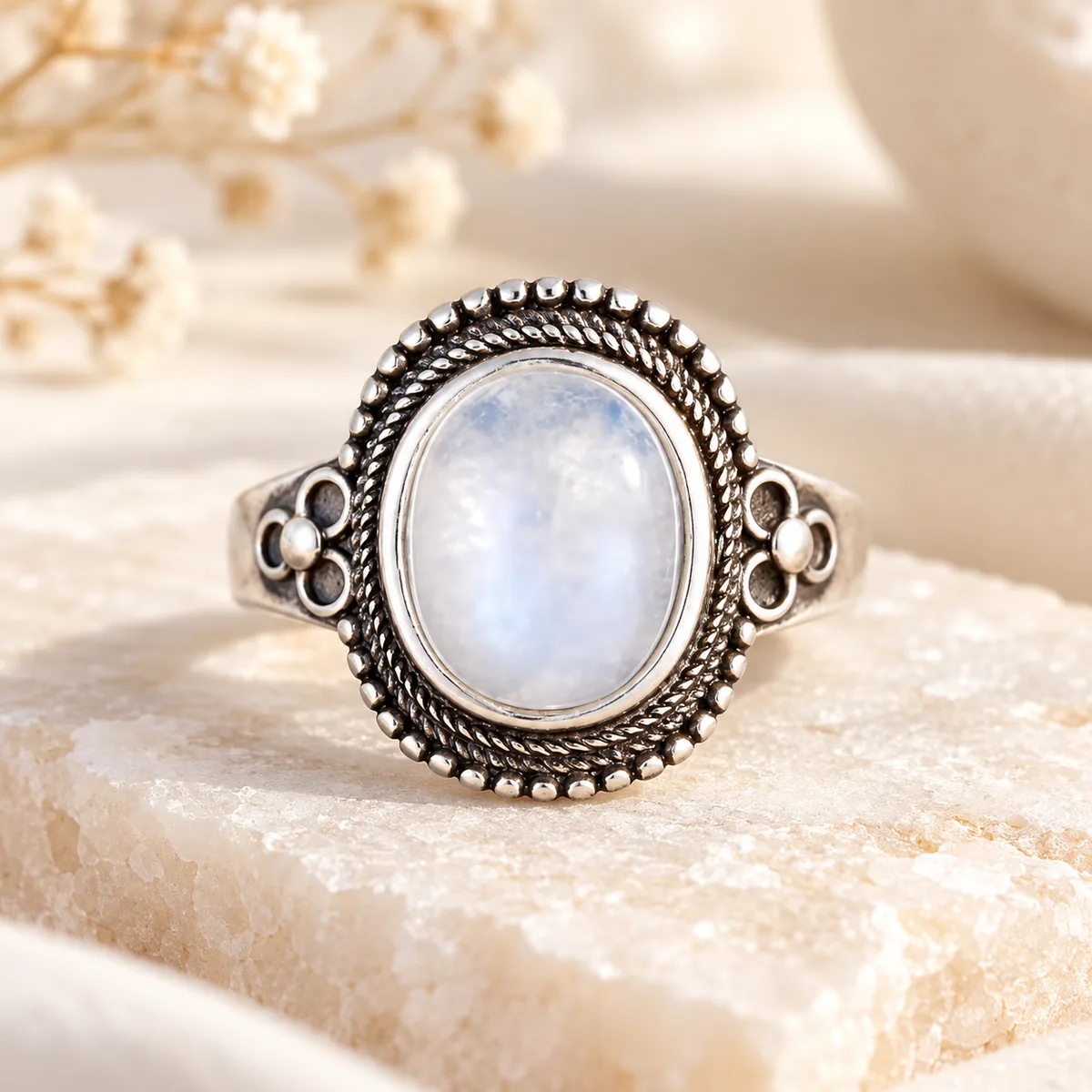
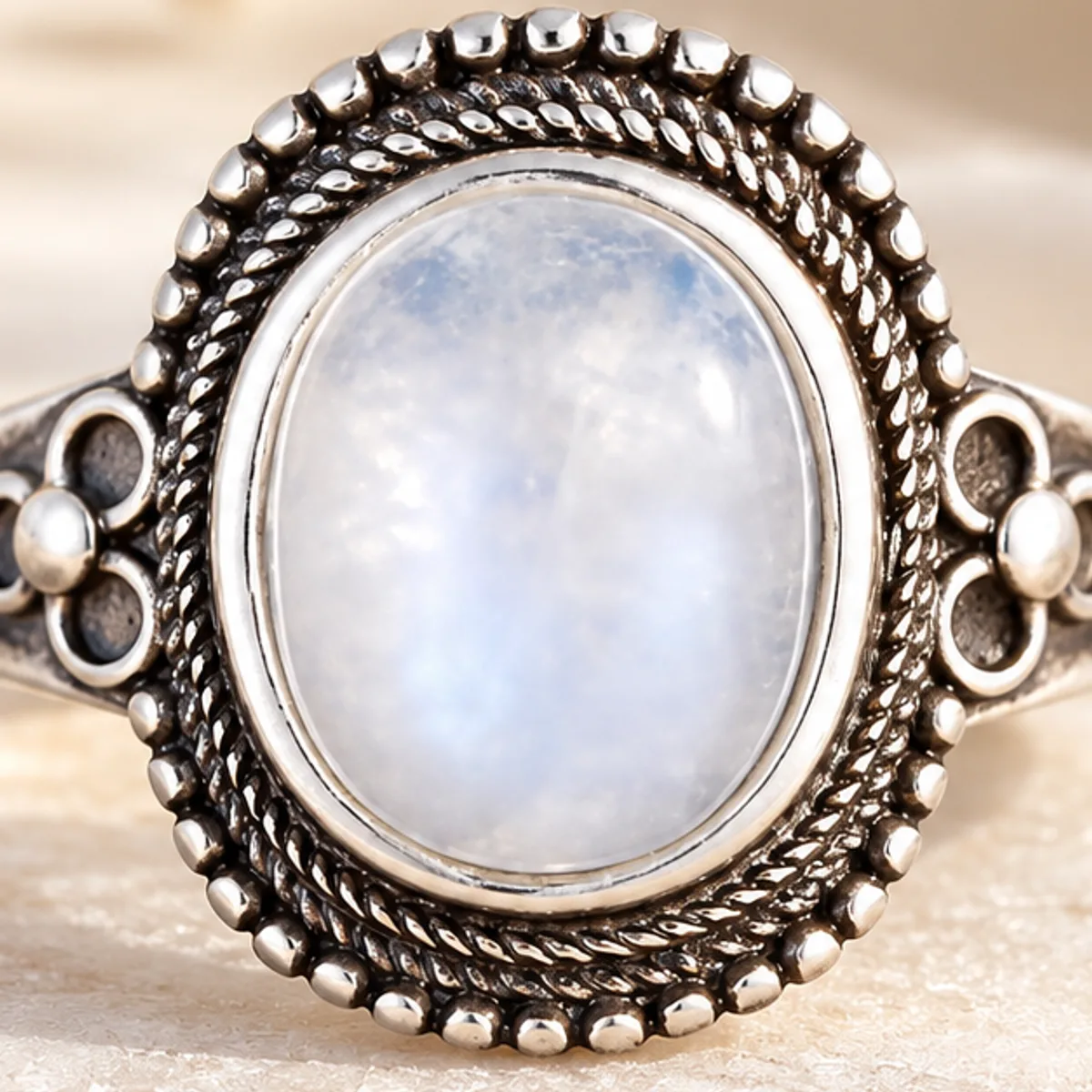
An oval cabochon framed by a twisted wire, and on each shoulder three beads in a row, the largest nearest the stone and each one smaller than the last.
Beads that get smaller
The three beads on each shoulder are not the same size. The one closest to the bezel is the largest, the middle one smaller, the outer one smaller still. That graduation does one thing and does it well: it gives the eye a direction. Three identical beads read as a full stop, three graduated ones read as a movement running into the stone. The whole difference is perhaps half a millimeter between the first and the third, and it changes how the shoulder relates to the center.
Graduation is also how you make a short shoulder look longer. On a ring this size there is not much room between the bezel and the curve of the band, and a decoration that stays the same size along that stretch makes the space look shorter than it is. Shapes that shrink suggest distance, which is the same reason painters make things smaller as they recede. It is a cheap trick and an honest one.
The surround is a single twisted wire, soldered around the bezel, and it is deliberately modest: the shoulders are the worked part of this ring, so the frame stays quiet. If the frame were as busy as the shoulders the eye would have nowhere to rest, which is the most common fault I see in decorated rings, and the easiest to avoid by simply doing less in one of the two places.
The stone is an oval rather than a round, which is the main choice to make on a ring of this kind, and I have set out below how I would decide. It sits in a closed bezel, and the blue veil runs along the long axis when the hand tilts. The other rings are here, and the size guide takes two minutes.
- Oval moonstone cabochon, closed bezel under a twisted wire surround.
- 925 sterling silver hallmarked S925, three graduated beads set on each shoulder.
- The graduation gives the shoulder a direction, running into the stone.
- US sizes 4 1/2 to 10, that is 48 to 62 mm. Shipped in two weeks.
The specifications
- Stone
- Real moonstone (adularia), oval cabochon
- Origin
- India
- Metal
- 925 sterling silver, S925 hallmark
- Setting
- Closed bezel, no glue
- Decoration
- Twisted wire surround, three graduated beads per shoulder
- Finish
- Oxidized silver, crests rubbed back with a cloth
- Sizes
- US 4 1/2 to 10 (48 to 62 mm)
- Gender
- Women
- Brand
- Melissa Moon
Oval or round: how I would choose
Set lengthwise along the finger, an oval lengthens the hand and reads as dressed up. A round stone reads as neutral and sits comfortably on any finger, which is why it is the shape I use for the everyday models. If you want one ring that goes with everything, take a round. If you want the ring to be noticed, take an oval. That is most of the answer, and it has nothing to do with the stone.
The part that does concern the stone is this: moonstone shows its veil best across a broad surface, so a large oval will always give you more of the blue sheet than a round of the same weight. If the veil is the reason you want the stone, the oval wins. If you prefer the flash that appears and disappears, a small round gives you that, and it survives daily wear better because there is less surface to meet the world.
People ask me which shape is more classic. Both are. What changes is whether you want to be wearing a ring or wearing a stone.
No salt, no ultrasonic tank, no hot water: moonstone is a feldspar, and all three damage it for good. The beads and the twist both hold cream, so rinse under lukewarm water rather than wiping, and use a dry soft brush once a month. Avoid silver dips, they lift the oxidation and both the twist and the graduation stop reading. The detail is in cleaning a moonstone piece, and the safe methods in caring for it without harming it. The bezel protects the stone, though a moonstone chips on a real knock.