Moonstone or Opalite: The Most Common Mix-Up
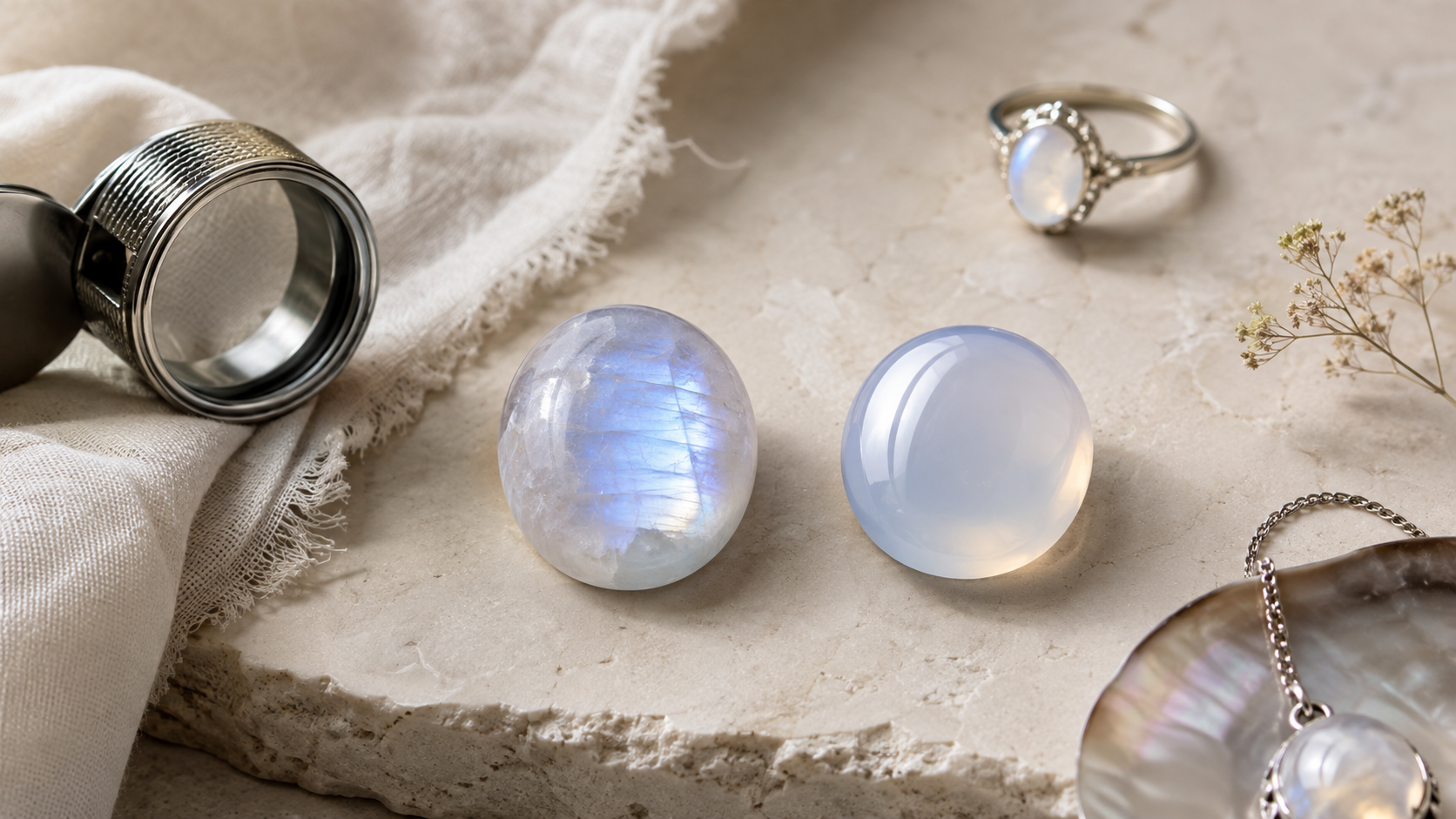
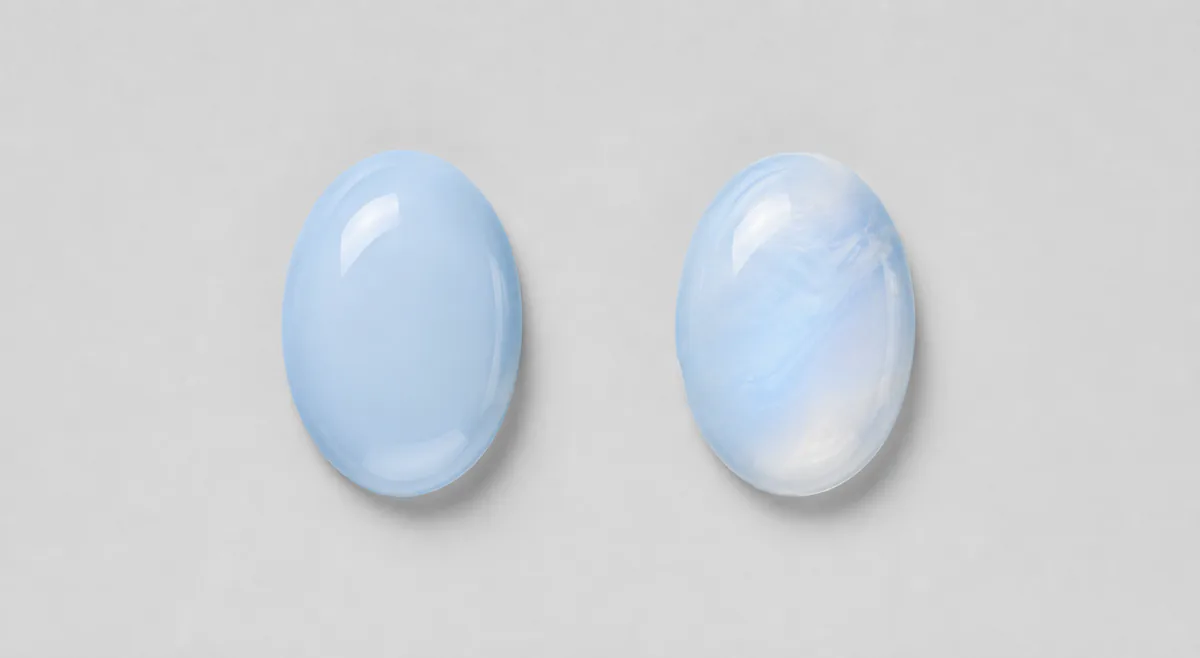
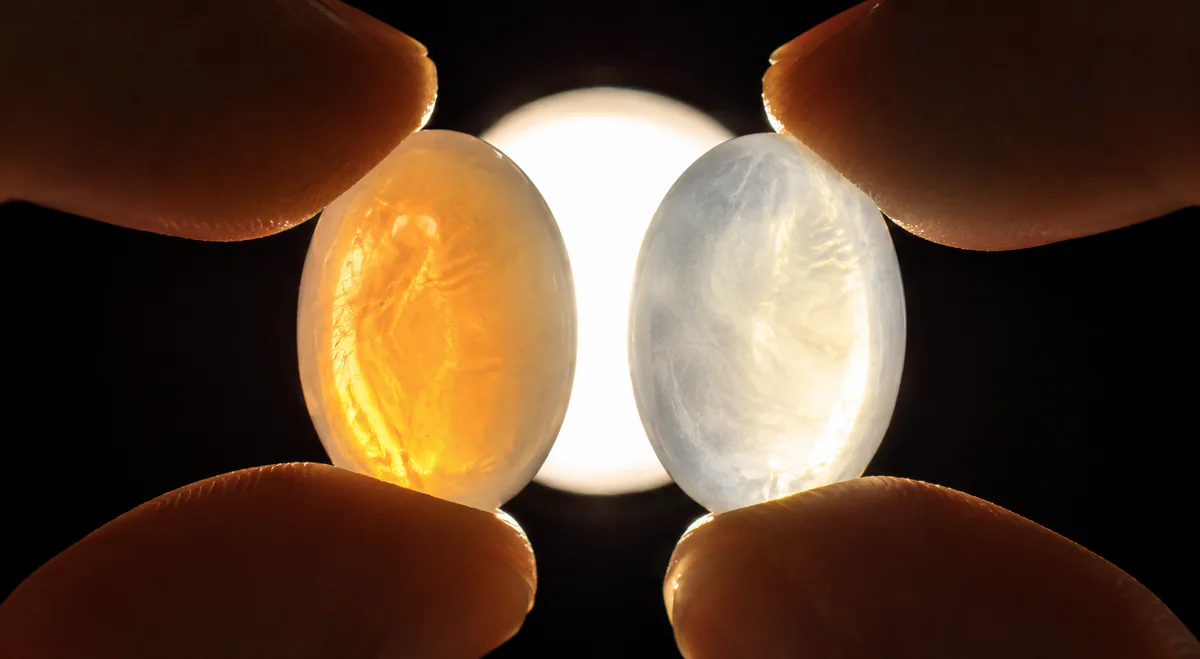
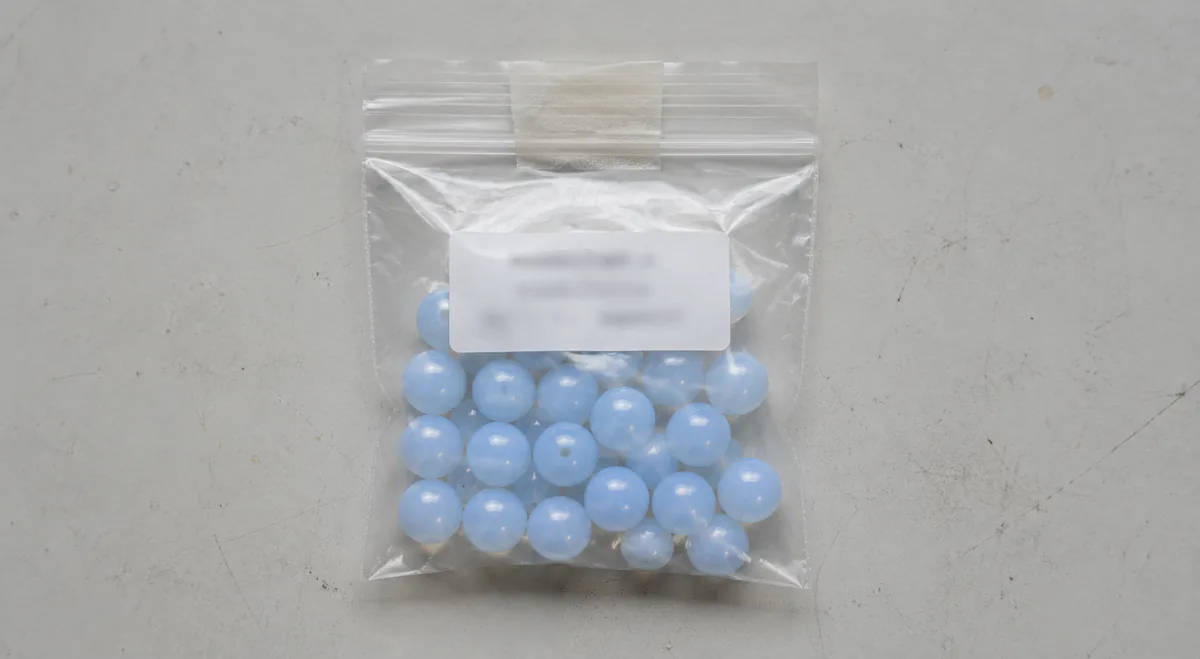
Opalite isn't a stone. It's glass, manufactured in a factory, sold everywhere under the name moonstone and under half a dozen others. A three-second test separates them: hold the piece up to backlight. Opalite turns orange, moonstone stays white.
It's counterfeit number one in this market, and the most honest one to take apart, because many sellers don't know themselves what they're selling. This article says what opalite is, how to spot it, and why I don't sell it, not even as an entry-level piece.
The essentials, if you're in a hurry
- Opalite is glass, manufactured industrially. It's neither a stone, nor an opal, nor a variety of anything.
- The backlight test settles it in three seconds: opalite turns amber orange, moonstone stays white and cool.
- Its shine doesn't move. A uniform milky glow, identical from every angle, isn't adularescence.
- Round bubbles under a loupe are the signature of melted glass, no exceptions.
- It's sold under at least six names, including sea opal, aura stone, and dragon's breath.
- It's cheap, and that's the best clue when everything else fails.
- I don't sell it, not as an entry-level piece, not under another name. It's one of the workshop's three refusals.
The backlight test, in three seconds
Let's start with the practical answer, before the explanation.
Hold the piece in front of a light source, between the lamp and your eye, and look through it. That's all.
Opalite turns orange. A warm, amber orange, sometimes almost peach. The contrast with its front-facing color, a cool milky blue, is dramatic. It's a property of the glass it's made from: it scatters blue in reflection and lets warm wavelengths pass in transmission.
Moonstone doesn't turn. It stays white, milky, cool. A translucent stone lets through a slightly hazy white light, never a frank orange.
This test works on a cabochon, on a bracelet bead, on a mounted piece, and it asks for nothing but a lamp or a window. It's the most effective one I know, and that's why I put it at the top of this article.
Stones that pass the backlight test
What opalite actually is
The word sounds mineral, and it isn't one. Let's be precise.
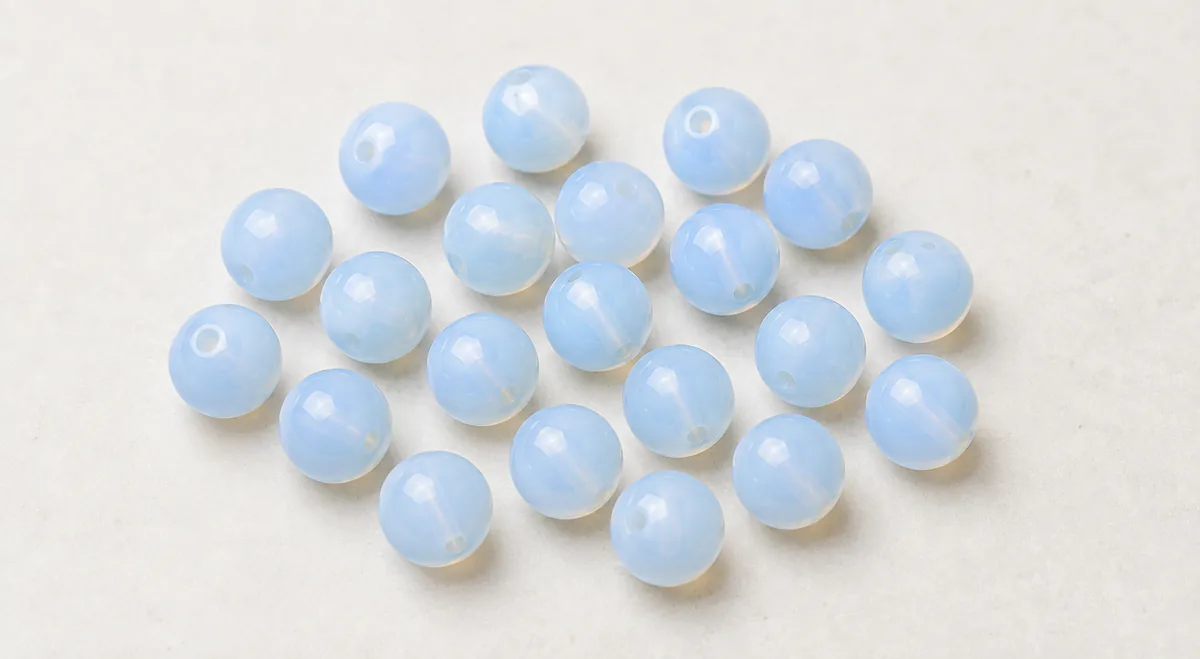
Opalite is a manufactured opalescent glass, enriched with compounds that give it its milky scattering, shaped hot, then cut and polished like a stone. It comes out of a factory, not a mine. There's no such thing as an opalite deposit.
The name itself is a source of trouble. "Opalite" has two uses: in the crystal trade, it almost always refers to this glass; in mineralogy, the term has sometimes been used for low-quality common opals. This ambiguity suits sellers, and it's probably why it persists.
What to remember: when opalite is offered to you in costume jewelry, it's glass. Ninety-nine times out of a hundred, and probably more.
It isn't the only imitation on the market, either. Quartz coated with an iridescent film, resin, and plastic circulate too, and the six tests to sort them out are in how to tell if moonstone is real.
The six names it's sold under
Knowing the names is useful, because it's often the only clue before buying online.
- Opalite. The most common name, and the most honest of the six, since it doesn't claim to be anything else.
- Moonstone. With no further precision, it's the most problematic: it names a real gem.
- Sea opal. There's no such thing as sea opal.
- Aura stone. Also often used for coated quartz, which doesn't help.
- Dragon's breath. The most poetic, and it sometimes refers to a Mexican opal glass type, old and collectible.
- Moon opal. A combination of both confusions at once.
A point of vocabulary that matters: selling glass under the name of a natural gem is a deceptive commercial practice. A seller who writes "opalite" is doing their job correctly, even if the product isn't worth much. A seller who writes "moonstone" on glass isn't.
The six differences, one by one
The backlight test is almost always enough. Here are the other five, for doubtful cases or photos.
1. The movement of the sheen. On moonstone, the sheen shifts as you tilt the stone: it travels across the dome, intensifies, then dims. On opalite, the milky glow is static, it doesn't travel. That's the difference between adularescence, produced by internal layers, and simple scattering in a homogeneous mass. The real mechanism is explained in adularescence.
2. Uniformity. A real stone has dead zones, an off-center sheen at certain angles, irregularities. Opalite is perfectly homogeneous from edge to edge. Perfection is the surest sign of manufacture.
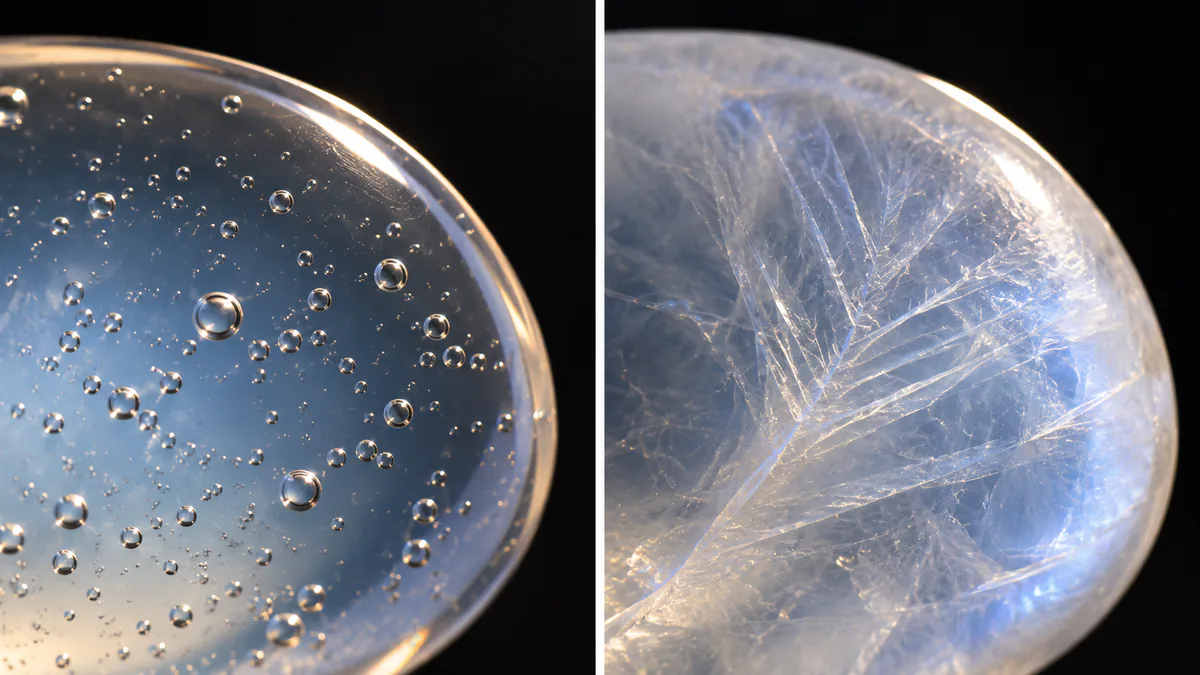
3. Bubbles. Under a 10x loupe, perfectly spherical bubbles, often lined up or clustered, and sometimes internal swirls. The signature of melted glass, no exceptions.
4. Centipedes. Conversely, moonstone very often shows characteristic tension inclusions, two parallel fractures from which perpendicular cracks branch off. They're so distinctive that seeing them is enough to identify the stone, and opalite never has them.
5. Temperature. Glass reaches skin temperature in a second or two. A stone stays cool longer.
6. Price. An opalite bead costs a few cents. A decent moonstone cabochon starts at a few dollars and climbs fast. Full price ranges are in moonstone pricing.
The comparison table
Everything above, at a glance.
| Criterion | Moonstone | Opalite |
|---|---|---|
| Nature | Natural feldspar | Glass |
| Backlit | White, hazy | Orange |
| The sheen | Shifts with the angle | Static |
| Uniformity | Dead zones, irregular | Perfect |
| Under a loupe | Centipede fractures | Round bubbles |
| In hand | Stays cool | Warms up fast |
| Mohs hardness | 6 to 6.5 | About 5.5 |
| Price per bead | A few dollars | A few cents |
The most useful row is the second one, because it asks for no equipment, no experience, no comparison. The others serve to confirm.
Why the confusion is so widespread
It would be easy to conclude there's widespread bad faith. That would be wrong, and the real explanation is more interesting.
The resemblance from the front is real. Seen from above, in a shop photo, an opalite looks a lot like an average-quality white moonstone. It's sometimes even prettier: more uniform, brighter, more regular. That's precisely what should raise a flag, and it's what wins people over.
The resale chain is long. A manufacturer sells to a wholesaler, who sells to an importer, who sells to an online shop, who sells to a dropshipper. The name degrades at every step. Many small sellers sincerely believe they're selling moonstone: they bought a batch labeled that way.
The word is ambiguous at the source. Since opalite has also referred to common opals, the argument "it's a mineral name" seems, on the surface, defensible. It doesn't hold up under scrutiny, but it's enough to create fog.
And nobody runs the test. The backlight check takes three seconds and it's almost never mentioned. That's the main reason I wrote this page.
And what about opal in all this?
A third term in the confusion, and it needs to be stated clearly.
Opal is a real gem: a hydrated silica whose colors come from a network of microspheres that diffract light. It has nothing to do with moonstone, which is a feldspar whose sheen comes from exsolution layers. Two different optical mechanisms, two unrelated mineral families.
Opalite borrows its name from opal and its appearance from moonstone. It's neither one.
The serious comparison between the two real gems, opal and moonstone, is covered in moonstone or opal. And if you're trying to tell moonstone apart from labradorite or selenite, the two other frequent mix-ups, that's in moonstone or labradorite and moonstone or selenite.
What can be said in opalite's favor
This section exists because attacking a product without nuance is easy, and I don't like that.
Opalite is pretty. That's not a hollow compliment: it's a well-made glass, its milky blue is pleasant, and its backlit effect, the very thing that gives it away, is frankly beautiful.
It's cheap, which has real value. An opalite bracelet costs a few dollars, and it lets you wear something you couldn't otherwise afford in a natural stone.
It's durable. A glass at 5.5 on the Mohs scale has no cleavage, unlike moonstone: it chips, it doesn't split clean. For a piece of jewelry worn without much care, that's objectively an advantage. Moonstone's real fragility is explained in is moonstone fragile.
The problem, then, isn't the product, it's the name. An opalite sold as opalite, for three dollars, is an honest transaction. The same one sold as moonstone for thirty dollars isn't. That's the whole difference, and it has nothing to do with the material.
Why I don't sell it
It's one of the workshop's three refusals, alongside relabeled labradorite and fertility claims, and I hold to it without exception.
I don't sell opalite, not under that name, not under another, not as an entry-level piece, not as an affordable alternative. This isn't contempt for the product, I just wrote what I think is good about it.
The reason is this: a shop named Melissa Moon that sells glass alongside its cabochons creates exactly the confusion it claims to fight. A customer who bought an opalite from me one day won't know, six months later, what they have in their box. And I spend pages explaining how to identify a real feldspar.
What I do instead: every product listing names the exact mineral species, adularia or labradorite, even when that complicates the sale. It's the same commitment, taken from the other end. The rest of what I refuse is in the complete guide.
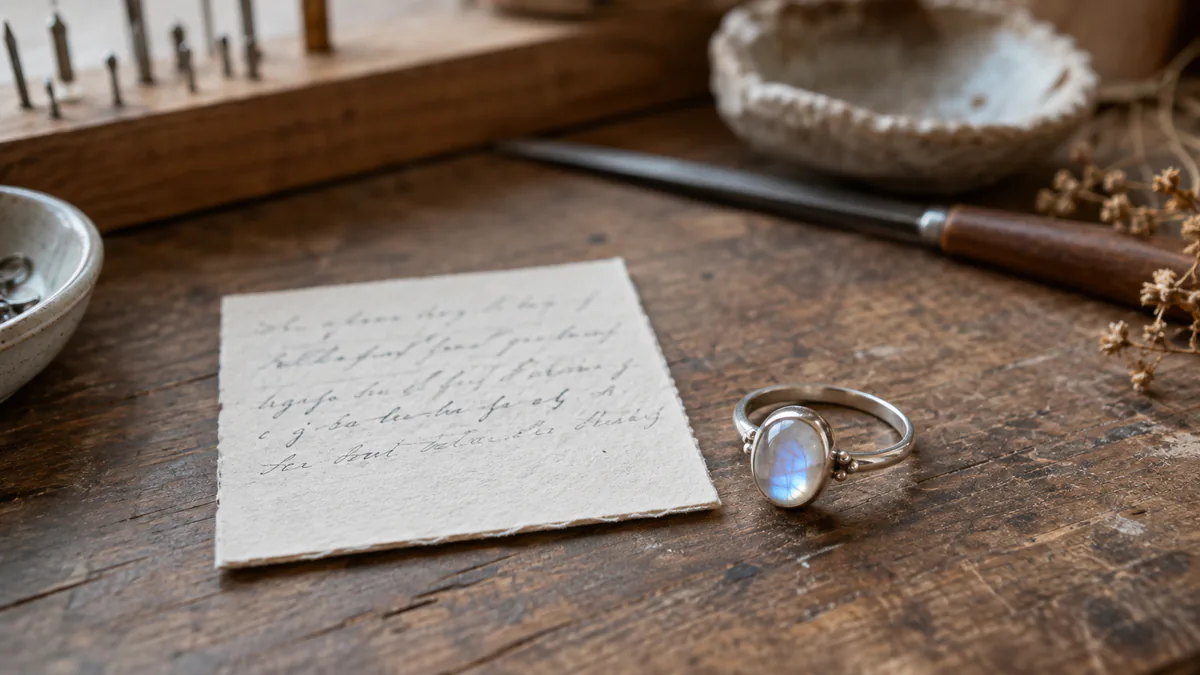
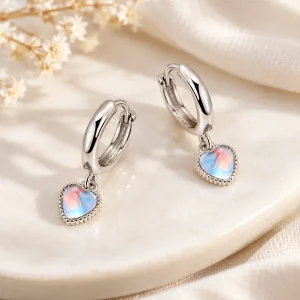
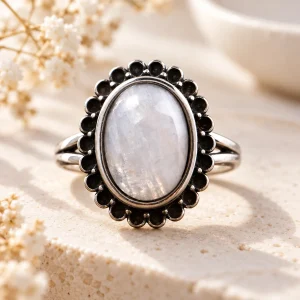
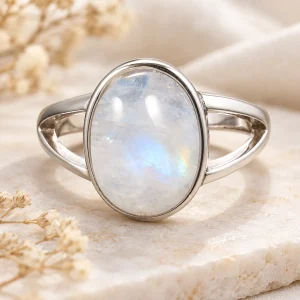
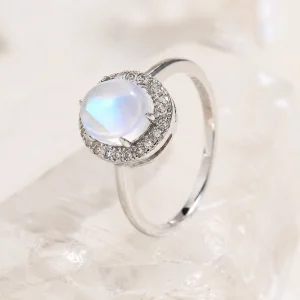
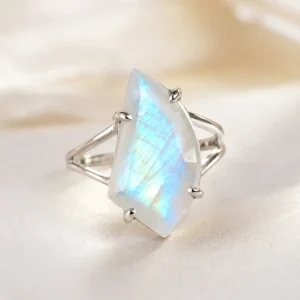
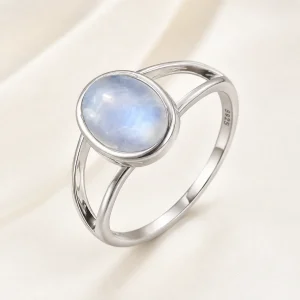
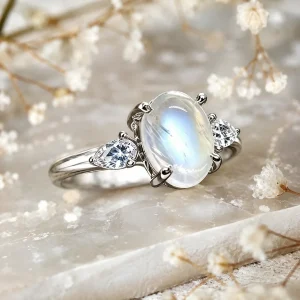
The workshop's rings, no opalite among them




Frequently asked questions
Is opalite a real stone?
No. It's an industrially manufactured opalescent glass. There's no opalite deposit, and it's neither an opal, nor a moonstone, nor a variety of anything natural.
How do you tell opalite apart from moonstone?
Hold the piece up to backlight, between a lamp and your eye. Opalite turns amber orange, moonstone stays white and hazy. Three seconds, no equipment, and it's enough in nearly every case.
Why does opalite turn orange in backlight?
Because the glass it's made from scatters short wavelengths, meaning blue, in reflection, and lets warm wavelengths through in transmission. It's the same effect that makes it look milky blue from the front.
What other names is it found under?
Sea opal, aura stone, dragon's breath, moon opal, and unfortunately just "moonstone." Only the name opalite is honest, since it doesn't claim to be a natural gem.
Does opalite have bubbles?
Often, yes, and it's the second decisive test. Under a 10x loupe, perfectly spherical bubbles, sometimes lined up, with internal swirls. A natural stone never contains any.
Is opalite durable?
More predictable than moonstone, oddly enough. Around 5.5 on the Mohs scale, so a bit softer, but with no cleavage: it chips instead of splitting clean. For a piece of jewelry worn without much care, that's a real advantage.
Is it illegal to sell opalite?
No, as long as it's called opalite. Selling it under the name of a natural gem is what causes problems: in the US, a commercial claim must be accurate, and presenting glass as a stone amounts to a deceptive practice.
Did my seller know it was glass?
Often not. The resale chain is long and the name degrades at every step: many small sellers bought a batch already labeled "moonstone." That doesn't excuse it, but it explains it.
What's the difference with opal?
Opal is a real gem, a hydrated silica whose colors come from a network of microspheres. Opalite only borrows its name. The two real gems are compared in moonstone or opal.
Do you sell opalite?
No, never, under any name and in any range. It's one of the workshop's three refusals. In exchange, every product listing names the exact mineral species, adularia or labradorite.
Where to go from here
- Checking what you have: the six authenticity tests, treated stones, the six quality criteria.
- The other mix-ups: moonstone or labradorite, moonstone or selenite, moonstone or opal.
- Buying without getting it wrong: what sets the price, where to buy.
- Understanding the sheen: adularescence, colors and varieties, is it fragile.
- The full picture: the complete moonstone guide.
The jewelry is in the shop. If you have doubts about a piece you already own, run the backlight test and send me the photo: I'll tell you what I think, and I'd rather give you bad news than leave you in doubt.
My sources
For the nature of opalite: it's a manufactured opalescent glass, described as such by gemological reference sources and mineralogy databases, which recognize no deposit for it. The ambiguity of the term, also used to refer to low-quality common opals, is documented and explains part of the commercial confusion.
For its optical behavior: opalite looks milky blue in reflection and turns orange or amber in transmission, a classic scattering effect in a glass loaded with fine particles. Spherical gas bubbles and internal swirls are the markers of a melted material.
For moonstone: the GIA for adularescence, the hardness of 6 to 6.5, and the tension inclusions called centipedes, so distinctive that seeing them is enough to identify the gem. Mindat for feldspar classification.
For the commercial framework: a claim must be substantiated by whoever makes it, and presenting a product under an inaccurate name can amount to a deceptive commercial practice. That's the position developed in moonstone properties and virtues.
One limitation I'll flag: the hardness of about 5.5 attributed to opalite is a rough figure for common glass, not a value measured on a specific sample. These glasses vary by composition, and nobody characterizes them seriously, precisely because they aren't gems.
Last updated: August 19, 2026. If you spot an error in this article, let me know: I'll fix it and note it.
✦ À porter, à offrir
Découvrez mes créations