


Description
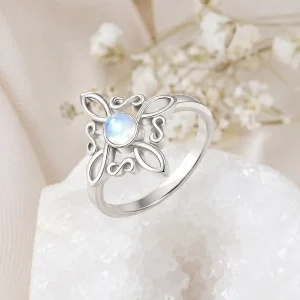
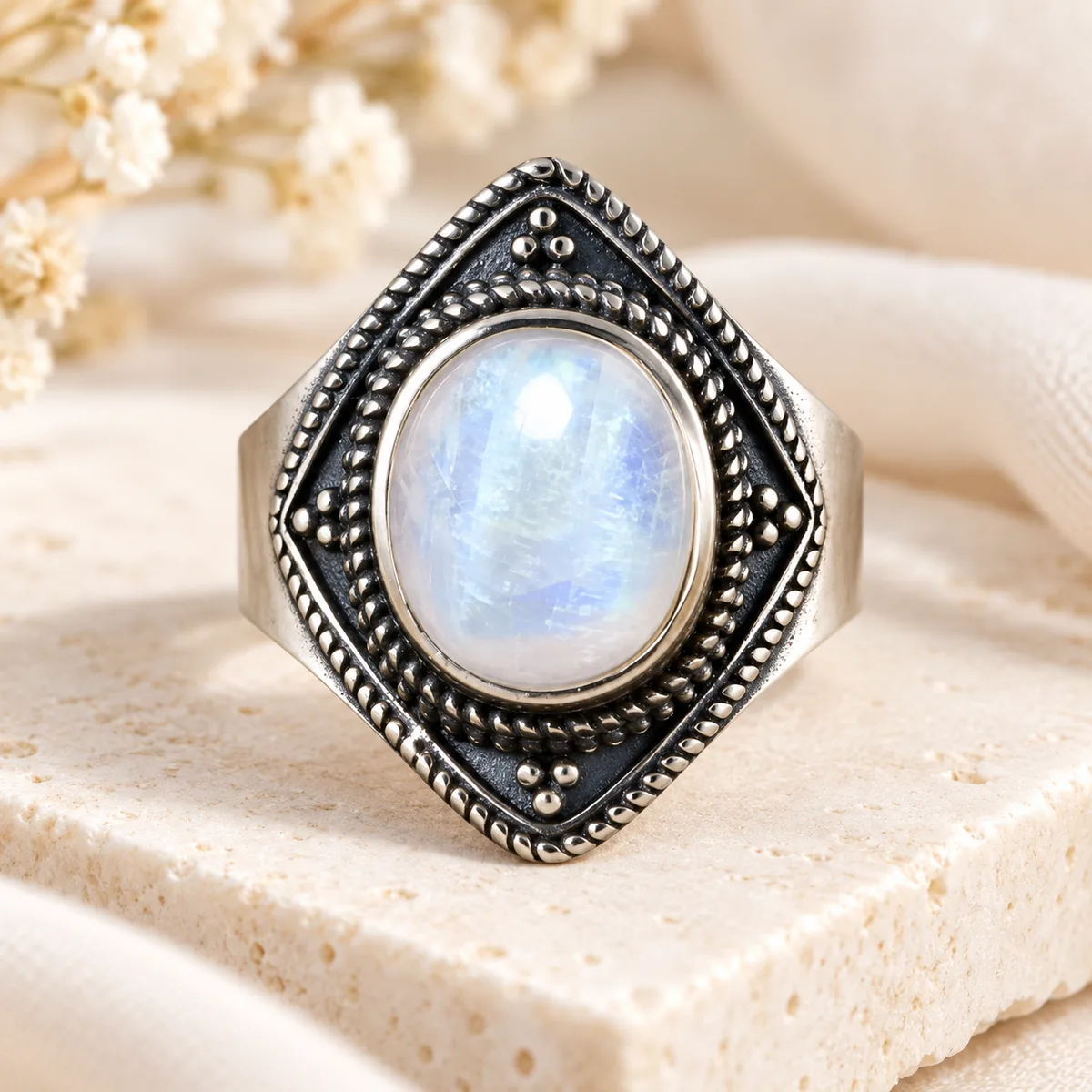
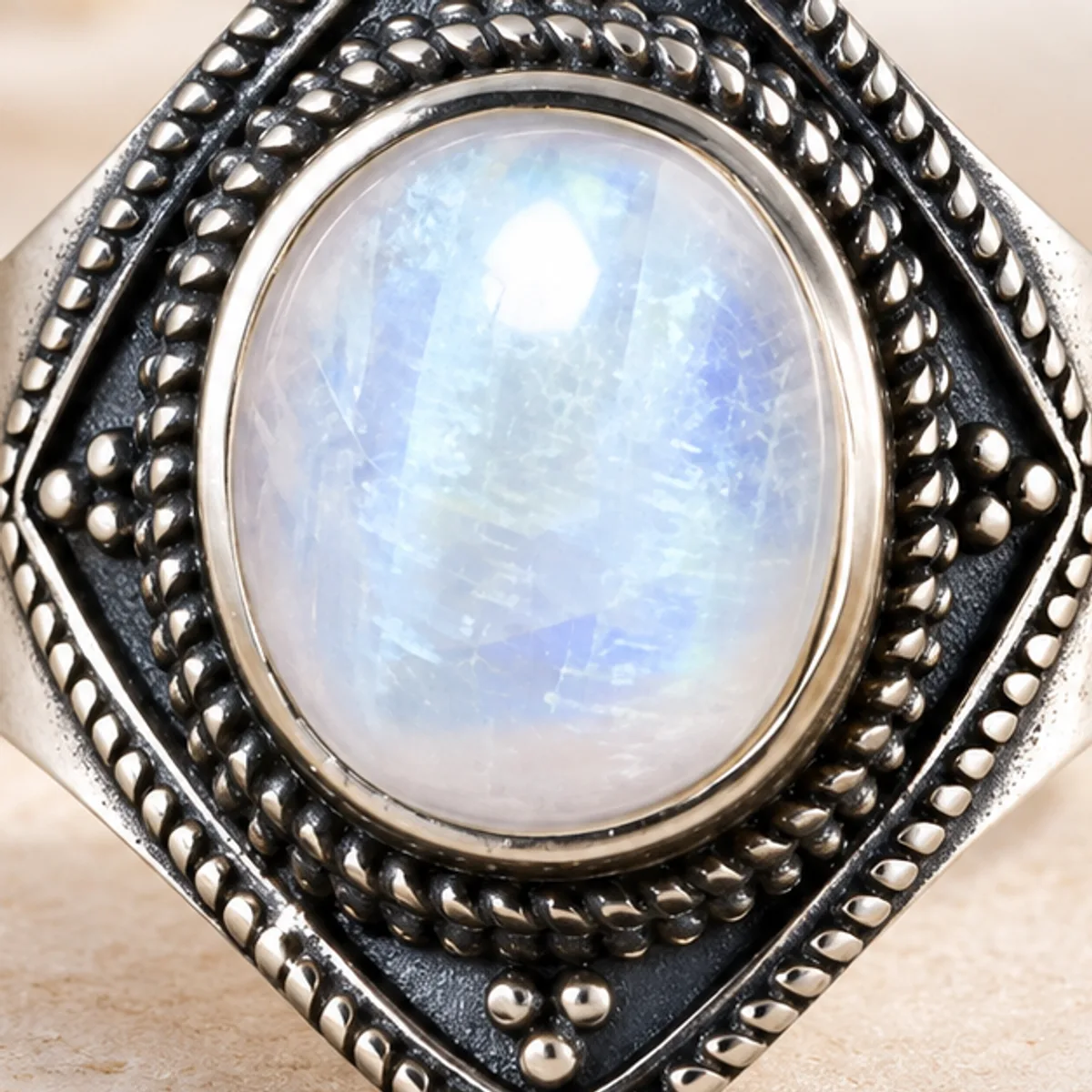
An oval cabochon inside a diamond shaped frame, and running around that frame a row of silver beads that has to turn four sharp corners.
A round stone in an angular frame
An oval inside a diamond is a deliberate mismatch. The stone is all curve, the frame is all angle, and putting them together makes each one more visible: the cabochon looks rounder than it would in an oval bezel, and the frame looks sharper than it would around a square stone. Jewelers have used this contrast for centuries and it almost never fails, provided the two shapes are close enough in size that neither swallows the other. Here the oval fills the diamond with a narrow margin, which is the proportion that works.
The real difficulty of this design is the corners. A row of beads is easy along a straight edge and awkward at a point, because the beads on the two sides arrive at different angles and meet in a gap. There are three honest solutions: stop the row short of the corner, run it through and accept an uneven spacing, or set one larger bead exactly on the point and let the two rows die into it. I use the third, and it is the only one of the three that looks intentional rather than tolerated.
Look at the four corner beads and you will see they are slightly bigger than the others. That is not a mistake, it is the joint. Once you have noticed it on this ring you will start noticing it on old jewellery, because it is a very old solution to a problem that has not changed.
The stone sits in a closed bezel inside the frame, and the band is wide, so take a quarter size up compared to a thin ring. The blue veil moves inside a shape that does not, which is the whole pleasure of this one. The other rings are here.
- Oval moonstone cabochon, closed bezel inside a diamond shaped frame.
- 925 sterling silver hallmarked S925, beaded row with a larger bead at each corner.
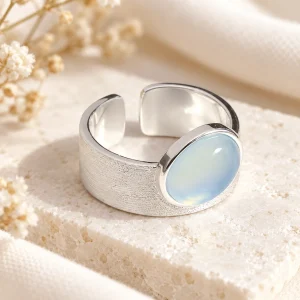
- Wide band, worn alone, a curved stone against an angular frame.
- sizes I 1/2 to T 1/2, that is 48 to 62 mm. Delivered in two weeks.
The specifications
- Stone
- Real moonstone (adularia), oval cabochon
- Origin
- India
- Metal
- 925 sterling silver, S925 hallmark
- Setting
- Closed bezel, no glue
- Shape
- Diamond shaped frame, wide band
- Decoration
- Beaded row, larger bead set at each corner
- Finish
- Oxidized silver, crests rubbed back with a cloth
- Sizes
- I 1/2 to T 1/2 (48 to 62 mm)
- Gender
- Women
- Brand
- Melissa Moon
Corners are where you judge a piece
If you only ever look at one thing to tell a well made piece from a badly made one, look at the corners. Straight runs and smooth curves are easy, and any workshop gets them right. A corner is where two pieces of work meet, and it is where the decisions are: what stops, what continues, what is added to hide the join. Cheap pieces do not solve corners, they blur them, usually by rounding everything off until there is no corner left.
The same is true of the inside corners you cannot see. Where the frame meets the band there is an angle on the underside, and if it is left sharp it will press into the finger within an hour. I round those and nobody ever mentions it, which is exactly right: the work you notice is decoration, the work you do not notice is fit.
Show me the corners and I will tell you how long the maker spent on the piece. Everything else can be faked with a polishing wheel.
No salt, no ultrasonic tank, no hot water: moonstone is a feldspar, and all three damage it for good. The beaded row holds cream between the beads and the four corners are where it collects most, so rinse under lukewarm water rather than wiping, and use a dry soft brush once a month. Avoid silver dips, they lift the oxidation and the beads flatten out visually. The detail is in cleaning a moonstone piece, and the safe methods in caring for it without harming it. The frame stands proud of the stone, so it takes knocks before the cabochon does, which helps with a stone that chips.