

Description
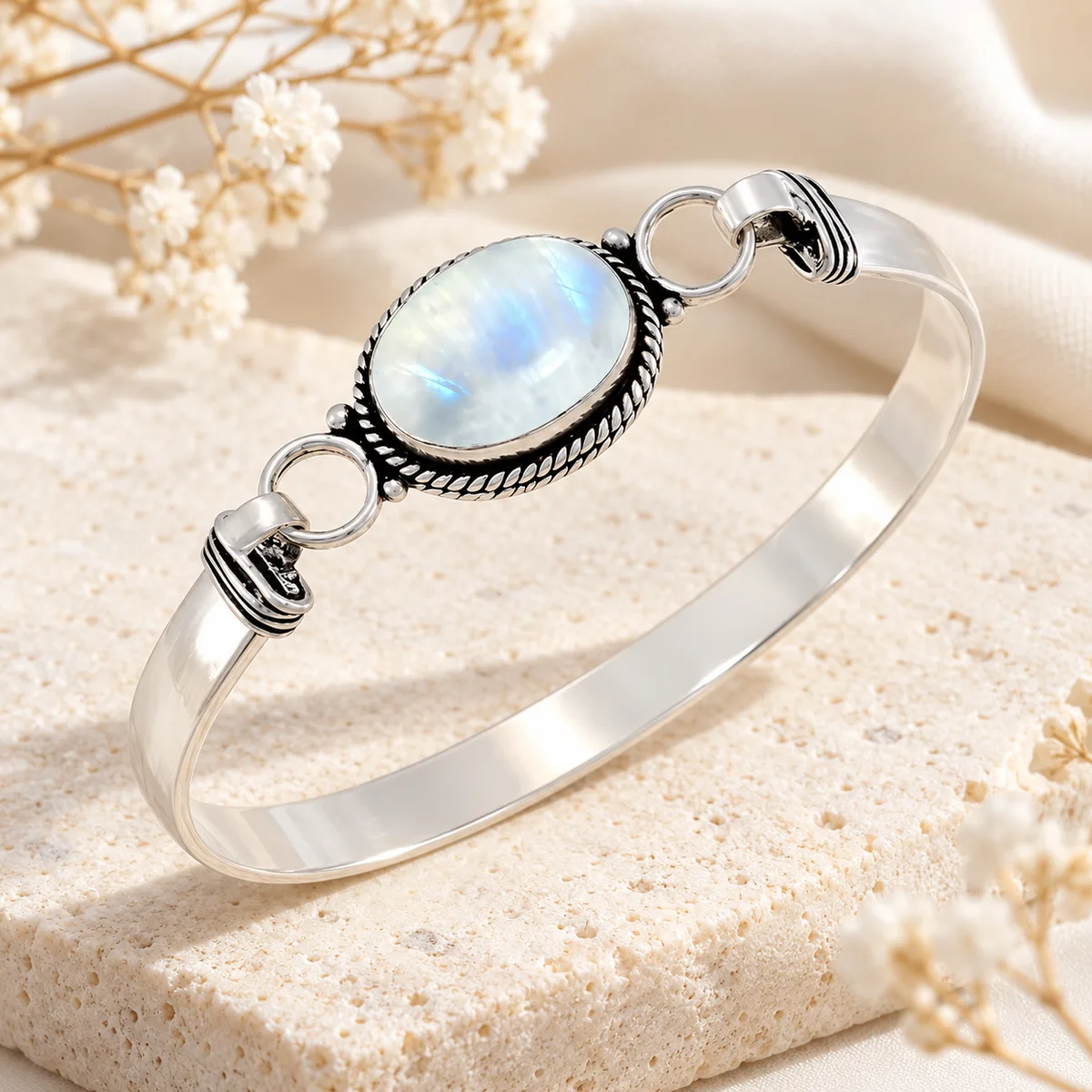
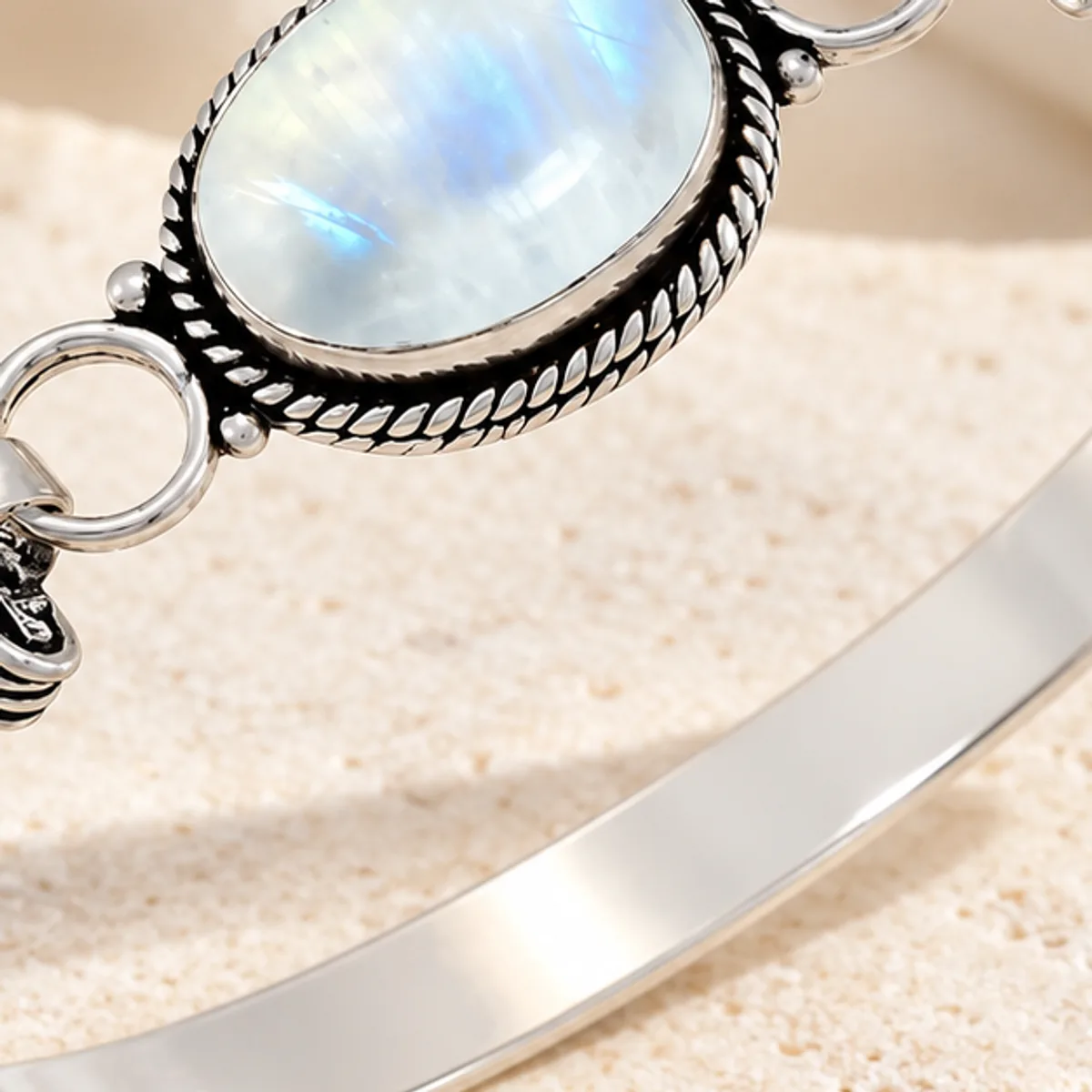
A rigid silver bangle, and at the top an oval cabochon mounted like a medallion, slightly raised on a chased base. A bracelet worn the way a watch is: always in the same place.
A medallion, not a stone laid on
The difference is in the base. The cabochon is not set directly into the thickness of the bangle: it is mounted on a small oval platform, itself soldered onto the bracelet, with a chased edge running all the way round. That construction lifts the stone by two millimetres and isolates it visually from the rest, like a cameo on a ribbon. The eye stops there instead of following the curve of the bangle.
It also has a practical advantage. On a rigid bracelet the stone necessarily sits on top of the wrist, the zone that meets tables and door handles. A base that projects sideways beyond the setting takes those knocks before the stone does. On a feldspar that chips on impact, that is not a theoretical precaution.
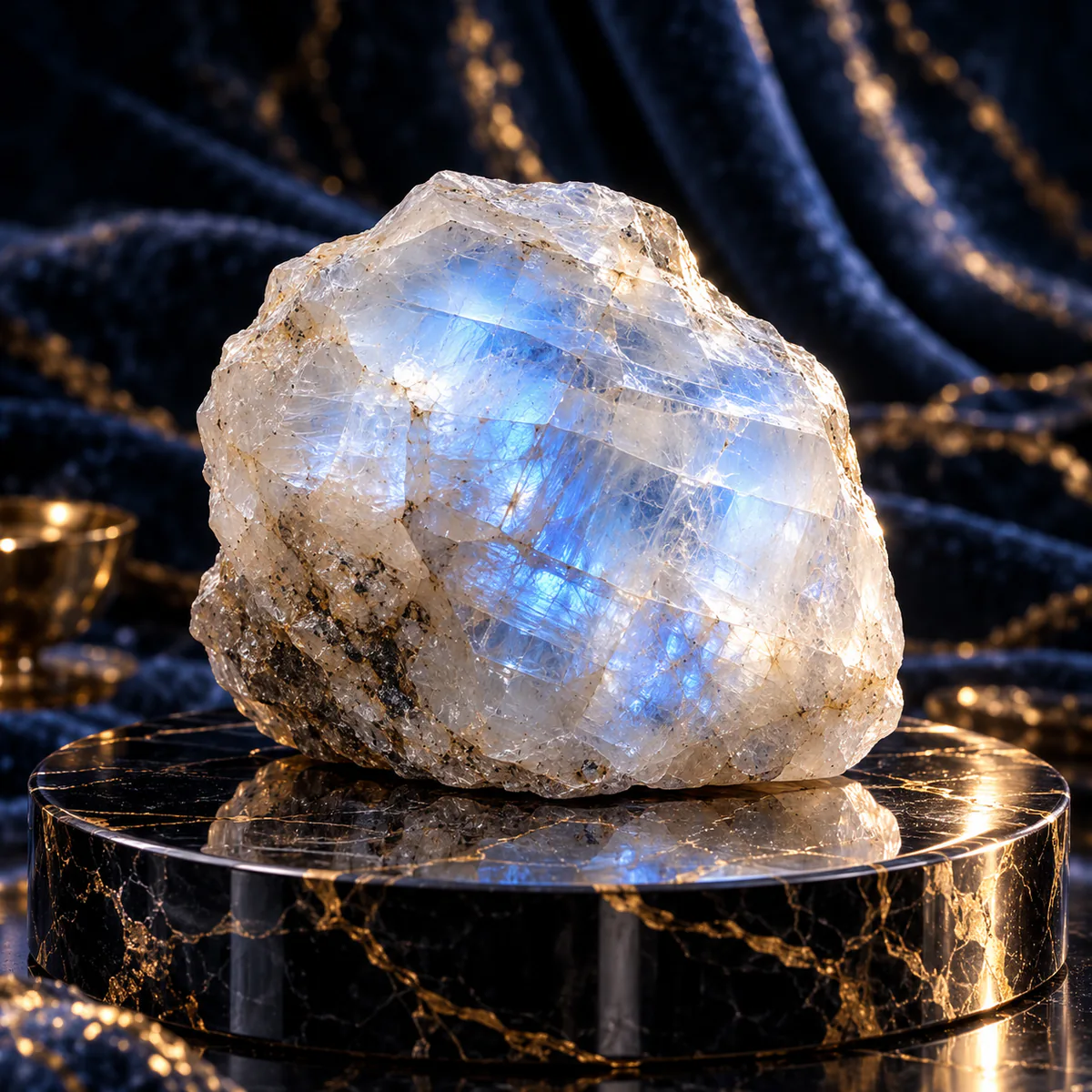
The cabochon is oval, mounted along the line of the bracelet, in a closed bezel with no claws and no glue. On this dome the adularescence slides from one edge to the other as the arm turns. The movement is wider than on a ring: a wrist describes larger arcs than a finger, and the veil has time to cross the whole stone.
The bangle is rigid, with a discreet opening at the back that lets it pass. The silver is polished, the base oxidised in the hollows of its chasing then rubbed back with a cloth. The other bracelets are here, and which wrist to wear it on answers the question I am asked most often.
- Real moonstone, oval cabochon, wide and centred blue veil.
- 925 sterling silver hallmarked S925, rigid bangle, stone mounted on a chased base.
- The base projects beyond the setting and takes the knocks before the stone.
- Wrists of 16 to 18 cm. Delivered in two weeks.
The specifications
- Stone
- Real moonstone (adularia), oval cabochon
- Origin
- India
- Metal
- 925 sterling silver, S925 hallmark
- Setting
- Closed bezel on a soldered chased base, no claws, no glue
- Shape
- Rigid bangle, discreet opening at the back
- Finish
- Polished silver, base oxidised in the chasing and rubbed back
- Sizes
- Wrists of 16 to 18 cm
- Gender
- Women
- Brand
- Melissa Moon
Why a rigid bangle and not a chain
A chain bracelet turns on the wrist, so its stone spends most of the day underneath, against the skin, where nobody sees it and where it meets every surface you lean on. A rigid bangle does not turn: the stone stays on top and stays visible. That is the entire argument, and it is why almost every stone I set on a bracelet goes on a bangle rather than on a chain.
The cost is fit. A chain adjusts to any wrist and a bangle does not, which is why this one is made for sixteen to eighteen centimetres and why I would rather you measure with a tape before ordering than send it back. Wrap a strip of paper round the wrist, mark it, lay it flat against a ruler. Thirty seconds, and it is the only measurement that matters here.
A chain hides the stone under your wrist all day. A bangle keeps it where you can see it.
No salt, no ultrasonic tank, no hot water: moonstone is a feldspar, and all three damage it for good. For the oxidised base, one rule on top: no silver dip and no polishing cloth on the chasing, which would remove exactly the dark that makes it readable. Take it off before leaning on your forearms at a desk. Cleaning a moonstone piece and caring for it without harming it cover the rest.