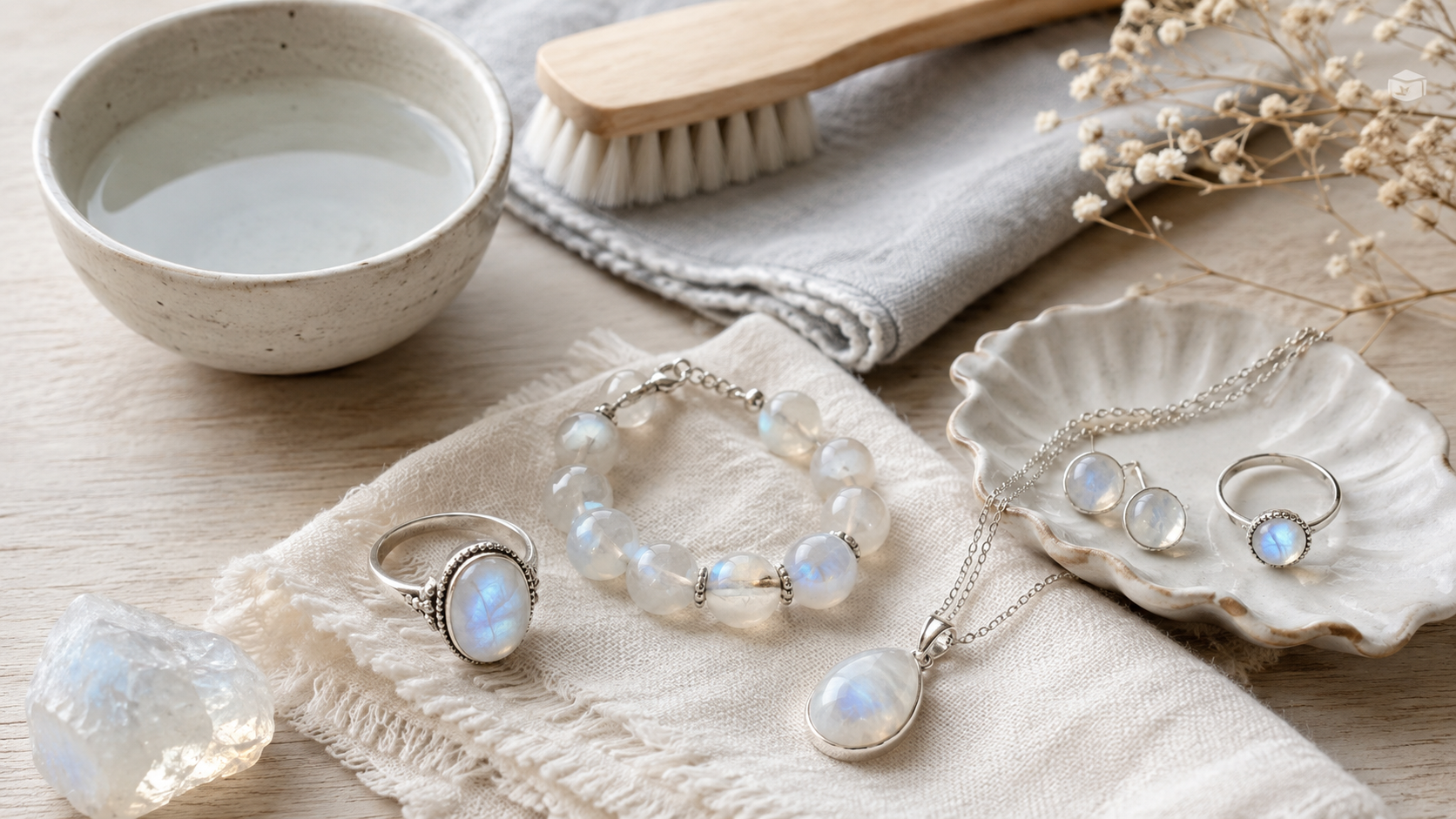
How to Clean Moonstone Jewelry: Ring, Bracelet, Necklace
The method changes with the piece, and above all with the setting. A closed bezel doesn't clean like prongs, and an elastic cord doesn't clean like a chain. Here is the exact move for each, what to dry and for how long, and the three mistakes that cost you a stone.
This article is purely practical: no properties, no cleansing, no calendar. Just soap, a cloth and a soft brush. The cleansing question is covered in cleansing and charging your moonstone, and the water question in can moonstone go in water.
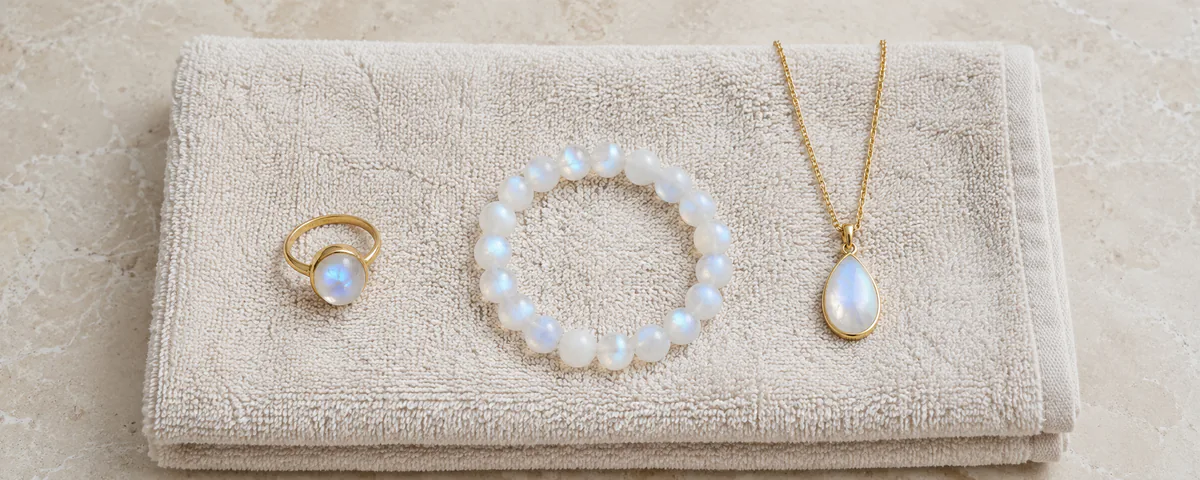
The essentials, if you're in a hurry
- Warm water, a drop of mild soap, a soft toothbrush. That's it, and it's the only method the GIA recommends.
- Brush the setting, never the dome of the stone. The grime is in the metal, not on the cabochon.
- A closed bezel traps water and needs the longest drying time. Prongs rinse better but catch on things.
- A bracelet on elastic cord doesn't soak. The cord is a wear part, and water wears it out faster.
- Plug the drain before you start. It's the one truly irreversible disaster in this whole article.
- Never ultrasonic, never steam, never hot water, and never a store-bought jewelry cleaner.
- A dull sheen is almost always a film of lotion, not a damaged stone. It comes off at the first cleaning.
What decides is the setting
People search "how to clean a moonstone ring," and that's the right question aimed at the wrong level. Two rings can need two different methods, and a ring and a pendant can need the same one.
What matters is how the stone is held, and there are four cases.
| Setting | What it changes | Drying |
|---|---|---|
| Closed bezel | Traps water behind the stone | Long |
| Prongs | Rinses well, but catches and can loosen | Short |
| Elastic cord | The cord wears, water stays between the beads | Very long |
| Chain and clasp | The clasp is the part that grimes up | Medium |
Look at the right-hand column: it's the drying that varies, more than the washing. The washing is the same everywhere, thirty seconds of warm soapy water. What sets one piece apart from another is how long it then takes for no water to be left anywhere.
On choosing a setting at the time of purchase, and on what a closed bezel actually protects, see closed bezel or prongs.
The supplies, and what not to reach for
The list of what you need fits in four lines, and the list of what's forbidden is longer than the list of tools.
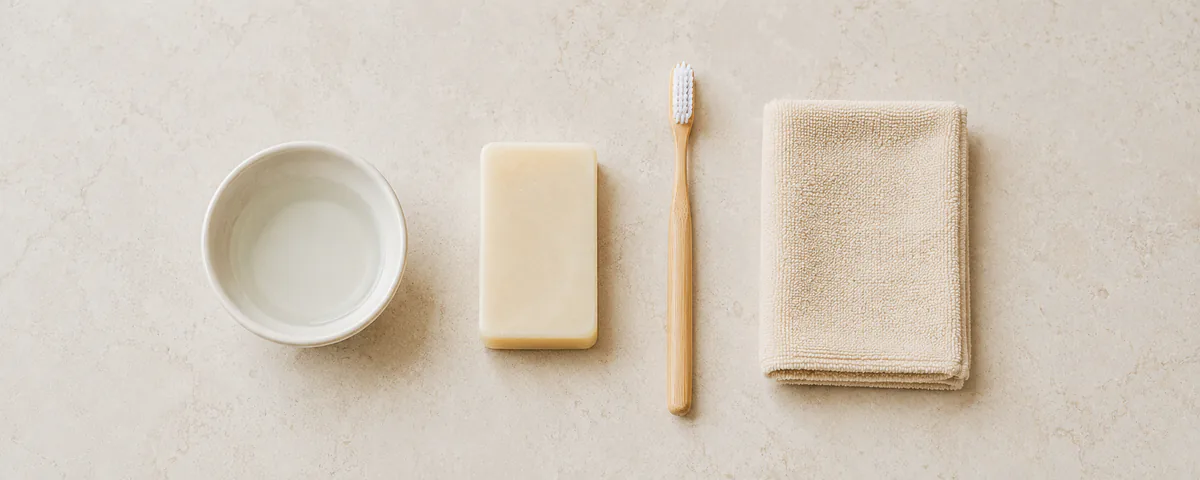
What you need: a bowl of warm water, a drop of mild soap, castile soap or unscented dish liquid; a soft toothbrush, genuinely soft, not "medium"; a microfiber cloth; and a towel to lay the piece on to dry.
What not to reach for, and I run into this regularly in messages: no store-bought jewelry cleaner, often ammonia-based; no baking soda, which is an abrasive; no vinegar or lemon, which are acidic; no toothpaste, which is an abrasive in disguise; no alcohol or acetone; no silver polishing cloth, impregnated with product, on a set piece.
And the three appliances: no ultrasonic cleaner, no steam, no hair dryer. The GIA writes that ultrasonic and steam cleaners are never recommended for this stone, and a hair dryer adds a thermal shock a feldspar doesn't need.
Cleaning a ring
It's by far the dirtiest piece of the lot. A ring spends its day in hand lotion, soap and dishwater, and all of it builds up behind the stone, right where you never look.
Plug the drain. Always first. A ring that slips into an open drain is gone, and it's happened to everyone once.
Thirty seconds in warm soapy water. No more. The goal is to soften the greasy film, not to soak.
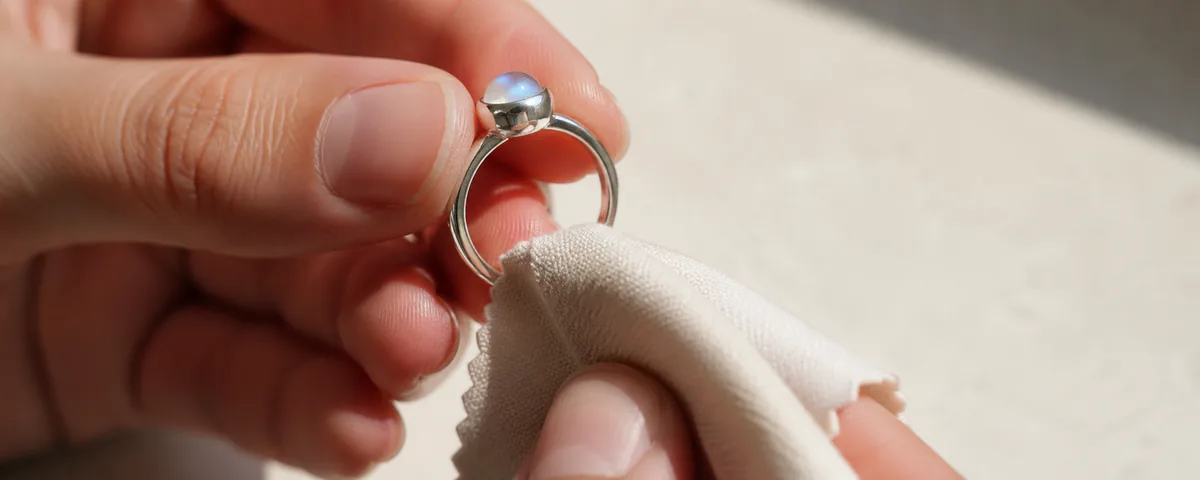
Brush the back and sides, not the top. On a closed bezel, focus where the metal meets the stone, where soap forms a gray seam. On prongs, run the brush under the stone, between the prongs, and check that none of them move as you go.
Rinse in clear warm water, then dry completely. On a closed bezel, tap the ring flat on the towel, dome down, to drive out the water trapped behind the stone.
Frequency: once a month for a ring worn daily. How to wear it, and when to take it off, are covered in how to wear moonstone.
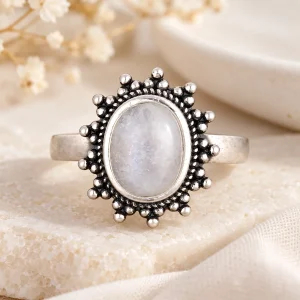
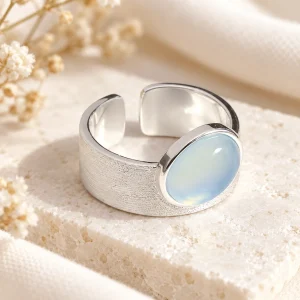
The workshop's rings, the ones that get dirty fastest




Cleaning a beaded bracelet
A special case, because the enemy here isn't grime but the cord.
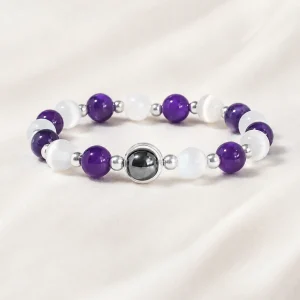
The workshop's beaded bracelets are strung on elastic cord, which is a wear part: one to three years depending on how often it's worn, and then it needs restringing. Water and soap speed up that wear, and water trapped between the beads takes a long time to leave.
So don't soak it. Run a slightly damp microfiber cloth over the beads, one at a time if you're patient, holding the bracelet flat without stretching the elastic. Dry it right away with a dry cloth.
If the bracelet is really dirty, a quick rinse under a thin stream of warm water is fine, about ten seconds, then dry it flat on a towel for at least twenty-four hours. Flip it halfway through. Don't put it back in a pouch until it's completely dry.
The move that wears out the elastic fastest isn't cleaning, it's putting it on by stretching it out to full width. Roll it onto your hand instead. It's the tip that extends a bracelet's life the most, and it costs nothing.
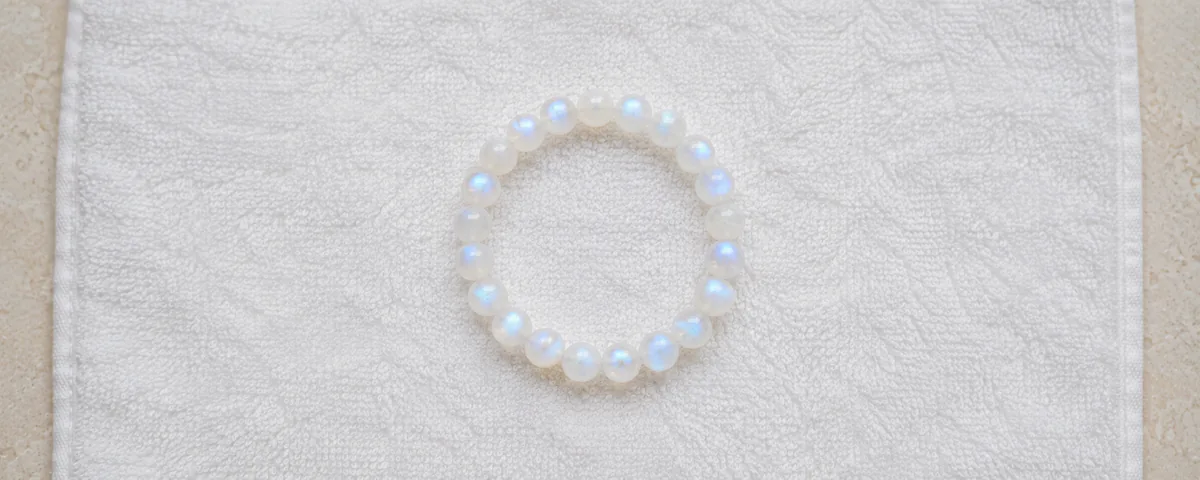
The workshop's bracelets, strung on elastic cord
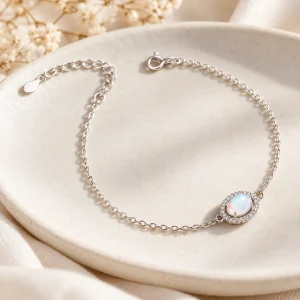
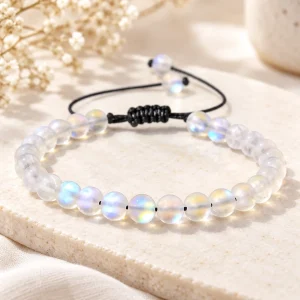
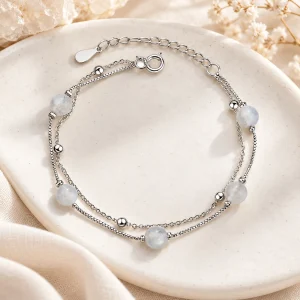
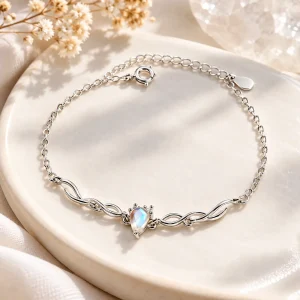
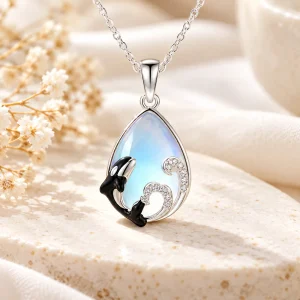
Cleaning a necklace or pendant
Here, the stone is almost always the cleanest part. The real work is elsewhere.
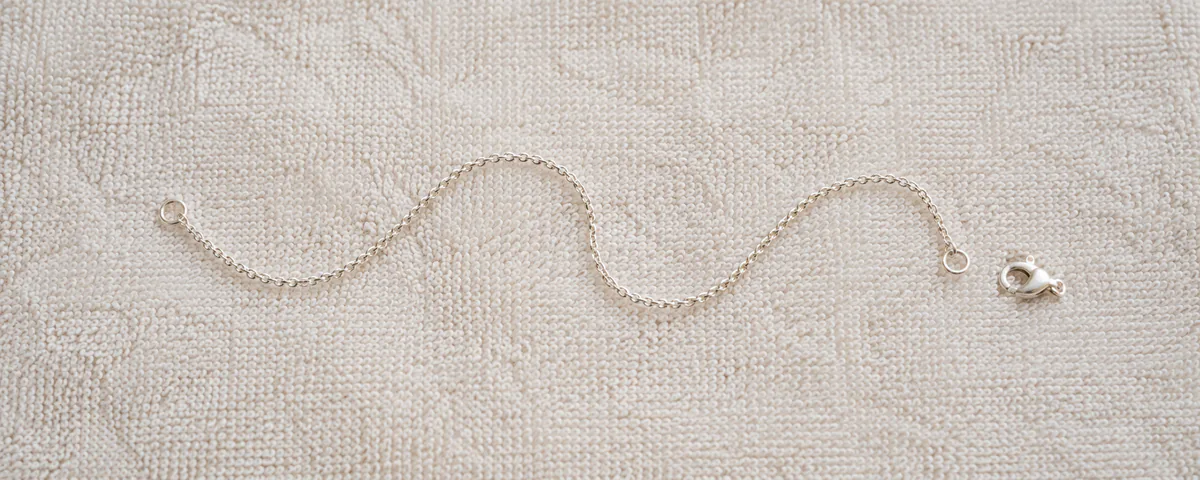
The clasp is the trouble spot, literally. It's where sebum and perfume residue build up, and it's also the part that breaks. Brush it open, spring included.
Wash the chain in a pile, not stretched out. Set it in a small pile in your palm with a drop of soap, roll it gently, then rinse. A fine chain brushed while stretched out will bend out of shape.
The pendant follows the rule of its setting. Closed bezel, tap it to drive out water behind the stone. Prongs, check that none of them move.
Dry the chain laid flat, not in a pile, or it stays damp at the center for hours and the silver tarnishes exactly there.
Frequency: two or three times a year for a pendant worn under clothing, more if it touches skin. One note on perfume while we're at it: spray it before putting the necklace on, not after.
Cleaning earrings
A short section, because the piece is small, but two points matter.
The post and the pushback first. That's the part that touches skin constantly, and it's the part that grimes up. A lightly soapy cotton swab is enough, plus a careful rinse: soap residue left on a post means an irritated ear.
Work over a bowl, not a sink. A pushback is the single easiest piece to lose in an entire jewelry box, and it fits down any drain.
The rest follows the setting, just like a ring. And if your ears react, it's usually not the stone but the alloy: ask me before you order, and I'll tell you exactly what the post is made of.
Drying, the step everyone rushes
This is where nearly every recurring problem I see comes from, and it only takes patience.
A piece put away damp oxidizes. Sterling silver is alloyed with copper, and copper tarnishes with prolonged contact with moisture. A ring put back in its pouch still wet comes out gray a week later, and the pouch gets blamed.
A closed bezel is the worst case. There's a sealed pocket behind the stone, and water stays there. Tap the piece dome-down on a towel, then let it sit in open air for at least an hour before putting it away. Two hours if it's a chunky piece.
Elastic cord is the extreme case. Twenty-four hours flat, minimum, and not in a pouch.
No hair dryer, no radiator, no direct sun. Speeding up drying with heat means adding a thermal shock to a feldspar to save forty minutes.
Tarnishing silver, a separate problem
People write to me about this often, thinking the stone is at fault. It never is.
Sterling silver tarnishes naturally on contact with air, sweat and certain products. It's not a manufacturing defect, it's chemistry, and it's fixable.
What works: a silver polishing cloth, rubbing only the exposed metal, well away from the stone. These cloths are impregnated with a product that should never get near a cabochon or a bezel, where it would settle in.
What doesn't work, and that gets recommended everywhere: the baking soda and aluminum foil bath. It works on bare silverware; it's not advisable on a set piece, because it involves hot water, a prolonged soak and an alkaline product around a stone with cleavage.
Prevention is better: store pieces in a closed pouch, separately, and take them off before a shower or exercise. Storage comes up again in cleansing and charging your moonstone.
The three mistakes that cost you a stone
In order of how often I see them come up.
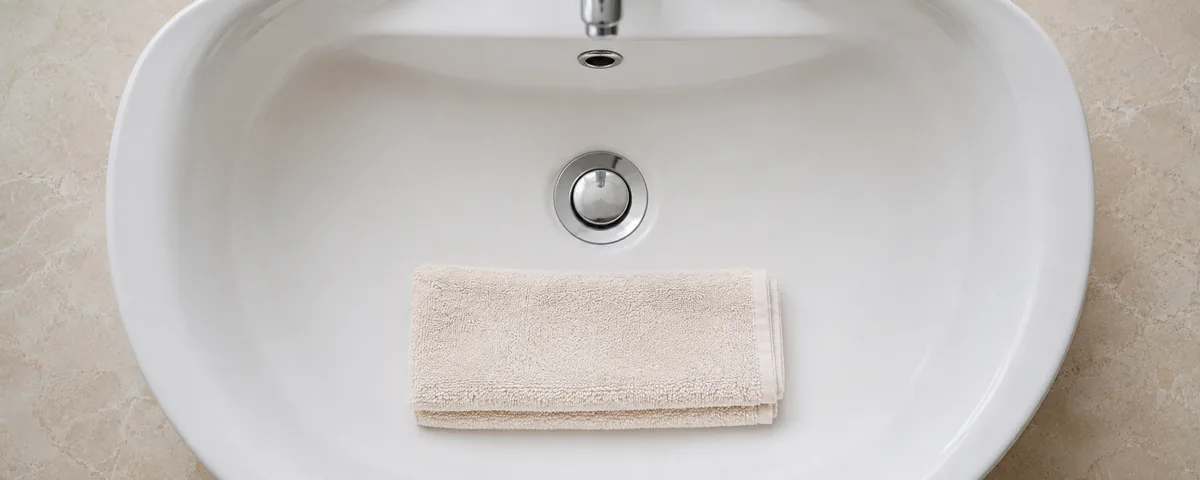
One. The open drain. This isn't a joke, it's the number-one cause of permanent loss. Plug it, or wash over a bowl set in the sink.
Two. The ultrasonic tank. Often done by a jeweler, often without anyone asking your opinion, during a restringing or resizing job. The vibrations follow the feldspar's two cleavage directions and turn an invisible micro-fracture into a milky haze. Say so explicitly when you drop the piece off.
Three. Cleaning over a hard edge. A ring that slips from your fingers over a ceramic sink falls a foot onto a hard surface. That's enough. Lay a folded towel in the bottom of the sink; it takes two seconds.
None of these three mistakes has anything to do with the product used, and that's exactly the problem: people hunt for the right soap and lose the stone some other way. The real fragility of this stone is explained in is moonstone fragile.
Frequently asked questions
How do you clean moonstone jewelry?
Warm water, a drop of mild soap, thirty seconds, a soft toothbrush on the setting only, a warm rinse and complete drying with a soft cloth. It's the only method the GIA recommends, and it holds for every piece.
Can you soak moonstone jewelry?
Thirty seconds yes, overnight no. It isn't the stone that suffers, it's the glue in some settings, the elastic cord on bracelets, and silver that tarnishes. A closed bezel also traps water behind the stone.
How do you clean a beaded bracelet without ruining it?
A slightly damp microfiber cloth, bead by bead, without stretching the elastic. If it's genuinely dirty, a ten-second rinse then a twenty-four-hour flat dry, flipped halfway through. The cord is a wear part and water speeds that up.
Should you brush the stone itself?
No, only the setting. Grime builds up in the metal, at the join with the stone and behind it. The dome only needs a cloth.
My jewelry lost its shine, is it damaged?
Almost always no: it's a film of lotion or soap on the polish, and it comes off at the first cleaning. If the haze is inside the stone and milky, that's something else, often an open cleavage, and there's nothing to be done there.
Can you use toothpaste or baking soda?
No. Both are abrasives, and they scratch the polish on the cabochon as much as on the metal. The baking soda and foil bath, often recommended for silver, isn't advisable on a set piece: hot water, a prolonged soak and an alkaline product around a stone with cleavage.
Why does my silver tarnish so fast?
Because sterling silver is alloyed with copper, which tarnishes on contact with air, sweat and moisture. It's not the stone. The most common cause is jewelry put away still damp after cleaning.
Can a jeweler clean my moonstone?
Yes, on one condition: tell them explicitly not to put it through the ultrasonic cleaner. It's the default cleaning method at most shops, and no one will ask your opinion first.
How often should you clean it?
A ring worn every day, once a month. A beaded bracelet, less often, because every pass wears the cord. A pendant worn under clothing, two or three times a year. The real test stays visual.
What about earrings?
Post and pushback first, with a soapy cotton swab, then a careful rinse: soap residue on a post irritates the ear. Work over a bowl rather than a sink, since a pushback fits down any drain.
Where to go from here
- Care beyond cleaning: cleansing and charging your moonstone, the seven methods, every stone, the moon calendar.
- Related questions: can it go in water, is it fragile, the mineral profile.
- Wearing and choosing it: how to wear it, which wrist, closed bezel or prongs, the six quality criteria.
- The full picture: the complete moonstone guide.
The jewelry is in the shop, and every parcel ships with a care card. If a piece looks damaged after cleaning, send me a photo: I'll tell you honestly whether it's a greasy film or a cleavage, and those are not the same news.
My sources
For the method: the Moonstone Care and Cleaning sheet from the GIA, which gives warm soapy water as the only recommended substance and rules out ultrasonic and steam cleaners without reservation. The stone sits between 6 and 6.5 on the Mohs scale there, with low toughness and two cleavage directions typical of the feldspar family.
For sterling silver tarnishing: the alloy contains roughly 7.5% copper, whose oxidation on contact with air, moisture and sulfur compounds is the classic mechanism behind tarnishing.
The rest comes from the workshop, and I flag it as such: drying times, cleaning frequencies, the order of the three most common mistakes and the notes on elastic cord are observations from making the pieces and from customer feedback, not published data. These are the most useful parts of this page, and also the ones I can't cite a source for.
Last updated: August 19, 2026. If you spot an error in this article, let me know: I'll fix it and note it.
✦ À porter, à offrir
Découvrez mes créations