

Description
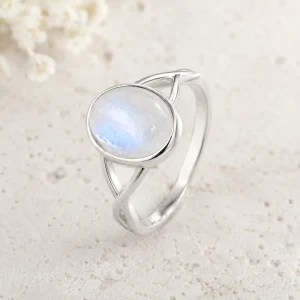
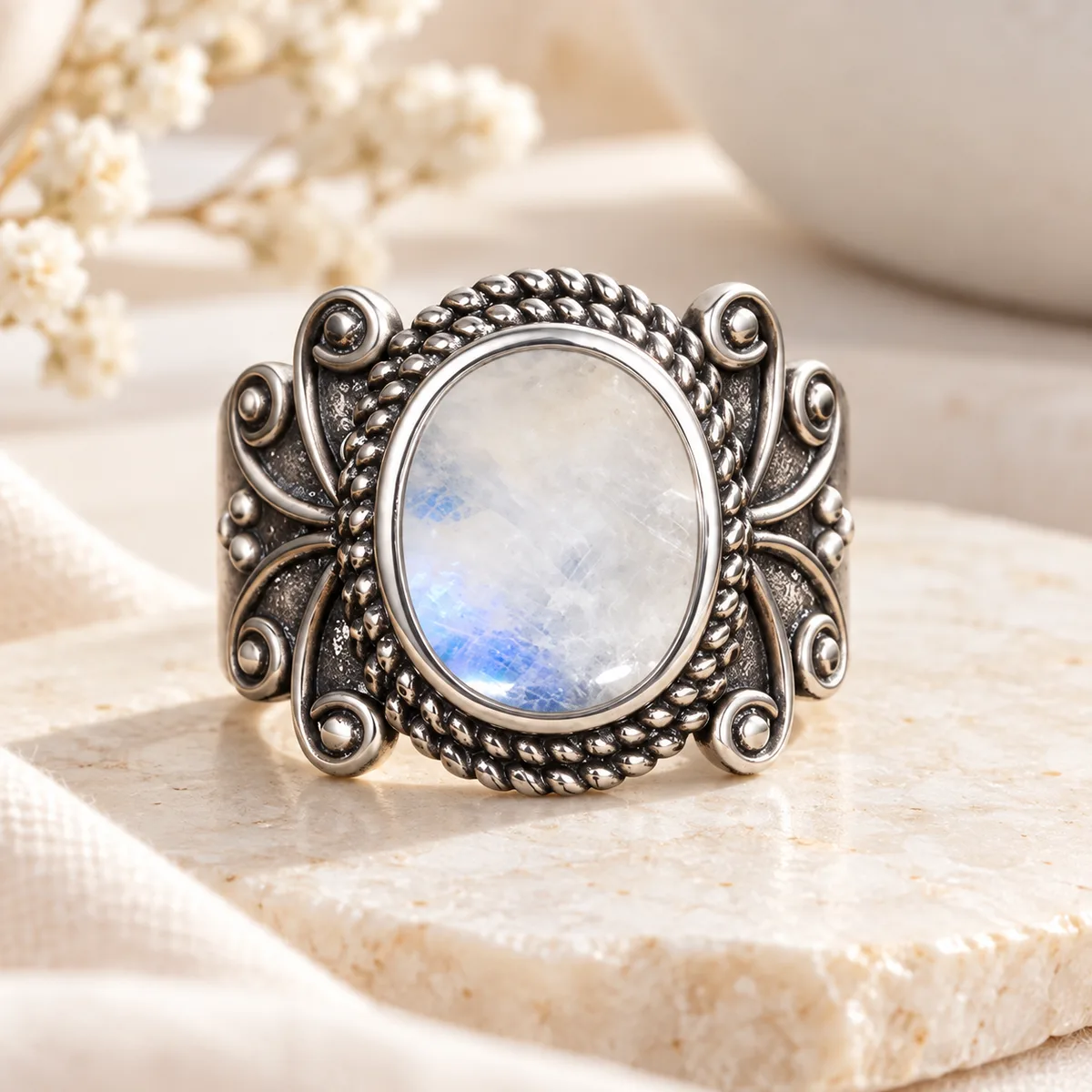
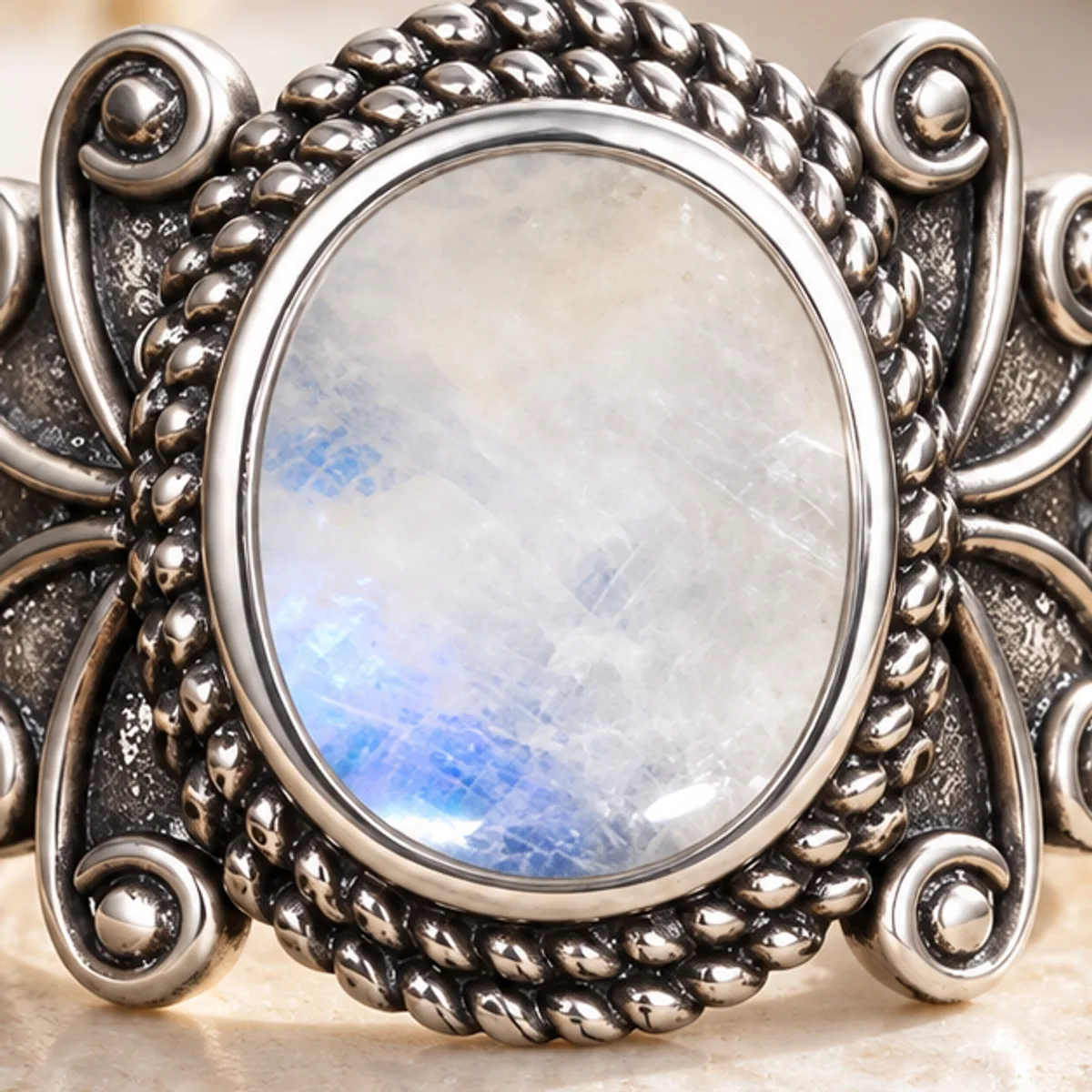
An oval cabochon, and on each shoulder a scroll made of metal thick enough to read as a rope rather than as a line. Nothing here is delicate, and that is the point.
Thick scrolls belong to a tradition
There are two families of European silver jewellery, and they do not look alike. Court silver is fine: thin wire, small motifs, a lot of surface for very little metal, made for people who did not use their hands. Rural silver is thick: heavy scrolls, chunky beads, motifs you can feel with your thumb, made in regions where a piece of jewellery was also a store of value and had to survive being worn at work. This ring is squarely in the second family.
You can tell the two apart without knowing anything about dates. Look at the smallest element of the decoration and ask whether you could dent it with a fingernail. On court work, usually yes. On rural work, never. That is not a judgment about quality, both traditions produced superb pieces, but it tells you immediately what kind of object you are holding and what kind of life it was made for.
Thick scrolls have a practical consequence that fine ones do not: they do not deform. A fine scroll on a shoulder can be flattened by one hard grip, and once flattened it is difficult to raise again without marking the surface. These are massive enough that you would have to work at damaging them. If you are hard on jewellery, this is the shoulder decoration to choose, and the rest of this collection is more fragile than it looks by comparison.
The stone sits in a closed bezel between the two scrolls, protected on all sides and lower than they are. The blue veil is the only fine thing on the piece. The other rings are here, and the size guide takes two minutes.
- Oval moonstone cabochon, closed bezel, set lower than the scrolls.
- 925 sterling silver hallmarked S925, heavy scrolls on the shoulders.
- Rural silver rather than court silver: nothing here deforms easily.
- sizes I 1/2 to T 1/2, that is 48 to 62 mm. Delivered in two weeks.
The specifications
- Stone
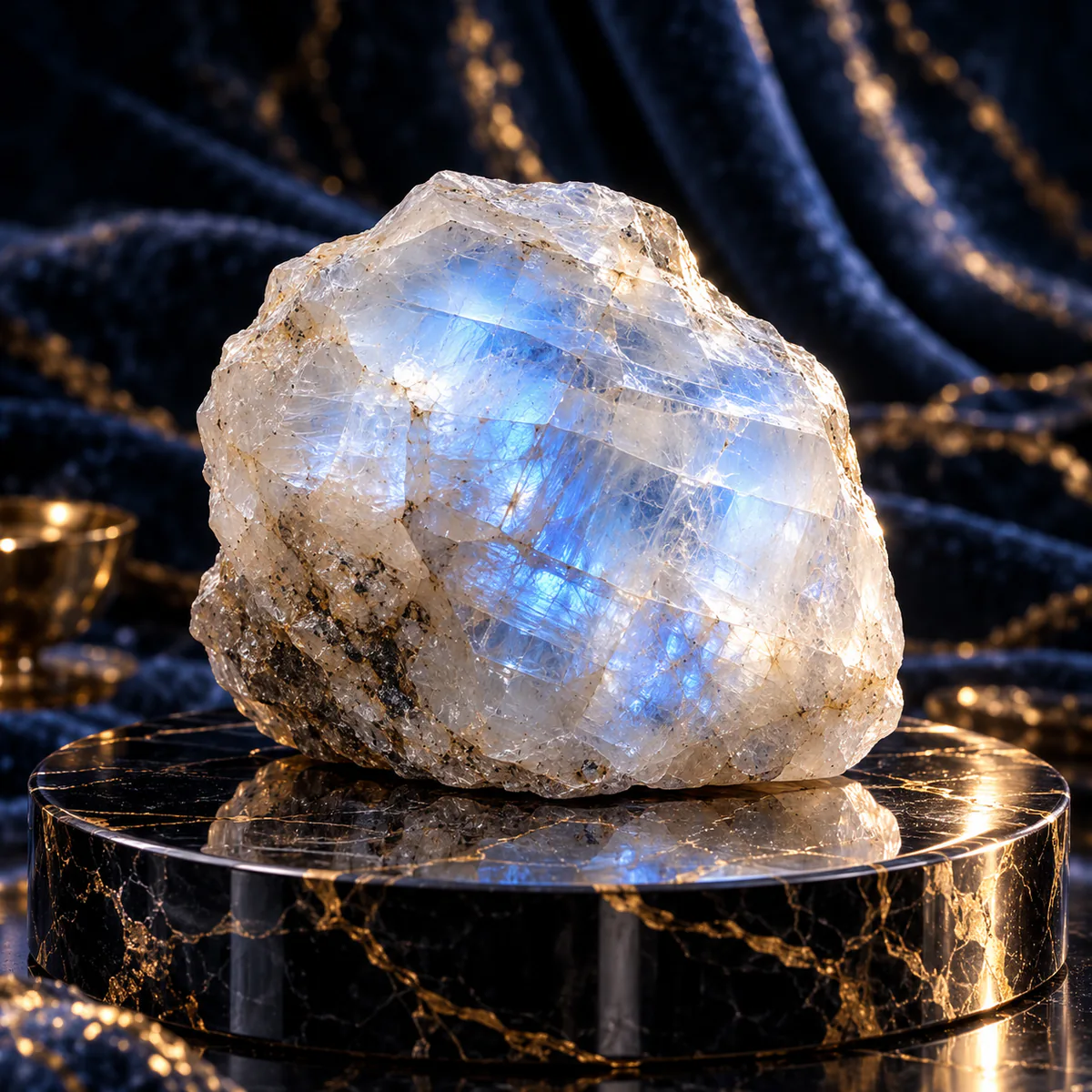
- Real moonstone (adularia), oval cabochon
- Origin
- India
- Metal
- 925 sterling silver, S925 hallmark
- Setting
- Closed bezel, no glue
- Decoration
- Thick scrolls on both shoulders
- Finish
- Oxidized silver, crests rubbed back with a cloth
- Sizes
- I 1/2 to T 1/2 (48 to 62 mm)
- Gender
- Women
- Brand
- Melissa Moon
Weight as a way of saying something
In the regions where rural silver was made, the weight of a piece was information. Silver was money, a piece of jewellery was savings you could wear, and a heavy brooch said something specific about a household. Nobody thinks that way now, but the visual language survived: heavy silver still reads as solid and honest, and thin silver still reads as decorative, whatever the actual quality of either.
What I take from that tradition is not the weight itself, which would make an uncomfortable ring, but where the weight goes. Rural work puts the mass where it will be touched and seen, in the decoration, and keeps the band reasonable. Court work does the opposite. This ring follows the first rule: the scrolls are substantial, the band is not, and it weighs less on the hand than it looks in a photograph.
A heavy ring and a ring that feels solid are not the same thing. The second is about where the metal is, not how much of it there is.
No salt, no ultrasonic tank, no hot water: moonstone is a feldspar, and all three damage it for good. Thick scrolls have deep hollows that hold cream, so rinse under lukewarm water and use a dry soft brush once a month, which you can do firmly here since nothing will bend. Avoid silver dips, they lift the oxidation from the hollows and the scrolls lose their relief. The detail is in cleaning a moonstone piece, and the safe methods in caring for it without harming it. The scrolls stand above the stone and take knocks before it does, which is real protection for a stone that chips.