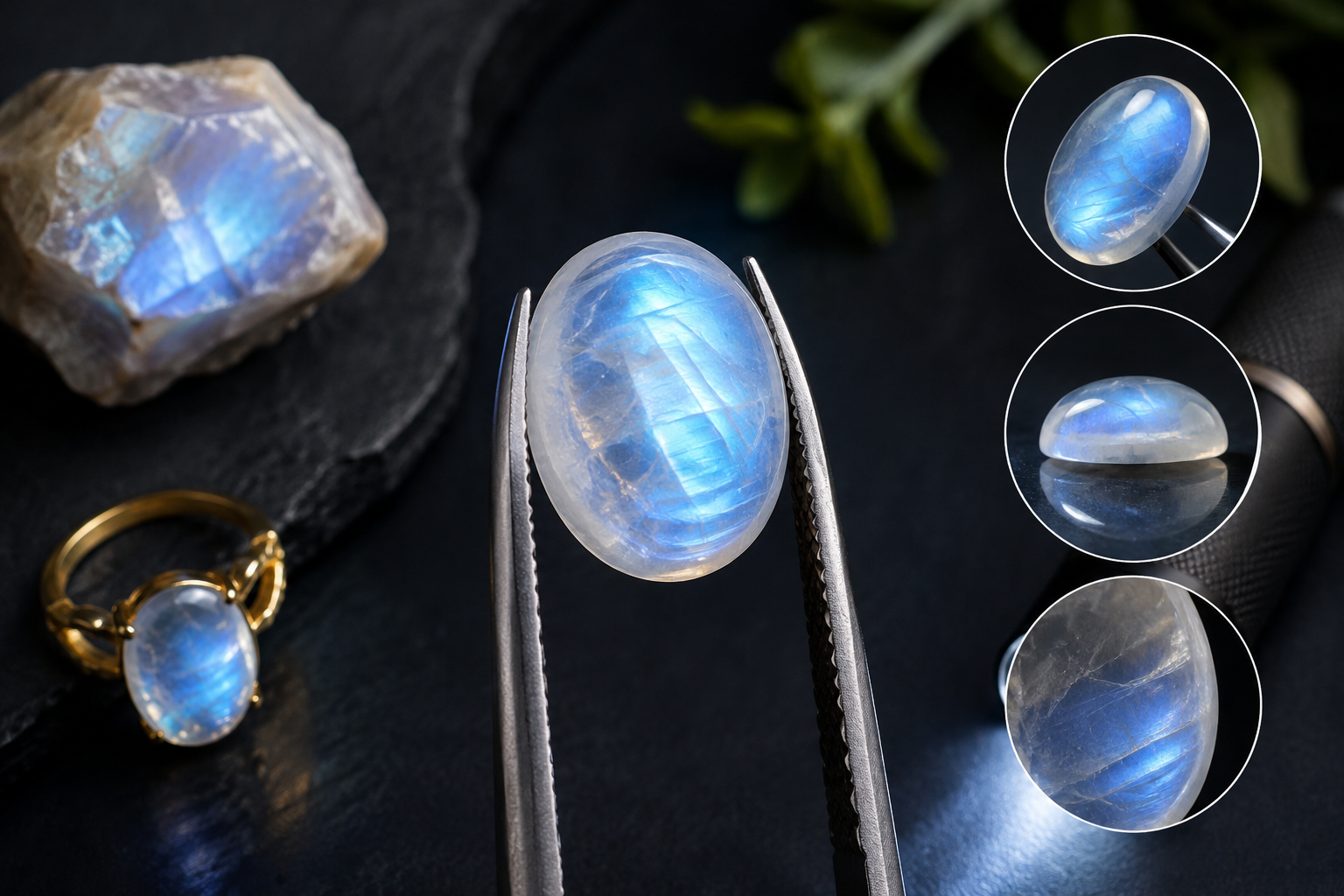
How to Tell If Moonstone Is Real
Six tests, no equipment except a loupe for the second one, and three minutes total. The first is enough nine times out of ten: on a real stone, the sheen shifts as you tilt it. On an imitation, it stays glued to the surface. Here are the other five, and the four fakes you'll run into.
This is the question I get asked most often before a purchase, and it's a fair one: the most widespread imitation is sold everywhere under the name moonstone, including by sellers who genuinely believe they're selling the real thing. I run these tests myself on every batch I receive.
The essentials, if you're in a hurry
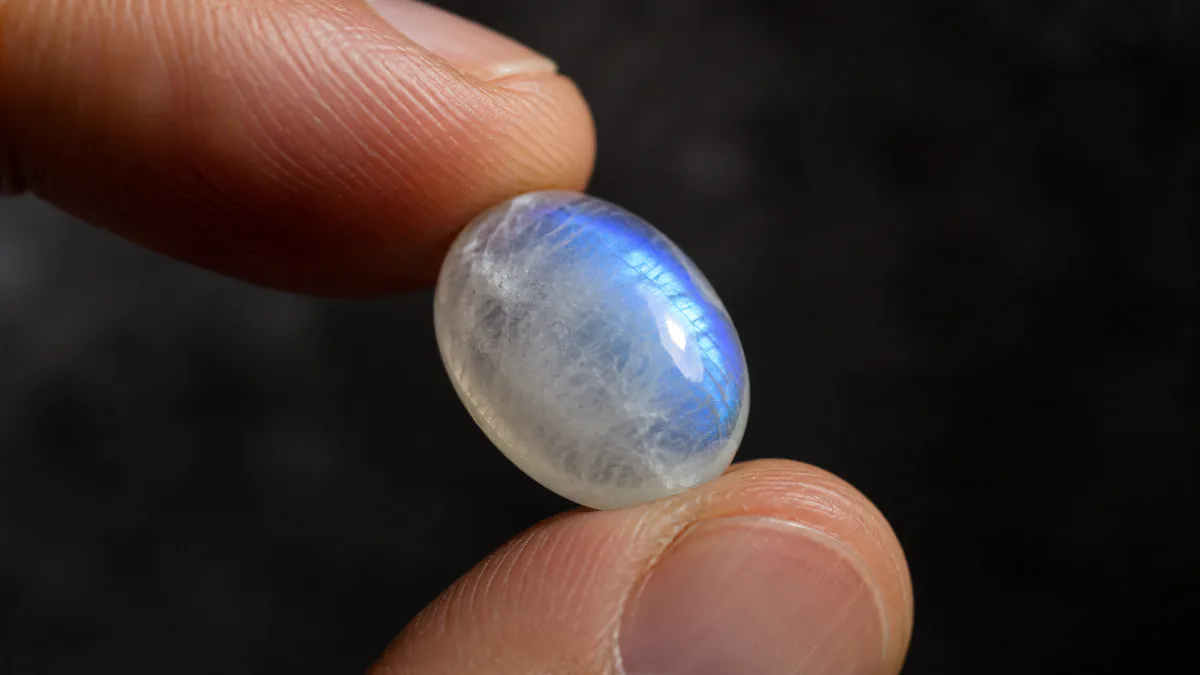
- Tilt the stone slowly. On a real one, the sheen slides and dims depending on the angle. On glass, it stays frozen in place.
- Look for centipedes under a loupe. These are micro-fractures so distinctive that spotting them is enough to identify the stone.
- A real stone stays cool for a few seconds in your hand. Glass and resin reach skin temperature almost instantly.
- No round bubbles. A perfectly spherical bubble inside a bead is melted glass, no exceptions.
- A sheen that's too even is suspect. A real stone has an irregular, off-center sheen, with dead zones.
- Opalite is fake number one. It's glass, and it turns orange when held up to light.
- Price is a clue, not proof. Too low is suspect; high doesn't guarantee anything.
The test that's almost always enough
If you only remember one, make it this one, and it works on a photo just as well as in a shop.
Take the stone, angle it toward a light source, and tilt it slowly back and forth. Watch the bluish sheen.
On a real moonstone, it moves. It travels across the dome, intensifies at a certain angle, disappears at another. It seems to float beneath the surface rather than sit on top of it. That's adularescence, produced by microscopic layers inside the crystal, as explained in the article dedicated to it.
On an imitation, the shine is glued to the surface. It follows your eye, doesn't travel through anything, and above all it never fully dims. A uniform milky glow that stays identical at every angle isn't adularescence.
This test asks for nothing, takes five seconds, and rules out almost every fake on the market. The next five are for the doubtful cases.
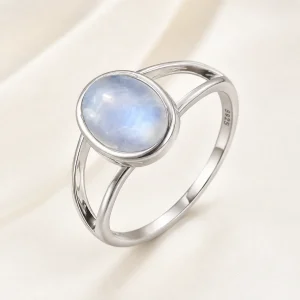
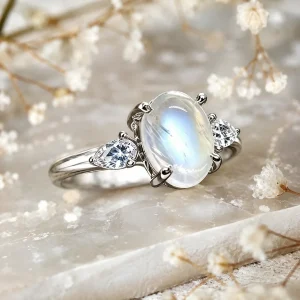
Stones you can run the test on
1. The sheen that shifts
The test above, in detailed form, because three nuances matter.
The sheen should be off-center at some point. A real moonstone, even one cut correctly, shows a reflection that isn't perfectly centered on the dome at every angle. If it stays centered no matter what you do, be wary.
It should have dead zones. On a real stone, part of the cabochon stays dark while the other lights up. That's the internal structure at work. A dome that's uniformly lit from edge to edge is a sign of glass.
It should be blue or white, not colored. A frankly pink, green, or uniformly multicolored sheen across the whole surface belongs to quartz coated with an iridescent film. Watch the nuance: rainbow moonstone does show colored flashes, but they're irregular and patchy, because it's labradorite, as explained in moonstone or labradorite. Treated stones are covered in is moonstone treated.
2. Centipede inclusions
Here is the test that gives you certainty, and it's little known to the public even though it's a gemology classic.
Under a jeweler's loupe, 10x magnification, moonstone very often shows inclusions of a very particular type that gemologists call centipedes. These are fine tension cracks: two short parallel fractures, oriented along the crystal axis, from which even shorter cracks branch off perpendicularly. Under the loupe, it looks exactly like a many-legged insect.
These fractures form under exsolution pressures, along the feldspar's incipient cleavage. In other words: they are the signature of the very mechanism that produces adularescence. They can't be faked, because they're a byproduct of the crystal's formation.
Moonstone is one of the rare gems whose inclusions are so distinctive that seeing them is enough to guarantee identification. It's the only one of these six tests that offers proof rather than a clue.
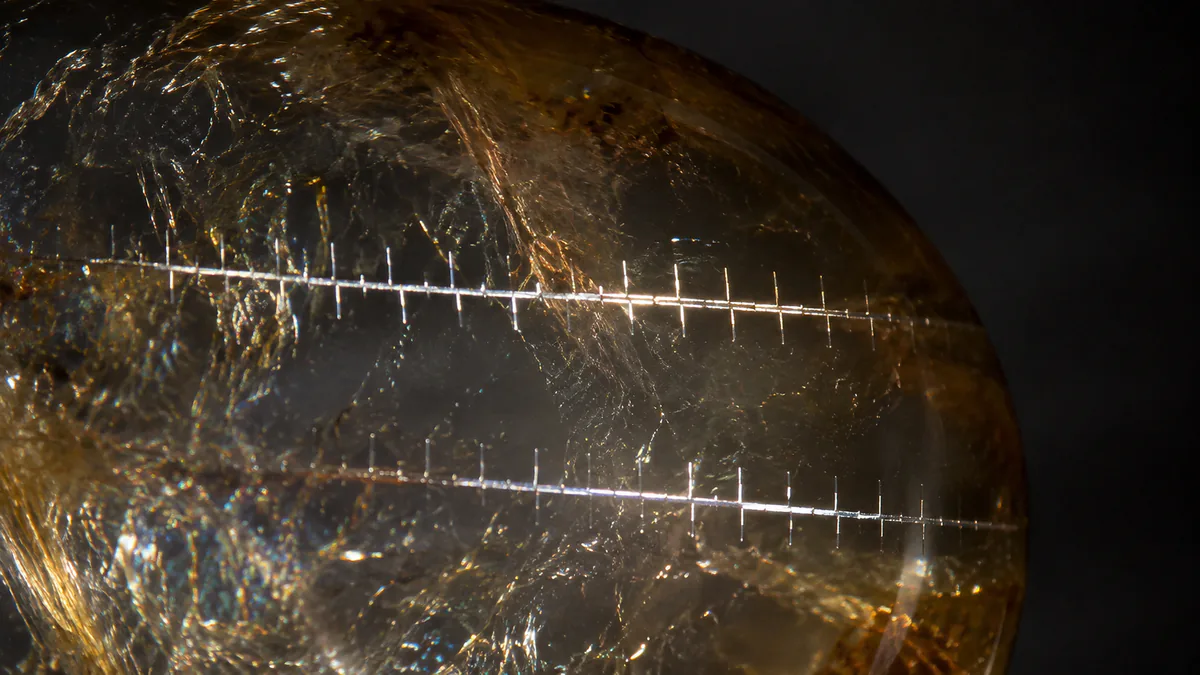
A jeweler's loupe costs about ten dollars and lasts a lifetime. If you buy stones regularly, it's the only purchase I recommend.
3. Temperature on contact
A field test, imperfect but quick, useful at a flea market or a fair.
Set the stone in the palm of your hand, still, and count. A natural stone stays cool for several seconds: a mineral conducts heat well, carries it away, and takes time to reach skin temperature. Glass and resin warm up almost instantly, within a second or two.
The limits, because they need saying. This test doesn't distinguish moonstone from any other stone: a dyed agate passes it without issue. It doesn't work if the stone just came out of a pocket or a heated display case. And it takes a bit of practice to be reliable.
What it does very well, on the other hand: rule out plastic and resin, the crudest and most common imitations found at markets and on very-low-price websites.
4. The weight
Same logic, same limit, and it combines well with the previous one.
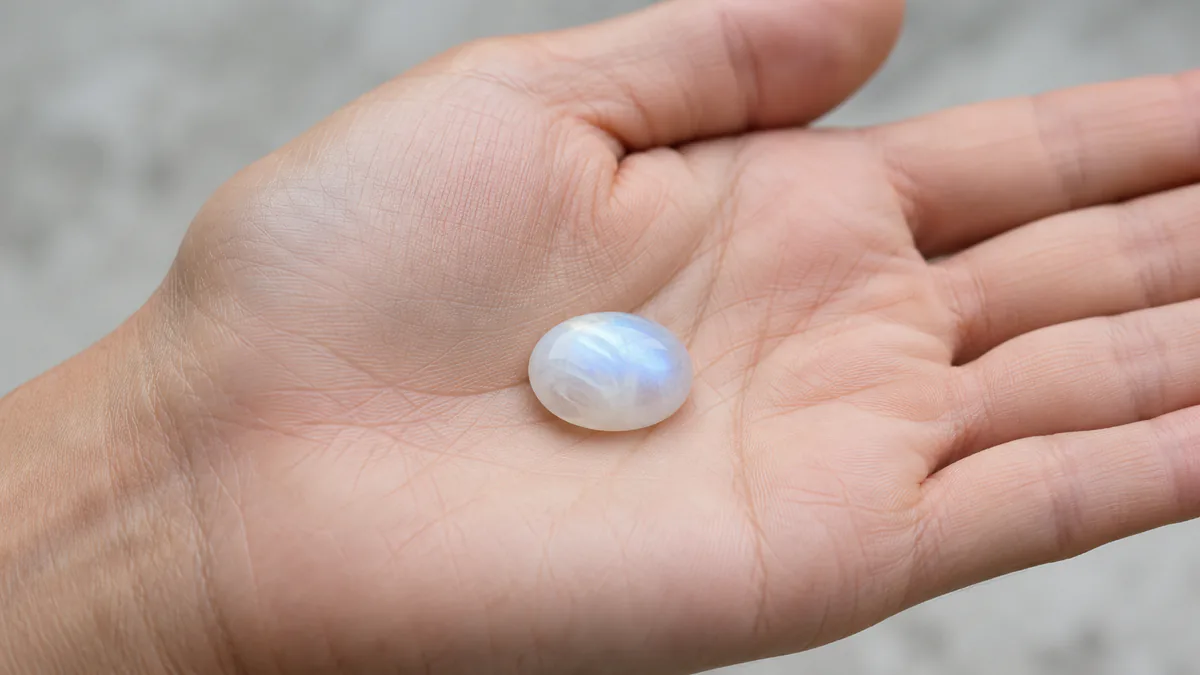
At equal volume, a natural stone is heavier than resin and slightly heavier than common glass. Moonstone's density is around 2.57, resin's hovers around 1.2, and jewelry glass's around 2.4.
In practice, you're not measuring density at the counter. What you can do: compare two similarly sized pieces in each hand. Resin gives itself away immediately; it feels hollow. Glass is harder to tell apart, since the gap is small.
On a beaded bracelet, this test becomes more telling: twenty resin beads, you can feel it on your wrist. Full density figures are in moonstone properties.
5. Bubbles
The most conclusive test after centipedes, and it only needs the same loupe.
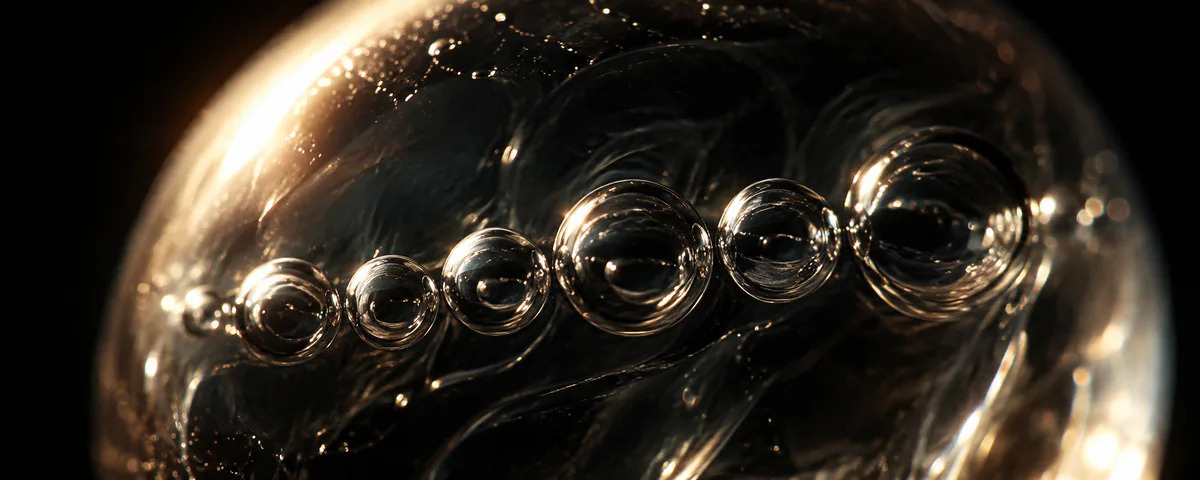
A perfectly round bubble inside a stone is glass. No exceptions, no debate. Spherical gas bubbles are the signature of a material that has been melted, and feldspar doesn't melt, it crystallizes.
Also look for swirl marks, internal streaks in curling patterns, the other signature of poured glass. In moonstone, inclusions are angular, fracture-shaped, never fluid.
Watch out for a common confusion: a real moonstone can contain liquid inclusions or cavities, but they're irregular and elongated, never perfectly spherical. It's the bubble's geometric perfection that gives it away, not its mere presence.
6. A price that's too low
The sixth test isn't gemological, and yet it's the one that will save you from the most regrettable purchases.
A rough order of magnitude. A decent white moonstone runs between $5 and $45 per carat depending on quality. A fine blue one climbs from $55 to $550 per carat. A rainbow one runs between $3 and $28. The details, and what makes these ranges vary, are in moonstone pricing.
Translated into jewelry: a silver-set pendant with a decent cabochon doesn't drop below about thirty-five dollars once metal, labor, and margin are counted. A "genuine moonstone" necklace for seven dollars doesn't contain any. This isn't a matter of a good deal, it's a matter of arithmetic.
The reverse isn't true, and it matters: a high price guarantees nothing. I've been sent photos of opalite sold for ninety dollars. A low price is a reliable warning sign; a high price isn't a certificate.
The six tests in one table
Keep this on hand, or pull it up on your phone in a shop.
| Test | What it shows | Equipment |
|---|---|---|
| The sheen shifts | Real adularescence, so feldspar | None |
| Centipedes | Certain proof of identification | 10x loupe |
| Stays cool in hand | Rules out resin and plastic | None |
| The weight | Rules out resin | None |
| Round bubbles | Proves it's glass | 10x loupe |
| Price too low | Warning sign, not proof | None |
Only two rows give certainty: centipedes and bubbles. The other four give clues, very reliable when taken together. And both certainties require the same tool, a ten-dollar loupe.
The four imitations you'll run into
In order of frequency, with the test that exposes each one.
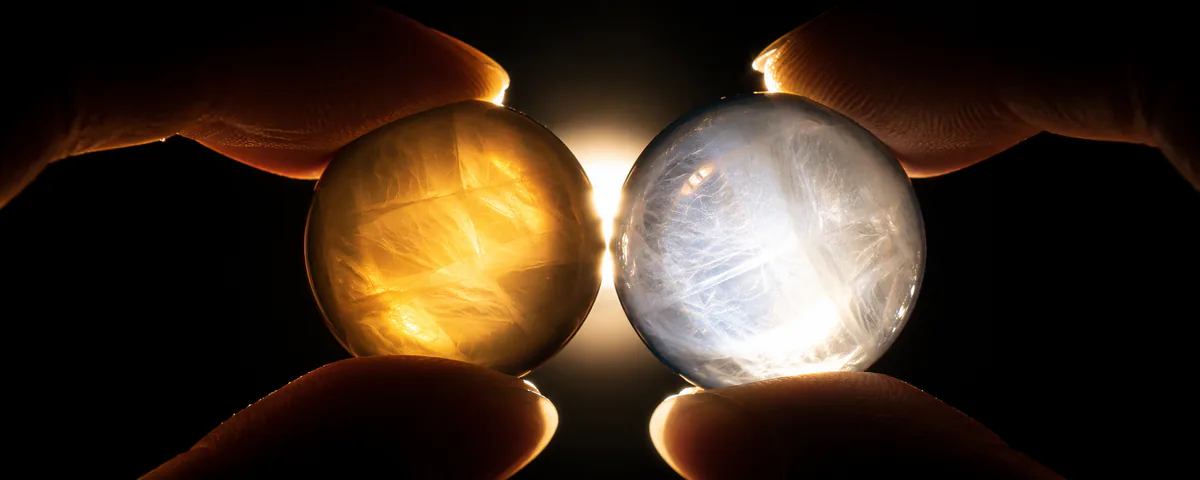
Opalite. Manufactured opalescent glass, sold everywhere under the name moonstone, and also under the names sea opal, aura stone or dragon's breath. It gives itself away in three seconds: hold it up to a light source and look through it. It turns warm orange or amber, even though it looks milky blue from the front. A real moonstone stays cool and white when held up to light. It's counterfeit number one, and it has its own article, moonstone or opalite.
Coated quartz. Quartz covered with an iridescent film, often sold as rainbow moonstone. A too-colored, too-uniform sheen, present across the whole surface. The film sometimes wears off at the edges, which shows under a loupe.
Resin and plastic. The crudest, found at markets and on very-low-price websites. The temperature test and the weight test rule them out immediately.
White labradorite sold as adularia. This one isn't a counterfeit, it's an imprecision, and it's nearly universal: rainbow and black moonstone are labradorites. They're not fakes, they're a different feldspar, and an honest listing says so. The detail is in moonstone or labradorite.
Three questions to ask the seller
When you're buying online and can't hold anything in your hand, these three questions remain. The answers, or their absence, are very telling.
"What's the exact mineral species?" The correct answer is "orthoclase, known as adularia" for a white or blue one, and "labradorite" for a rainbow or black one. A seller who answers just "moonstone" without specifying either doesn't know or doesn't want to say.
"Can you send me a side profile photo?" It shows the cabochon's thickness and lets you spot a doublet, meaning a thin slice of stone glued onto a backing. A serious seller sends it without hesitation. I do it on request, for any piece.
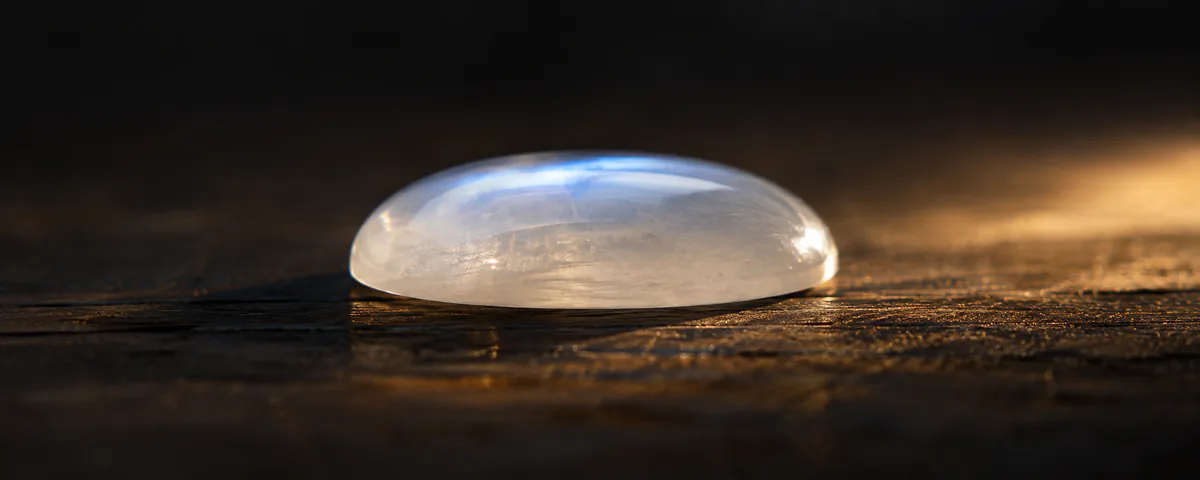
"Do you have a video where the stone moves?" That's test number one, delegated. Two seconds of video at a changing angle beat ten retouched photos. The absence of a video isn't proof of deception, but a refusal to provide one is a good sign of it.
On choosing a seller in general, there's where to buy moonstone jewelry. And to judge quality once authenticity is established, which is an entirely different question, the six quality criteria.
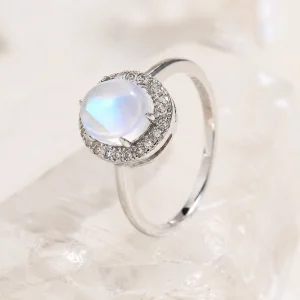
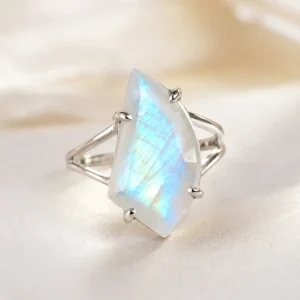
The workshop's rings, mineral species named on every listing




Frequently asked questions
How do you spot a genuine moonstone?
Tilt it slowly under light: the sheen should shift, intensify, then dim depending on the angle. On an imitation, it stays glued to the surface. That's the test that rules out almost every fake, and it asks for nothing.
What are centipede inclusions?
Fine tension cracks, visible under a 10x loupe: two parallel fractures from which shorter perpendicular cracks branch off. They form along the feldspar's incipient cleavage. Seeing them is enough to identify the stone with certainty.
Can a real moonstone have bubbles?
Not perfectly round ones. It can contain cavities or liquid inclusions, but they're irregular and elongated. A geometrically perfect sphere means melted material, so glass.
How do you spot opalite?
Hold it up to light and look through it: it turns orange or amber, even though it looks milky blue from the front. A real moonstone stays white and cool when held up to light. Also look for round bubbles and swirls.
Is the temperature test reliable?
It rules out resin and plastic well, since they reach skin temperature in a second or two. It doesn't distinguish moonstone from any other natural stone, and it doesn't work if the stone just came out of a pocket.
Does a high price guarantee authenticity?
No. A price that's too low is a reliable warning sign, but the reverse isn't true: opalite gets sold for ninety dollars. Price is a clue, never proof.
Is rainbow moonstone a fake moonstone?
No, it's labradorite, a different feldspar in the same family. It's not a counterfeit, it's a commercial name. An honest listing specifies the species, and almost no shop does.
Do you need a certificate for a moonstone?
A lab certificate costs more than most cabochons, and no one issues one routinely for this stone. The six tests on this page are far more useful, and they're free.
Which loupe should you buy?
A 10x jeweler's loupe, triplet preferred, around ten dollars. It's the only purchase I recommend to anyone who buys stones regularly: it's used for centipedes and for bubbles, the only two tests that give certainty.
Can you judge from an online sale photo?
Poorly, because a photo freezes the sheen. Ask for a two-second video where the stone moves, and a side profile photo. A serious seller provides them without hesitation.
Where to go from here
- The fakes in detail: opalite, counterfeit number one, treated stones, moonstone or labradorite.
- Once authenticity is established: the six quality criteria, what sets the price, where to buy.
- Understanding the sheen: adularescence, the mineral profile, colors and varieties.
- After the purchase: is it fragile, cleaning jewelry, closed bezel or prongs.
- The full picture: the complete moonstone guide.
The jewelry is in the shop, and every listing names the mineral species. If you're unsure about a piece seen elsewhere, send me the photo: I'll tell you honestly what I think, including when it's good and not from me.
My sources
For the inclusions: the GIA describes centipedes, these characteristic tension cracks in moonstone, formed under exsolution pressures along incipient cleavage, made up of short pairs of fractures parallel to the crystal's vertical axis from which perpendicular cracks branch off. Moonstone is one of the rare gems whose inclusions are enough on their own to guarantee identification.
For adularescence and its mechanism, the GIA and Mindat reference sheets. For the density of about 2.57 and the hardness of 6 to 6.5, the same sources, covered again in moonstone properties.
For opalite: it's manufactured glass, described as such, whose optical behavior is documented, milky blue in reflection and amber orange in transmission. Spherical gas bubbles and swirl marks are the classic markers of a melted material.
Two limitations I'll flag. The price ranges cited here are rough figures observed on the market, not an official rating: this stone has none. And the temperature and weight tests are imperfect field methods, which I present for what they're worth, meaning a quick sort rather than an identification.
Last updated: August 19, 2026. If you spot an error in this article, let me know: I'll fix it and note it.
✦ À porter, à offrir
Découvrez mes créations