


Description
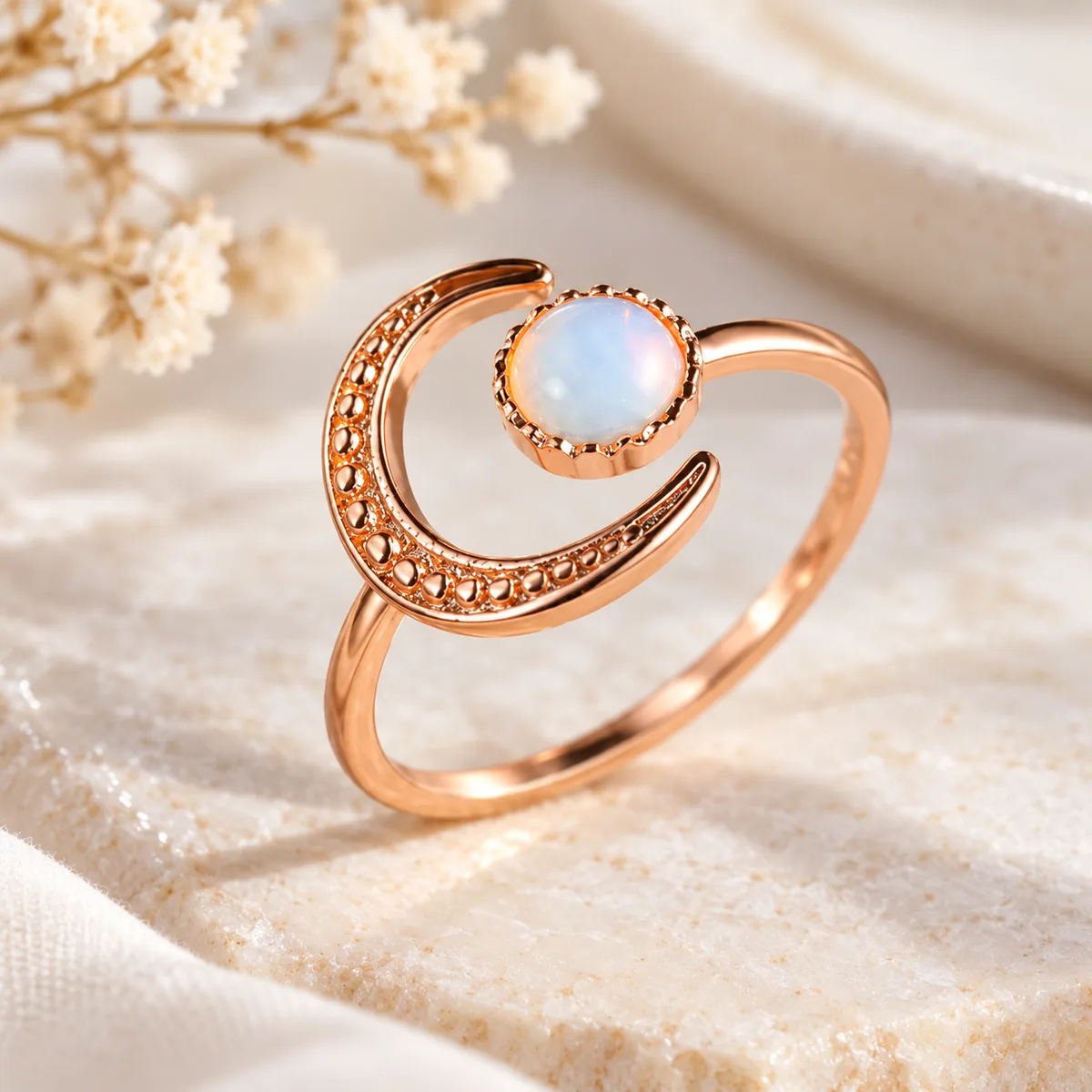
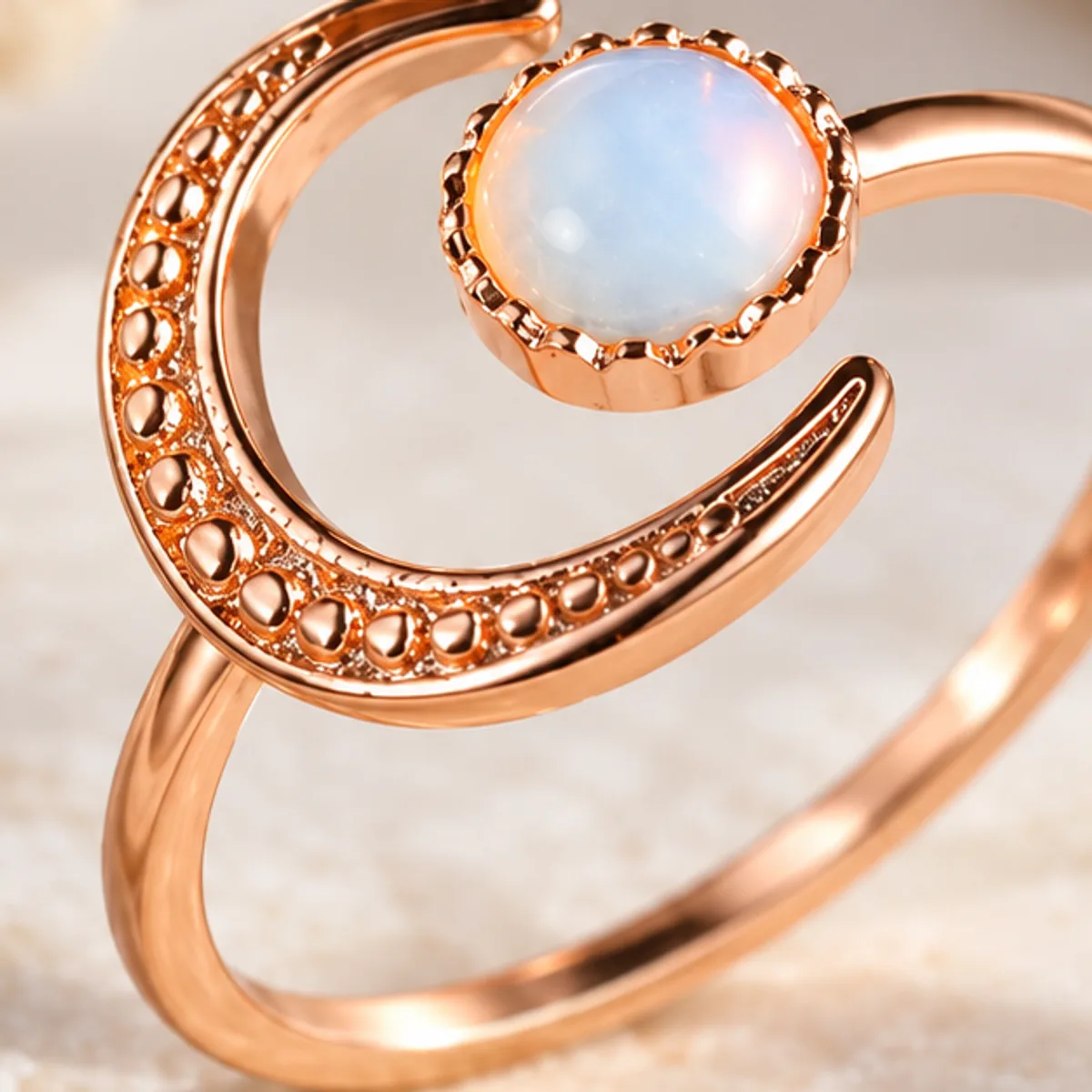
An open rose gold plated band, with a crescent moon at one end and a small round cabochon at the other. A warm metal for a cold stone, which is not the obvious choice.
Why rose gold suits moonstone
Moonstone gives back a silvery blue veil, which is to say a cold light. Set on silver, it is among its own family of colours: the whole thing is coherent, calm and slightly monotonous. Set on a warm metal, it stands out. That is an elementary rule of colour, the rule of complementaries, and it works on a piece of jewellery exactly as it works on a painting: a blue looks bluer next to an orange.
Rose gold is the gentler of the two warm metals for this stone. Yellow gold is frankly solar and makes a contrast of temperature that some people find abrupt on a milky stone, which is why I also offer the yellow version for those who want the contrast stated outright. Rose gold pulls towards copper without reaching orange, and it lets the stone stay dominant. Between the two there is no better choice, there are two temperaments.
This is plating on 925 silver, not solid gold, and I prefer to say so plainly. A layer a few microns thick deposited by electrolysis, which wears where the ring rubs: on the edges of the open band and on the tip of the crescent, count on one to two years in daily wear. That is the nature of the technique, and it is what lets this model cost the price of a silver ring.
Since the band is open, it adjusts by hand and covers three sizes: you have no measurement to take before ordering, though the size guide is there if you want it. The cabochon is mounted in a closed bezel with no claws and no glue, which protects a stone that chips on impact. On this small dome the adularescence lights up all at once when the angle is right. The other rings are here.
- Real moonstone, small round cabochon, frank blue reflection against the warm metal.
- 925 sterling silver hallmarked S925, rose gold plated, closed bezel with no glue.
- Open band, adjusts by hand, covers about three sizes: no measuring needed.
- The plating wears on the edges in one to two years of daily wear. Said before you buy.
- Delivered in two weeks.
The specifications
- Stone
- Real moonstone (adularia), small round cabochon
- Origin
- India
- Metal
- 925 sterling silver, S925 hallmark, rose gold plated
- Setting
- Closed bezel, no claws, no glue
- Shape
- Open band, crescent at one end and cabochon at the other
- Finish
- Rose gold plating, polished
- Sizes
- Open band, adjustable, covers about three sizes
- Gender
- Women
- Brand
- Melissa Moon
Adjusting an open band without breaking it
An open band is adjusted by holding both ends and easing them apart or together, never by squeezing the middle and never with pliers. Do it once, in small movements, with the ring off the finger. Silver takes a few adjustments happily and a great many badly: metal worked repeatedly in the same place hardens and eventually cracks, and that crack always appears at the back of the band, opposite the stone.
In practice that means deciding on your finger early and leaving it alone. If you plan to move the ring between two fingers of different sizes, buy a closed one instead. I would rather say that now than replace a band that was opened and closed twice a week for a year.
An open band is adjusted two or three times in its life, not two or three times a month.
No salt, no ultrasonic tank, no hot water: moonstone is a feldspar, and all three damage it for good. For the plating, one rule on top: never a silver dip and never a polishing cloth, both of which strip the gold layer immediately. A soft dry cloth only. Cleaning a moonstone piece covers the routine and caring for it without harming it the rest.