Getting Started With Crystals: Moonstone for Beginners
Here is a beginner guide written by someone who sells stones and ascribes no effect to them. That is not a contradiction: there is a good way to start, and it consists of learning to look at a stone rather than collecting promises. And moonstone is the best first exercise there is.
I could sell you a list of virtues, it would be simpler and probably more profitable. I would rather give you what served me: some vocabulary, some price benchmarks, and five ways to spot a seller who is telling you nonsense.
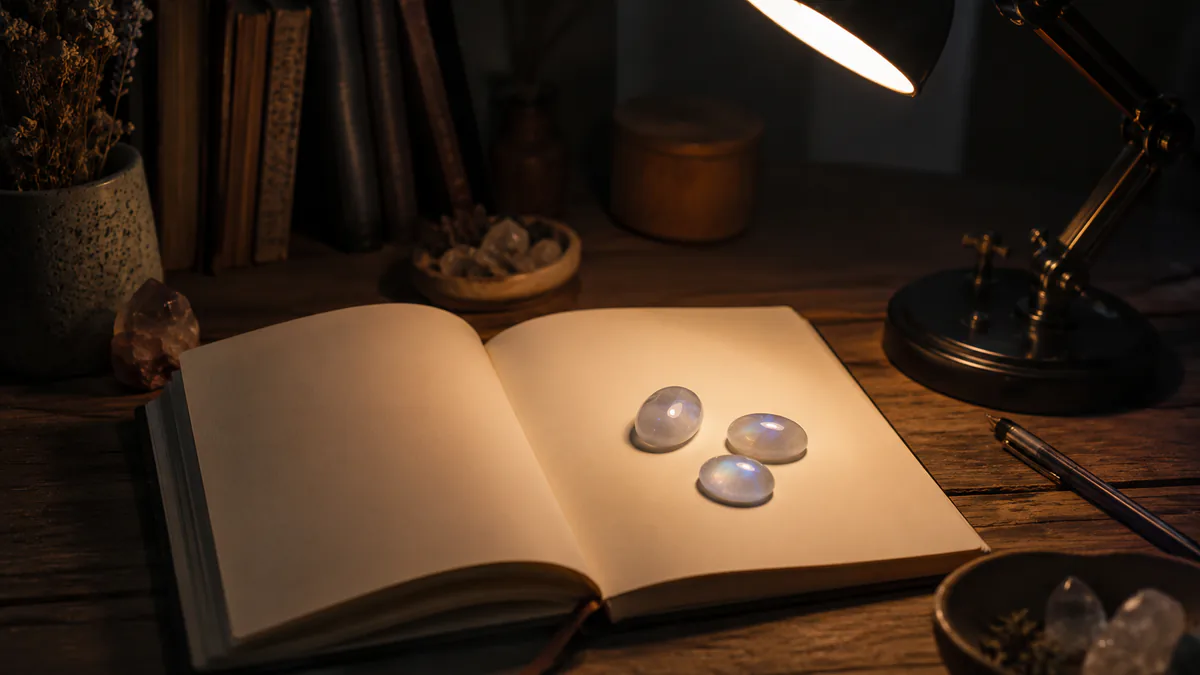
The short version, if you are in a hurry
- No effect is demonstrated. Crystal healing is a practice, not care, and this site will never claim otherwise.
- Start with a single stone, not with a set of twelve. One stone you look at is worth more than ten you pile up.
- Moonstone is an excellent first choice because its phenomenon is visible and can be checked by you.
- The skill to acquire is learning to look, not to recite correspondences.
- A sensible starting budget: the price of a meal, not that of a weekend away.
- Five words should put you on alert: cure, relieve, regulate, guaranteed, and AAA.
- Never swallow anything, never replace medical advice, never leave a bead within reach of a small child.
What crystal healing is, and what it is not
Let us set the frame, it will save misunderstandings across the twelve sections that follow.
Crystal healing is a set of practices consisting of wearing, arranging or handling minerals while ascribing effects to them. It took its present form in the second half of the twentieth century, borrowing vocabulary from older and far more diverse traditions.
What it is not: medicine. No physiological effect has been demonstrated, no health authority recognizes it as a treatment, and the word healing in its name is misleading.
Does that make it useless? Not necessarily, and I will be precise. An object can mark a moment, serve as a reminder, give pleasure. Plenty of people find a frame in it, an attention, a ritual. Those are real effects, they are of a personal order, and they ask no particular property of the pebble.
So my position comes down to one sentence: you can perfectly well practice, provided you know what you are practicing.
Everything reported here about crystal healing belongs to traditions and beliefs. None of it is a medical claim, and none of it replaces the advice of a health professional. Read the full disclaimer.
Setting your expectations before buying
This is the step nobody offers, and it is the one that saves you disappointment and pointless spending.
Ask yourself one question, only one: what am I expecting from this object?
If the answer is "that it be beautiful, that I wear it, that it remind me of something", you are starting very well, and this page is going to be useful to you.
If the answer is "that it fix a problem with sleep, with pain, with anxiety or with health", then I will tell you plainly: you will be disappointed, and above all you risk losing time. Those subjects belong to a professional, and no stone substitutes for one.
That clarification is not a formality. Most bad experiences with crystals come from a badly calibrated expectation at the start, kept up by sellers who promise because promising sells.
Why moonstone is a good first stone
I sell moonstone, so read these arguments with suspicion. They hold up anyway.
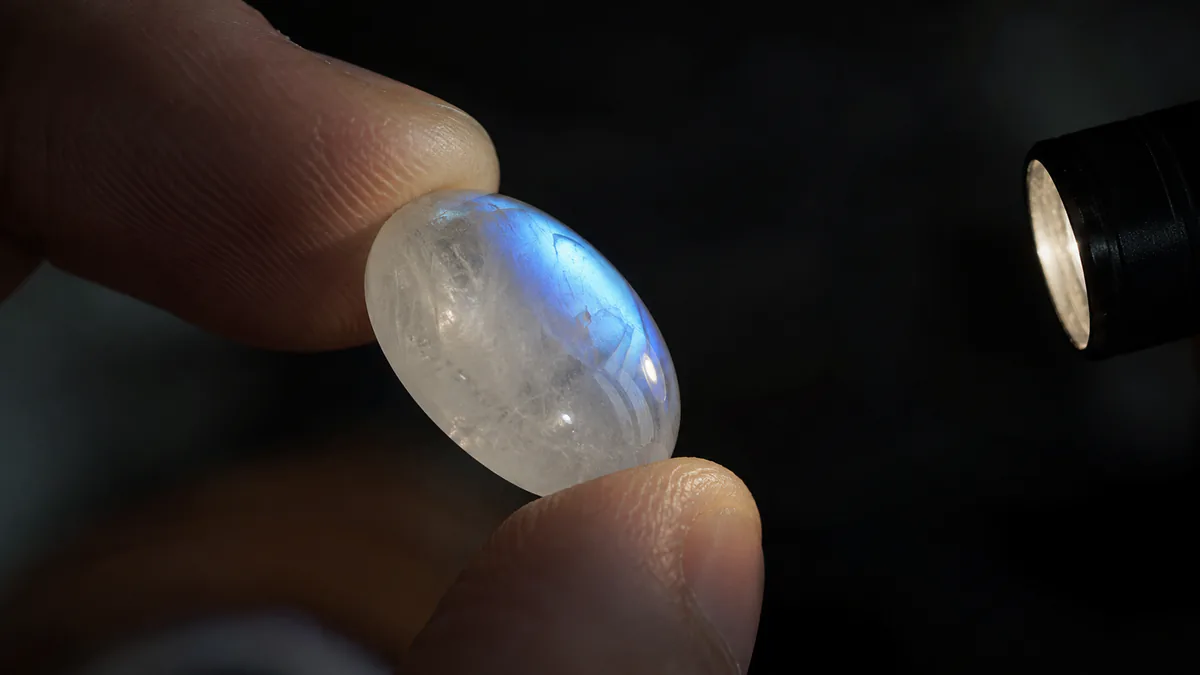
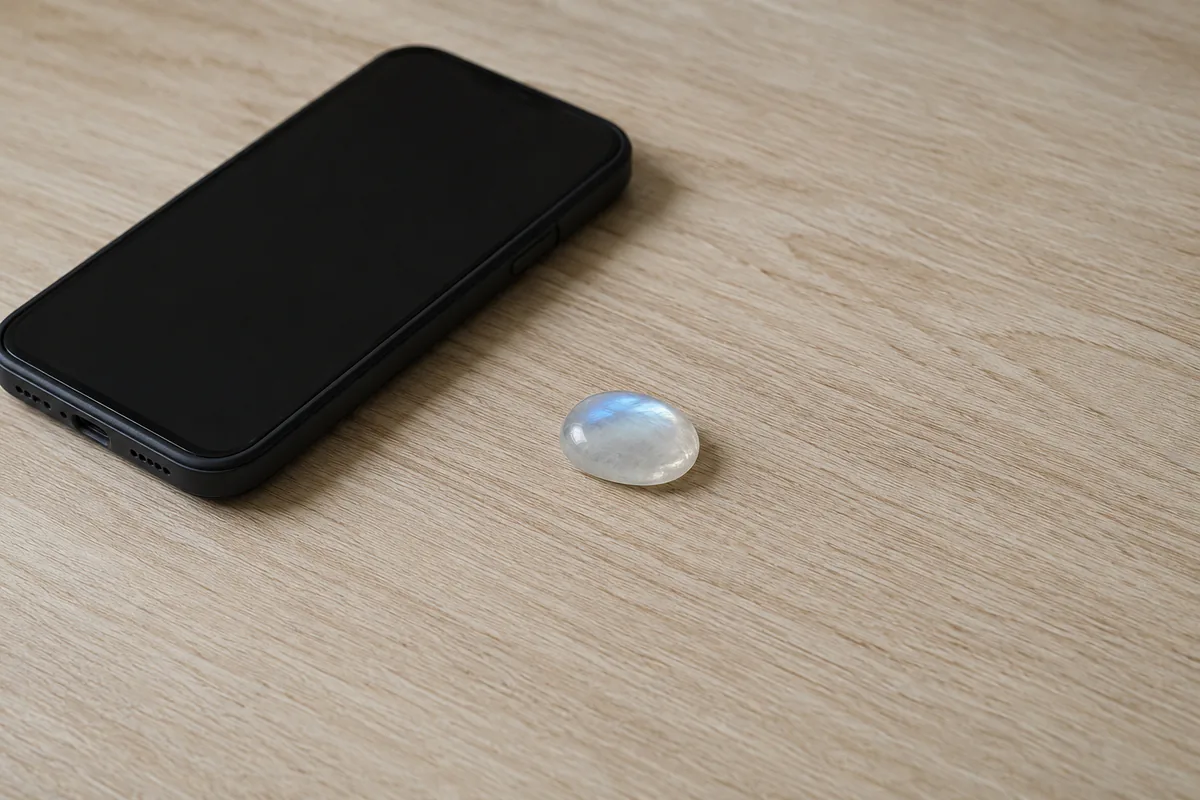
It has a visible phenomenon. The veil moves when you tilt the stone. You can check it yourself, at home, with no instrument. It is the one thing that will teach you to look, and I come back to it in the next section.
It is affordable. A fine cabochon or a bracelet stay within a discovery budget. You do not need to put down three hundred dollars to start, and whoever tells you otherwise is selling.
It is not toxic. Some minerals sold in shops call for real precautions. This one is chemically inert in contact with skin.
It is fragile enough to teach you. At 6 or 6.5 on the Mohs scale and with perfect cleavage, it will force you to understand what a hardness and a cleavage are, which will serve you for every stone after it.
Its counterfeit is the easiest to unmask. Opalite, a glass, imitates its halo but does not move. Learning to spot that is learning the basic gesture of identification.
The only skill that counts: looking
If you keep only one thing from this page, take this one.
The beginner believes they have to learn correspondences: which stone for what, which chakra, which sign. That is what every guide offers, and it is the opposite of what needs doing.
What has to be learned is to look at a stone: to recognize an optical phenomenon, to tell a natural material from a glass, to judge a transparency, to spot a dye. That skill can be checked, it can be passed on, it protects you, and it will stay with you whatever you end up thinking of the rest.
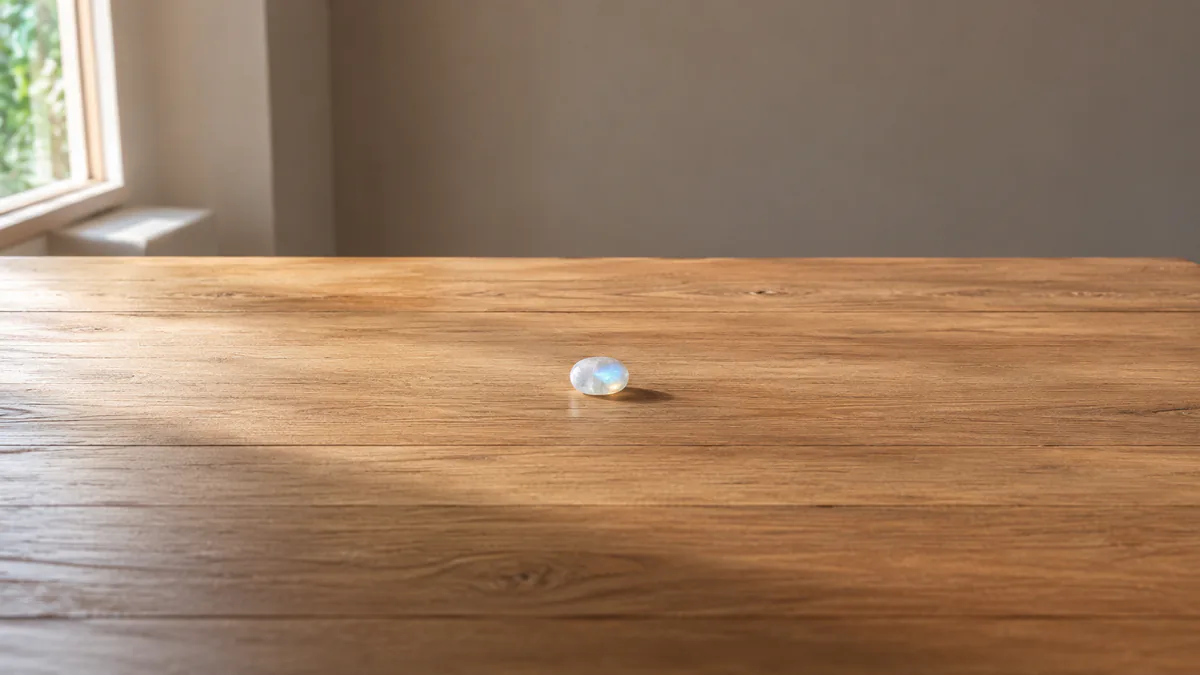
The exercise with a moonstone comes down to three gestures. One: put it under a point source, a small lamp, not the diffuse light of a room. Two: tilt it slowly and watch the veil travel across the dome. Three: compare two stones, they will never be identical.
Do that once and nobody will fool you on this stone again. Do it on other materials and you will have begun to learn something. The mechanism is explained in adularescence.
Choosing your first stone
Three decisions, and they are taken in this order.
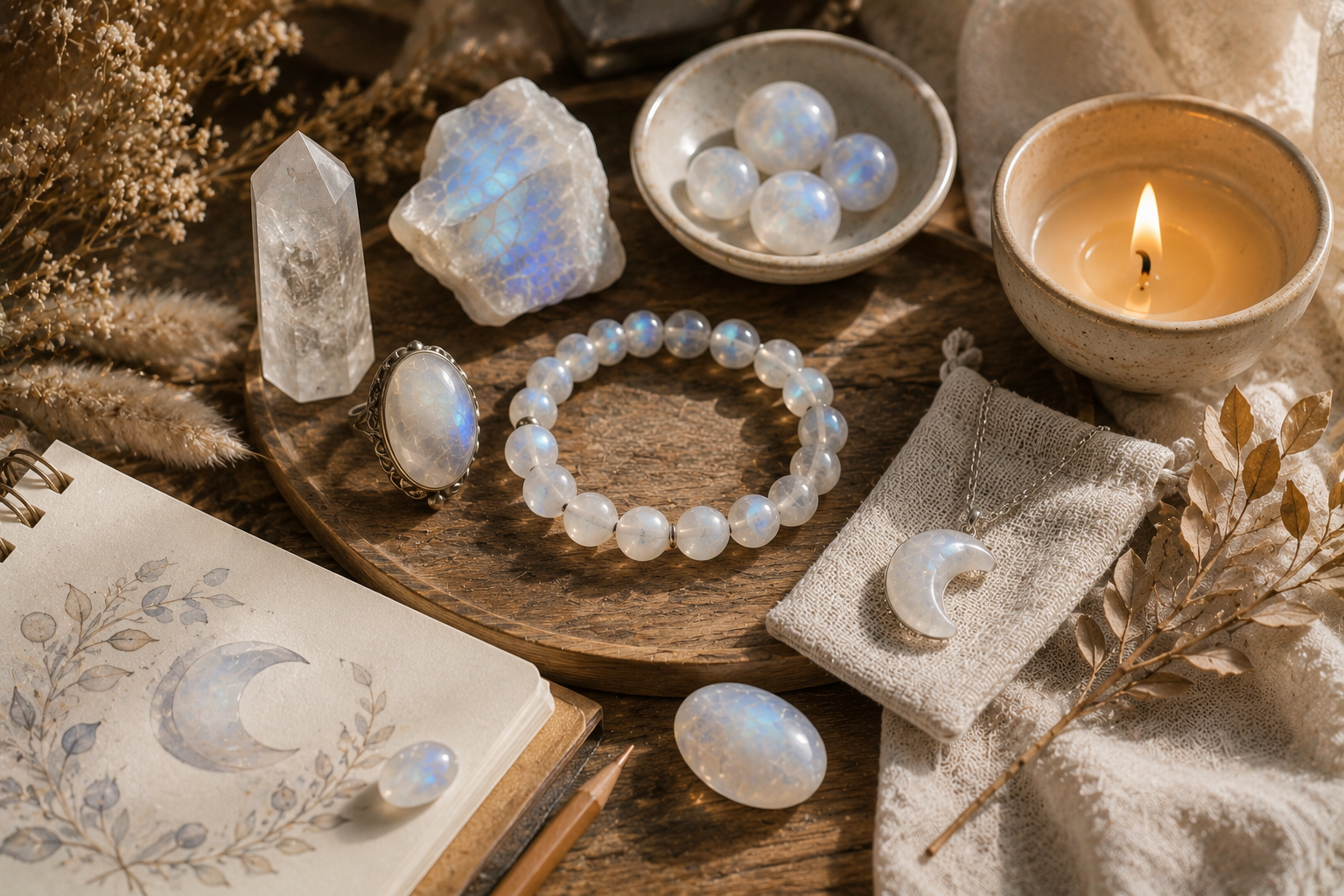
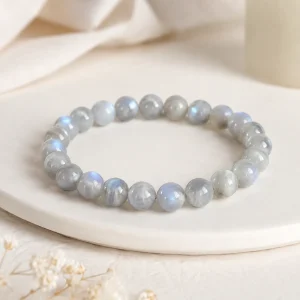
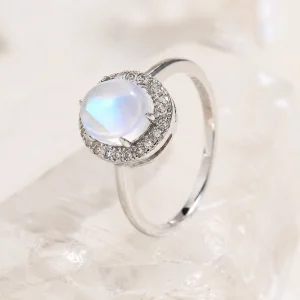
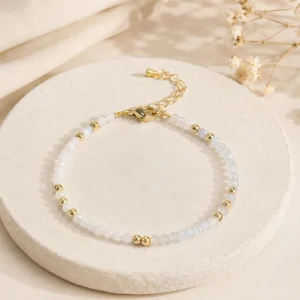
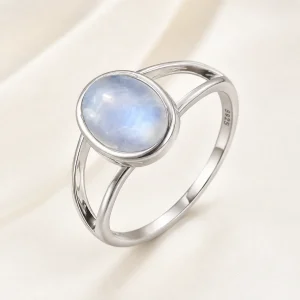
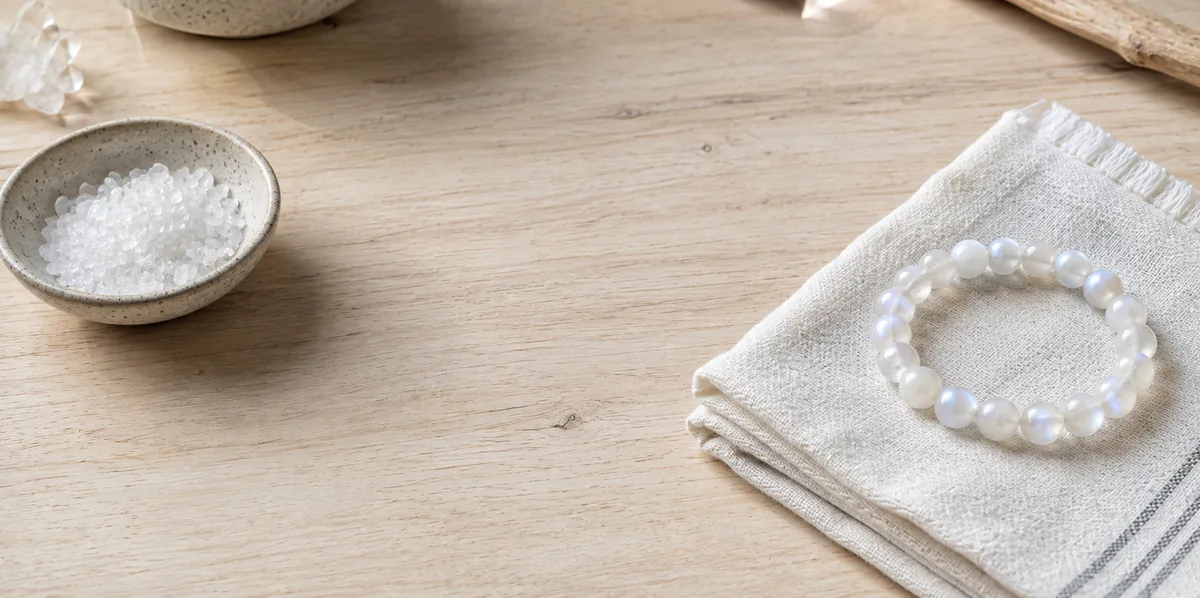
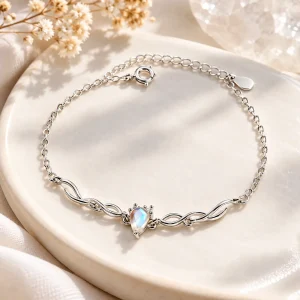
The form. A tumbled stone or a bare cabochon cost less and can be handled, which is perfect for learning. A piece of jewelry costs more but gets worn, and therefore looked at every day. To begin with, I would suggest the bead bracelet or a bare cabochon.
The variety. Take a white one or a very pale, slightly blue one. That is where the veil reads most clearly, so where it teaches most. Keep the strong blue for later, it is expensive, and the warm shades have a more discreet veil. The varieties are in the colors and varieties.
The budget. Reckon on the price of a meal, no more, for a first piece. You have no way of judging quality until you have handled a few stones, and there is no shame in starting small. The benchmarks are in the price of moonstone.
A rule I repeat often: a small stone with a clean veil is worth more than a large dull one, and that is true at every budget level.
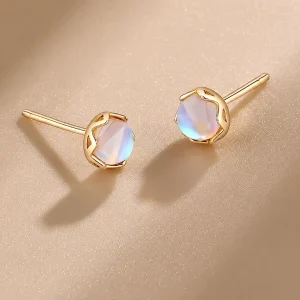
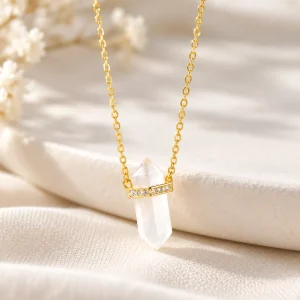
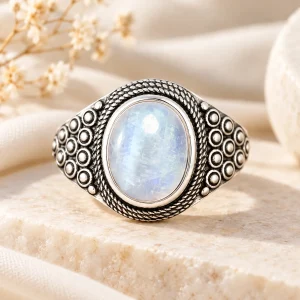
Discovery pieces, white and easy to read
Where to buy when you know nothing
The channel matters less than what you ask the seller, but it does matter.
A gem and mineral show is the best place to begin, because it is the only one where you can pick the stone up and turn it. Take a small lamp, hall lighting flattens everything. Against that: no recourse, no right to return.
A crystal shop offers advice and a face to talk to, with often approximate gemology and a lot of copied trade names.
A maker or a lapidary will name the species and answer your questions. Higher price, narrower choice.
A marketplace can hide excellent sellers and a great many anonymous middlemen, and nothing on the listing tells them apart. Write before you buy.
In every case, one question separates the serious from the rest: which mineral species is this? Orthoclase, labradorite, or something else. A seller who owns their stock answers in one sentence. The other five questions are in where to buy moonstone jewelry.
The five warning signs
These will serve you for every stone, not only for this one.
| Sign | Why it is a problem |
|---|---|
| "Cures", "relieves", "regulates" | A medical claim, forbidden and misleading |
| "AAA quality", "gem quality" | No organization issues that grading |
| A very low price on a large piece | Glass, dyed material, or another species |
| Species not named | The seller did not buy their stones themselves |
| Urgency, stock running out, limited offer | A sales technique, never an argument about the stone |
Three of those five signs on one page, and you can close the tab without regret.
Cleansing, recharging: what that means
This is the first vocabulary a beginner meets, and it deserves to be taken apart properly.
What the practices say. A stone is said to "load up" with what it is around and to need "cleansing" regularly, then "recharging", often in moonlight. Those are beliefs, circulated in this form since the 1970s and 1980s, and no effect of that kind has been demonstrated.
What is real, on the other hand. A worn piece gets dirty: sebum, soap, cream, dust. Cleaning it has a perfectly measurable effect, particularly on this stone, whose veil is read through the polished surface. A clogged stone visibly loses its sheen.
So yes, look after your stone. Lukewarm water, mild soap, a very soft brush, dry with a cloth. And above all, four prohibitions which, those, are technical: no ultrasonics, no steam, no salt, no hot water. The detail is in how to clean a moonstone piece and the practices in cleansing and recharging your moonstone.
A frequent trap for beginners: cleansing with salt, very widely recommended online, genuinely damages a great many stones and attacks settings. It is the one case where a crystal healing practice has a physical consequence, and it is a negative one.
What you do with it day to day
A legitimate question, and I will answer it without embroidery.
You wear it. That is the main use, and the simplest. A bracelet or a pendant are worn without thinking; a ring has to be taken off several times a day. The ranking by risk is in how to wear moonstone.
You put it somewhere. On a desk, on a bedside table. Some practices attach a meaning to that, and you are not obliged to believe anything to find it pleasant to have a beautiful object in front of you.
You look at it. That is the use I defend, and there is nothing ironic about it: a moonstone changes with the light in the room and the hour of the day. It is an object that rewards attention.
What you do not do with it: you do not swallow it in any form, you do not put it in your water, and you do not entrust it with anything that belongs to a doctor.
The minimum vocabulary
Six words are enough to stop being lost on a listing or in a conversation at a show.
Feldspar: the large family of minerals moonstone belongs to. More than half the crust of the earth.
Orthoclase: the precise species of true moonstone. When a seller cannot pronounce that word, you already know something.
Adularescence: the name of the moving veil. It is not a color, it is a phenomenon of light scattering.
Cabochon: a stone cut as a smooth dome, without facets. It is the compulsory cut for showing a veil.
Cleavage: the tendency of a crystal to split cleanly along internal planes. That is what makes moonstone liable to break, independently of its hardness.
Bezel setting: a setting where a ribbon of metal surrounds the stone completely. It is the one that protects it best. See bezel or prong setting.
The full glossary is in the moonstone glossary.

The six beginner mistakes
I see them every week, and they are easily corrected.
Buying twelve stones at once. A starter set gives you twelve pebbles you will never look at. One stone, well chosen, teaches infinitely more.
Ordering without a photo of the exact piece. On a one-off stone, no two examples look alike. Always ask for two photos from two angles.
Mixing hardnesses. Quartz, amethyst and garnet scratch moonstone by simple rubbing at the wrist. See which stones not to pair it with.
Cleansing with salt. That genuinely damages the stone and the setting. It is the most frequent mistake and the most harmful.
Believing the correspondence charts. They contradict each other from one source to the next, which is the sign that they are recent and not handed down.
Paying extra for a promise. A stone sold at a higher price because it is supposedly "programmed", "activated" or "specific" to something is the same stone as the others.
What you must never do
Three things, and they are not up for discussion.
Never replace medical advice with a stone. That is the one real danger of this practice, and it comes not from the mineral but from what is asked of it. Delaying a consultation is costly, sometimes very costly.
Swallow nothing. No elixir, no water that has been sitting with stones in it. Many minerals are genuinely toxic in prolonged contact with a liquid, and that practice assumes you know exactly which species you are handling.
Do not leave beads within reach of a small child. An elastic thread always gives way in the end, and a bead gets swallowed. The detail is in the contraindications of moonstone.
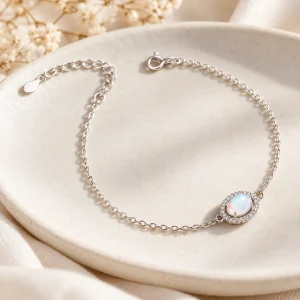
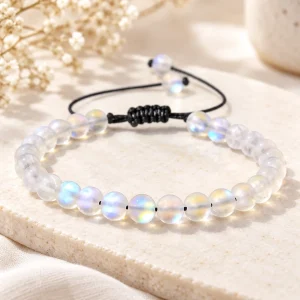
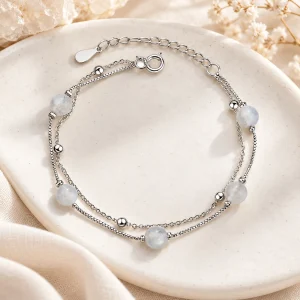
The bracelets, the simplest format to start with
Frequently asked questions
Which stone should you start with?
With a stone whose phenomenon is visible and can be checked by you, which teaches you to look rather than to recite correspondences. White moonstone fills that role well: it is affordable, non-toxic, and its most common counterfeit is unmasked by tilting the stone.
Does crystal healing work?
No physiological effect has been demonstrated, and no health authority recognizes it as a treatment. It is a practice, not care. An object can mark a moment, serve as a reminder or give pleasure, and those effects are real, personal, and require no property of the mineral.
How much should you spend to start?
The price of a meal, no more. Until you have handled a few stones you have no way of judging quality, and a small stone with a clean veil teaches more than a large dull piece. Be wary of anyone advising a high budget to begin with.
Do you have to cleanse and recharge a stone?
Those practices are beliefs circulated since the 1970s, with no demonstrated effect. Cleaning a worn piece, on the other hand, has a perfectly visible effect on this stone, whose veil is read through the surface. Lukewarm water and mild soap, never salt, ultrasonics, steam or hot water.
Does salt really damage stones?
Yes, and it is the most harmful beginner mistake. Salt works its way into microfractures and attacks settings. It is the one case where a practice widely recommended online has a measurable physical consequence, and it is a negative one.
How do you recognize a serious seller?
They name the mineral species, they say where the stone comes from, and they send two photos of the exact example from two angles. They use neither "cures", nor "relieves", nor "regulates", nor "AAA quality", and they do not put you under pressure.
Is a starter set or a single stone better?
A single one, without hesitation. A set of twelve stones gives you twelve pebbles you will never look at and will know nothing about. One well-chosen stone, handled and compared, teaches infinitely more.
Can you do this without believing in it?
Yes, and that is even my own position. You can love a material, learn to recognize it, wear it and take pleasure in it without ascribing any effect to it. What counts is knowing what you are doing, and never entrusting to an object what belongs to a health professional.
Where to go next
This page is a way in. The next steps, in order:
- Learning to look: adularescence, recognizing a real stone, moonstone or opalite, judging the quality.
- The vocabulary: the moonstone glossary, the mineral file, the colors and varieties.
- Buying and caring: where to buy it, the price, cleaning it, cleansing and recharging your stones.
- What tradition says, and since when: virtues and benefits, the meaning, the contraindications.
- The whole picture: the complete guide.
What I make is in the shop, with no promise on any listing. A beginner question, even the one you think is silly? Write to me: I would far rather answer it before the purchase.
My sources
The mineral data, hardness, cleavage, adularescence, behavior under cleaning, follow the public files of the GIA, of Mindat and of the International Gem Society. They are the only statements on this page that rest on measurements.
The absence of a demonstrated effect of worn minerals on the body is not an opinion: no clinical data establishes one, and no health authority recognizes crystal healing as a treatment. I say it both ways, without ascribing more dangers to stones than virtues.
The dating of the cleansing and recharging practices, and of the correspondence charts, refers to the spread of modern crystal healing from the 1970s and 1980s, and then to its fixing by the crystal literature of the 1980s and 1990s.
The warning signs, the beginner mistakes and the buying advice come from my own workshop and from exchanges with the people who write to me before or after a purchase.
Last updated: 19 August 2026. If you find an error in this article, let me know: I correct it and I note it.
✦ À porter, à offrir
Découvrez mes créations