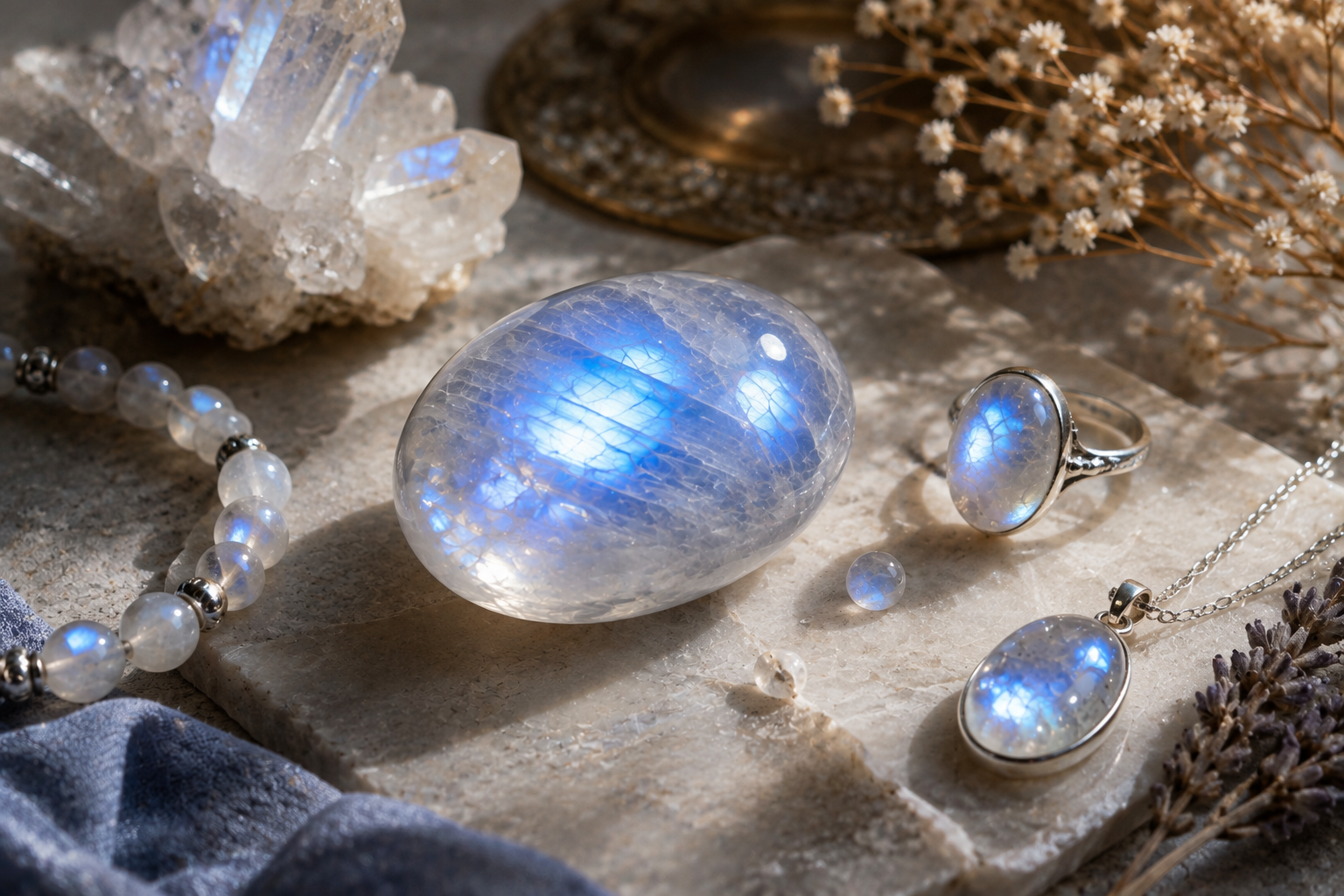
Blue moonstone: sheen, meaning and price
This is the top of the range, and the gap is brutal: $75 to $750 a carat when a decent white trades between $6 and $60. The reason is neither the colour of the body nor the rarity of the deposit alone. It is the thickness of microscopic layers, and that cannot be ordered.
This article covers the colour. The Meetiyagoda deposit, which supplies the finest stones and is running out, has its own article: moonstone from Sri Lanka. I do not mix the two, because they are two subjects and two reasons to pay a lot.
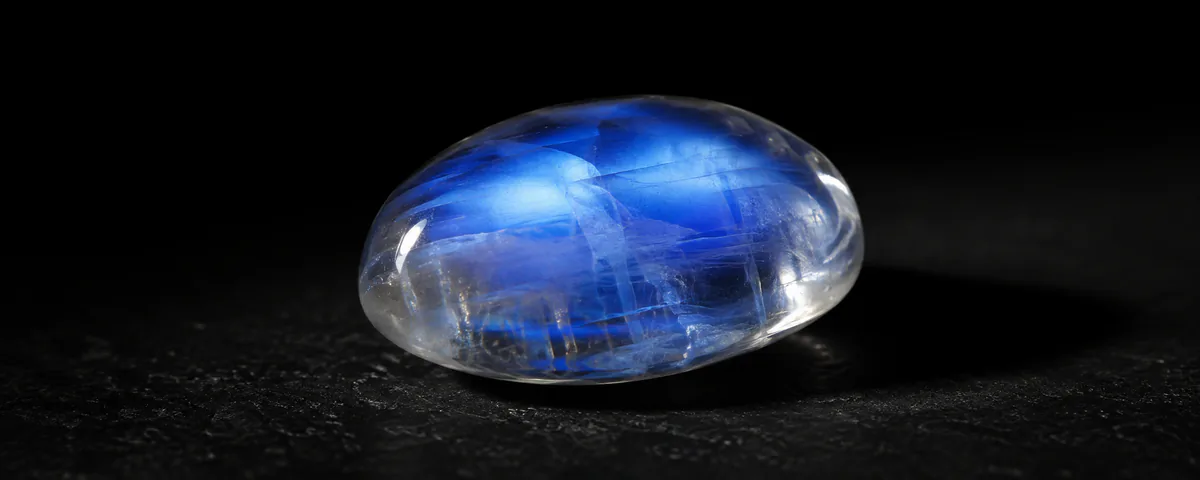
The short version, if you are in a hurry
- Blue is not a body colour, it is the colour of the sheen. The body of the stone is colourless.
- It comes from very fine layers, whose thickness approaches the wavelength of blue, a few hundred nanometres.
- It is a regularity of formation, not a pigment. You cannot manufacture it and you cannot treat for it.
- From $75 to $750 a carat, against $6 to $60 for a white. The summit is a transparent stone with a clear blue sheen.
- Sri Lanka supplies most of it, and the deposit is thinning out, which pushes prices up.
- Beware of bluish stones. A slightly blue sheen on a milky body is not a blue in the trade sense of the word.
- What tradition attributes to it does not differ from the other varieties, apart from a recent insistence on clarity of mind.
What a blue moonstone is
One point of vocabulary settles a great many misunderstandings.
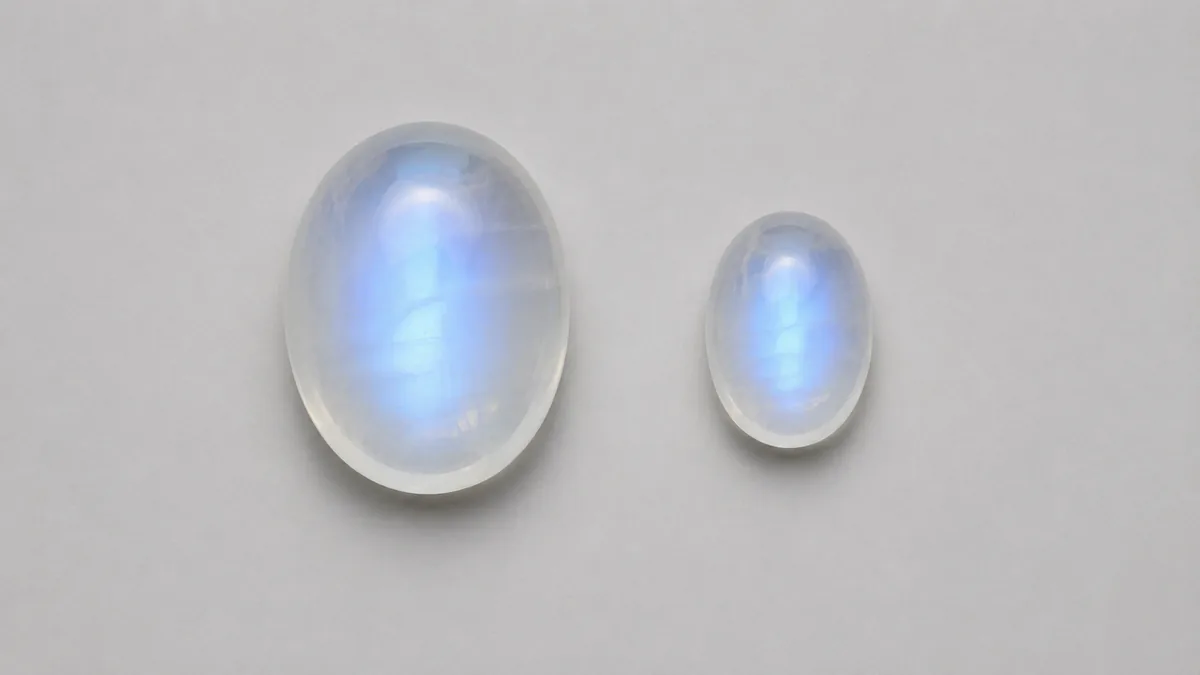
The body of the stone is not blue. A blue moonstone is an adularia, an orthoclase feldspar, whose body is colourless and ideally transparent. What is blue is the sheen: the light scattered by the internal layers and sent back to the eye. Put a fine blue on a sheet of white paper without looking for the reflection and it appears colourless.
That is a difference in kind from, say, a sapphire, whose colour sits in the material. Here the colour is an optical phenomenon, and it disappears at certain angles. The mechanism is detailed in adularescence.
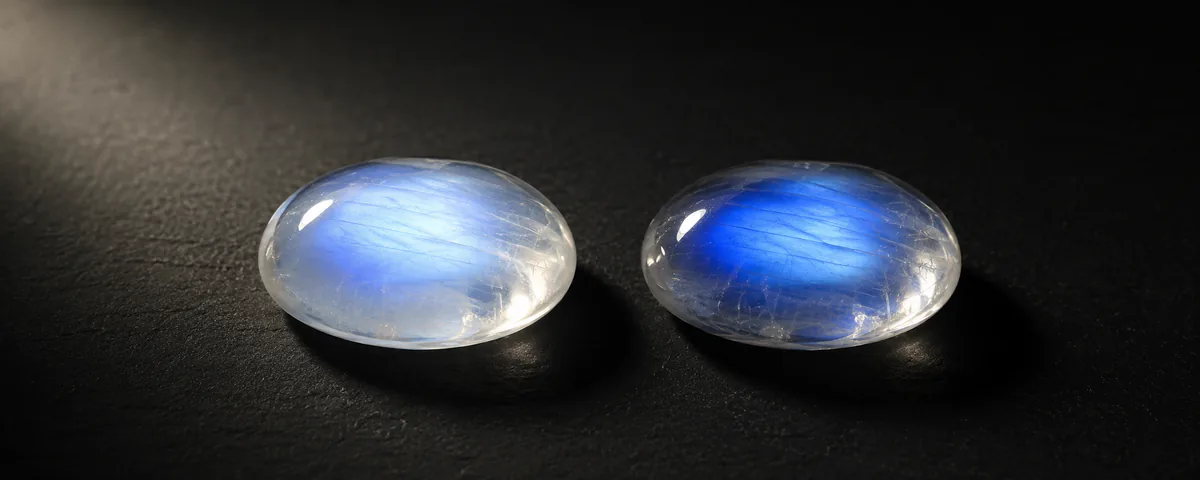
One direct and useful consequence: a blue moonstone photographed flat under diffuse lighting shows nothing. That is why you have to insist on a video, and why so many buyers are disappointed on delivery after a flattering photo.
Finally, not to be confused: rainbow moonstone and the black one also show blue flashes, but they are labradorites, another species, and their mechanism is not the same. The sorting is in moonstone or labradorite.
Why that particular blue is so rare
Here is the explanation that justifies the rest of the article, and it rests on a coincidence of scale.
When an alkali feldspar cools slowly, the potassium and the sodium separate into alternating layers, of orthoclase and albite. Light passing through that stack scatters inside it, and the way it scatters depends entirely on the thickness of the layers.
If that thickness is close to the wavelength of visible light, a few hundred nanometres, the scattering becomes selective: the short wavelengths, meaning blue, head back towards the observer, while red and orange pass through. The sheen looks blue.
If the layers are thicker or irregular, the scattering stops being selective and sends everything back together: the sheen turns milky white. Thicker still, or disordered, and it shifts to a dull grey.
The decisive point is this: that thickness was settled as the rock cooled, millions of years ago. It depends on how fast the rock cooled, on the chemistry of the fluid, on the duration. No treatment alters it, no cutting creates it. That is why blue commands a price, and it is also why it cannot be imitated: you would have to manufacture thousands of parallel nanometre layers.
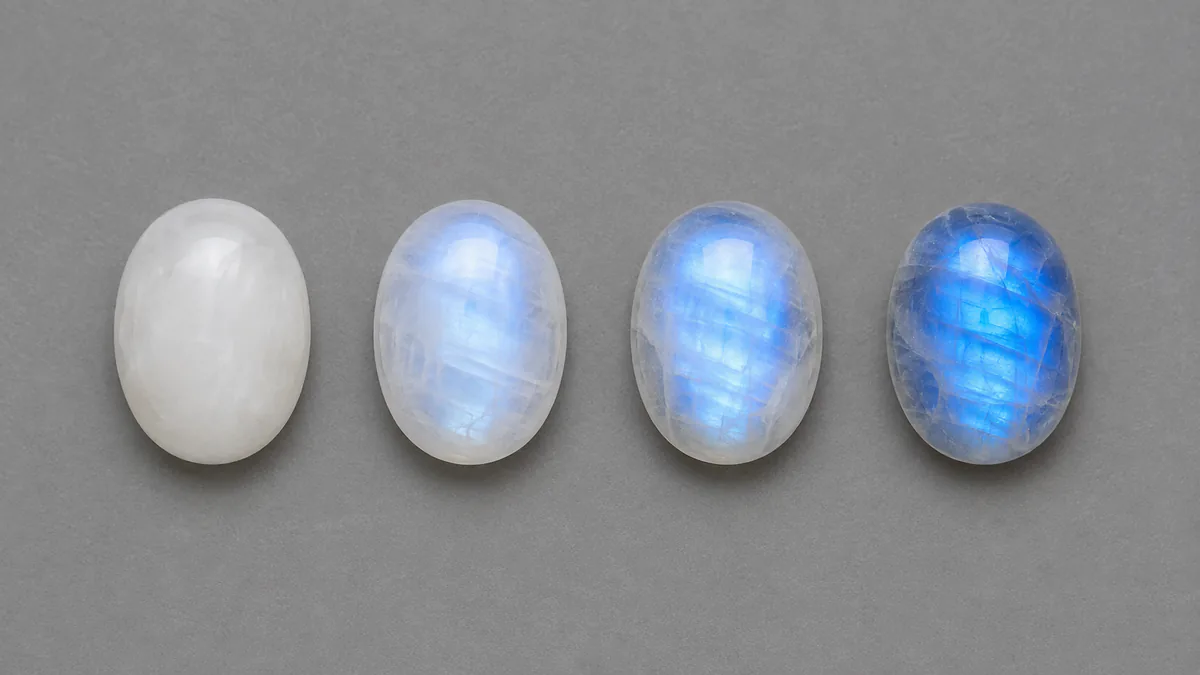
From milky sheen to clear blue, four stones
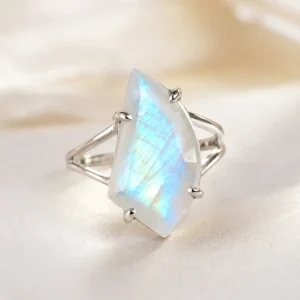
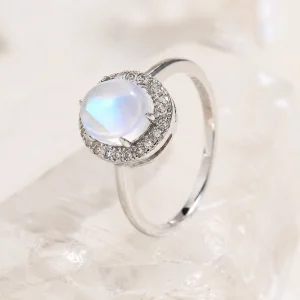
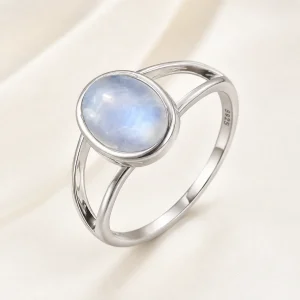
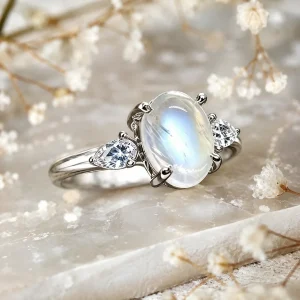
The official Sri Lankan grading
It is the only official grading that exists for this stone, published by Sri Lanka's export promotion body, and it is worth knowing because it describes what you will see in a display case.
| Category | What it means | Rarity |
|---|---|---|
| Blue crystal | Transparent body, clear blue sheen | Very rare |
| Blue | Distinct blue sheen, less limpid body | Rare |
| Cloudy blue | Blue sheen, grey-green body | Common |
| Superior semi-blue | Marked bluish sheen | Common |
| Normal semi-blue | Barely bluish sheen | Very common |
| White crystal | Transparent body, white sheen | Uncommon |
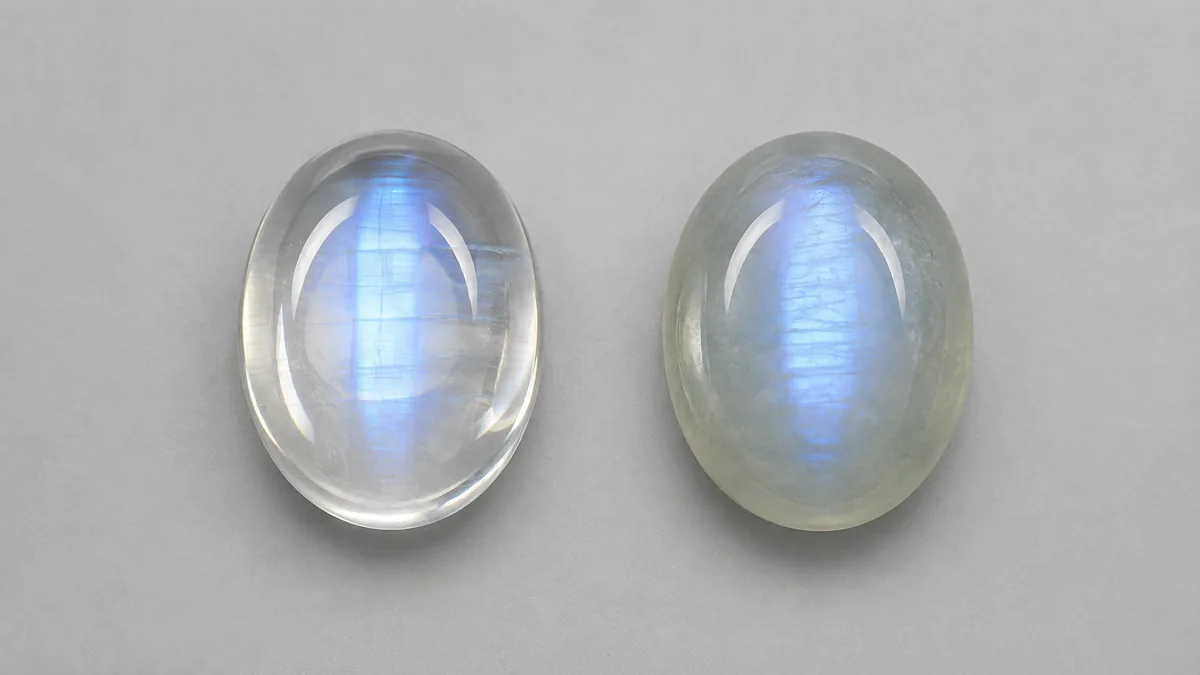
Two lessons. First, the summit combines two things, transparency and blue, and it is their conjunction that is rare: a very milky body scatters a great deal and shows its sheen clearly, a limpid body gives depth but often a quieter sheen.
Second, the grading has a word for dull stones, muddy, applied to grey-green bodies. You will never see it on a price tag, but it structures prices behind the scenes, and a stone graded cloudy blue is not a blue stone in the commercial sense.
The price, and what moves it
The numbers, since they are one of the three promises in the title.
From $75 to $750 a carat for a loose cabochon of commercial quality. A decent white sits between $6 and $60. In other words, weight for weight, a fine blue can be worth more than ten times a good white, and far more than that against a peach or an orange.
Four factors move that number inside the range.
The intensity of the blue. An electric, deep blue against a soft blue is already a factor of three or four.
Transparency. A limpid body easily doubles the price of a stone with a comparable blue.
Weight. And in a non-linear way: a 10 carat stone is often worth three or four times a 5 carat one, because large clean stones are rare and cutting big on a feldspar with cleavage is risky.
Origin. A Sri Lankan blue costs a third to a half more than a comparable stone from elsewhere. It is not the nationality you are paying for, it is a probability of quality, and that is developed in moonstone deposits.
The detail of the calculation, including the share of the stone in the price of a finished piece, is in the price of moonstone. And the reason the trend is upward is in moonstone from Sri Lanka.
Telling a true blue from a bluish stone
This is the most expensive confusion on the subject, and it is easy to avoid.
A bluish stone is a white moonstone whose sheen leans slightly towards blue. It is genuine, it is pretty, and it sells in the white range. Plenty of sellers advertise it as blue.
A true blue shows a clear, saturated blue that plainly dominates the white at the peak of intensity.
The test, in one movement. Tilt the stone slowly until you find the angle where the sheen is strongest, and judge the hue at that moment. On a bluish stone, white still dominates even at the peak. On a blue, the blue asserts itself without hesitation.
Two other traps. Sales photos are often taken under cool light or edited towards blue: ask for a video. And a dark background greatly exaggerates a bluish sheen, which explains the black velvet on the marketplaces.
On authenticity proper, opalite included, there is how to recognise genuine moonstone and moonstone or opalite. On quality once authenticity is established, the six criteria.
What tradition attributes to the blue
A change of register, and I am flagging it. What precedes can be measured; what follows belongs to crystal healing, an approach founded on traditions and beliefs, and is written in the conditional.
Blue moonstone is the subject of no attribution of its own in the older sources. It inherits everything attributed to moonstone in general: emotional balance, intuition, cycles, beginnings. The dating of those attributions is in the properties of moonstone.
A recent nuance has appeared, and it deserves to be flagged for what it is. Contemporary manuals often associate the blue with clarity of mind and right speech, more than with intuition. The reason is the colour itself: in crystal healing, blue mechanically calls up the throat and communication, whatever the stone. That is a rule of palette, not an observation, and I developed the mechanism in the properties and meaning of black moonstone, where the same thing happens with black.
On symbolism in general there is the meaning of moonstone, and on chakra correspondences moonstone and chakras.
These correspondences belong to crystal healing, an approach founded on traditions and beliefs. They are not a medical claim and never replace the advice of a health professional. Read the full disclaimer.
Choosing it, and setting it
Three practical pieces of advice, at a price level where mistakes are expensive.
Small and fine rather than large and average. Since the price per carat rises with weight, on a fixed budget you trade quality for size. A 4 carat cabochon with a clear blue is far more noticeable than a 10 carat one with a soft sheen.
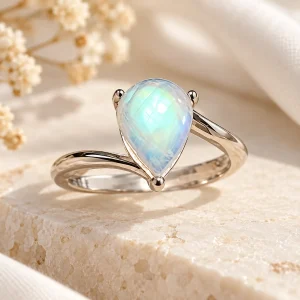
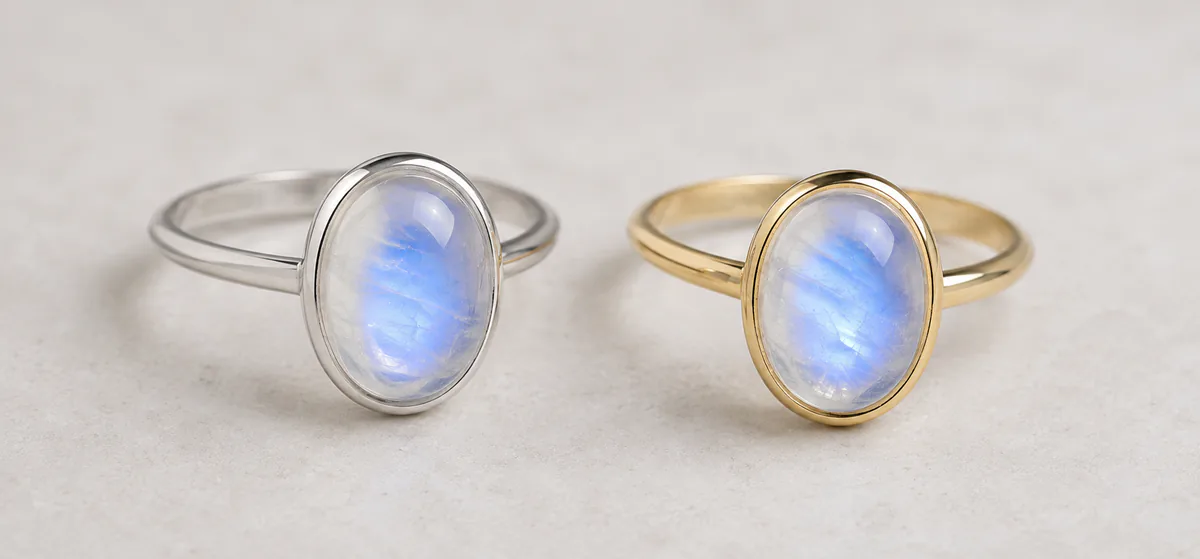
Prongs rather than a closed bezel, if the stone is transparent. This is the case where the aesthetic argument wins: on a limpid blue, a closed bezel blocks side light and puts out part of what you paid for. An open-backed bezel, pierced underneath, is the best compromise. The subject is in bezel or prongs.
Silver or white gold rather than yellow gold. A cool white metal returns the blue instead of competing with it. Yellow or rose gold warms the stone and visually softens its blue, which is a shame on the one variety where you are paying for it.
And one obvious thing that is not obvious at all: ask for a video before buying. At this price level a still photo proves nothing, and no serious seller will refuse.
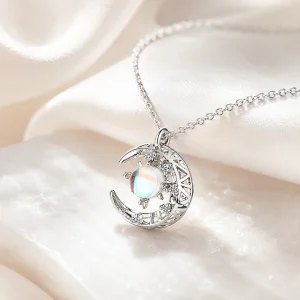
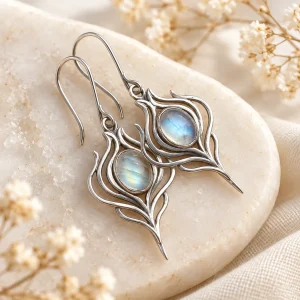
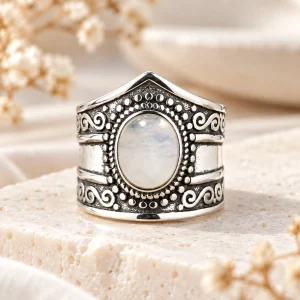
The workshop rings, one of them blue




Frequently asked questions
What is a blue moonstone?
An adularia whose sheen leans towards a clear blue, on a colourless and ideally transparent body. It is not the body that is blue, it is the reflection: laid flat without looking for the light, the stone appears colourless.
Why does it cost so much?
Because its blue depends on the thickness of internal layers, which has to approach the wavelength of blue. That is a regularity of formation settled millions of years ago, which no treatment reproduces. From $75 to $750 a carat, against $6 to $60 for a white.
How do you tell a blue from a bluish stone?
Tilt the stone until the sheen peaks in intensity, and judge the hue at that moment. On a bluish stone, white still dominates. On a true blue, the blue asserts itself without hesitation.
Where do the finest ones come from?
From Sri Lanka, and above all from the Meetiyagoda deposit, discovered in 1906. It is thinning out, which pushes prices upward, and that is the subject of moonstone from Sri Lanka.
Can a stone be treated to make it blue?
No. The blue comes from the internal structure of the crystal, not from a pigment. What does exist, on the other hand, are quartzes covered with an iridescent film, and that is another matter: is moonstone treated.
What setting for a blue?
Prongs, or an open-backed bezel if the stone is transparent, to let side light in. And a cool white metal, silver or white gold, which returns the blue instead of competing with it.
What does tradition attribute to it?
Nothing of its own in the older sources: it inherits the attributions of moonstone in general. Contemporary manuals add clarity of mind, but that is a rule of palette tied to blue, not an observation about this stone.
Is a blue tougher than a white?
No, exactly the same: 6 to 6.5 on the Mohs scale and two directions of cleavage. It calls for the same precautions, and they are detailed in is moonstone fragile.
What is a blue crystal stone?
The top of the official Sri Lankan grading: a transparent body with a clear blue sheen. It is the conjunction of the two that is rare, because transparency and sheen intensity naturally work against each other.
Should you ask for a video?
Yes, systematically at this price level. A still photo shows one angle out of an infinity, and many are taken under cool light or edited towards blue. Two seconds of video is enough, and no serious seller refuses.
Where to go next
- Understanding the sheen: adularescence, colours and varieties, the glossary.
- Buying without getting it wrong: the six quality criteria, the price, recognising a genuine stone, treatments.
- Where it comes from: the Sri Lankan deposit, the map of the deposits.
- Setting it and wearing it: bezel or prongs, is it fragile, how to wear it.
- The whole picture: the complete guide to moonstone.
The jewellery is in the shop. I have only one blue in the catalog, and that is deliberate: at this price level I would rather offer one I have genuinely chosen than a range. Write to me if you are looking for something specific, and I will check with my suppliers.
My sources
For the mechanism: the GIA and Mindat on the exsolution of alkali feldspars into alternating layers of orthoclase and albite, and on the relation between the thickness of those layers and the selective scattering of short wavelengths. The detail is in adularescence.
For the grading: the official scale of the Sri Lanka Export Development Board, which distinguishes blues, semi-blues and whites with their sub-categories, and reserves the top for transparent stones with a clear blue sheen.
For the dating of the traditional attributions, the crystal healing manuals published between 1985 and 2003, listed in the properties of moonstone.
One limit already flagged elsewhere that applies here too: the price ranges are not an official rating, this stone has none. They are orders of magnitude observed on the cabochon market, and a twofold spread on one and the same quality would be nothing unusual.
Last updated: 19 August 2026. If you find an error in this article, let me know: I correct it and I note it.
✦ À porter, à offrir
Découvrez mes créations